
Omaha and the rest of Nebraska: clients a long drive from the office
Lawyer SEO in Omaha, NE
Omaha lawyer SEO for a state where many clients live hours from a lawyer.
Half of Nebraska's attorneys work in Douglas County, and many of the families who need them live hours away, on farms and ranches in counties with one lawyer or none. We help Omaha firms reach those clients through search, maps and AI answers.
Below: where Nebraska's lawyers work, where its farm and ranch families live, and the state rules that shape a firm's marketing to both. General search work that isn't Nebraska-specific is on our law firm SEO page.
Free, done by a real person, and in your inbox within 48 hours.
From Farnam Street to the Sandhills
Nebraska's lawyers cluster in the east; its farm families don't
An Omaha firm sits in the middle of Nebraska's legal profession and at the edge of much of its client base. The table moves outward from downtown Omaha, one step at a time, with the figure for each step and what it changes for the firm's marketing.
| How far from Farnam Street | Figure | Source | For an Omaha firm |
|---|---|---|---|
| Douglas County | 2,609 active attorneys, about half the state's, for 29.9% of Nebraskans | NSBA map, April 2025; ACS | The most crowded field in the state for every practice search |
| Lancaster and Sarpy | 1,197 and 360 more; with Douglas, about 80% of the attorneys on the map | NSBA map (GLP total) | Lincoln and the southern suburbs compete for the same clients |
| The other 90 counties | 43.7% of Nebraskans, about 20% of its attorneys | NSBA map; ACS 2020-24 | The clients most likely to choose a firm they have never visited |
| The thinnest 34 | 12 counties with no lawyer, 22 more with three or fewer | NSBA Rural Practice Initiative | Search, phone and video replace the walk to a local office |
| On the land | 44,479 farms and ranches; 93% of them family farms | USDA Census of Agriculture, 2022 | Matters about land, succession and debt, under Nebraska law |
| The people running them | 80,283 producers, 29,620 of them 65 or older | USDA, 2022 | Estate and succession questions arriving over the next decade |
Law firm SEO in Omaha
An Omaha search plan for clients who may never see the office
GLP's clients are law firms. For an Omaha firm, and for a Nebraska firm searching for an agency ("nebraska law firm seo company", "omaha law firm seo service", "attorney marketing agency omaha"), the job is to be found by people deciding from a distance. The table lists the ways a client far from the office actually reaches a firm, and what we build for each.
| How the client reaches you | What we build | The Nebraska detail |
|---|---|---|
| A phone search from far outside Omaha | Practice pages that put the answer first, naming the Nebraska statute and the court that will hear the matter | In 12 counties there is no local lawyer to compare the firm against |
| The map, from far away | A Business Profile with the right category, real hours and photos, and services written the way clients describe them | § 3-507.2(c): the ad itself must say who answers for it and where that office is |
| A question put to ChatGPT about the farm | Passages built around one Nebraska rule each, and monthly checks on which firms the answers name | Nebraska's inheritance-tax rates changed in 2023 and its first class in 2026 |
| A phone call that starts on a practice page | Call and form tracking tied to the page, with each enquiry traced to a signed case where intake data allows | Legal Aid's statewide AccessLine answers about ten hours a week, so a missed call often goes nowhere else |
| A first meeting by video | A booking page that offers video and says when the firm travels, and what that costs | Statute 24-734 already allows some hearings by video |
| A paid search, in a rural ZIP code | Paid campaigns, run when the firm hires us as Consulting CMO and judged by signed cases | Pay-per-case lead deals can breach § 3-507.2(b); per-click and per-lead ads that recommend no one are a different matter |
From here
Start with the free audit: one of our staff searches for your firm as a client in Holt or Custer County would, and records what comes up. Request it here.
USDA Census of Agriculture, 2022
Nebraska's farm and ranch families, by the Census of Agriculture
Every five years the Department of Agriculture counts the country's farms and the people who run them. The 2022 count for Nebraska describes a client group that most law firm marketing ignores, even though its legal needs are large, specific to Nebraska, and growing as its owners age.
Family operations, almost without exception
Nebraska's farms and ranches covered 43,975,693 acres, 989 acres apiece on average, and sold $29.4 billion of products in 2022, fourth among the states (USDA state profile). With nearly all of them family-owned, their legal work is family work: succession between siblings, a parent's estate, leases between relatives, a loan the next generation co-signed.
Producers past 65, county by county
The census counts producers, the people making decisions on each farm. More than a third had passed 65, and just 9,031 were under 35. In the county profiles the share rises in places: 102 of Thomas County's 229 producers were 65 or older, and 446 of Cherry County's 1,175. The transfer of these operations to the next generation is a decade of estate, tax and business work, much of it in counties where no lawyer keeps an office.
Ranches measured in thousands of acres
In Grant County the average farm covers 7,498 acres; in Cherry County, the state's largest by land in farms, 6,223; in Arthur County, 5,175. Douglas County's 312 farms average 167 acres. Size changes the legal file. A ranch of several thousand acres is a business as much as a piece of land, dividing it among heirs can end the operation, and the questions a family brings are about keeping it whole: buy-sell terms, leases to the child who stays, a business entity that holds the land.
Where the farm money is managed
Several of the agricultural institutions these families deal with are based in Omaha. Farm Credit Services of America, which lends in Iowa, Nebraska, South Dakota and Wyoming through 42 local offices, has its corporate headquarters in Omaha (FCSAmerica), and so do the AGP cooperative, Valmont and Green Plains. An Omaha firm that represents farmers deals with these institutions across the table; one that represents the institutions sees the same families from the other side.
What these families search for
- Passing the farm to one child without shortchanging the others.
- What the heirs owe the county, and by when.
- Ending, or keeping, a handshake lease.
- A lender's notice on an operating loan, and what mediation can do.
- Well permits and pumping limits from the local natural resources district.
- An injured hired hand, and whether the operation carries comp coverage.
Where the lawyers are
Lawyers in Douglas County, clients in the other 90
The Nebraska State Bar Association maps the active attorneys in every county (judges excluded). Set against the Census population of those counties, the April 2025 map shows how far the profession has gathered into the eastern corner of the state.
Douglas County's share of the state's attorneys
The map shows 2,609 attorneys in Douglas County, 1,197 in Lancaster and 360 in Sarpy; adding up all 93 county figures gives 5,192, so the three counties hold about 80% of them and Douglas alone about half. The American Bar Association's 2025 survey, counted differently, puts Nebraska's resident active attorneys at 5,959 (ABA). Either way, an Omaha firm competes for local searches against most of the state's bar.
Counties with no attorney at all
On the NSBA's map (Rural Practice Initiative), the counties without any lawyer are Arthur, Banner, Blaine, Boyd, Garfield, Grant, Hayes, Logan, Loup, McPherson, Thomas and Wheeler, home to 9,760 people in the latest Census estimates. Federal employment data point the same way: the Bureau of Labor Statistics counted no private law-office establishment in 22 counties in 2024 (BLS QCEW).
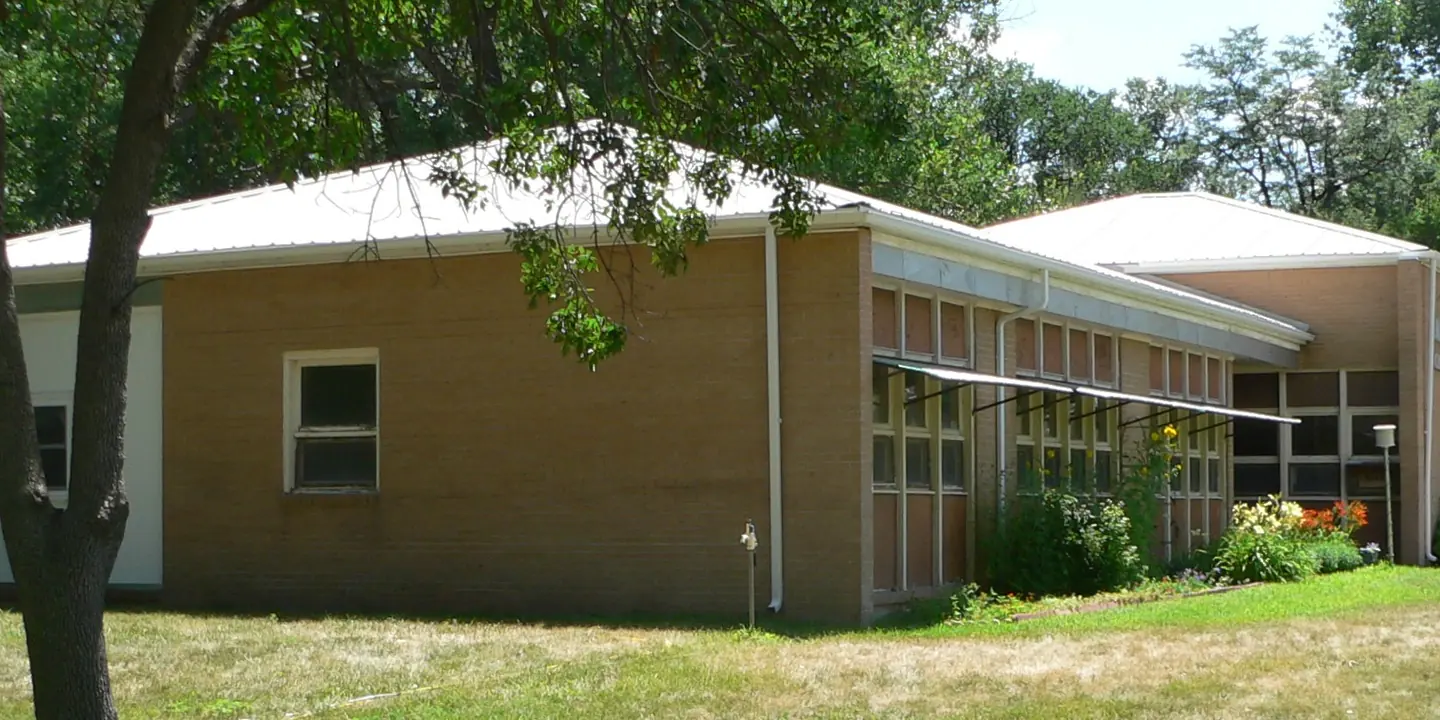

Fewer lawyers in most counties than in 2012
The NSBA also compares each county with 2012. Fifty counties had fewer attorneys in 2025, eight of them less than half as many; 23 had more, and 10 had none in either year.
Rural lawyers nearing retirement
In a 2022 projection the NSBA counted 363 attorneys working in rural counties and expected 108 of them, about 30%, to reach 70 by 2027, with the rural workforce falling to 255 (NSBA projection). Their clients will look for someone else, and many will look online first.
What the bar and the law school are doing about it
The NSBA's Rural Practice Initiative connects rural employers with students and lawyers, held listening sessions across rural Nebraska in 2026, and promotes a loan repayment program for attorneys serving counties under 15,000 people (NSBA). The University of Nebraska College of Law's Rural Law Opportunities Program recruits students at Chadron State, Peru State, the University of Nebraska at Kearney and Wayne State (Nebraska Law). Both help over years. Until those programs fill the gap, families in Garfield or Loup County will keep choosing lawyers they find online, and an Omaha firm's pages decide whether it is one of them.
Estate and succession content
Succession pages built on Nebraska's county inheritance tax
Nebraska taxes what heirs receive, county by county, and for farm families with land worth millions the tax is often the first legal question after a death. A firm that explains it accurately, with the section numbers, is answering one of the most practical searches a rural family makes.
Rates and exemptions since 2023
For deaths on or after January 1, 2023, close relatives (parents, children, siblings, grandchildren and others in the first class) pay 1% on what each receives above $100,000 (77-2004); aunts, uncles, nieces, nephews and their families pay 11% above $40,000 (77-2005); everyone else pays 15% above $25,000 (77-2006). A surviving spouse pays nothing, nor does any heir under 22, and the homestead allowance, exempt property and family maintenance allowance are not taxed.
A 2026 change in who counts as close family
LB838, approved on April 14, 2026 and operative July 18, 2026, left the rates alone but added to the 1% class the descendants of a person whom the deceased had treated as their own child for at least ten years (committee statement). For blended farm families, where a stepchild's children may be the ones who stay on the land, that change can move an heir from the 15% rate to the 1% rate.
Paid to the county where the land is
The tax is paid to the treasurer of the "proper county" and is a lien on the real estate until paid (77-2003). That is normally the county of residence, but for land in another county it is the county where the land sits (77-2014), and the money stays with that county (77-2032). A family living in Omaha that inherits a section of ground in Holt County deals with Holt County.
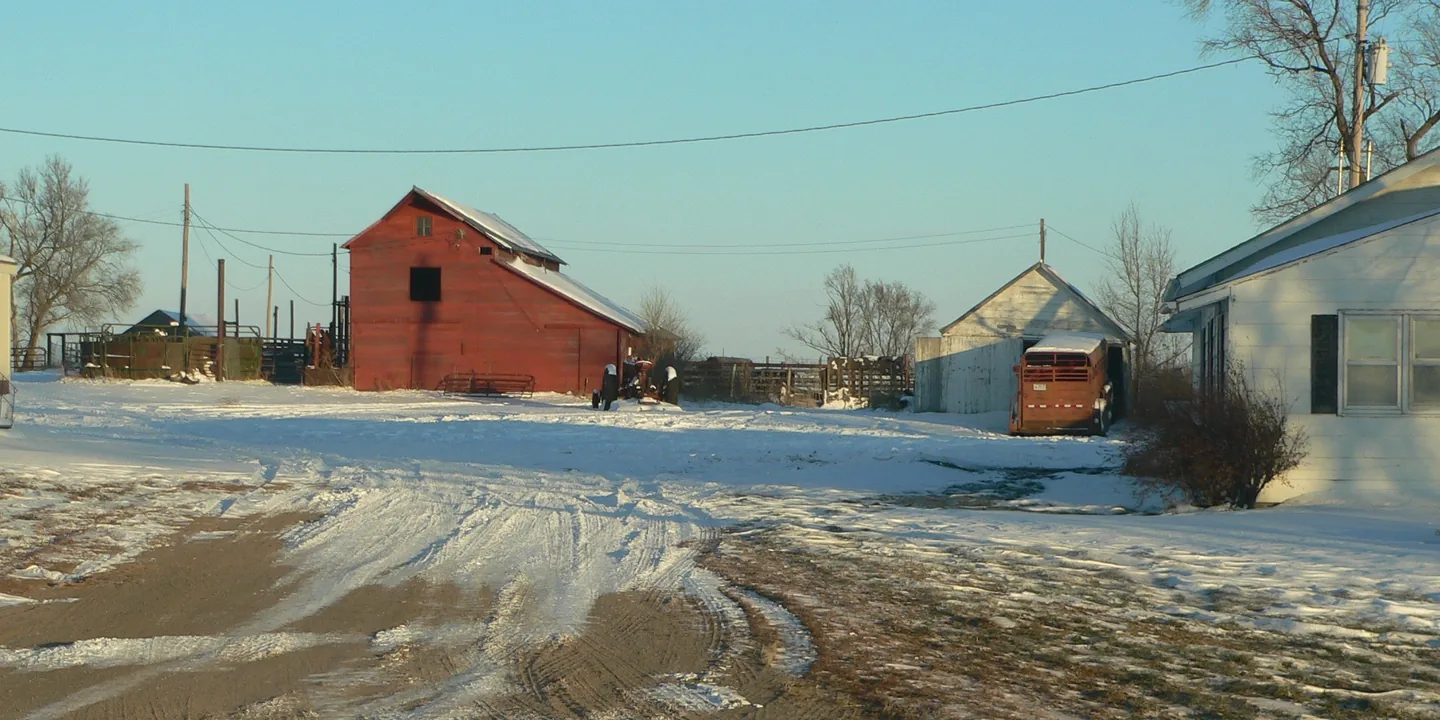

When the inheritance tax falls due, and what follows a late filing
The tax is due 12 months after the death. After that, interest runs at 14% a year, and a family that has not filed a proceeding to determine the tax within the 12 months owes a penalty of 5% a month, up to 25% of the unpaid tax (77-2010; 45-104.01). The county court can determine the tax in a proceeding of its own, without a full probate (77-2018.02).
No discount for farmland
Property is valued at its fair market value at death (77-2008), and nothing in the inheritance tax sections gives agricultural land a separate valuation. With high land values, even the 1% class can face a real bill, which is why planning pages that explain the rate, the exemption and the valuation together serve these readers better than a page that only says the tax exists.
What a succession page should cover
- Which class each likely heir falls into, with the rate and the exempt amount for that class.
- Which county is owed the tax when land lies outside the county of residence.
- The 12-month due date, and the penalty for missing the filing.
- How land is valued, and why an appraisal matters.
- The difference between the inheritance tax and the federal estate tax, which most families will never owe.
Agricultural debt
When an operating loan goes bad: farm mediation and Chapter 12
A bad harvest or a fall in cattle prices turns into a legal problem when a lender sends a letter. Nebraska and federal law give farm borrowers options that general debt pages never mention, and a farm family searching after that letter is looking for exactly those options.
Mediation notice: a month before the lender can sue
Under the Farm Mediation Act, at least 30 days before starting a proceeding on an agricultural debt over $40,000, a creditor must give the borrower written notice that mediation is available, with the address and phone number of the farm mediation service (2-4807). Exceptions apply where the federal Agricultural Credit Act of 1987 sets its own requirements and where a court finds the delay would cause irreparable harm, such as a risk that collateral will disappear.
Voluntary, quick, and binding once signed
Mediation is not a precondition to a lawsuit or a foreclosure, and nobody can be forced to attend (2-4808). When it happens, the first meeting comes within 40 days of the request and the process runs about 60 days (2-4809), and a signed agreement can be enforced as a contract (2-4811). Borrowers in mediation are offered a free analysis of their business and personal finances (2-4804).
Who runs it, and the farm hotline
The state program is run by the Department of Agriculture as its Negotiations Program; each party pays $20 an hour, and the program also takes land lease, family farm transition and division fence disputes (program FAQ). The Rural Response Hotline, at 800-464-0258, arranges free consultations with an attorney (Farm Hotline). A firm's page should name both, because a reader who has called them is better prepared to hire a lawyer, not less likely to.
Chapter 12 and its debt limit
Chapter 12 of the Bankruptcy Code is written for family farmers. For cases filed on or after April 1, 2025, the debt limit for a family farmer is $12,562,250 (Federal Register). The definition also requires that at least half of the debt arise from farming and that more than half of the household's gross income came from farming in the year before filing, or in each of the two years before that. A Chapter 12 page that walks through those tests with an example lets a reader judge whether to call before the lender's deadline.
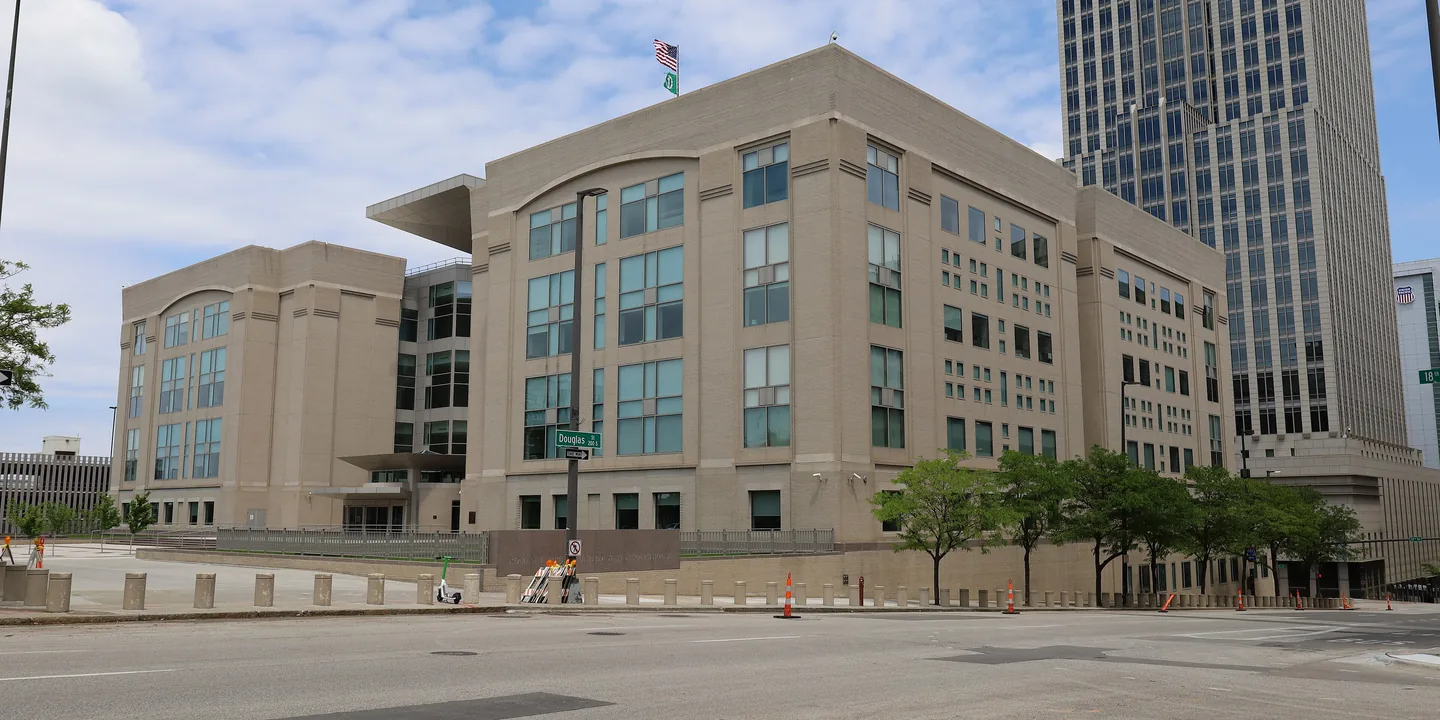

Land, water and labor
Leases, wells and hired hands: the rest of a farm client's file
Ending a handshake lease
Many Nebraska farm leases are oral and run from year to year. Nebraska's rule for ending one comes from the Supreme Court rather than a statute: notice must be given six calendar months ending at the anniversary of the tenancy (Critchfield v. Remaley, 1887). For a lease year beginning March 1, a notice served on August 29 was held timely (Peterson v. Vak, 1955). Landowners and tenants search this every summer, and a page that states the case law and the date arithmetic, with a reminder to put the notice in writing, is one of the most useful a farm practice can publish.
Wells, permits and pumping limits
Every landowner may make reasonable use of the ground water under the land, subject to the rights of neighbors when supply runs short, and the state treats natural resources districts as the preferred regulators (46-702). In a management area, a new well needs a district permit before drilling, with a $50 fee and a decision within 30 days, except for small wells (46-735). Districts may allocate how much water can be pumped, require meters, limit new irrigated acres and approve transfers of certified acres between landowners (46-739). There are 23 districts today, by their association's count (NARD), and each writes its own rules, so a water page should name the district.
Hired hands and workers' compensation
Nebraska's comp law exempts a farm or ranch employer whose only employees are relatives, and one with fewer than 10 unrelated full-time employees; coverage applies once the operation has 10 or more on each working day for 13 weeks in a year (48-106). An exempt operation without insurance must give each unrelated worker a signed written notice that they are not covered, in the statute's words. If it doesn't, the employer can be held liable under the act. Both sides search for this after an accident: the worker asking whether there is coverage, and the operator asking whether the notice was given.
Disputes the state will mediate
Beyond debt, the Negotiations Program lists land leases, family farm transition, neighbor disputes and division fences among the matters it mediates. For a firm, that is a list of practice pages that start with a state process the reader can use and end with when a lawyer adds value.
Distance
Serving a client a long day's drive from Farnam Street
An Omaha firm can represent a family in the Panhandle without asking them to make the drive for every step. Nebraska's courts already allow much of the work to happen remotely, and saying so on the firm's pages removes a reason a rural reader might look elsewhere.
Hearings by video under 24-734
Nebraska's statute lets a judge use telephone or video for proceedings that don't involve oral testimony, and in civil cases a judge must, for good cause shown, let a witness testify by phone or video unless an objection is sustained (24-734). Several judicial districts have their own remote-hearing rules. The details vary by court, which is a reason for the firm's page to describe what it has done, not promise what a court will allow.
Every filing is electronic
E-filing has been mandatory for Nebraska attorneys in all trial and appellate courts since the 2022 amendments to § 2-202, with narrow exemptions. Distance from a county courthouse no longer decides who can handle a case there, which is the practical answer to a rural reader's first doubt about an Omaha firm.
What free help exists outside Omaha
Legal Aid of Nebraska takes calls statewide through its AccessLine, with separate lines for people 60 and older and for agricultural workers, and does not handle personal injury, workers' compensation, immigration or criminal defense (Legal Aid). Courthouse self-help desks run by the Volunteer Lawyers Project operate in Buffalo, Madison and Valley counties; Omaha has monthly pop-up clinics instead (VLP). A rural reader who has tried these and still needs a lawyer is the reader a firm's page should be written for.
Distance, stated plainly on the firm's own pages
- Whether first meetings can be held by video or phone, and how to book one.
- When the firm travels, to which courts, and how travel time is billed.
- Which district courts the firm's lawyers have appeared in, stated as fact and not as a promise of results.
- How documents are signed and exchanged when the client lives hours away.
A Sandhills map search, run from four county seats
On November 6, 2026 at 20:40 UTC we sent 40 queries to Google's Places API: ten practices, from estate planning, probate and water rights to divorce, bankruptcy and criminal defense, each searched as "[practice] [town] NE" from North Platte, Ogallala, Broken Bow and Valentine, each weighted to a 50-kilometer radius, with no more than 20 results saved (API documentation). The searches returned 538 listings. Only 11 of the 40 filled all 20 places, and in Valentine nine of the ten searches ran out at ten listings or fewer.
| Searched from | Listings returned | Omaha or Lincoln offices | Of those, in the first three |
|---|---|---|---|
| North Platte, Lincoln County | 187 | 0 | 0 |
| Ogallala, Keith County | 160 | 0 | 0 |
| Broken Bow, Custer County | 112 | 4 | 0 |
| Valentine, Cherry County | 79 | 10 | 0 |
Source: GLP survey, Google Places API (New) text search, November 6, 2026, 20:40 UTC; 10 practices, 4 search points, up to 20 listings each. Town and county read from each listing's address. These are listings, not positions on a live results page, where Google may arrange the map pack differently.
East Nebraska firms appear out west for one practice
Omaha and Lincoln offices showed up 14 times in the 538 listings. Thirteen of those came from criminal defense searches in Valentine and Broken Bow, the other from an agricultural-law search in Valentine, and none reached the first three. For estate planning, probate, water rights, divorce or real estate, the map showed firms from the region and nobody from the east. An Omaha firm that wants ranch families as clients is unlikely to reach them through the map pack; it reaches them through practice pages, AI answers and the ordinary results, which is what the channel table in the service section is built around.
Neb. Ct. R. of Prof. Cond. §§ 3-507.1 to 3-507.4
§§ 3-507.1 to 3-507.4, section by section for a Nebraska firm's site
Nebraska numbers its conduct rules inside the court rules, so ABA Model Rules 7.1 to 7.5 appear as §§ 3-507.1 to 3-507.5. Four of them are in force; § 3-507.5, on firm names, was deleted on March 25, 2020 and is now marked reserved, with its subject moved into the comments to § 3-507.1. Unlike several states, Nebraska has no filing requirement for ads, no copy-retention rule in § 3-507.2, and no waiting period after accidents. What it has is short and strict.
§ 3-507.1: misleading statements, and results
The first section is one sentence long: nothing a firm says about itself may be false, or misleading through what it leaves out (§ 3-507.1). Comment [3] applies this to case results: a true account of an earlier win misleads when readers come away expecting the same outcome without regard to the facts of their case, and an unsubstantiated comparison with other lawyers can mislead too. A disclaimer "may preclude" that finding. For an Omaha firm's results page, that means context for each result and the caution beside it.
Firm names, now in the comments
Firm names moved into Comment [5] to § 3-507.1 in 2020, and the test there is the one applied to any other statement: is the name, domain or handle misleading? An advisory opinion adds that a trade name may leave out "LLC" or "LLP" if the firm's legal name appears elsewhere in the same materials (Opinion 19-02).
§ 3-507.2: payments for recommendations, and the exceptions
Paying someone for recommending the firm is off limits under § 3-507.2(b), with four carve-outs: what an ad reasonably costs, a legal service plan's or nonprofit referral program's normal charge, the price of buying a practice, and reciprocal referrals that are non-exclusive and disclosed to the client. Comment [5] names directory listings, airtime and payments to "website designers" and similar vendors as advertising costs. The line falls at payment for channeling cases: Opinion 07-01 found that an online marketing agreement with an up-front fee for exclusive referrals and a further fee based on each referred case's net recovery was a for-profit referral service the rule forbids.
Who answers for the ad, and from what address
Section 3-507.2(c) requires every advertisement to include "the name and office address of at least one lawyer or law firm responsible for its content." On a website it belongs in the footer of every page. In paid search, where an ad has room for very little, the ad can carry the firm's name and lead to a landing page that gives the office address in its opening lines.
§ 3-507.4: "specialist" yes, "certified" only with a named certifier
Under Comment [1] to § 3-507.4, a Nebraska lawyer may say they specialize, or call themselves a specialist, as long as the claim isn't misleading. A lawyer who claims certification must name the certifier, and the certifier must hold state approval or ABA accreditation. The NSBA's own directory notes that the bar has certified no listed lawyer as a specialist.
Testimonials and deal sites
Testimonials are allowed so long as the advertising is not false or inherently misleading, with disclosures added where needed (Opinion 12-04). Opinion 12-03 allowed a discounted-services deal through Groupon if the advertising fee is reasonable, the deal says it is advertising material, payments are held in trust and refunds are given when the lawyer can't take the matter. Among the opinions on the Judicial Branch's index, running to 2025, none deals with social media or online review platforms (opinion index), so § 3-507.1 is the standard for those.
§ 3-507.3
"This is an advertisement": Nebraska's label on email, mail and recordings
The rule on contacting prospective clients is where Nebraska is most specific about wording, and it reaches the email and text campaigns many firms now run.
Where the words go
The phrase has to appear on the envelope of a mailed solicitation, at the start and the end of a recorded or electronic one, and in an email's subject line, never in type smaller than the address (§ 3-507.3(c)). For a newsletter sent as an email attachment, Opinion 09-04 found it enough to put the words in the subject line and at the end of the message, not in the attachment.
When the label isn't needed
Comment [7] excludes communications sent in response to a request from a potential client and general announcements such as a new lawyer or a new office. The relationships that permit live contact also take a letter outside the labeling rule. A follow-up email to someone who filled in the firm's contact form is a reply, not a solicitation.
Live contact, and stopping when asked
A firm may not use a visit, a live phone call or a live chat to ask a stranger for paid work (§ 3-507.3(a)); lawyers, family, close friends and former clients are the exceptions. Under § 3-507.3(b), a person who has asked not to be solicited is off limits, and Comment [5] warns that further contact after an unanswered letter may cross that line. Email sequences need an easy way to stop them, and the stop must be honored.
No waiting period after an accident
Nebraska's rule contains no waiting period after an accident or disaster. That does not make early outreach wise. The label, the live-contact ban and the bar on misleading content all still apply, and an injury firm's reputation in a small county travels fast.
For firms searching for a web designer
A Nebraska firm's website, read on a farm-office computer
Queries naming website work, "website design for lawyer omaha", "website for lawyer omaha" and "website design for lawyer nebraska", bring firms here. We design and build law firm sites, with the details on our website design page; for a Nebraska firm serving rural clients, a few choices matter more than usual.
Built for the connection the reader has
The 2022 Census of Agriculture found that 83% of Nebraska farms had internet access, which leaves about one in six without it at home (USDA). Pages should load quickly over a weak signal, put the phone number and office address at the top, and make the main answer readable without scrolling through images.
Readable for an older client
With more than a third of Nebraska's producers over 65, type size, contrast and plain headings are not cosmetic. We aim for WCAG 2.2 AA accessibility from the start, which covers much of what an older reader needs, and we write the first lines of every practice page so the answer comes before the explanation.
Pages that name the place and the court
Rural readers often search by county or by the town where the court sits. A Nebraska firm's practice pages should say which district courts its lawyers appear in and which counties it takes matters from, stated as facts. Those lines help a reader decide, and they give search engines and AI tools a reason to connect the firm with that county.
The rule that touches every page
Since § 3-507.2(c) wants every ad to identify a lawyer who answers for it, along with an office address, the site's template carries both on every page, and so does each landing page built for ads. It is a small design decision that removes a compliance question for the life of the site.
AI search
Inheritance tax, leases and liens in AI-written answers
A ranch family that asks an AI tool about inheritance tax or a lease notice gets an answer assembled from whatever pages the tool can find. The firm that wants to be named in that answer needs pages that add what a general summary can't.
The details that make a page worth quoting
An AI answer about Nebraska inheritance tax can state the rate. A firm's page can add what the family needs next: which county is owed the tax on land elsewhere, the 12-month due date and the penalty, and how the 2026 change to the 1% class affects a stepfamily. Those specifics, each with its statute, are what AI tools lift into answers, with the firm's name attached when its details are consistent across its site and its listings.
Questions asked without a city
A question typed into an AI tool may name no place at all, while the person asking expects an answer that fits Nebraska. A firm's page that says plainly that it is about Nebraska law, and names the counties and courts it works in, is easier for those tools to match to the question.
Prompts, citations and monthly reports
For each Nebraska firm we keep a list of prompts written the way its clients ask them, record which firms the answers name and which pages they cite, and report the results each month alongside Search Console and call tracking. We report what the prompts showed, including the months the firm wasn't named; background on AI visibility for law firms. No tool, and no agency, can make an AI answer name a particular firm.
Douglas County
Omaha's own caseload: which Douglas County court hears what
Not every client is a rancher. For an Omaha firm's city practice, these Douglas County facts belong on the pages that serve each kind of case, because a reader often knows where their case is before they know they need a lawyer.
- Small claims
- Claims up to $7,500 since July 1, 2025 (25-2802), heard by a county judge without a jury, and attorneys are not allowed (Douglas County Court). A business or landlord page should say when a claim is better kept small and when it is worth filing in the civil division instead.
- County court civil cases
- Civil actions up to $70,000 are handled in county court, in its Civil and Small Claims Division at the Civic Center, 1819 Farnam Street (Douglas County Court).
- Juvenile and custody
- Douglas is one of only three Nebraska counties with a separate juvenile court, at 1717 Harney Street (Judicial Branch), so juvenile defense and guardian pages in Omaha should name it rather than the county court.
- Workers' compensation
- The Workers' Compensation Court holds Omaha hearings at 1701 Farnam Street but does not accept filings there; attorneys file electronically (court site).
- Claims against the city
- A claim against a political subdivision such as the City of Omaha must be made in writing within one year, and suit must follow within two years, with a six-month extension in some cases (13-919).
- Discrimination
- Employment discrimination charges go to the Nebraska Equal Opportunity Commission within 300 days; its Omaha office is at 1313 Farnam-on-the-Mall (NEOC).
- Immigration
- The Omaha Immigration Court is at 1717 Avenue H, Suite 100, not in the downtown court district (EOIR).
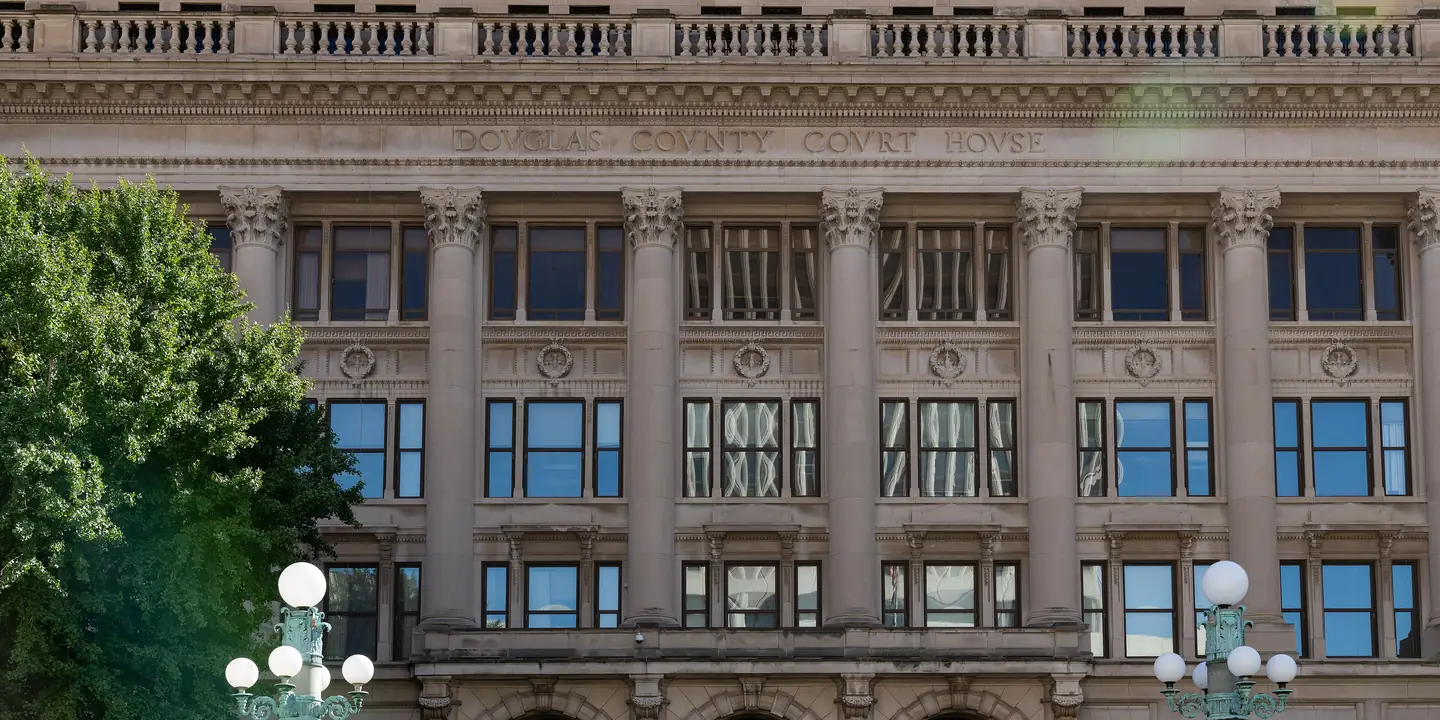

Working with GLP
What working with GLP involves for a Nebraska practice
A marketing company or a consultant: what Nebraska firms ask for
Nebraska firms reach this page with both words. Some want a company: "nebraska law firm seo company", "law firm seo company omaha ne", "nebraska lawyer digital marketing company", "nebraska law firm marketing company". Others ask for a person: "nebraska law firm digital marketing consultants", "nebraska lawyer digital marketing consultants", "nebraska lawyer google ads consultants", "seo consulting omaha nebraska". GLP is a company, a team that researches, writes, builds and reports, and the consulting side comes in when a firm hires us as Consulting CMO, the engagement that adds paid search, intake and oversight of the firm's other vendors to the search work.
Whichever a firm hires, the same questions sort the options. Who writes the pages, and does a lawyer at the firm approve each one before it goes live? Who owns the Google Ads account and the Search Console property when the contract ends? Is anyone paid per signed case, the arrangement § 3-507.2(b) puts in doubt? A two-lawyer county-seat office with good answers from a solo consultant may need nothing more. A firm that wants the writing, the site and the ads under one contract is the case for a company.
Our office, and why it isn't in Omaha
The agency you would be hiring operates out of West Hollywood, California, without a Nebraska branch. A Nebraska firm receives the work as recorded walkthroughs, scheduled calls and a reporting dashboard. We don't claim an Omaha office we don't have, for the same reason § 3-507.2(c) asks firms to state theirs.
How it starts and runs
Once the audit is done we talk strategy, then send a written scope naming the pages, corrections, markets and reports. The retainer is monthly, and GLP doesn't ask for a long-term contract; how we work sets out the stages and our team page the people. Each page citing a Nebraska statute is checked by one of your lawyers before we publish it.
Results we can and can't cite
Our case studies include no Nebraska firm, so we publish no Nebraska results here. Rankings depend on Google, and no one can promise them. Calls go to (661) 388-5526 if you would rather talk before requesting anything.
Nearby
Pages for the markets around Nebraska
Each of these markets is hours from Omaha by car, and each page starts from its own clients.
Nebraska questions, from niche practices to Council Bluffs
In short
The Census of Agriculture, the Nebraska State Bar Association's county map of attorneys, the inheritance-tax and farm-mediation statutes, and the current text of §§ 3-507.1 to 3-507.4: the record behind every plan we write for an Omaha or Nebraska firm.
What are people looking for when they search "omaha ai lawyers" or "omaha ai attorneys"?
Both searches reach this page, and both are ambiguous. Some searchers want a lawyer who advises on artificial intelligence: contracts with AI vendors, data use, employment policies. Others want legal help delivered with AI tools. GLP is a marketing agency, not a law firm, so neither group is our client; but an Omaha firm with a technology or privacy practice can write a page that answers the first group plainly, and that page has very little Omaha competition today.
Is a page for defamation or revenge-porn cases worth writing in Nebraska?
Yes, for a firm that handles them: the searches are specific, and so is Nebraska law. Libel and slander claims must be filed within one year (25-208). The civil remedy for disclosure of intimate images allows presumed damages of up to $10,000 per defendant, plus attorney's fees and injunctions (25-3505), with four years from discovery to sue (25-3506), and since 2025 it reaches digitally altered images. The criminal offense is in 28-311.08, amended again in 2026. A page that states those rules does more for a frightened reader than a general "online harassment" page.
Can a Nebraska firm use different names in Omaha and Lincoln?
Yes. Opinion 12-01 allows a Nebraska firm to operate in different cities under different trade names with different attorneys, and recommends that the letterhead of both offices show both trade names with the lawyers at each office listed under theirs. Online, the same logic applies to each office's page and Business Profile: say plainly that both names belong to one firm.
Does the state or local bar run a referral service a firm can join?
The Nebraska State Bar Association's Find-A-Lawyer is a directory rather than a referral service; lawyers listed there charge "$50 or less for the first 30 minutes of consultation" (Find-A-Lawyer). In Omaha, the Omaha Bar Association's Lawyer Referral Service refers callers to private attorneys in Douglas and Sarpy counties (Judicial Branch). Opinion 14-01 found that paying into the NSBA's not-for-profit program is permitted under § 3-507.2.
Does Nebraska have licensed nonlawyer legal providers?
Not at present. A search of the Judicial Branch site turns up no licensed paraprofessional program, and the exceptions to the unauthorized-practice rule (§ 3-1004) were last amended in 2019. The nearest allowance is for staff and volunteers of nonprofits assisting domestic violence and sexual assault victims. For an Omaha firm, that means the help a client finds before calling a lawyer is the court's self-help material, Legal Aid or a volunteer clinic, not a licensed nonlawyer.
Who should hold our domain, hosting and Google accounts: the IT company or the marketing agency?
Some firms looking for IT support for law firms in Omaha land on this page. GLP doesn't provide IT support, and we'd suggest keeping the two roles separate. What matters is that the IT provider and the marketing agency agree, in writing, on who holds the domain and DNS, the hosting account, the Google Business Profile and analytics. Firms lose weeks when a site move stalls because nobody knows who holds the domain login, so settle that list before any site work starts.
Do middle-market, private equity and venture capital searches matter to an Omaha business firm?
They reach this page, and they show business readers searching Omaha by deal type. The agricultural companies headquartered in the city give those searches a local shape: Farm Credit Services of America (site), the AGP cooperative (site), Valmont (site) and Green Plains (site) all list Omaha as their headquarters. A transactional firm's pages can name the industries it advises in, which is how a general counsel narrows a list.
What about clients across the river in Council Bluffs?
Iowa matters need an Iowa-licensed lawyer and fall under Iowa's advertising rules, so a firm should state which states each lawyer is admitted in before writing pages for Iowa readers. How firms in a metro split by a state line handle admissions on their sites is covered on our Philadelphia page.
We practice in Lincoln, not Omaha. What changes?
Less than the distance suggests. Lancaster County had 1,197 attorneys on the NSBA's 2025 map, about 23% of the state's, for 16.5% of its people, so a Lincoln firm also competes in a crowded field (NSBA map). Farm and ranch clients reach Lincoln as easily as Omaha, and the Bankruptcy Court for the District of Nebraska keeps a Lincoln courthouse at 100 Centennial Mall North, although it asks for all mail to go to its Omaha address (court locations). A Lincoln firm's Chapter 12 page should say where hearings happen and where papers go, because the two differ.
Our firm is in Grand Island, Kearney or North Platte. Is this page relevant?
Yes. Most of what is written here, from the farm-client content to the Nebraska rules, applies to a firm anywhere in the state, and a firm based in a regional center is closer to the clients this page describes than an Omaha firm is. What changes is the competition: the NSBA's 2025 map shows 94 attorneys in Buffalo County, 78 in Hall and 50 in Lincoln, against 2,609 in Douglas (NSBA map).
Do Nebraska rules let our site say "free consultation"?
Yes, if it is true and complete. Comment [2] to § 3-507.2 counts fee information, prices for specific services among it, as something a lawyer may publish. The risk lies in the omission: a free first meeting followed by charges the reader didn't expect is the kind of statement § 3-507.1 calls misleading.
Can Nebraska lawyers buy a listing on an online directory?
Generally yes, within limits. Opinion 07-05 allows a listing in an internet directory as long as the directory only lists lawyers and their information, recommends no particular lawyer, and charges a reasonable fee fixed in advance rather than tied to cases. A directory that ranks or recommends, or that charges per case, moves toward the for-profit referral arrangements the rule forbids.
Is a two-lawyer county-seat firm too small for GLP?
We work with firms that want more of a particular kind of case and are willing to measure it. A two-lawyer office in a county seat and a large Omaha firm need different plans, and the audit is where we find out which one we are writing. If a firm's goals are better served by something we don't do, we say so.
A ranch family in the Sandhills is searching tonight: see whether it finds your firm
Pick the practice areas where you want growth. In 48 hours you get a recorded look at your firm in Google and ChatGPT, compared with the firms showing up instead.
Or call Call (661) 388-5526