
For firms from downtown and Uptown to Plano and Frisco
Lawyer SEO in Dallas, TX
Dallas law firm SEO for practices whose clients run, work for or sue companies.
Dallas County employs more people at company headquarters, and more in banking and insurance, than Harris County does, even though Harris has a third more jobs. A large share of the city's legal work is bought by those companies and their staff. We build the matter pages, attorney bios and AI-search presence that reach a general counsel, an executive or an employee when they go looking for a lawyer.
Below: who hires lawyers in Dallas according to federal job and Census data, what Google returns when those clients search, and how GLP runs SEO, AI search and site work for a Dallas firm, building on our national law firm SEO method.
Free, done by a real person, and in your inbox within 48 hours.
The service
Dallas law firm SEO, explained by the work: matter pages, bios and AI answers
GLP works with Dallas law firms on organic search, Google Maps, paid campaigns and the answers that AI assistants give. When a Dallas firm asks us for legal SEO, or simply for SEO for law firms near me in Dallas, our first question is who signs its engagement letters. A firm whose clients are companies needs different pages, bios and measures of success from one whose clients are families, and Dallas has a large share of both. These three pieces carry most of our Dallas engagements.
Matter pages for the work companies buy
A single "business litigation" page can't rank for a noncompete injunction, a trade-secret case and a Business Court governance fight at the same time. We plan one page per matter type the firm wants more of, each with its own search target, the Texas law that governs it and the forum where it is heard. The survey further down shows why: for business searches in Dallas, Google mostly returns a page about the specific matter.
You receive: a page plan by matter type, then the pages, each reviewed by your lawyers before it goes live.
Attorney bios a general counsel can check
Business clients often arrive with a name from a colleague and look the lawyer up before they call. The bio is the page they land on. We rebuild bios around what a company reader checks: bar admissions, the courts the lawyer has appeared in, industries served, publications and speaking, and the matter types the lawyer handles, all consistent with the State Bar record and the firm's other profiles.
You receive: rewritten bios and a list of every outside profile that should match them.
AI answers for comparison questions
People now ask ChatGPT, Gemini or Google's AI Mode to name lawyers for a matter in Dallas, and those tools draw on pages that state facts plainly and on the sites that mention a firm. We write the pages so the facts can be quoted and check how the tools describe your firm. The AI-visibility section below shows what that looks like for a defense practice.
You receive: a read of how Google's AI features, ChatGPT, Perplexity and Claude describe the firm, and the pages we changed in response.
Texas regulates lawyer advertising through Part VII of its Disciplinary Rules of Professional Conduct, and our drafts for Dallas firms follow it. The rules and the State Bar's filing process are laid out on our Houston page; this page only notes where they reach a Dallas business practice, as in the website section below.
The free audit maps your Dallas pages against the matters you want, and lists the searches where another firm appears instead.
Request the Dallas auditFrom the public record
Dallas in public data: who works here, who employs them and where disputes go
We look at these before proposing anything to a Dallas firm. Every row moves something up or down the build order, and the sources sit in the last column.
| Who counted it | What they counted | Dallas | What a firm does with it |
|---|---|---|---|
| Census Bureau, ACS DP03 | Residents working in finance and real estate (share) | 9.9% (U.S. 6.7%) | Gives lending, insurance-coverage and real estate disputes pages of their own. |
| Census Bureau, ACS DP03 | Residents in professional and corporate services (share) | 16.7% (U.S. 12.6%) | Writes for managers and professionals with contracts, equity and restrictive covenants. |
| BLS, QCEW 2025 | Headquarters employment (NAICS 55), Dallas County | 41,367 (Harris County 34,056) | Treats in-house legal departments as a real audience for bios and matter pages. |
| Dallas Regional Chamber | Fortune 500 headquarters in Dallas-Fort Worth | 24 | Expects big out-of-state firms to compete with their Dallas branch pages. |
| Business Court of Texas | Business Court cases filed statewide, Sept. 2024 to Apr. 2026 | 409 | Explains a new forum with published opinions that few firm pages cover well yet. |
| txcourts.gov | First Division coverage | 7 counties; judges sit in two cities | Names the same division on Dallas and Collin County business pages, and a different one for Denton. |
Who the clients are
A city that goes to work in offices: who hires lawyers in Dallas
Of Dallas residents 16 and older, 672,765 have jobs, by the Census Bureau's latest five-year count. Compared with Texas and the country, more of them work in finance, insurance and real estate, in professional and corporate services and in construction, and fewer in schools, hospitals and government. That mix shapes a large part of the city's legal demand.
Where Dallas residents work, compared with Texas and the U.S.
Share of employed residents aged 16 and over, by industry group
- Finance and insurance, real estate 9.9% 7.0% 6.7%
- Professional, scientific, management and administrative services 16.7% 12.9% 12.6%
- Construction 10.0% 8.5% 6.9%
- Information 2.2% 1.6% 1.9%
- Educational services, health care and social assistance 18.0% 21.6% 23.5%
- Public administration 2.0% 4.1% 4.7%
Use the arrow keys to read each value.
| Industry group | City of Dallas (%) | Texas (%) | United States (%) |
|---|---|---|---|
| Finance and insurance, real estate | 9.9 | 7 | 6.7 |
| Professional, scientific, management and administrative services | 16.7 | 12.9 | 12.6 |
| Construction | 10 | 8.5 | 6.9 |
| Information | 2.2 | 1.6 | 1.9 |
| Educational services, health care and social assistance | 18 | 21.6 | 23.5 |
| Public administration | 2 | 4.1 | 4.7 |
Source: U.S. Census Bureau, American Community Survey 2020-2024 5-year estimates, table DP03 (industry).
Finance, insurance and real estate
About one employed resident in ten works in finance, insurance or real estate, 9.9% against 6.7% nationally. Those workers and their employers generate lending and guaranty disputes, insurance-coverage fights, commercial lease cases and broker claims. A firm that does this work needs pages that name the transaction types it litigates or closes, written in the vocabulary of the industry rather than the consumer's.
Professional and corporate services
At 16.7%, professional, scientific, management and administrative services is the second-largest industry group for Dallas residents, behind education and health care combined. It covers consultants, accountants, engineers, staffing and the people who run corporate functions. Their legal questions tend to be about the contract: compensation, equity, restrictive covenants and what happens when they leave.
Construction, the other large share
Construction employs 10.0% of working residents, well above the national 6.9%. That is a separate market inside the business one: owners, general contractors and subcontractors with payment disputes, lien claims and project delays. Pages for that market are judged by whether they describe a project the way people in the trade do.
What changes when the client is a buyer at a company
A company reader searches less often than a consumer, but each search carries more weight. The query names the matter, the reader often has a short list already and the decision may pass through several people. So we write fewer, deeper pages, make every bio complete, and measure success in matters opened rather than in visits.
The employers
Headquarters in Dallas and Collin counties, and the legal work they bring
Federal job counts by county, from the BLS Quarterly Census of Employment and Wages, single out two industries for business-law firms. One is "management of companies and enterprises," which is mostly headquarters staff; the other is finance and insurance. On both, Dallas County leads Texas's largest county.
Private jobs at headquarters and in finance, by county, 2025
Annual average employment, private employers
- Dallas County 41,367 113,300
- Harris County (Houston) 34,056 77,098
- Collin County (Plano, Frisco, McKinney) 15,702 67,825
- Bexar County (San Antonio) 11,772 61,769
- Tarrant County (Fort Worth) 6,988 49,199
- Denton County 3,112 14,344
Use the arrow keys to read each value.
| County | Management of companies (NAICS 55) | Finance and insurance (NAICS 52) |
|---|---|---|
| Dallas County | 41,367 | 113,300 |
| Harris County (Houston) | 34,056 | 77,098 |
| Collin County (Plano, Frisco, McKinney) | 15,702 | 67,825 |
| Bexar County (San Antonio) | 11,772 | 61,769 |
| Tarrant County (Fort Worth) | 6,988 | 49,199 |
| Denton County | 3,112 | 14,344 |
Source: U.S. Bureau of Labor Statistics, Quarterly Census of Employment and Wages, 2025 annual averages, private ownership.


Where the headquarters jobs sit
In 2025 Dallas County averaged 41,367 private jobs in management of companies and 113,300 in finance and insurance. Harris County, with about 2.17 million private jobs to Dallas County's 1.64 million, had 34,056 and 77,098. Collin County added 15,702 headquarters jobs and 67,825 in finance, more finance jobs than Bexar County, which is home to San Antonio. In Texas, corporate legal work concentrates here.
The Fortune list, and the national firms that follow it
The Dallas Regional Chamber counts 24 Fortune 500 and 49 Fortune 1000 headquarters in Dallas-Fort Worth on the 2026 list. Toyota Motor North America is one of the better-known arrivals: its headquarters campus in Plano opened in July 2017, according to the company. National and international law firms open Dallas offices to be near clients like these, and their office and practice pages show up in the same searches as local firms.
What a company reader looks for on a firm's site
- The matter type named in the page title, not buried in a list of twenty services.
- The forum: Dallas County district court, the Business Court, the Northern or Eastern District, or arbitration.
- Industries the firm knows, described the way an in-house lawyer would describe them.
- Bios with courts, admissions and publications, so a name passed along by a colleague checks out.
- Representative work described within the Texas rules, with the facts that make a past result meaningful.
- A contact path that asks for the company name and the other side, so conflicts can be cleared before the first call.
Our Dallas search survey
Matter pages, homepages or office pages: what ranks when a Dallas company looks for a lawyer
On November 4, 2026, we ran 18 searches through Google from a Dallas location: 12 a company or executive might type, such as "non compete lawyer dallas" and "business court lawyer dallas," and 6 consumer searches such as "divorce lawyer dallas." For each of the 180 results on page one, we recorded what kind of page Google had chosen.
Page one for business searches and for consumer searches in Dallas
Share of the top ten organic results, by type of page
- 12 business-law searches120 results 67206522
- 6 consumer searches60 results 1527315
Use the arrow keys to read each value.
| Searches | Matter page (%) | Homepage (%) | Office page (%) | Article (%) | Other site (%) |
|---|---|---|---|---|---|
| 12 business-law searches / 120 results | 55.8 | 16.7 | 5 | 4.2 | 18.3 |
| 6 consumer searches / 60 results | 25 | 45 | 5 | 0 | 25 |
Source: GLP survey through the Serper API (Google, U.S. English, Dallas, TX location, desktop), November 4, 2026. Top ten organic results per search; numbers on the bars are result counts.
Business searches return a page about the matter
For "non compete lawyer dallas," nine of the ten results were a firm's page about noncompete agreements and one was a homepage. "Trade secret attorney dallas" and "white collar defense attorney dallas" looked the same. Across the 12 business searches, 67 of 120 results were matter pages and only 20 were homepages. A firm that wants these clients and has one general business page is mostly invisible to them.
Consumer searches return the firm's homepage
The consumer searches flipped the pattern: 27 of 60 results were homepages and 15 were practice pages. "Immigration lawyer dallas" and "dwi lawyer dallas" were led by firms whose whole site is about that one practice. The lesson for a mixed practice is that a consumer page and a business page compete differently and should be planned separately.
National firms rank with their Dallas office pages
"Corporate lawyer dallas" and "business court lawyer dallas" each returned two or three pages that were simply a national firm's Dallas office page. Those pages win on the strength of the firm's whole domain. A local firm doesn't beat them with a similar office page; it beats them with a deeper page about the matter.
How we sorted the results
We counted a result as a matter page when its address and title were about the searched practice, as a homepage when it was the site's root, and as an office page when it described a firm's Dallas location. Directories, rating sites, job boards and forums went into "not a law firm site." The survey is one day from one location, so we use it as a direction for planning, not a ranking promise.
Commercial litigation
Business litigation pages and the First Division of the Texas Business Court
Texas opened a statewide Business Court on September 1, 2024. Its First Division covers Dallas County and six others, and its judges keep chambers in Dallas and McKinney. For a Dallas litigation firm, the court is both a forum to explain to clients and a steady source of written opinions to write about.
Which disputes qualify
Under Government Code 25A.004, the court hears governance and internal-affairs disputes, derivative suits among them, when more than $5 million is in controversy, and with no minimum at all if a party is publicly traded. A second group needs more than $5 million too: qualified transactions, cases where the contract chooses the Business Court, Finance Code and Business & Commerce Code violations, and, since 2025, intellectual property and trade-secret disputes. House Bill 40, effective September 1, 2025, lowered that second threshold from $10 million and added the IP, trade-secret and arbitration categories.
Where the First Division sits, and where it doesn't
The First Division is made up of Collin, Dallas, Ellis, Fannin, Grayson, Kaufman and Rockwall counties, according to the court's county list. Its two judges have chambers on North Central Expressway in Dallas and on State Highway 121 in McKinney. Denton County is not in it: Denton and Tarrant belong to the Eighth Division, based in Fort Worth.
How busy the court has been
Filings reached 409 between the court's opening and April 30, 2026, according to its mid-year report, and fiscal 2026 filings ran 69% ahead of fiscal 2025. In the report's table of cases by judge, the two First Division judges account for 112 of 400. Average time from a defendant's first appearance to trial was twelve months and one day, a figure for the whole court.
Written opinions as a content source
The judges must issue written opinions in specified situations under Texas Rule of Civil Procedure 360, and the report counts 82 through April 2026. They are published on the court's opinions page with their own citation form, "Tex. Bus.," and the court prefers paragraph-number citations. Each opinion on a jurisdiction question is a reason for a short, dated update on a litigator's Business Court page.
Appeals skip the Fifth Court
An appeal from the Business Court goes to the Fifteenth Court of Appeals, which has exclusive jurisdiction over those appeals under Section 25A.007, not to the Dallas-based Fifth Court of Appeals that hears other Dallas County cases. Appellate pages should keep the two paths apart.
What a Business Court page needs
- The dollar thresholds in one sentence, with the publicly traded exception.
- The matter types that now qualify, including trade secrets since 2025.
- The division that covers the client's county.
- How removal from a district court works, explained without legal shorthand.
- Links to the firm's own written opinions or briefs, where public.
- A date showing when the page was last checked against the statute.
Restrictive covenants
Noncompete pages after Ryan LLC v. FTC was decided in Dallas
The federal rule that would have banned most noncompetes nationwide was stopped by a Dallas federal court. That story is a natural opening for a Dallas employment or business-litigation firm, and the Texas law that applies instead gives the page its substance.
The case that set aside the federal rule
On August 20, 2024, Judge Ada Brown of the Northern District of Texas, Dallas Division, held the Federal Trade Commission's Non-Compete Clause Rule unlawful and set it aside before its September 4, 2024 effective date, with effect beyond the parties to the case. The FTC appealed on October 18, 2024, then voted on September 5, 2025 to drop the appeal and accept the ruling. The agency's own rule page now says the rule is not in effect.
Texas law decides it
Without a federal ban, Business & Commerce Code 15.50(a) governs. A covenant not to compete is enforceable if it is ancillary to or part of an otherwise enforceable agreement, and its limits on time, geography and scope of activity are reasonable and no broader than needed to protect goodwill or another business interest. Pages that explain those two tests, with examples of what courts have treated as reasonable, answer most of what employers and employees search.
Doctors, dentists, nurses and physician assistants since September 2025
Senate Bill 1318 changed the rules for health-care noncompetes made or renewed on or after September 1, 2025. For physicians, dentists, licensed nurses and physician assistants, the buyout can't exceed the practitioner's total annual salary and wages, the covenant must expire within a year and reach no further than five miles from where the practitioner mainly worked, and the terms must be clearly stated in writing. A physician's covenant is void if the doctor is let go without good cause. Dallas's hospital systems and physician groups make this a page worth writing on its own.
Why the anti-SLAPP statute rarely reaches these suits
Defendants in Texas often answer a lawsuit with a motion under the Texas Citizens Participation Act. That route is mostly closed here: the act does not apply to an action arising from an employer-employee or independent-contractor relationship that seeks recovery for misappropriated trade secrets or corporate opportunities, or that seeks to enforce a non-disparagement agreement or a covenant not to compete (Civil Practice and Remedies Code 27.010(a)(5)). A noncompete page that says so spares a reader a wasted strategy.
Trade secrets when there is no covenant
Many departing-employee cases have no enforceable covenant at all, and the claim becomes misappropriation under the Texas Uniform Trade Secrets Act. Damages can cover the actual loss and the defendant's unjust enrichment, or a reasonable royalty, and a court may award attorney's fees for willful and malicious misappropriation or for a claim made in bad faith (Civil Practice and Remedies Code 134A.004-.005). That fee risk cuts both ways and belongs on both the employer's and the employee's page.
Employer and employee each get their own page
An employer that wants a covenant enforced and an employee who wants to know if it binds them type different words and need different answers. We build them as separate pages, even when one firm handles both sides, so neither page has to hedge.
For noncompete practices, the audit shows which covenant searches in Dallas land on your site today and which go elsewhere.
Check our noncompete pagesEmployee-side practice
Executives and employees: severance reviews, Chapter 46 and the 180-day clock
The same office economy that brings Dallas firms corporate clients also produces employees with a contract to read, a severance offer to weigh or a discrimination claim to file. Their searches are personal, urgent and often typed at night, and the pages that reach them have to give the deadlines straight.
The state clock and the federal one
Labor Code 21.202 gives a worker 180 days after the act to file a discrimination complaint with the Texas Workforce Commission's Civil Rights Division, and 300 days for sexual harassment since September 1, 2021. The EEOC extends its own 180-day limit to 300 days where a state or local agency enforces a law against the same discrimination. An employment page that gives only one of those numbers misleads someone.
Dallas's own ordinance
Dallas adopted Chapter 46 in May 2002, effective October 1 that year. Its protections cover sexual orientation and, in the city's own policy wording, gender identity and expression, across jobs, housing and public accommodations inside city limits. An offense is punishable by a fine of $200 to $500. A Dallas employment page can show where that city remedy sits beside the state and federal claims.
Severance offers and the release inside them
Severance offers usually come with a release of claims and a short window to sign, so a review page has to tell the reader what it covers before the window closes. We write those pages around the documents the reader is holding: the offer letter, the release, any equity or bonus plan and any restrictive covenant tied to the payment.
Executive compensation and equity
Managers and professionals are a large share of Dallas's working residents, and their disputes often turn on bonus plans, deferred pay and equity grants. A page for them names those instruments, explains who usually decides the dispute, whether an arbitration clause or a court, and says plainly which side of the table the firm sits on.
Criminal defense
AI visibility for Dallas criminal defense lawyers, from county courts to federal investigations
Search Console shows us people asking for examples of AI visibility campaigns for criminal defense lawyers in Dallas, and for the digital marketing companies that do them. We don't have a published Dallas defense case study to show, and won't present another firm's work as ours. What we can show is what such a campaign contains and the Dallas facts it is built on.
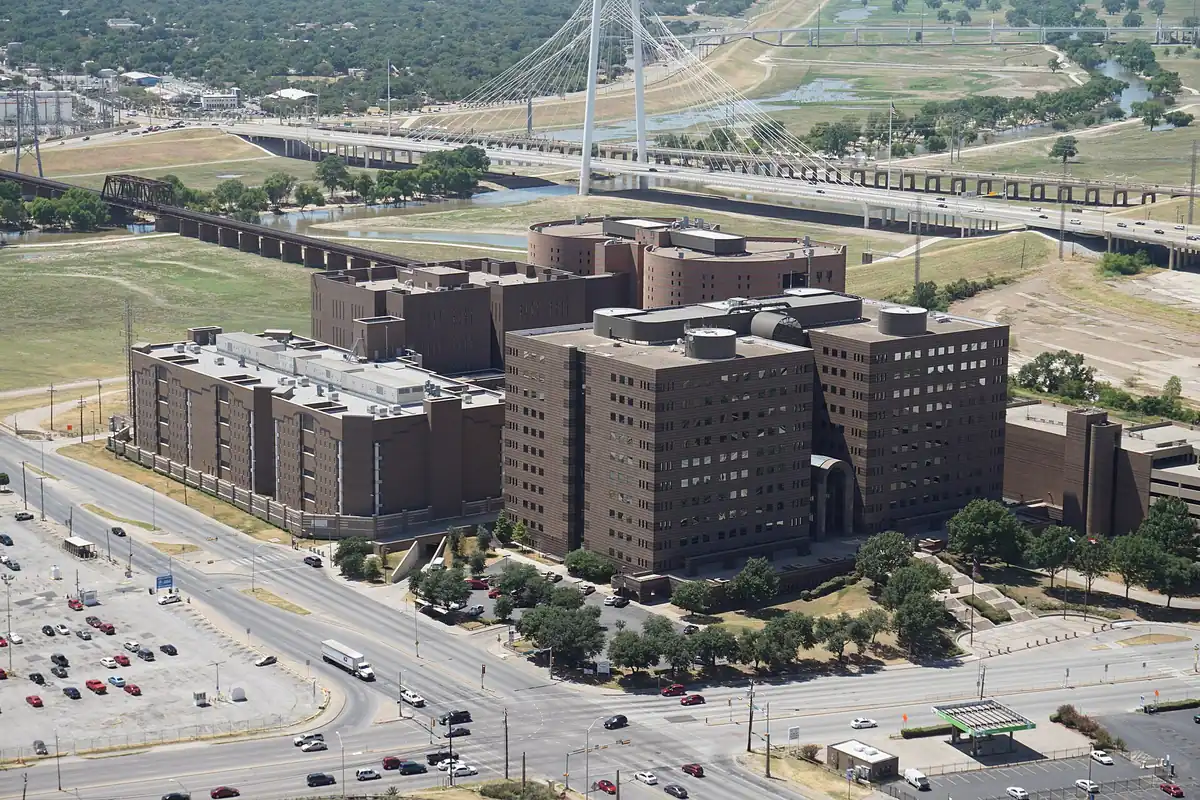

Diversion programs AI tools get asked about
People now ask a chatbot first whether they can get diversion in Dallas County. The District Attorney's own guide says the office funds and sponsors two diversion programs, A.I.M. for youth offenders and S.E.T. for people with mental illness, lists DIVERT as its adult drug court program and takes part in 13 other specialty courts or diversion programs (Dallas County DA). A defense page that names each one and says who may qualify gives an AI tool something precise to quote.
Federal matters for white-collar practices
White-collar work in Dallas runs through the federal courthouse at 1100 Commerce Street, the Earle Cabell Federal Building, where the Dallas Division sits and the U.S. Attorney's Office for the Northern District has its headquarters. That office covers 100 counties. Executives under investigation rarely search "criminal lawyer"; they search the agency, the statute or the word "subpoena," so the pages have to use those words.
What the campaign contains
- A page for each charge the firm wants, with the Texas Penal Code section and the court level written in a sentence.
- Arrest-to-magistrate steps in Dallas County, written for the relative on the phone.
- Federal investigation pages organized by agency and by document received.
- Bios that list jury trials and courts, kept identical across directories and the State Bar record.
- An FAQ built from the questions relatives put to chatbots after an arrest, answered with the county's own program names.
Our general approach for defense firms, wherever they practice, is set out under criminal defense SEO.
Construction practice
Construction disputes in Dallas: lien deadlines after the 2022 rewrite
The construction share of Dallas's workforce, shown in the workforce chart above, makes building disputes a market of their own. Owners, general contractors, subcontractors and suppliers each search for different things when a project goes unpaid, and the deadlines they look up changed when House Bill 2237's rewrite of Property Code chapter 53 took effect on January 1, 2022.
The general contractor's affidavit
An original contractor must file its lien affidavit with the county clerk by the 15th day of the fourth month after the month its work was completed, terminated or abandoned, or by the 15th day of the third month on a residential project (Property Code 53.052). A page that converts that rule into a calendar date for the reader's own project is more useful than one that quotes it.
The subcontractor's notice comes first
A subcontractor or supplier must send the owner and the original contractor a notice of claim in the statutory form, by the 15th day of the third month after the month the labor or materials were provided, or the second month on residential work (Section 53.056). Missing that notice can lose the lien before the affidavit deadline ever arrives, so the subcontractor's page leads with it.
Retainage the owner has to hold
During the work and for 30 days after completion, the owner must reserve 10% of the contract price or of the value of the work done (Section 53.101). Owners searching after a lien lands on their property need that rule explained from their side of the table.
Pages by role, not one "construction law" page
- Owners and developers facing a lien on a Dallas or Collin County property.
- General contractors collecting from owners and passing claims down the chain.
- Subcontractors and suppliers working against the notice calendar.
- Residential homeowners, whose deadlines and notices differ from commercial ones.
Business defamation
Competitor disputes, online reviews and the Texas anti-SLAPP motion
Business disparagement claims, competitor accusations and suits over online reviews reach Dallas litigators regularly, and nearly every one raises the same early question: will the defendant move to dismiss under the Texas Citizens Participation Act?
A 60-day window after service
A party sued over its exercise of free speech, petition or association may move to dismiss, and the motion must be filed within 60 days after service of the suit unless the parties agree to more time (Civil Practice and Remedies Code 27.003). Defense-side pages should give that deadline in their opening paragraph.
The commercial-speech exemption
The act does not apply to a suit against a person primarily in the business of selling or leasing goods or services when the statement arises out of that sale or lease and is aimed at actual or potential customers (Section 27.010(a)(2)). Whether a competitor's advertising falls inside that exemption is often the fight, which makes it a good subject for a firm's own analysis.
Who reads these pages
Company owners hit by a rival's claims, executives named in a former partner's posts and businesses deciding whether to sue over a review read these pages. Each needs the same statute explained from a different side, so we plan them as separate pages.
Personal injury
Injury practices and the streets where Dallas crashes concentrate
Dallas injury firms compete with heavy advertisers on the obvious searches. The city publishes something those advertisers rarely use: a map of where people are actually killed and badly hurt.
The high-injury network
When the City Council adopted its Vision Zero resolution on December 11, 2019, it recorded 558 traffic deaths and 3,750 severe injuries in Dallas from 2013 to 2017, and found that half of them happened on six percent of the city's streets (Resolution 19-1900). The city's current Vision Zero data page describes a high-injury network of 7% of roads that accounts for 62% of crashes resulting in death or severe injury. The action plan was adopted on June 8, 2022.
Corridor pages instead of a citywide template
An injury page about a named corridor, written with the city's own data, is local in a way no national firm's Dallas page is. It can describe the road, link the city's map and explain which agency investigates crashes there. We build those pages only for corridors where the firm actually takes cases, so they don't turn into a set of near-identical location pages.
Hiring for an injury practice: what to ask first
Search Console shows Dallas injury lawyers asking which marketing agency they should hire. Our answer is to hire whoever shows you, before you sign, which injury searches in your part of Dallas you can win in the next year and which would take several, and who backs it with your own data rather than a ranking report from one ZIP code. Local SEO for an injury firm is mostly that triage, plus a Business Profile and reviews kept in order. Firm-wide injury strategy, beyond the Dallas corridors, is on personal injury SEO.
Collin and Denton counties
Plano, Frisco and McKinney: law firm SEO along the northern corridor
Search Console shows firms looking for law firm SEO and website design in Plano, Frisco, McKinney, Carrollton, Garland, Grand Prairie and Denton. North of the county line the client base changes sharply, and so do the courts.
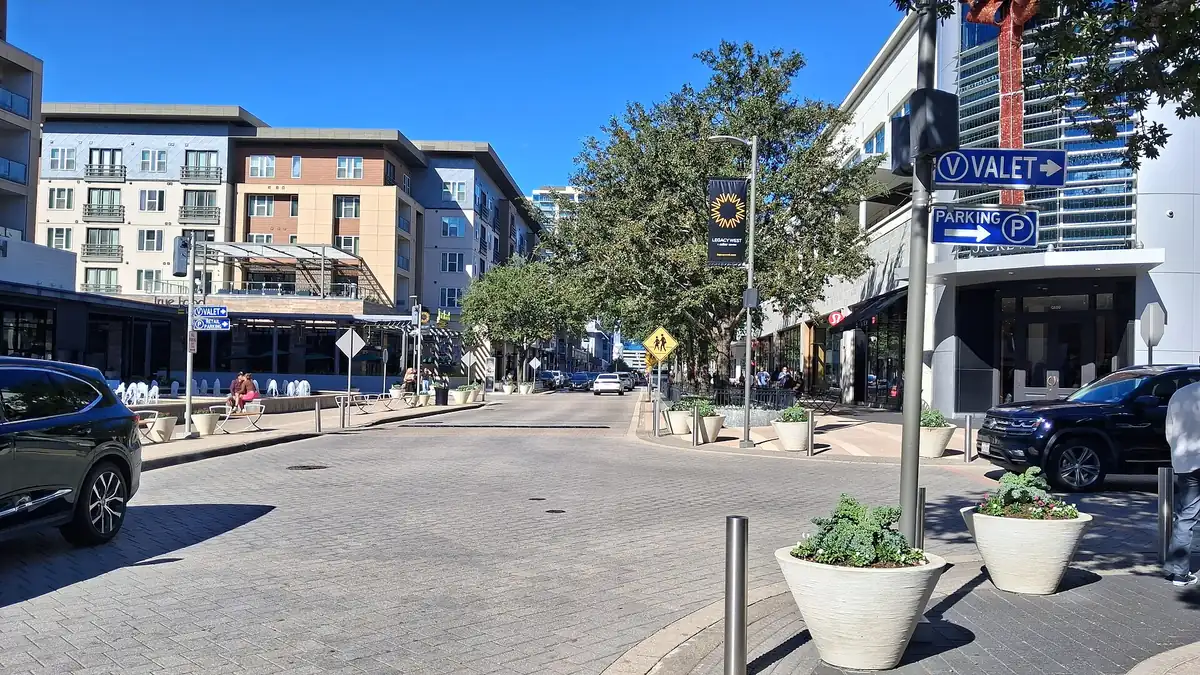

City limits that cross into Collin and Denton
The city's limits cross county lines. The regional planning council notes that the city also has portions in Collin, Denton, Kaufman and Rockwall counties (NCTCOG). A firm with clients in far north Dallas can be dealing with Collin or Denton County courts and records without ever leaving the city limits.
A different federal court north of the line
Collin and Denton counties sit in the Eastern District of Texas, Sherman Division, not in the Northern District that covers Dallas County, and the Eastern District holds court in Plano (E.D. Tex. General Order 03-15; USAO N.D. Tex.). A Plano company's federal dispute and a Dallas company's can land in different courts with different local rules, and a firm's federal practice pages should say so.
Office suburbs and household suburbs
In Frisco 65.8% of employed residents work in management, business, science or arts occupations, and in Plano 59.6%; in Garland the figure is 31.2% and in Grand Prairie 36.0%. Median household income runs from $150,212 in Frisco to $76,320 in Garland. For a firm, that means a Frisco page leads with executive employment, business formation and estate planning for high-asset households, while a Garland or Grand Prairie page leads with injury, family and immigration work. The same suburb template would fit neither.
Websites and brand
Attorney website design and branding for Dallas firms that sell to companies
This section answers the website design, branding and graphic design searches that come from Dallas, Plano, McKinney and Carrollton. For a firm with corporate clients, the site's job is narrower than it looks: to let a busy reader confirm in a minute that the firm handles their kind of matter, and to make the lawyers easy to check.
A site an in-house lawyer can scan
We organize business-firm sites by matter and by industry, with each attorney linked from the matters they handle. Navigation labels use the words clients search, not internal department names. Publications and alerts sit under the matter they discuss, where they support the page instead of hiding in a news archive.
A brand that holds up next to a national firm
On page one, a Dallas boutique often sits beside a national firm's office page. The site design carries the firm's own name, colours and type consistently across every template, with real photographs of the lawyers and offices. Consistency is what makes a smaller firm read as established; ornament doesn't.
Results, testimonials and firm names under Texas rules
Business firms like to show deals closed and cases won. Texas has specific rules on how past results, testimonials and trade names may appear, and we apply them to every template before launch; they are set out on our Houston page.
Built to keep what already ranks
A redesign that changes page addresses without redirects can erase years of rankings. Before any Dallas rebuild we list every page that brings traffic and map where each one goes. How a GLP build runs from start to finish is on law firm website design.
Lead quality
How can law firms in Dallas get more qualified leads online?
For many Dallas firms the problem isn't too few inquiries but too many of the wrong ones. It is also the first thing to listen for when you hire an SEO company for your law firm in Dallas: an agency that promises more leads before asking what a qualified one looks like will deliver volume, not matters.
Define qualified before measuring it
We start by writing down, with the partners, what a good inquiry is: the matter types, the minimum size, the counties or courts, and the side of the dispute the firm takes. That definition becomes the yardstick for the monthly report, so a month with fewer inquiries but more opened matters counts as a good month.
Pages that filter as well as attract
A business-litigation page that states the Business Court's $5 million thresholds, or an employment page that says the firm represents employers only, turns away readers it can't help. That lowers raw inquiry counts and raises the share worth a call. We write that filtering into the pages on purpose.
Intake questions that sort a company from a consumer
The contact form on a business page asks for the company name, the other party and the deadline, if any. That lets intake clear conflicts and route the inquiry to the right lawyer before anyone picks up the phone, and it gives us a clean way to count qualified inquiries by page.
Tracking a lead back to the page that earned it
Calls and forms are tagged with the page they came from, so the report can show which matter pages produce opened matters and which only produce traffic. Pages that bring the wrong readers get rewritten or narrowed before we add new ones.
If many inquiries are ones you can't take, send us a month of them, with names removed, and we'll show which pages they came from.
Start with the auditElsewhere in Texas
Fort Worth, Austin and the rest of GLP's Texas coverage
Fort Worth shares DFW Airport with Dallas, but its county, its Business Court division and its GLP page are separate: Fort Worth law firm SEO. Firms with offices further afield can read about Austin, Houston, San Antonio and El Paso, or see every city we serve. Employment firms will find our practice-specific method on SEO for employment lawyers, and the engagement itself is explained on how we work.
What Dallas attorneys want settled before a search engagement
A question about your own matters is better asked in the audit request form.
In short
GLP plans Dallas law firm SEO around who buys legal work here: companies, the managers who run them and the employees who work for them, alongside the injury, family and defense clients every city has. That decides which pages a firm needs, how they are written and where its name has to show up when someone asks an AI tool for counsel.
Does GLP take on firms based in Plano, Frisco and McKinney?
Yes. Firms with offices in Collin County are a normal part of our Dallas work, and the north section above explains how their search picture differs. One practical detail: a Plano or Frisco page should say that federal cases from Collin County go to the Eastern District of Texas, while state business disputes there can still reach the First Business Court Division, whose chambers include one in McKinney. Getting those two facts right is a quick credibility test for a reader who already knows them. E.D. Tex.; First Division.
Does this page cover Tarrant County firms too?
Attorneys looking for search engine optimization in Fort Worth, Texas, have a page of their own, where Tarrant County topics sit. The split matters more than it looks: Tarrant and Denton counties belong to the Business Court's Eighth Division, not the First, so a Fort Worth business litigator's pages name a different division from a Dallas one. Business Court divisions by county.
What should a Dallas family law firm put on its site about the standing order?
The Dallas County family district courts use a standing order that applies in every divorce and every suit affecting the parent-child relationship filed in the county. Among other things it bars either party from deleting content from any social network profile used or created by either party or a child, and from using a password to get into the other party's email, bank or social media accounts. It works as a temporary restraining order for fourteen days after filing and then continues until the court orders otherwise. A divorce page that warns about the social media clause answers a question clients usually think of too late. Dallas County standing order.
Is there anything Dallas-specific about SEO for an immigration practice?
Mostly the court. One detail we put on Dallas removal-defense pages: the Dallas Immigration Court is at 1100 Commerce Street, Suite 1060, the same address as the federal courthouse, within walking distance of the Akard and West End DART stations. Faxed filings are refused unless the judge or court staff requested them, a detail worth a line on any immigration firm's contact page. EOIR, Dallas Immigration Court.
Should a Dallas practice also target statewide Texas searches?
For practices that are statewide by nature, yes. Business Court litigation and the appeals that follow it, which all go to the Fifteenth Court of Appeals, are not tied to one city, and a Texas-wide page about them can rank where a Dallas page would not. For consumer practices Google ties results to place, so reaching beyond Dallas takes real offices or honest service-area pages rather than a list of Texas city names.
Do you manage PPC and search engine marketing for Dallas law firms?
Yes. For business-law practices the searches are few and specific, so campaigns run on narrow matter terms ("trade secret injunction," "noncompete lawyer") with tight geography, rather than on broad phrases like "dallas lawyer." For consumer practices the volume is larger and the competition heavier. Either way, an ad is advertising under the Texas rules, which we cover on our Houston page. The account-level method, from bidding to conversion tracking, lives on law firm PPC.
Can GLP design our logo and brand, or only the website?
Our website work starts from your existing brand: its name, colours and type. We design the site, its page templates and the visual system that carries the brand across practice pages and bios, but we don't present logo or identity design as a separate service. If you are rebranding, bring the new identity and we build from it.
Do you add schema markup to Dallas law firm websites?
Yes, as part of the build or the technical SEO work. For a Dallas firm that usually means organization and attorney markup that matches the bios, the office address written the same way as on the Business Profile, and FAQ markup only where the page shows the questions and answers on screen. Markup doesn't make a page rank by itself; it helps Google and AI tools read facts that are already on the page.
Which citations and directory listings matter for a Dallas law firm?
Fewer than most vendors sell. We check the listings a Dallas client or referral source actually uses, such as the State Bar of Texas profile, the major legal directories, the Dallas Bar Association's member listing where the firm belongs, and any chamber or industry group the firm is part of. Each one should show the same name, address and phone as the website. Listings bought only for volume do little and are hard to keep consistent.
Do you offer legal videography or IT support for Dallas firms?
Neither. Depositions, networks and document systems belong to other vendors; GLP's Dallas engagements stop at rankings, AI answers, the website and ad campaigns. If an audit finds that a slow or broken site is really a server problem, we write it up for whoever runs your hosting.
Do we need an agency with a Texas address?
No, and GLP doesn't have one: we run Dallas engagements remotely from our West Hollywood, California headquarters, with scheduled video meetings and a common folder of drafts. The Dallas research here, from court filings and job counts to Census tables and our own search survey, is public and cited where it appears.
How long does law firm SEO take to work for a Dallas firm?
Expect the first signs in Search Console within months and the bigger shifts after about a year, the timeline our how we work page sets out. Business-law pages often move faster than consumer pages, because fewer firms compete for each matter term; a new site, a recent domain change or a practice like car-accident injury in Dallas takes longer. No one can promise a date or a position.
Have your Dallas pages checked against the searches companies run
Describe the client you would like more of and give us your office address. You will have a written reply within 48 hours covering your Dallas rankings, map presence and AI mentions, and the matter pages worth adding.
Or call Call (661) 388-5526