For practices on both sides of the Delaware River

Lawyer SEO in Philadelphia, PA

Philadelphia law firm SEO for a market that crosses state lines.

Philadelphia firms compete with practices in the suburbs, across the river in South Jersey and down I-95 in Wilmington, under Pennsylvania advertising rules that were rewritten in 2024. GLP builds the website, the pages and the local search work for that market, with every page written to Rules 7.1 to 7.3.

Here: who a Philadelphia firm really competes with, what Pennsylvania's rewritten advertising rules require, and which courts and statutes your clients run into. GLP's general approach is set out under law firm SEO.

Free, done by a real person, and in your inbox within 48 hours.

The work, for a Philadelphia practice

What GLP builds for a Philadelphia law practice: search, site and local results

GLP is a lawyer SEO company that builds law firm websites and works on how they rank, including for firms in Philadelphia (or Philly, as plenty of searchers type it) and the counties around it. A Philadelphia client's shortlist can include a Cherry Hill office, a Main Line practice and a Wilmington firm, each governed by a different state's advertising rules. What follows is how that plays out in search results, in the site itself and under the Pennsylvania rules every page has to meet.

An audit before any plan

A real person reviews your site, your Google Business Profile and the firms that outrank you, then records a walkthrough you receive within 48 hours. If you hire us, the written strategy names the practice areas, counties and pages to work on first, and your attorneys approve anything that states the law.

A website built to carry the plan

Some Philadelphia sites can be fixed; others sit on a platform the firm doesn't control. If rebuilding is the better route, GLP designs and builds the new site, keeps every URL that already earns traffic and 301-redirects anything that has to move. The rebuild process is laid out further down, under attorney website design.

State pages that match your lawyers' admissions

A firm with lawyers admitted in Pennsylvania and New Jersey can serve clients on both sides of the river, and its pages have to say who is admitted where. State and county pages follow the admissions your lawyers actually hold.

Reporting tied to signed cases

Every report sets what search delivered against what intake signed, as far as the firm's tracking can connect the two. Where tracking can't make that link yet, we say so and help fix it.

Want to know how your firm shows up for Philadelphia searches today, and in AI answers? The audit is free.

Get My Free Audit

The starting point

Where a Philadelphia firm stands before any page is written

Seven numbers and rules come up in almost every Philadelphia plan we write. Each links to its source, and each changes a decision about pages, profiles or copy.

Number or ruleWhat it tells a firmSource
13,617 active attorneys in Philadelphia County28.8% of the 47,249 active attorneys based in Pennsylvania work from this one county.Disciplinary Board, 2025 Annual Report
930 law offices in the city, 2,368 in eight nearby metro countiesMost of the offices competing for Philadelphia clients sit outside the city, many across a state line.BLS QCEW, 2024
63,153 South Jersey residents working in Philadelphia CountyClients and searches cross the river every day, in both directions.Census commuting flows, ACS 2016-2020
4,277 mass tort cases pending at the end of 2023National firms market Philadelphia filings, which crowds product-injury searches.First Judicial District, 2023 Annual Report
$50,000Civil claims at or under this amount go to compulsory arbitration before a panel of three lawyers.Phila. Civ. R. 1301
Rules 7.1 to 7.3 onlySince November 14, 2024, Pennsylvania's advertising rules sit in three rules; 7.4, 7.5 and 7.7 were folded in.Disciplinary Board notice, Nov. 18, 2024
The office's city or town, in every adPages for places where the firm has no office have to say where its lawyers do practice.Pa. R.P.C. 7.2(h)

Who you compete with

A legal market split by the Delaware River and by state lines

Federal statisticians treat this city, Camden and Wilmington as one metropolitan economy that crosses into New Jersey, Delaware and Maryland. The law offices that compete for a Philadelphia client are spread the same way. In 2024 the Bureau of Labor Statistics counted 930 private law offices in Philadelphia County, and 2,368 more in eight nearby counties of the metro area: 1,280 in the Pennsylvania suburbs, 640 across the river in South Jersey and 448 in New Castle County, Delaware.

Private law offices in Philadelphia and eight nearby metro-area counties, 2024

Annual average count of establishments, offices of lawyers. Bars coloured by state.

Use the arrow keys to read each value.

Private law offices in Philadelphia and eight nearby metro-area counties, 2024
CountyPrivate law officesJobs at those offices
Philadelphia, PA 930 15,375
Montgomery, PA 518 3,424
New Castle, DE 448 3,721
Camden, NJ 347 2,520
Delaware, PA 272 1,092
Bucks, PA 254 1,436
Chester, PA 236 1,778
Burlington, NJ 213 1,858
Gloucester, NJ 80 335

Source: U.S. Bureau of Labor Statistics, Quarterly Census of Employment and Wages, 2024 annual averages, NAICS 54111 (offices of lawyers), private ownership.

Philadelphia has the most law offices of any single county here, but 72% of the region's offices sit outside it.

Why the suburbs and South Jersey show up in Philadelphia results

People cross the river for work, and their legal problems follow them. The Census Bureau's commuting tables for 2016 to 2020 count 30,496 Camden County residents, 16,604 from Burlington County and 16,053 from Gloucester County working in Philadelphia County. A Cherry Hill resident hurt on the job in Center City may search for a Philadelphia lawyer; a Philadelphian hit on Route 70 needs someone who can practice in New Jersey. Firms in King of Prussia, Media and Cherry Hill compete for both, so when we size up a practice area for a Philadelphia firm, the list of rivals includes their offices, not only the ones inside the city line.

Different pay, different firms

The same federal data shows what kinds of offices these are. Average annual pay at a Philadelphia law office was $181,250 in 2024; in New Castle County it was $217,528, higher than in the city, while Bucks, Delaware and Gloucester counties ran between $94,842 and $110,097. Philadelphia offices average about 16 jobs each and New Castle County offices about 8; in the suburban counties on both sides of the river the average runs from four to nine. The firm that outranks you in a Bucks County search is likely a small local practice, and a Philadelphia page has to beat both kinds.

Consequences for a Philadelphia page plan

  • County pages only where the firm has lawyers admitted in that state and a real reason to serve the county.
  • Practice pages that name the court a client would actually face, Pennsylvania or New Jersey, instead of one generic "local court".
  • Admission details on every attorney bio, state by state, so a reader in Camden can see who can take a New Jersey matter.

Cross-river practice

Admitted in Pennsylvania, New Jersey or Delaware: what changes on each page

Plenty of Philadelphia practices carry New Jersey admissions as well, and a few carry Delaware ones. The three states start from the same model rules but diverge exactly where a website feels it: what a page must disclose, how a certification is worded, how long copies of the site must be kept. A page aimed at Camden readers answers to New Jersey's rules as well as Pennsylvania's. Here is how the three compare on the points that touch a site.

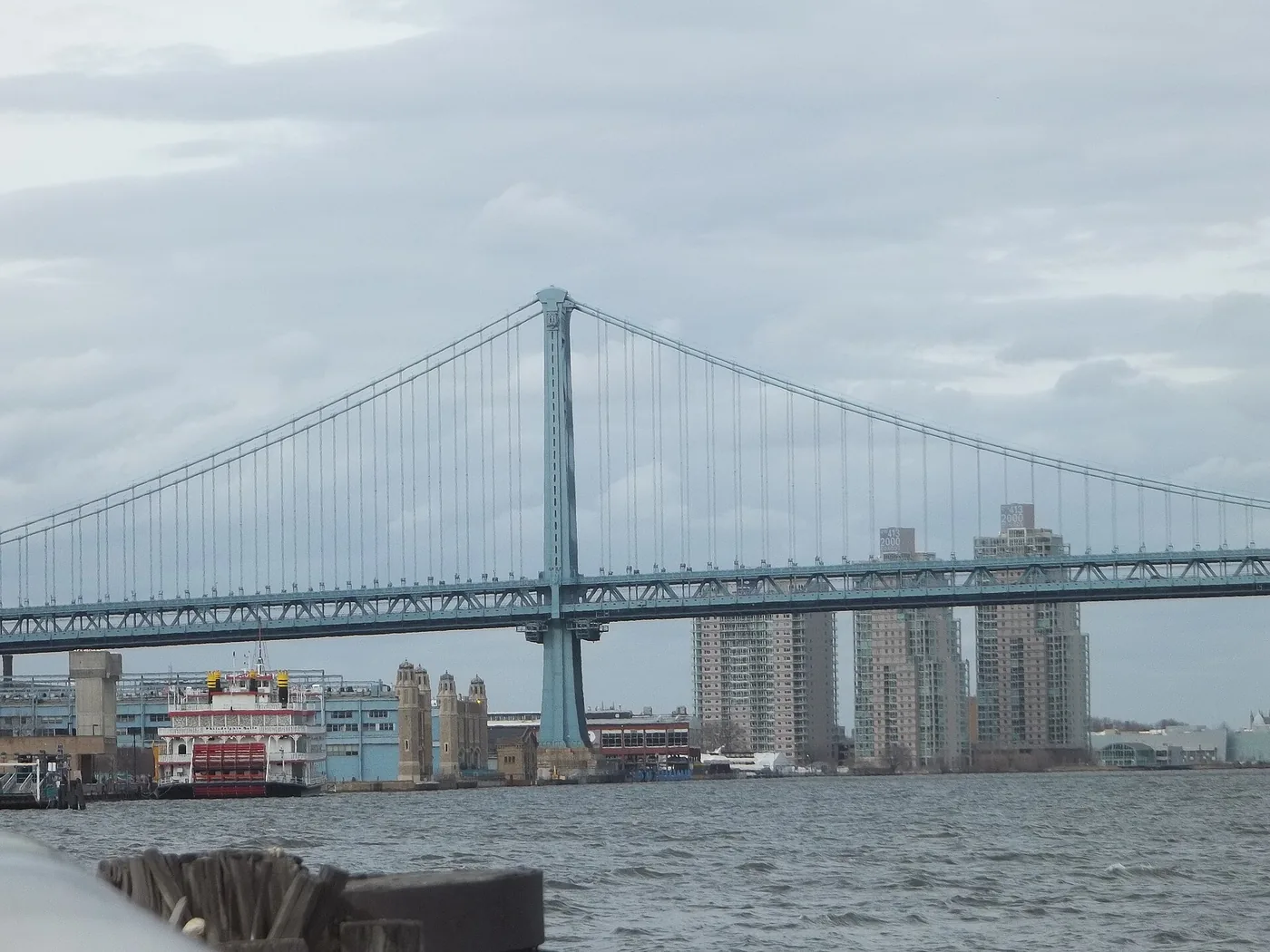
The Benjamin Franklin Bridge spanning the Delaware River, seen from Penn's Landing in Philadelphia, with Camden on the far bank.
The Benjamin Franklin Bridge from Penn's Landing, with Camden on the far bank. The 30,496 Camden County residents who worked in Philadelphia County cross this river, and so do their cases, which is why a page for them has to say which side's lawyers it is offering. Photo: Gary Miotla, CC BY 3.0, via Wikimedia Commons.
On the pagePennsylvaniaNew JerseyDelaware
Who and whereWhere the handling lawyers are based, and who answers for the ad, with contact details: Rule 7.2(h), (k).Where a firm name includes a lawyer not licensed in New Jersey, at least one New Jersey lawyer responsible for the New Jersey practice must be named: RPC 7.5(b).A street address as well: a named lawyer or firm answering for the ad, with its office address (Rule 7.2(c)).
Lawyers in other statesBios flag any listed lawyer who isn't licensed in Pennsylvania (Comment 6 to Rule 7.1).All lawyers of the firm, wherever the firm name is used, must show the limits of those not licensed in New Jersey: RPC 7.5(b).Same multi-jurisdiction wording as Pennsylvania's comment: Rule 7.5(b).
"Certified" and "specialist"Certification by a court-approved organization, named; an out-of-state certification with the issuing state and a statement that the lawyer is not certified in Pennsylvania; or a verifiable "specialist" claim with a not-certified disclaimer, in one field only: Rule 7.2(c).Only the court's own wording, for example "Certified by the Supreme Court of New Jersey as a Civil Trial Attorney", and no other combination of words: Reg. 402:3.A certification only from an organization approved by a state authority or accredited by the ABA, with the organization named: Rule 7.4(d).
Rankings and comparisonsAn unsubstantiated comparison may mislead; a qualifying disclaimer can prevent that (Comment to Rule 7.1).A comparison must name the comparing organization, be substantiated and carry "No aspect of this advertisement has been approved by the Supreme Court of New Jersey": RPC 7.1(a)(3).Judged under the general misleading-communication rule, 7.1.
Copies of the websiteNo current requirement; the two-year retention paragraph was repealed in 2024.All website material captured at least monthly and kept for three years: RPC 7.2(b).No retention paragraph in Rules 7.1 to 7.5.
Mail or messages aimed at a specific personDirect mail to a known person may be sent; calls, visits and texts may not (Rule 7.3)."ADVERTISEMENT" in capitals on the letter and envelope, and no contact within 30 days of a specific mass-disaster event: RPC 7.3(b).The words "Advertising Material" outside, and at both ends of any recording or email: Rule 7.3(c).

New Jersey text as published by the New Jersey courts in their compilation of the Rules of Professional Conduct; Delaware text from the Delaware courts' current edition. The New Jersey compilation on the courts' site runs through amendments effective September 1, 2018, so a New Jersey page should be checked against the current official text before it goes live.

Pages for South Jersey readers

If your firm has New Jersey-admitted lawyers and wants Camden, Burlington or Gloucester County cases, those pages need a New Jersey-licensed lawyer named as responsible, the New Jersey courts the reader would face, and a backup schedule that meets New Jersey's monthly capture rule. If no lawyer at the firm is admitted there, the right page is one that says so and explains what the firm can handle in Pennsylvania, not one that implies otherwise.

Bios that carry the admissions

Attorney bios are where readers and AI tools look first for "is this lawyer allowed to take my case". Each bio should list every state admission with its year, and, where a lawyer holds a New Jersey certification, the exact court wording plus the statement Pennsylvania requires that the lawyer is not certified in Pennsylvania.

Thirty miles down I-95

Delaware attorneys near Philadelphia: SEO, paid clicks and Local Services Ads

Search Console shows Delaware searches reaching this page: "delaware attorney seo company", "delaware law firm seo service", "delaware lawyer google ads consultants" and "delaware attorney google lsa consultants". New Castle County is a different market from Philadelphia. It had 448 private law offices in 2024 with an average annual pay of $217,528, the highest of any county around the city, and it is home to a court with a national docket.

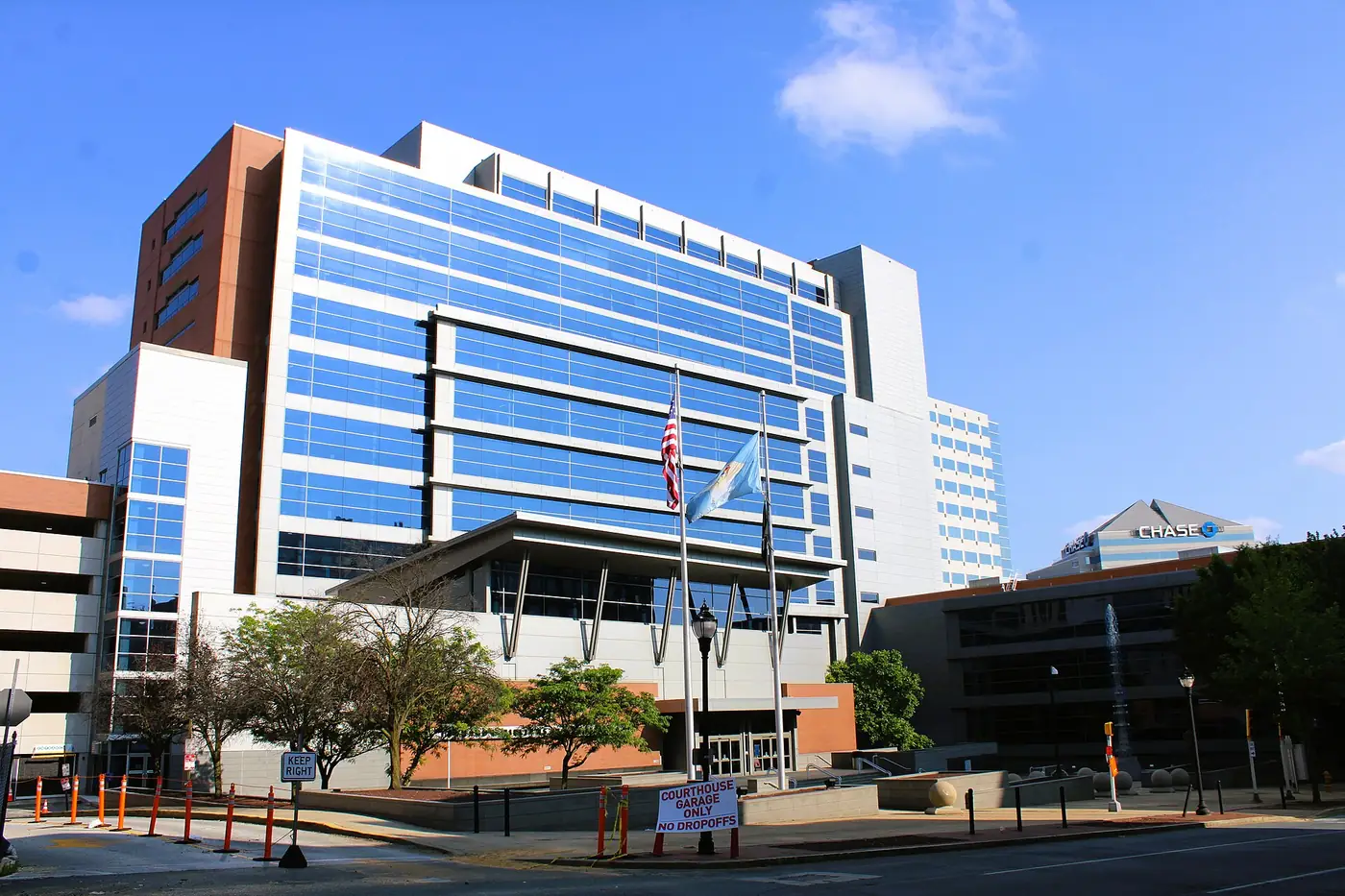
The Leonard L. Williams Justice Center, a tall modern courthouse in downtown Wilmington, Delaware.
The Leonard L. Williams Justice Center at 500 North King Street, Wilmington, where the Court of Chancery sits for New Castle County. Corporate clients searching for Chancery counsel already know the building and the court's reputation. Photo: Farragutful, CC BY-SA 4.0, via Wikimedia Commons.

A court with a national audience

The Delaware Court of Chancery describes itself as the forum for disputes over the internal affairs of the "thousands upon thousands" of companies organized in Delaware. Searches about it come from corporate counsel and founders across the country, not only from Wilmington. A Delaware firm's pages on Chancery practice compete nationally; its pages on family, injury or criminal matters compete locally. The two need separate plans.

Paying for clicks or for leads in Delaware

Paid search lets a Wilmington firm appear for Philadelphia-area searches it can't yet win organically, but the ads themselves are attorney advertising under Delaware's rules, which require the name and office address of a responsible lawyer or firm in the communication. Local Services Ads charge per lead and show the Google Verified badge after Google's background and license checks. Many Delaware firms run both and should keep them in separate reports, because the leads behave differently. How we structure and measure campaigns is explained under PPC for law firms.

Admitted in Delaware and Pennsylvania

A lawyer admitted in both states can serve Delaware County, Pennsylvania, and New Castle County, Delaware, from one office, but the pages for each side follow that side's rules. A page aimed at Pennsylvania readers carries the Pennsylvania office-location line; a Delaware page carries the responsible lawyer's office address. One template can hold both if it is built that way from the start.

204 Pa. Code, chapter 81

Pennsylvania's lawyer advertising rules since the November 2024 rewrite

On October 15, 2024 the Supreme Court of Pennsylvania amended its advertising and solicitation rules, effective November 14, 2024. The Disciplinary Board's notice explains that Rule 7.4 (fields of practice and specialization), Rule 7.5 (firm names and letterheads) and Rule 7.7 (lawyer referral services) were removed "as much of their content is addressed under the other rules", and that the old two-year duty to keep copies of ads was repealed. Rule 7.6 is also gone. The whole subject now sits in Rules 7.1 to 7.3 of 204 Pa. Code chapter 81 and their comments. Marketing copy, vendor templates and even some bar handouts still cite the old numbers, so the first thing we check on a Pennsylvania site is which version its disclaimers were written for.

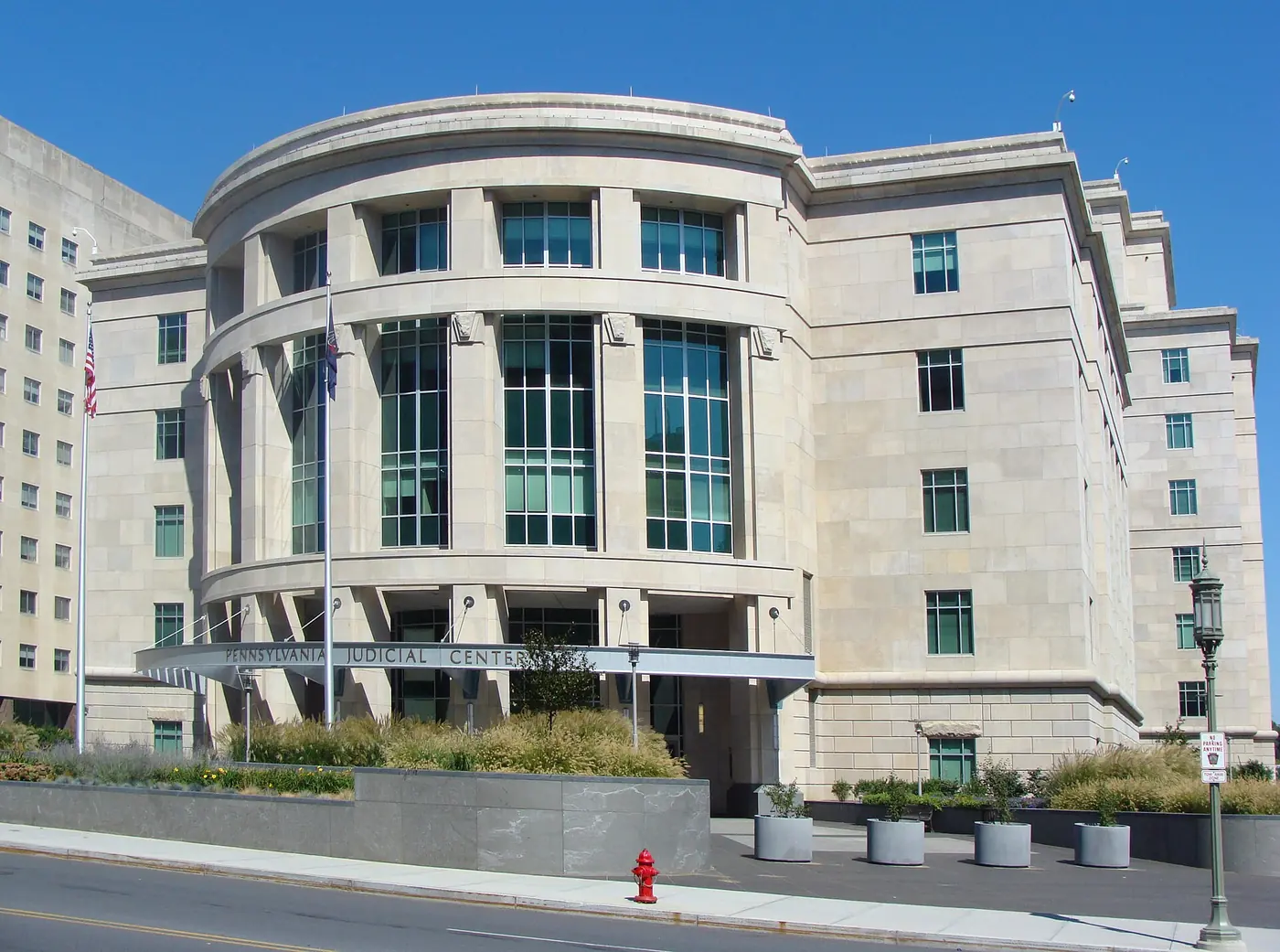
The Pennsylvania Judicial Center in Harrisburg, a stone building with a columned entrance, seen from across the street.
The Pennsylvania Judicial Center in Harrisburg, where the Disciplinary Board keeps its main office (Suite 5600). Complaints about a Philadelphia firm's advertising are judged under the three rules described here. Photo: Niagara, CC BY-SA 3.0, via Wikimedia Commons.

Rule 7.1: the misleading-communication test

The rule itself is one sentence: no false or misleading communication about the lawyer or the lawyer's services, including a true statement that leaves out a fact needed to keep it from misleading. Its comment carries the detail. Truthful reports of past results may mislead if they lead a reasonable person to expect the same outcome "without reference to the specific factual and legal circumstances of each client's case". Unsubstantiated comparisons with other firms may mislead too, though "an appropriate disclaimer or qualifying language" can prevent that finding.

Calls to action that imply a duty

Comment 2 adds a test aimed squarely at marketing: a truthful statement is misleading if it makes a reasonable person believe they must take further action when no action is required. A banner telling accident victims they "must contact an attorney before speaking to any insurer", or a pop-up implying a deadline the reader isn't actually under, fails it. Our calls to action offer a consultation; they don't announce obligations.

What replaced Rule 7.5: names, web addresses and handles

What used to be Rule 7.5 now lives in Comment 5 to Rule 7.1. A firm may use its lawyers' names or a trade name that isn't misleading, and it "may be designated by a distinctive website address, social media username or comparable professional designation that is not misleading". The comment warns that a trade name built on a place name can read like public legal aid, and may then need an express statement that the firm is not a legal aid organization. A keyword-rich domain such as one built on "Philadelphia" and a practice area is judged the same way.

Firms with offices in several states

Comment 6 lets a firm use one name in every jurisdiction where it has offices, but the lawyers listed for an office must show the jurisdictional limits of those not licensed where that office is. Comment 7 adds that lawyers who are not a firm may not present themselves as one, which rules out shared "network" brands that look like a single practice.

Pa. R.P.C. 7.2

What Rule 7.2 requires on every Philadelphia page and ad

Rule 7.2 is where Pennsylvania gets specific. Its paragraphs, lettered in the Pennsylvania Code, decide what has to appear on a page, what can't, and what a firm may pay for. These are the paragraphs that shape templates and ad copy.

7.2(h)

The office's city or town

Every advertisement and written communication must disclose the city or town of the office where the lawyers who will do the work principally practice, or the county if the office is outside a city or town. Comment 14 says why: to stop readers concluding that a lawyer practices in their hometown when the practice is elsewhere. A Delaware County page from a Center City firm says "Philadelphia" plainly.

7.2(k)

A responsible lawyer, with contact details

Any communication under the rule must name at least one lawyer or firm responsible for its content, with contact information, which Comment 19 says can be a website address, phone number, email address or office location. The footer is the natural home for it, since it then appears on every page and landing page.

7.2(g)

"No fee unless" and advertised prices

An ad that says no fee will be charged without a recovery must disclose that the client will owe certain expenses, if that is the case. A specific fee or rate that is advertised must be honored for at least 90 days, or a year for media published annually. A price posted on a wills or uncontested-divorce page is therefore a 90-day commitment.

7.2(e)

Endorsements, paid and famous

A paid endorsement must say the endorser is paid or otherwise compensated, and no ad or public communication may carry an endorsement by a celebrity or public figure. That covers a well-known local athlete in a video as much as a TV spot.

7.2(f)

Actors, re-enactments and stock photos

A non-lawyer may not portray a lawyer. A client portrayed by a non-client, a re-enacted scene, or pictures or persons that are not actual or authentic need a disclosure that the depiction is a dramatization. On a website that includes a stock photo captioned as a client, so stock images either get an honest caption or come out.

7.2(c)

"Specialist", for a single field

Short of certification, a lawyer may claim a specialty only if it can be objectively verified from experience, training or education, with a disclaimer that the lawyer isn't certified in it, and in no more than one field. That limit reaches title tags and ad headlines: "Philadelphia specialist in injury and divorce" breaks it twice.

7.2(j)

Practice areas the firm really handles

A firm may not advertise that it takes only, or concentrates on, a type of case unless that work is a principal part of its practice, and may not advertise as a pretext to refer the cases out. Practice pages therefore follow the firm's real caseload, not the list of searches with the most volume.

7.2(b) and (i)

What a firm may pay for

A lawyer may not pay anyone for recommending the lawyer, but may pay the reasonable cost of permitted advertising; Comment 3 names online directories, domain registrations, internet ads and website designers. A firm that pays toward another firm's ad, through a co-op or otherwise, must disclose every payer's name and principal office in that ad, and how any referrals are made.

Rule 7.3 and paid lead sources

Where Pennsylvania draws the solicitation line: texts, reviews and Local Services Ads

Search Console shows Pennsylvania firms looking for help with Google's Local Services Ads ("pennsylvania law firm google lsa company"). Those ads, intake follow-ups and review requests all sit near the line Rule 7.3 draws between advertising and solicitation, and Pennsylvania draws it in a few places other states don't.

Websites and search results are not solicitation

Comment 1 to Rule 7.3 says a communication is not a solicitation if it is directed to the general public, "such as through a billboard, an Internet banner advertisement, a website or a television commercial", or if it responds to a request for information or is "automatically generated in response to electronic searches". Organic pages, paid search ads and an auto-reply to a web form are all on the advertising side.

A text message counts as live contact

Under Rule 7.3(b), a lawyer may not pitch a prospect face to face or on a live call when money is a significant motive, other than fellow lawyers and people with a family, close personal or prior professional relationship to the firm. Comment 2 includes text messages in "live person-to-person contact", while chat rooms and other written messages a person can easily ignore are not. A firm can reply by text to someone who asked to be contacted; it can't text accident victims who never reached out. Targeted direct mail is allowed under Rule 7.3(c), and Pennsylvania's current rule has no waiting period after an accident.

Paying Google per lead, or a lead generation seller

Paying per lead is permitted as the cost of advertising. A lead seller is acceptable under Comment 4 to Rule 7.2 so long as nothing it says vouches for the firm, presents the match as free, or claims to have reviewed the person's case before choosing a lawyer. Comment 2 explains that a directory listing lawyers by practice area, without more, is not a recommendation. The ad text and the profile behind a Local Services Ad are still communications under Rule 7.1, so the same results and comparison limits apply.

Asking for reviews, and answering them

The Pennsylvania Bar Association's Formal Opinion 2014-300 on social media says lawyers may solicit client reviews and respond to them, must monitor reviews for accuracy, and must correct or remove a review they know to be false or misleading. It also notes that, under the Association's earlier Formal Opinion 2014-200, a lawyer may not reveal client confidences when answering a negative review. Both are advisory opinions, not binding rules, and 2014-300 cites the paragraph numbers in force before 2024.

Running Local Services Ads alongside SEO? Start with the free audit of how your firm appears in Google today, and mention the account when you request it.

Request the audit

Mass torts in Room 622

Philadelphia's mass tort program, and where a local injury firm can still win searches

Philadelphia draws injury cases from far beyond the city. The Court of Common Pleas says its Complex Litigation Center was the first courthouse in the country designed only for mass tort cases when it opened in 1992, and it has sat in Room 622 of City Hall since 2002. Its active programs include asbestos, hair relaxer, Johnson & Johnson talc, paraquat, Roundup, tobacco, vena cava filters and Zantac.

The carved stone south facade of Philadelphia City Hall, with columns, statues and an arched entrance.
Philadelphia City Hall, seen from Broad Street. Room 622 inside is the Complex Litigation Center, which is why product-injury searches about Roundup or talc so often mention Philadelphia. Photo: Magiluke, CC BY-SA 4.0, cropped, via Wikimedia Commons.

The First Judicial District's latest annual report, for 2023, counts 849 new mass tort filings that year, 450 of them paraquat and Roundup cases and 256 asbestos, and 4,277 such cases still open when the year closed. It also reports the program's first Roundup trials, with plaintiff verdicts of $175 million and $3.5 million. Those numbers sit inside a civil docket that looks like this:

Pending civil cases in the Court of Common Pleas' major programs, end of 2023

30,999 pending records in all.

Use the arrow keys to read each value.

Pending civil cases in the Court of Common Pleas' major programs, end of 2023
ProgramPending cases, end of 2023
Compulsory arbitration 9,064
Major jury 8,694
Mass tort 4,277
All other programs 8,964

Source: First Judicial District of Pennsylvania, 2023 Annual Report (civil inventory). "All other programs" is the remainder of the 30,999 total.

Mass torts were about one case in seven; ordinary claims made up most of the docket.

Who is bidding on "lawsuit" searches

Searches such as "roundup lawsuit" or "talc lawsuit lawyer" draw national firms and lead buyers whether or not the searcher lives near Philadelphia, because filings land here. A local injury firm with a few lawyers rarely wins those searches and rarely needs to. Unless the firm handles mass torts as a principal part of its practice, Rule 7.2(j) also argues against advertising for them only to refer the cases on.

The cases that stay local

The docket above is the better guide. Compulsory arbitration (claims of $50,000 or less, heard by a panel of three court-certified attorneys) and major jury cases together were about 57% of the inventory. Car crashes, falls, and work and transit injuries in specific neighborhoods are what Philadelphians search for locally, and those pages can win when they explain how a case of that size actually moves through this court.

Personal injury pages

Limited tort or full tort: the question every Pennsylvania crash page has to answer

Searches like "philadelphia personal injury lawyer seo" come from injury firms, and the most distinctive thing a Pennsylvania crash page can explain is the tort option on the reader's own insurance policy. Under 75 Pa.C.S. § 1705, a driver chooses between full tort and limited tort. A person bound by the limited tort election can still recover economic loss, but "unless the injury sustained is a serious injury" is "precluded from maintaining an action for any noneconomic loss", which is pain and suffering in plain terms. A driver who never signs and returns the election form is treated as having chosen full tort.

Exceptions a page should list

The statute lifts the limited-tort bar in situations a reader may recognize from their own crash:

  • The at-fault driver is convicted of, or accepts Accelerated Rehabilitative Disposition (ARD) for, driving under the influence.
  • The at-fault driver was in a vehicle registered in another state, common on roads shared with New Jersey and Delaware.
  • The at-fault driver intended to cause the injury, or had no insurance.
  • The claim is against a business over a defective vehicle or part.
  • The injured person was riding in a vehicle other than a private passenger vehicle, such as a bus.

Pages that answer it well

The Pennsylvania Insurance Department's own auto insurance guide tells drivers that limited tort saves on premiums but blocks damages "such as payments for pain and suffering" unless an exception applies. A crash page that shows readers where to find the election on their declarations page, explains "serious injury" in the statute's terms and walks through the exceptions answers the question most callers have, before they call. A separate page for SEPTA bus and trolley riders can take the vehicle exception further.

Consumer and bankruptcy practices

Pennsylvania's debt statutes and the websites of debt relief law practices

Debt practices looking for local SEO help reach this page too, and in Pennsylvania the words such a practice puts on its site carry legal weight. The state regulates commercial debt help under two laws, and both exempt lawyers, on conditions that a website can undermine.

The Debt Settlement Services Act's attorney exemption

The Debt Settlement Services Act of 2014 excludes legal services provided in an attorney-client relationship by a lawyer authorized to practice in Pennsylvania. Its section on who the act doesn't cover then exempts an attorney "not otherwise engaged in or holding himself or herself out to the public as being engaged in debt settlement services" who negotiates with creditors in the normal course of legal practice, and says the exemption doesn't apply if the attorney is paid by a settlement provider. The older Debt Management Services Act of 2008 exempts Pennsylvania-admitted attorneys who do this work within an attorney-client relationship.

What that means for the copy

A page that sells "debt settlement services" in the language of a settlement company invites the question the act asks. Pages for a debt-relief law practice describe legal representation: the lawyer's analysis of the debts, negotiation as counsel, and bankruptcy as one of the options. Whether a given practice fits an exemption is the firm's legal judgment, not ours; our job is copy that doesn't blur it.

Bankruptcy filings from Philadelphia

When a page sets bankruptcy beside settlement, it should name where a Philadelphian would file: the Eastern District of Pennsylvania's bankruptcy court on Market Street, in the Nix federal courthouse, which also keeps an office in Reading.

Rebuilds and redesigns

Rebuilding a Philadelphia firm's website without losing its rankings

Searches like "attorney website design philadelphia" and "lawyer website design philadelphia" also reach this page. Firms asking that are usually weighing whether their current site can carry an SEO plan at all. Sometimes it can, with fixes. When it can't, a redesign has to protect what already ranks, and that is where most redesigns go wrong.

  1. Every URL on the old site goes on a list first. We record which addresses earn clicks and impressions in Search Console, keep the ones that rank, and map a single 301 redirect for anything that has to move.
  2. Old and new are compared before launch. Titles, headings, canonical tags and structured data are checked page by page against the old site, so nothing that Google relied on disappears by accident.
  3. Pennsylvania's disclosures go into the templates. The office-location line, the responsible lawyer's name and the testimonial and fee wording described in the Pennsylvania rules section are built into the page templates, so new pages inherit them.
  4. Accessibility is tested, not bolted on. We aim for WCAG 2.2 Level AA, test with the Axe engine and by keyboard alone, and don't use overlay widgets.
  5. Calls are tracked from the first day. Tracking numbers show which page or channel a call came from, while your main number stays the same in the footer, on the Business Profile and in structured data.
  6. Search Console is watched after launch. Crawl errors and drops in the weeks after go-live are the signal that a redirect or page was missed.

Cali Lemon Lawyers: off a locked platform

Our most direct published example of what a rebuild can make possible is Cali Lemon Lawyers, a California lemon law firm. Its site sat on an agency's locked content system that couldn't be fully optimized. We moved it to WordPress, built pages for specific locations and car manufacturers, published lemon law content and handled technical SEO, local SEO, link building and tracking. Monthly organic visitors went from 240 to 54,700, as shown in Search Console screenshots on the case study; by GLP's account of the engagement, revenue from organic search went from $0 to about $500,000 a month in roughly a year, at about 50 signed retainers a month. Those figures are from a California firm and haven't been re-pulled since the study was written.

Prior results do not guarantee a similar outcome. See our earnings disclaimer.

Static build or WordPress

By default we build static sites, generated in advance and served as plain HTML, which load quickly and leave no plugins to patch; GLP's own site runs on Astro, a static framework. The tradeoff is that template changes need a developer. If your team needs to edit pages in WordPress itself, that is a reasonable choice, and we talk through speed, editing and upkeep before anything is built. The questions we ask before quoting a build are listed under law firm website design.

AI search and AI tools

Philadelphia AI legal marketing, and what the 2024 joint ethics opinion asks of lawyers

Firms reach this page searching for a "philadelphia ai legal marketing agency" or a "chatgpt marketing agency near me for lawyers". Behind those searches sit two different needs: AI search optimization, meaning showing up by name in the answers ChatGPT, Perplexity and Google's AI Overviews give, and producing the firm's own content with AI tools without breaking the rules. Pennsylvania lawyers have written guidance on the second.

Joint Formal Opinion 2024-200

The Pennsylvania Bar Association's ethics committee and the Philadelphia Bar Association's Professional Guidance Committee issued a joint opinion on lawyers' use of artificial intelligence in 2024. It concludes that "with appropriate safeguards, lawyers can utilize artificial intelligence" under the Pennsylvania rules, and it names the safeguards: lawyers must verify that citations are correct and accurately summarize what they cite, must not put a client's confidential information into an AI tool that lacks adequate confidentiality and security protections, and must make sure AI-generated content is "truthful, accurate, and based on sound legal reasoning". Like the review opinion, it is advisory and doesn't bind the Disciplinary Board.

Applied to a firm's website

  • A page drafted with AI help is still the firm's communication under Rule 7.1, so every statute, deadline and court fact on it is checked against the source and linked.
  • Case-result write-ups never start from a client file pasted into a chatbot; they start from what the firm has already made public or has written consent to publish.
  • Your attorneys approve anything that states the law before it goes live, as on every GLP engagement.
  • AI-generated images of "clients" or "attorneys" would need the dramatization disclosure under Rule 7.2(f), so they are better left off a law firm's site.

Getting named in AI answers about Philadelphia

AI tools lean on pages that state facts clearly and on records that agree with each other. For a Philadelphia firm the facts most worth stating are the local ones this page keeps returning to: which court a case of that size goes to, what limited tort means for the reader, which state's lawyers can take a South Jersey matter. The broader method sits on our AI SEO for law firms page, with a separate walkthrough of how Google picks AI Overview sources.

Consulting CMO

Legal marketing consulting for Philadelphia firms juggling several vendors

"Legal marketing consultant philadelphia", "philadelphia law firm marketing consultant" and "digital marketing for legal firms philadelphia" bring a different kind of firm to this page: one that already pays for TV or radio, a Local Services Ads account, a directory listing and an SEO vendor, and can't tell which of them produces signed cases. GLP built its Consulting CMO engagement for that situation.

What the engagement covers

Everything in our SEO and AI search engagement, plus oversight of paid media, intake and conversion, and the firm's other marketing vendors, with reporting that follows spending through to cases. Strategy calls with reporting are weekly, because there are more moving parts.

Why it fits a crowded market

In a metro where national mass tort advertisers, suburban firms and South Jersey practices bid on the same words, a firm needs one owner deciding where each dollar goes. The full scope is on our fractional CMO for law firms page.

Pennsylvania lawyer SEO

Lawyer SEO across the rest of the Commonwealth

"Pennsylvania lawyer seo services", "pennsylvania lawyer seo agency", "pennsylvania lawyer seo expert" and "pennsylvania law firm seo service" reach this page from across the state. The Disciplinary Board's 2025 annual report counts 13,617 active attorneys in Philadelphia County, 8,688 in Allegheny County and 2,385 in Dauphin County, with the four suburban counties around Philadelphia filling out the top of its list. Allegheny is Pittsburgh's county; Dauphin holds the state capital, Harrisburg, and the courts and agencies that come with it.

The same rulebook, different markets

Everything about Rules 7.1 to 7.3 on this page applies statewide, so a Pittsburgh firm writes to the same office-location, fee and specialist rules as a Philadelphia one. What changes is who else is competing for the same searches, which county's courts the client will face and how far the map results reach. We don't have a GLP page for Pittsburgh yet; firms there can start from the areas we serve list or the audit.

Up and down the corridor

GLP pages for the Northeast corridor

Philadelphia sits on the corridor between New York and Washington, and we cover markets in both directions, each under its own state's rules and courts. Firms that practice in more than one of them can compare:

Philadelphia practice questions, answered with local sources

Questions about your own practice area or county can go straight into the audit form.

In short

GLP plans lawyer SEO and website builds for Philadelphia firms from the region's real competition, which crosses into New Jersey and Delaware, and checks each page against Pennsylvania's Rules of Professional Conduct 7.1 to 7.3 as amended in November 2024.

Does GLP have an office in Philadelphia?

No. Our team is based in West Hollywood, California, at 8787 Shoreham Drive, and Pennsylvania clients work with us on video calls and by phone. Under Rule 7.2(h), it is your office's city or town that has to appear in your ads, so where your agency sits makes no difference to the pages themselves; what matters is that the research behind them comes from Philadelphia's own courts, agencies and data, as it does on this page.

Deadlines and shared fault: which Pennsylvania statutes do crash pages need?

Two statutes do most of the work. Under 42 Pa.C.S. § 5524(2), an action for personal injury or wrongful death caused by negligence must be started within two years. Under the comparative negligence statute, 42 Pa.C.S. § 7102, an injured person whose fault is not greater than the defendants' combined fault can still recover, with damages reduced by their share. A page that states both in the reader's terms answers what most callers want to know first. 42 Pa.C.S. § 5524, § 7102.

What does a Philadelphia criminal defense page need to explain first?

Which court the case is in. Philadelphia's Municipal Court hears adult misdemeanor and felony charges carrying up to five years of incarceration, plus non-traffic summary charges, so many families' first hearing is there rather than in the Court of Common Pleas. The court also says the District Attorney's Office may refer a case to a diversion program or a Problem Solving Court. Pages that explain both in plain words answer the call a parent makes the night of an arrest. Charge-by-charge page structure is under criminal defense SEO. Philadelphia Municipal Court.

How should an estate or probate firm in Philadelphia write about the Register of Wills?

As the office families will meet first. The Register of Wills, in City Hall Room 180, is elected, also serves as Clerk of the Orphans' Court, and handles probate with and without a will; it also lists help clearing a home's title among its services. The city says its staff can walk people through probate but cannot give legal advice and may recommend an attorney. A page that explains where the office's help ends, including "tangled title" cases where heirs don't know that term, gives readers a reason to call a lawyer. Register of Wills (phila.gov).

Which Pennsylvania inheritance tax figures belong on an estate planning page?

The four rates, by who inherits: 0% to a surviving spouse (and to a parent from a child aged 21 or younger), 4.5% to direct descendants and lineal heirs, 12% to siblings and 15% to other heirs, with charities and exempt institutions excluded. Blended families searching this question want to see the sibling and stepchild cases spelled out, so those pages earn more than a general rate table. Estate practice pages are covered on our estate law SEO page. Pennsylvania Department of Revenue.

What city deadlines matter on Philadelphia employment and civil rights pages?

Two of them. The Philadelphia Commission on Human Relations lists filing within 300 days of the alleged discriminatory act as a condition for a complaint under the Fair Practices Ordinance, which covers employment, housing and public accommodations, including gender identity and sexual orientation. Wage theft complaints to the city's Office of Worker Protections must be filed within three years and involve more than $100 in lost wages. A worker-side page that compares these city routes with a lawsuit is specific to this city. For wage and discrimination practices generally, see SEO for employment lawyers. PCHR guide, Office of Worker Protections.

Which business disputes belong on a Philadelphia commercial litigation page?

The ones the Court of Common Pleas sends to its Commerce Program. Its published criteria include fights over the governance or ownership of a business entity, disputes between businesses over UCC transactions, sales of businesses or their assets, commercial leases and franchise relationships, and trade secret and non-compete actions; arbitration cases are excluded. Matching each service page to one of those categories tells a business owner which judge and track to expect. Commerce Program criteria.

Which Philadelphia court decides evictions and small claims?

In the Civil Division of the Municipal Court, which handles landlord and tenant cases, code enforcement cases and small claims up to $12,000; anything above that goes to the Court of Common Pleas. Firms representing renters or property owners build their pages around that court, because it is where eviction filings and most deposit disputes are decided. Philadelphia Municipal Court, Civil Division.

Is the Philadelphia Bar's referral service worth paying for alongside SEO?

It can sit alongside SEO. The Philadelphia Bar Association runs a Lawyer Referral and Information Service, and Rule 7.2(b)(2) lets a lawyer pay the usual charges of a lawyer referral service, which is one of the few exceptions to the ban on paying for recommendations. Referrals and search reach different people: one comes through the bar's intake, the other finds you directly. Tracking each separately shows what each one is worth to the firm. Philadelphia Bar Association LRIS.

Do Avvo, Justia and Super Lawyers profiles count as advertising in Pennsylvania?

Paying for them is expressly allowed: Comment 3 to Rule 7.2 lists online directory listings among the advertising costs a lawyer may pay. What the profile says is still a communication under Rule 7.1, so a results figure or a "top" label on a directory profile needs the same care as on the firm's own site. Profiles also feed AI answers, so the firm name, address and admissions on each should match the website exactly.

What does this page add to GLP's general law firm SEO advice?

Local facts that change decisions. Site structure, technical health and links work the same way in Pittsburgh or Phoenix; competition from three states, rules rewritten in 2024, a mass tort docket and the limited tort election don't. Those are what a Philadelphia plan is built around.

Does a Main Line or Bucks County practice need a different plan?

A somewhat different one. The four suburban counties hold 11,611 active attorneys between them, by the Disciplinary Board's 2025 count, and their firms compete for the same Philadelphia-area searches. For a firm in Norristown, Doylestown, West Chester or Media, the Pennsylvania rules are identical; the page plan changes because the client's courthouse is that county's Court of Common Pleas, not Philadelphia's.

See where your firm ranks on both sides of the river

Which states are your lawyers licensed in, and what work do you want? Put both in the form. Within 48 hours you get a recorded walkthrough, made by a person and not a tool, of where your firm appears in Google and AI answers.

Or call Call (661) 388-5526