
Salt Lake City and the rest of Utah: firms serving people already in a case
Lawyer SEO in Salt Lake City, UT
Google, the map and AI tools for Utah firms whose clients began without one.
Most people with a legal problem in Utah start without a lawyer: a court form, a help line, a paralegal practitioner. Our work is making sure that when they decide they need a firm, the Salt Lake firm they find is yours.
What follows is specific to Utah: how Salt Lake City firms show up in Google, in the map pack and in AI answers when the reader has already filled in a court form or called the courts' help line. Crawling, speed and the rest of the technical groundwork are explained on our law firm SEO page.
Free, done by a real person, and in your inbox within 48 hours.
Utah court and Bar figures, 2020 to 2026
A Utah legal client usually starts without a lawyer
A firm in Salt Lake City meets most of its clients after they have already tried something else. The table follows that path in order, from the first search to the moment someone pays a lawyer, with the Utah figure for each step and what it means for the firm's pages.
| Where the reader is | Utah figure | The page's job |
|---|---|---|
| 1Looking for a name | 9,940 legal requests through the Bar's LicensedLawyer.org in 2024-25 (Utah State Bar) | Keep the firm's Bar listing and website saying the same thing about practice areas |
| 2Asking the court | 23,000+ contacts answered by the courts' Self-Help Center in FY2021 (Judicial Council) | Answer the question the help line can't: what a lawyer would advise |
| 3Filling in forms | OCAP retired; MyPaperwork now builds divorce, parentage, protective-order, guardianship and name-change forms (Utah Courts) | Point to the current tool by name, never to the old one |
| 4In a civil case | Nearly 90% of Utah civil cases involve at least one party without a lawyer (2026 annual report) | Write for someone already inside a case, not only for someone choosing a firm |
| 5Answering a suit | 97% of debt-collection and 94% of eviction respondents had no lawyer (district courts, FY2020) | Give the response deadline and the first filing, then the case for hiring help |
| 6Paying for part | 53 licensed paralegal practitioners statewide (Bar, 2025-26) | Say which parts of a matter the firm takes on, and on what terms |
| 7Hiring a firm | 5,663 active attorneys in the Bar's Salt Lake division, of 11,470 statewide (Bar, 2025-26) | Stand out among the half of Utah's lawyers who practice in the same division |
Our work for Utah firms
Salt Lake City lawyer SEO, planned around people who began on their own
GLP's clients are law firms, and this is our digital marketing for Utah law firms in practice. For a Salt Lake City firm the job is to be the firm a Utahn finds at the point where doing it alone stops working: in Google's results, on the map, in AI answers and, where it pays, in ads. Each tab below is one part of the work, written for that reader.
Practice pages that start where the court form stops
We write practice pages around the moments a self-represented Utahn gets stuck: served with a debt complaint, told to attend divorce mediation, facing a default, unsure what a protective-order hearing involves. Each page states the Utah rule with its code section, links the court's own tool for the simple version, and then explains what a lawyer changes. That order earns the reader's trust and keeps the firm's main practice phrases, "divorce lawyer salt lake city" and the like, at the strength the page needs to rank.
The map listing a self-represented reader sees
The Google Business Profile carries the primary category that fits the practice, correct hours, real photos of the office, and services described in the words people use. If the firm offers limited-scope help, such as preparing one filing or appearing at one hearing, the services list says so, because that is the offer a reader who started alone is looking for. Review requests follow Google's policies and Utah's Rule 7.1.
Passages an AI tool can quote and attribute
We write short, sourced passages that answer the questions Utahns put to ChatGPT and Google's AI Overviews, keep the firm's details consistent across its site, its Business Profile and its LicensedLawyer.org listing, and track on a fixed list of prompts whether the firm is named. Further down, the AI answers section explains why Utah answers so often quote the courts first.
A site built for someone holding a case number
When a firm needs a new site, we design and build it: fast pages that work on a phone, accessibility aimed at WCAG 2.2 AA from the start, structured data, and call and form tracking from launch. For Utah readers the intake form asks whether a case is already open and at what stage, so the firm's first reply can be specific. Examples and process are on our website design page.
Paid search that doesn't pay for form seekers
We take on Google Ads and LSA for firms that hire us as Consulting CMO. In Utah, many paid clicks come from people looking for a free form or the court's help line. We decide practice by practice whether to exclude those searches or to send them to a limited-scope landing page, and we track calls to signed cases where the firm's intake allows. Utah specifics follow in the paid-search section, and campaign mechanics in general on our PPC page.
See which pages beat yours. A free recorded walkthrough shows your firm's Utah searches in Google and ChatGPT, competitor by competitor.
Request the auditUtah district courts
Which Utah cases people file or answer without counsel
Utah's courts count, for each kind of case, how many parties came to court on their own. The most recent table that breaks it down this way covers every district court in fiscal year 2020. It shows something a firm's marketing rarely accounts for: in many case types, the person searching for help is the respondent, already served and already on the clock.
Share of parties without a lawyer, by case type
Utah district courts, cases disposed in fiscal year 2020; petitioners (the side that filed) and respondents (the side that answers)
- Debt collection58,475 cases 0% 97%
- Eviction5,923 cases 8% 94%
- Civil stalking1,097 cases 77% 82%
- Divorce and annulment12,753 cases 43% 78%
- Custody and support1,256 cases 33% 74%
- Protective orders5,123 cases 51% 70%
- Contracts2,356 cases 0% 67%
- Paternity695 cases 9% 53%
Use the arrow keys to read each value.
| Case type | Petitioner without a lawyer | Respondent without a lawyer | Disposed cases |
|---|---|---|---|
| Debt collection / 58,475 cases | 0 | 97 | 58,475 |
| Eviction / 5,923 cases | 8 | 94 | 5,923 |
| Civil stalking / 1,097 cases | 77 | 82 | 1,097 |
| Divorce and annulment / 12,753 cases | 43 | 78 | 12,753 |
| Custody and support / 1,256 cases | 33 | 74 | 1,256 |
| Protective orders / 5,123 cases | 51 | 70 | 5,123 |
| Contracts / 2,356 cases | 0 | 67 | 2,356 |
| Paternity / 695 cases | 9 | 53 | 695 |
Source: Utah State Courts, Self-Represented Litigants in Disposed Cases, All Districts, FY2020 (run July 13, 2020).
Debt cases: counsel for the creditor, rarely for the debtor
Of 58,475 debt-collection cases disposed in district court that year, 97% had a respondent without a lawyer and none had a self-represented petitioner. The creditor or collector filed through counsel; the person sued answered alone, or didn't answer. For a consumer or bankruptcy firm, this is the largest group of potential clients in the courts, and they search after the summons arrives.
Divorce: the served spouse is more often alone
In 12,753 divorce and annulment cases, 43% of petitioners and 78% of respondents had no lawyer, and in 42% of cases neither side did. The spouse who receives the papers is the one most likely to be reading search results with no one advising them. A family firm that writes only for the person "thinking about divorce" misses the reader who has to respond.
Evictions, protective orders and stalking cases
Tenants answered 94% of eviction cases without a lawyer. In protective-order cases half the petitioners and 70% of respondents were alone, and in civil stalking cases 77% and 82%. These are short, fast cases where a hearing date arrives within days, so the pages that serve them need the hearing information near the top, not a long introduction.
Name changes and paternity cases
Some case types run the other way. In name changes, 74% of petitioners had no lawyer and almost no respondents existed to count. Paternity cases were the most often represented on both sides, with 46% of cases having a lawyer for each party. Those patterns suggest where a firm's content can help: a short, accurate page for the simple filing, and fuller pages where both sides tend to hire counsel.
Why the figures stop in 2020, and what the courts say now
The courts have not published a newer table broken down by case type, so the chart uses the FY2020 one. Their 2026 report offers only the statewide total quoted at the top of this page, plus one more detail: guardianship cases lacked attorney involvement in 62% of qualifying cases (2026 annual report).
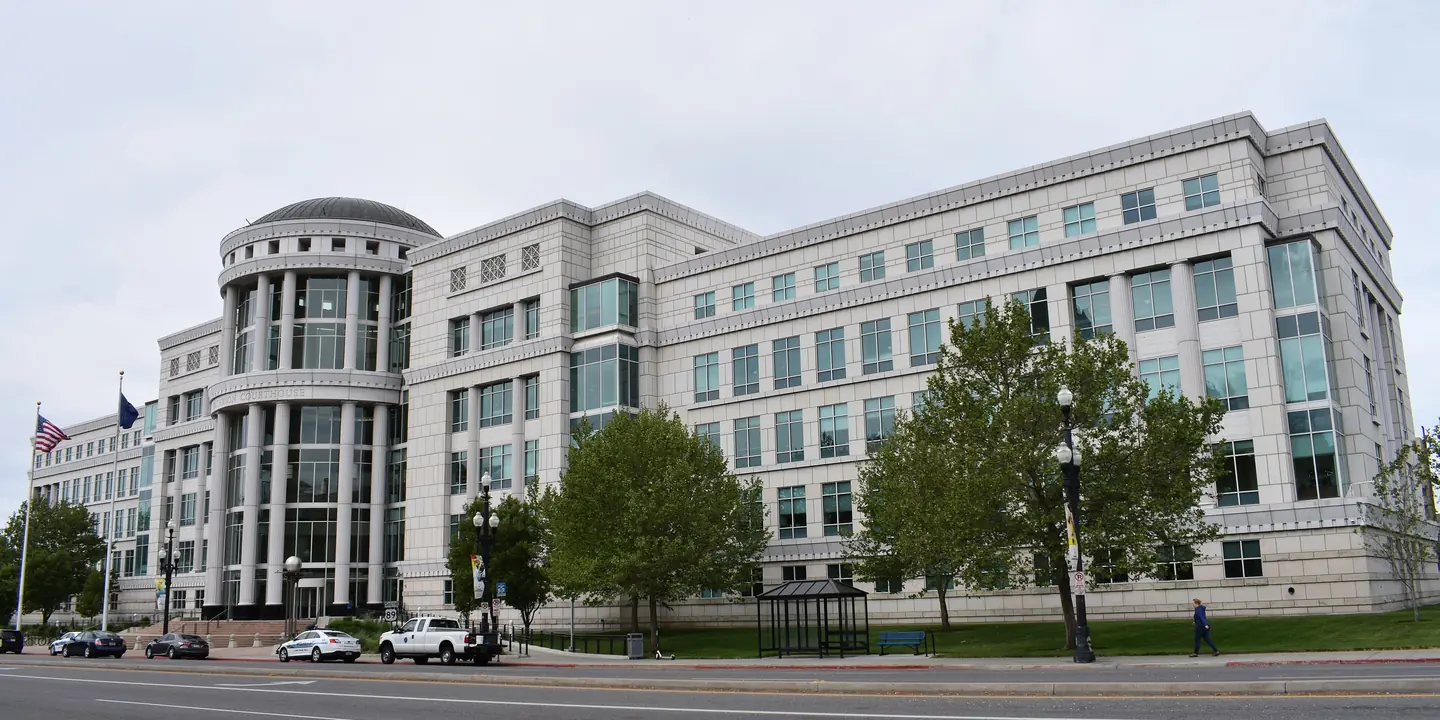

Before they find a firm
What Utah's courts give a person who has no lawyer
Utah's courts run a good deal of free help for people without lawyers, and a firm's pages compete with it for the same reader. That's not a reason to ignore it. A page that knows these tools, names them correctly and explains where they stop is more useful than one that pretends they don't exist.
The Self-Help Center, by phone, text and email
The courts' Self-Help Center is staffed by attorneys who answer questions about the law, court process and options, provide forms and help complete them, and point people to legal aid and lawyer referral. It answers by toll-free phone, text and email between 11 a.m. and 5 p.m. on weekdays, and the courts warn that the help line is very busy. Its own page sets the limit plainly: the center "cannot give you legal advice or represent you in court", and its attorney "is not your lawyer". The courts' last published count was over 23,000 contacts in FY2021 (2022 annual report).
MyPaperwork has replaced OCAP
For about a quarter-century, Utahns built court forms through the Online Court Assistance Program. The courts have retired OCAP and replaced it with MyPaperwork, which asks questions and assembles completed forms for divorce, parentage, guardianship, protective orders, civil stalking injunctions and name or sex designation changes. For most of those case types it does not file anything: the person downloads the papers and files them by email, mail or in person. Firm pages that still tell readers to "use OCAP" send them to a tool that no longer exists, and that is one of the first things we check on a Utah site.
MyCase, once the case is open
After a case starts, MyCase lets people track it online, and the courts' annual report says it lets self-represented litigants e-file in select civil case types, "including evictions, debt collection, and small claims, as well as in all criminal cases" (2026 annual report). A respondent in a debt case can therefore reach the court without ever visiting a courthouse, which is one more reason the firm's page, not its office, is where that client first meets it.
Small claims online, starting with Salt Lake City
Small claims filed in the city's own justice court (the Baxter Courthouse, 333 South 200 East) have moved small claims to the state courts' Online Dispute Resolution program. Utah's small claims limit is $20,000 through 2029, including attorney fees, and rises to $25,000 on January 1, 2030 (Utah Code 78A-8-102). A business or collections firm writing about small claims should describe the online process, since that is what a Salt Lake party now goes through.
The courts' own referral to lawyers
The courts' Finding Legal Help page sends people who want to hire someone to the Utah State Bar's Licensed Lawyer site, to search "by Legal Category", and reminds them that "court staff cannot recommend specific lawyers". For a firm, that makes its Licensed Lawyer listing part of its search presence. Practice categories there should match the site, and the firm's name should read the same way in both places.
Where the firm's page takes over
- When the reader needs advice about their own facts, which the help line is not allowed to give.
- When the other side has a lawyer, as the creditor nearly always does in a debt case.
- When a form asks for a choice the reader doesn't understand, such as how to divide a retirement account.
- When a hearing is set and the reader wants someone standing beside them.
- When a default or a missed deadline has already happened and the question is how to undo it.
Our map survey, November 5, 2026
Asking Google's map for help instead of for a lawyer
The other thing a Utahn acting alone meets online is Google's map. On November 5, 2026 at 15:35 UTC, twelve queries went to Google's Places API, each biased toward downtown Salt Lake City within 20 kilometers, and every listing returned was kept, up to 20 a query (API documentation). Six searches asked for help ("free legal help", "eviction help" and the like), two asked for an alternative to full representation, and four asked for a lawyer outright. We sorted the 229 listings into law offices, public or nonprofit help (courts, legal aid, government, charities, the Bar) and other services (online divorce sites, paralegal and document businesses, mediators, debt companies, collectors), by Google's category and the name, and by the website where those were unclear.
Who Google's map lists for twelve Salt Lake City searches
Places API text search from downtown Salt Lake City, November 5, 2026, up to 20 listings per search
- "free legal help" 155
- "legal aid" 18
- "divorce forms help" 965
- "eviction help" 119
- "debt collection lawsuit help" 1712
- "protective order help" 119
- "licensed paralegal practitioner" 659
- "limited scope attorney" 20
- "divorce lawyer" 20
- "eviction lawyer" 20
- "debt defense lawyer" 20
- "family lawyer" 20
Use the arrow keys to read each value.
| Search (with "Salt Lake City") | Law offices | Public or nonprofit help | Other services |
|---|---|---|---|
| "free legal help" | 15 | 5 | 0 |
| "legal aid" | 1 | 8 | 0 |
| "divorce forms help" | 9 | 6 | 5 |
| "eviction help" | 1 | 19 | 0 |
| "debt collection lawsuit help" | 17 | 1 | 2 |
| "protective order help" | 11 | 9 | 0 |
| "licensed paralegal practitioner" | 6 | 5 | 9 |
| "limited scope attorney" | 20 | 0 | 0 |
| "divorce lawyer" | 20 | 0 | 0 |
| "eviction lawyer" | 20 | 0 | 0 |
| "debt defense lawyer" | 20 | 0 | 0 |
| "family lawyer" | 20 | 0 | 0 |
Source: GLP survey through the Google Places API (New), text search with a 20 km bias on downtown Salt Lake City, 12 searches, 2026-11-05 15:35 UTC.
Help searches still put a reader in front of firms
Across the six help searches, 54 of 109 listings were law offices, 48 were public or nonprofit help and 7 were other services. Someone who typed "free legal help Salt Lake City" got 15 law offices among 20 listings, and "debt collection lawsuit help" returned 17. A firm there meets people who hoped not to pay, so its listing and landing page should say plainly what costs nothing and what doesn't.
Eviction help belongs to housing agencies
One search ran the other way. "Eviction help Salt Lake City" returned 19 housing agencies, charities and government offices and a single law office, in Orem. Tenants, who answered 94% of eviction cases alone in the court chart above, are sent to rent assistance first. A tenant-side firm reaches them with a page on the summons itself: the answer deadline, what the hearing decides, and the assistance programs named fairly.
Paralegals and form services compete in two searches
The paralegal practitioner search was the only one where other services outnumbered law offices, 9 to 6. "Divorce forms help" listed five online divorce, mediation and paralegal businesses among its 20. The limited-scope search returned 20 law offices; whether each one offers limited-scope work, the listing doesn't say.
Limits of a single downtown search
Results came from one point at one moment; a phone in Sandy or West Valley City would see a different order. We counted what the listings are, not the quality of any office.
This page's Search Console queries
On-page and off-page search engine optimization, as Salt Lake searchers word it
A good number of the queries that surfaced this page in Search Console ask about the SEO craft itself, not about lawyers: "off page search engine optimization salt lake city", "on page search engine optimization salt lake city", "title tag optimization salt lake city", "on page seo salt lake city", "local seo salt lake city" and "seo consultant salt lake city". Here is what each term means when the client is a Utah firm.
On-page work on a Utah practice page
On-page work covers everything on the page itself: the title tag and meta description, headings, body text, internal links, images and structured data. For a Utah firm the title names the practice and the place a reader types, such as "Divorce Lawyer in Salt Lake City", rather than a slogan. The first paragraph answers the question with its Utah code section, and the page links to its sibling practice pages. Fixing title tags is among our first jobs, since Google often rewrites titles that don't match the page.
Off-page work: links, listings and reviews
Off-page work is what other sites say about the firm. For a Salt Lake practice: links from Utah Bar sections, local press and community groups, a Licensed Lawyer listing that matches the site, and Business Profile reviews. We don't buy links, and we keep firms out of directories that exist to sell them.
A consultant, or an agency that does the work
"Seo consultant salt lake city" is really a question about who does the work. Here the writing, repairs and reporting stay with our own staff, though a Utah firm that employs a marketer can hold on to the writing and hand us the plan and the technical side. Read Google's guidance on hiring an SEO before any contract (Google Search Central). "Clear lake city seo consultant" also shows this page, but Clear Lake City is part of Houston, so a Texas firm should read our Houston page.
Unbundled services
Help with a single hearing or filing: limited-scope work as a page of its own
Someone who has already started a case alone often doesn't want to hand over the whole thing. They want a lawyer for the part that scares them. Utah's rules allow it, and a firm that offers it, and says so clearly, reaches readers its competitors leave to the help line.
What Utah's procedural rule allows
Utah Rule of Civil Procedure 75, in force since May 1, 2014, lets an attorney enter a limited appearance for one or more defined purposes: filing a pleading or paper, acting as counsel for a specific motion, a specific discovery procedure or a specific hearing (including a trial, a pretrial conference or mediation), or any other purpose the court allows. The attorney files a Notice of Limited Appearance, signed by the attorney and the client, describing exactly what the appearance covers.
What the client stays responsible for
Rule 75 says the party "remains responsible for all matters not specifically described in the Notice." That sentence belongs on any page selling limited-scope help, in plain words, because a reader who misunderstands it can miss a deadline they believed the lawyer was handling. Stating it openly also makes the offer more credible.
The professional-conduct side
Utah's Rule 1.2(c) lets a lawyer limit the scope of a representation if the limitation is reasonable and the client gives informed consent. Comment [7] gives the example of a brief telephone consultation for a client with a simple problem, and adds that such a limit would not be reasonable if the time "were not sufficient to yield advice upon which the client could rely." A limited-scope page should describe the services in terms that pass that test: the consultation is long enough to be useful, and the document review covers the whole document.
A gap the Bar's own program left open
The Utah State Bar's Modest Means Program was built to connect "the increasing number of pro se litigants to free or discounted legal services." When we checked its page on November 4, 2026, it still said the program was paused and not accepting new applications while being restructured (Utah State Bar). Firms that publish clear, fixed-scope offers at stated prices are filling part of that gap in search, whether or not they intend to.
How we build a limited-scope page
- One page per offer: answer review, a single hearing, a settlement agreement check, a mediation preparation session.
- The scope in a short list, the client's remaining responsibilities in another, and the Rule 75 notice explained.
- The price or the basis of the fee where the firm is willing to publish it, with court fees stated separately.
- A form that asks for the case number and the next hearing date, so the firm can say quickly whether the timing works.
If you already offer unbundled help, the audit will show whether anyone searching for it can find it.Ask for the audit
Licensed paralegal practitioners
Utah's paralegal practitioners, and where their license ends
Utah licenses paralegal practitioners to represent people in a defined set of matters without a lawyer's supervision. The Bar counted 53 of them after its 2025-26 exams, up from 37 active the year before, mostly along the Wasatch Front, with family law the most common practice (2025-26 Impact Report; 2024-25 Year in Review). They are small in number, but they serve exactly the readers this page is about, and a firm's pages should describe the boundary accurately.
The matters an LPP may handle
Under Rule 4-802(c), an LPP may practice in temporary separation, divorce, parentage, cohabitant abuse, civil stalking, custody and support, name or gender change and petitions to recognize a relationship as a marriage; in forcible entry and detainer; and in debt collection where the amount does not exceed the small claims limit. Since January 2023 they may also modify court forms and negotiate settlements for their clients.
Where a lawyer is still needed
The edges of the rule are where a firm's pages have something to say. An LPP's clients must be individuals, so a business with a debt dispute needs a lawyer. A debt claim above the small claims limit is outside the rule. So is any matter outside the listed areas, such as a probate estate or a personal injury claim. A family page that walks through those edges, calmly and without running anyone down, answers a question readers bring to it.
Fees and the sign on the wall
Two rules set LPPs apart from lawyers in ways readers notice. Rule 1.5(f) bars an LPP from taking a contingent fee. Rule 1.2(e) requires a notice in the LPP's office, at least 12 by 20 inches with letters an inch high, saying the practitioner is not a lawyer licensed to provide legal services without limitation. Neither is something a firm should repeat as a jab; both explain why a reader may be weighing the two.
Same advertising rule for both
Rule 1.0(i) counts a licensed paralegal practitioner as a "lawyer" for the conduct rules within the LPP's authorized practice, so Rule 7.1, set out below, governs an LPP's ads too (Rule 1.0). A firm's page and an LPP's page are judged by one standard.
Standing Order No. 15
Utah's regulatory sandbox, in the Innovation Office's own reports
In August 2020 the Utah Supreme Court opened a "sandbox" in which entities it authorized could offer legal services under rules that otherwise barred them, such as nonlawyer ownership and fee sharing, while reporting their activity to a new Office of Legal Services Innovation. Since then the Court has narrowed it step by step and set an end date. For a Utah firm the sandbox matters less as competition than as a record of what Utah consumers bought when given other options, and of what the Court decided to keep.
How it was set up
Standing Order No. 15 took effect on August 14, 2020, was amended in 2021 and 2022, and expires on its seventh anniversary. It was first authorized for two years; in April 2021 the Court extended it to seven, when the Office had received 47 applications and authorized 26 entities (Innovation Office release). By the December 2023 report there had been 105 applications and 51 authorizations (activity report).
What the entities sold
The latest full activity report, for September 2024, counts 117,370 legal services sought by about 24,000 unduplicated consumers from 35 entities that had launched. Business services led, followed by immigration and military and veterans' benefits; the top three made up 79.1% of all services (September 2024 report).
Who delivered the services, and the complaints
In the same report, 83.2% of services were delivered by a lawyer, a lawyer's employee or a software tool such as document completion, and 16.8% by nonlawyers with lawyer involvement. The December 2023 report counted 14 complaints to the Office, about one for every 3,760 services, and harm-related complaints at about one per 7,937 services.
How the Court narrowed the sandbox in 2024
In a September 5, 2024 letter the Court wrote that some entities "appear to have misused their Sandbox authorization to bolster their credibility or gain access to restricted advertising markets by suggesting that their services have been endorsed by this Court." It added a Utah-innovation requirement, retired the authorization "badge" in favor of language inviting complaints, and moved out entities that didn't meet the new test (letter). On September 16, 2024 it stopped taking applications from for-profit entities offering mainly immigration services (order), and it closed the portion for alternative business structures alone at the end of 2024 (Innovation Office).
Phase 3 and the August 2027 sunset
The Court announced Phase 3 on May 15, 2026, cut off applications on May 29 and set the sandbox to end on August 14, 2027, with a committee charged with recommending which reforms should outlast it (Phase 3 page). The Office's metrics page, as of August 2026, lists five entities in the sandbox, 37 applicants denied since it reopened in February 2024, and three consumer complaints in 2026 (metrics). It also notes that an authorization "is not an endorsement" from the Court or the Bar (authorized entities).
Lessons for anyone advertising legal services in Utah
Two points from the record matter to a firm. The Court objected to entities using its authorization as a selling point, which is a caution for anyone tempted to borrow the Court's name in an ad. And at its September 2026 meeting, the oversight committee denied an applicant whose model looked like gathering leads and referrals to pass to attorneys, while noting that its Rule 5.4 work group seemed unlikely to recommend changing that rule (committee minutes). Paying for clients in Utah runs through the rules described two sections down, not through the sandbox.
Utah Rules of Professional Conduct
Rule 7.1, the advertising rule Utah kept when it dropped the rest
Since 2020 a single rule has carried all of Utah's limits on lawyer advertising. That year the Supreme Court repealed Rules 7.2 (advertising), 7.3 (solicitation), 7.4 (fields of practice) and 7.5 (firm names) and folded what it kept into a rewritten Rule 7.1; the signed order gives August 31, 2020 as the effective date (order). The rules are now numbered in the Supreme Court Rules of Professional Practice, and Rules 7.2 to 7.5 appear there only as "reserved" (Rule 7.2). The current text, effective May 1, 2024, is short enough to apply clause by clause.
Rule 7.1(a)(1) False statements and the facts left out
The first clause covers outright falsehoods and, just as often in practice, omissions: a statement fails when it leaves out a fact needed to keep the whole from misleading. Comment [2] goes further and catches true statements that steer a reasonable reader toward a conclusion the facts don't support. On a website the usual culprits are omissions: a fee without its exclusions, a practice area listed for a lawyer who has left, a "serving all of Utah" line from a firm that won't travel.
Rule 7.1(a)(2) Results and expectations
A communication fails if it is "likely to create an unjustified or unreasonable expectation about results the lawyer can achieve or has achieved." Comment [4] applies this to case results: reporting a past result can mislead if it suggests other clients will get the same outcome regardless of their facts, and so can an unsubstantiated comparison with other lawyers. The same comment says an appropriate disclaimer "may preclude" that finding, which is why we place a disclaimer next to any result we publish, not in a footer.
Rule 7.1(a)(3) Testimonials, reviews and actors
Utah does not ban testimonials; the rule only reaches one that "violates any portion of this Rule." Comment [3] expressly allows "the use of actors or dramatizations to portray the lawyer, law firm, client, or events", provided nothing misleads. The Bar's 2022 review of older opinions keeps in force the view that testimonials and dramatizations may be used when they are not false or misleading (Opinion 22-02). For a review section on a firm's site, that means real reviews, shown in context, with a results caution where a review mentions an outcome.
Comment [5] "Specializes" and "certified"
A Utah lawyer may say they "specialize" in a field based on experience, training and education, subject to the misleading standard. Certification is treated differently. Any claim to be certified must rest on an objective certifying body, and the ad has to name it. On practice pages we write "focuses on" or name the certifying body; we don't leave "certified" floating.
Comments [7] to [10] Trade names, domains and handles
Firm names, letterhead and "professional designations" count as communications. Trade names are allowed, and so are distinctive web addresses and social media handles, as long as none of them misleads. The comment flags names that suggest a government office or a charity, and a trade name built on the city's name may need a note that the firm isn't legal aid. The Bar's Opinion 21-02 adds that a trade name containing the name of a political subdivision needs a disclaimer that the firm isn't associated with the government. A keyword domain like a "Salt Lake legal help" address is exactly where those comments bite. Comment [10] has a Utah-only line: a firm may keep the name of a lawyer serving in Utah's part-time legislature while that lawyer remains associated with the firm.
Rule 7.1(b) and (c) Contact with someone who needs a lawyer
The 2020 rewrite removed Utah's ban on in-person solicitation. What remains is 7.1(b), which bars interacting with a prospective client "in a manner that involves coercion, duress, or harassment", and, since May 1, 2024, 7.1(c): a lawyer may not directly contact a prospective client to obtain employment about a disaster, a personal injury or a wrongful death unless the event happened more than 30 days earlier, the person has a family, close personal or prior professional relationship with the lawyer or firm, or the contact was started by the prospective client or someone close to them. The Court's posting explains that the clause answered a petition about solicitation soon after traumatic events and was modeled on Florida Bar v. Went For It (rule posting). For injury firms, that governs follow-up texts and emails as much as visits.
What Utah no longer requires
- No "Advertising Material" label on letters or emails; that requirement sat in the repealed Rule 7.3(c).
- Nothing in the rule makes each ad carry a lawyer's name and office address.
- No filing of ads with the Bar, and no copy-keeping period in the rule's text.
- No separate rule on firm names, now handled in the comments to 7.1.
Fewer requirements do not mean less risk. With one broad standard, the question for every page is simply whether a reasonable reader would be misled, and that is the question our drafts are checked against before a firm's lawyer approves them.
Rules 1.0, 1.5, 5.4 and 5.8, effective November 1, 2026
Paying for clients in Utah after the November 2026 amendments
On November 1, 2026, amendments to Rules 1.0, 1.4, 1.5, 5.4 and 8.4 and a new Rule 5.8 took effect (signed order of July 31, 2026). They change what a Utah firm may pay to get clients, and they make several earlier statements about Utah's openness to paid referrals out of date.
Referral fees are prohibited
Current Rule 5.4(c) reads, in full: "Referral fees are prohibited." Rule 1.0 defines a referral fee as compensation "for the sole purpose of referring a legal matter" paid to anyone outside the firm (Rule 1.0(q)). Rule 5.4(b) still lets a person recommend, retain or pay a lawyer to serve someone else, and fee sharing with a nonlawyer remains possible only where Standing Order No. 15 authorizes it and the client gets written notice.
Advertising and lead generation are not referral fees
Comment [9] to Rule 1.0 draws the line a marketing plan needs: fees "paid for generating consumer interest for legal services with the goal of converting the interests into clients, including lead generation service providers, online banner advertising, pay-per-click marketing, and similar marketing or advertising fees are not referral fees." Small gifts of minimal value are not compensation either. Paying Google for clicks or leads, or paying an agency like ours for the work, sits on the permitted side of that line.
Splitting a fee with another lawyer
New Rule 5.8 allows fee sharing between lawyers only if no lawyer is paid until the client's fee is payable, the total fee does not increase, and the client agrees in writing, including the share each lawyer receives. Rule 1.5(e) points to 5.4, 5.8 and Standing Order No. 15 as the only routes (Rule 1.5). A firm that co-counsels with another firm on referred cases should have its intake and engagement letters ready for that written agreement.
Older guidance that now misleads
The Bar's Opinion 22-02 of 2022 told lawyers that opinions disapproving paid referrals "should no longer be relied upon", and it quoted a Rule 5.4 comment of that time permitting firms to pay for client referrals. That comment no longer reflects the rule. Articles, vendor pitches and AI answers written between 2020 and late 2026 can repeat the older position, and a Utah firm deciding whether to buy referrals should read the rule as it stands today.
Paid search
Paid search in Utah: Google Ads, LSA and the free-form searcher
Queries such as "utah lawyer google lsa consultants" and "utah law firm google ads expert" bring firms here. The platforms are the ones every state uses; what is different in Utah is the person on the other end of the click.
The searcher who wants the free version
A large share of legal searches in Utah come from people looking for a court form, the help line or a free clinic. In an ordinary account those clicks are waste, and we exclude terms like "form", "free" and "self help" early. For a firm that sells limited-scope services, some of them aren't waste at all: someone searching for divorce forms may be one bad experience away from paying for a document review. We decide per practice whether to block those searches or route them to a limited-scope landing page, and we test that choice against signed cases, not clicks.
Leads bought from Google, under Utah's new comment
With LSA a firm pays for each lead, not each click, and Google screens the advertiser before the ad runs. Under Utah's November 2026 rules, the fee for a lead is a marketing fee, which Rule 1.0 Comment [9] places outside the referral-fee ban. Results in LSA depend on the profile: reviews, responsiveness, hours that match when the phone is really answered, and practice areas that Google supports for lawyers. We set those up, answer disputes on leads that don't qualify, and compare cost per signed case with the firm's other channels.
What the ads may say
Rule 7.1 treats ad text as a communication, so the same tests apply in 90 characters: no unjustified expectation, no unqualified "certified", no price without its exclusions. Injury firms running follow-up campaigns, such as remarketing or texts to people who submitted a form, should keep the 30-day rule in 7.1(c) in mind when the person did not start the contact. Our general approach to campaigns, tracking and negative keywords is on our law firm PPC page.
Measuring it
- Calls tracked by campaign and keyword, with recordings where the firm consents.
- Form submissions tied to the page and ad that produced them.
- Signed cases sent back to Google Ads, so bidding learns from cases rather than clicks.
- A monthly comparison of paid and organic cost per signed case, practice by practice.
Law firm web design in Utah
A website for a reader already holding court papers
Web design searches bring Utah firms here too ("law web design utah", "website design for lawyer salt lake city"). A Utah firm's site has to do the usual things well, and a few Utah things besides.
Statute numbers that changed in 2024
Utah moved its family law into a new Title 81, the Domestic Relations Code. The divorce sections family pages cite most often, the 30-day waiting period in 81-4-402 and the mandatory mediation session in 81-4-403, carry an effective date of September 1, 2024 and were renumbered or enacted by Chapter 366 of that year's session. Pages written before then cite section numbers a reader can no longer find. On every Utah family site we audit, we check every citation against the current code.
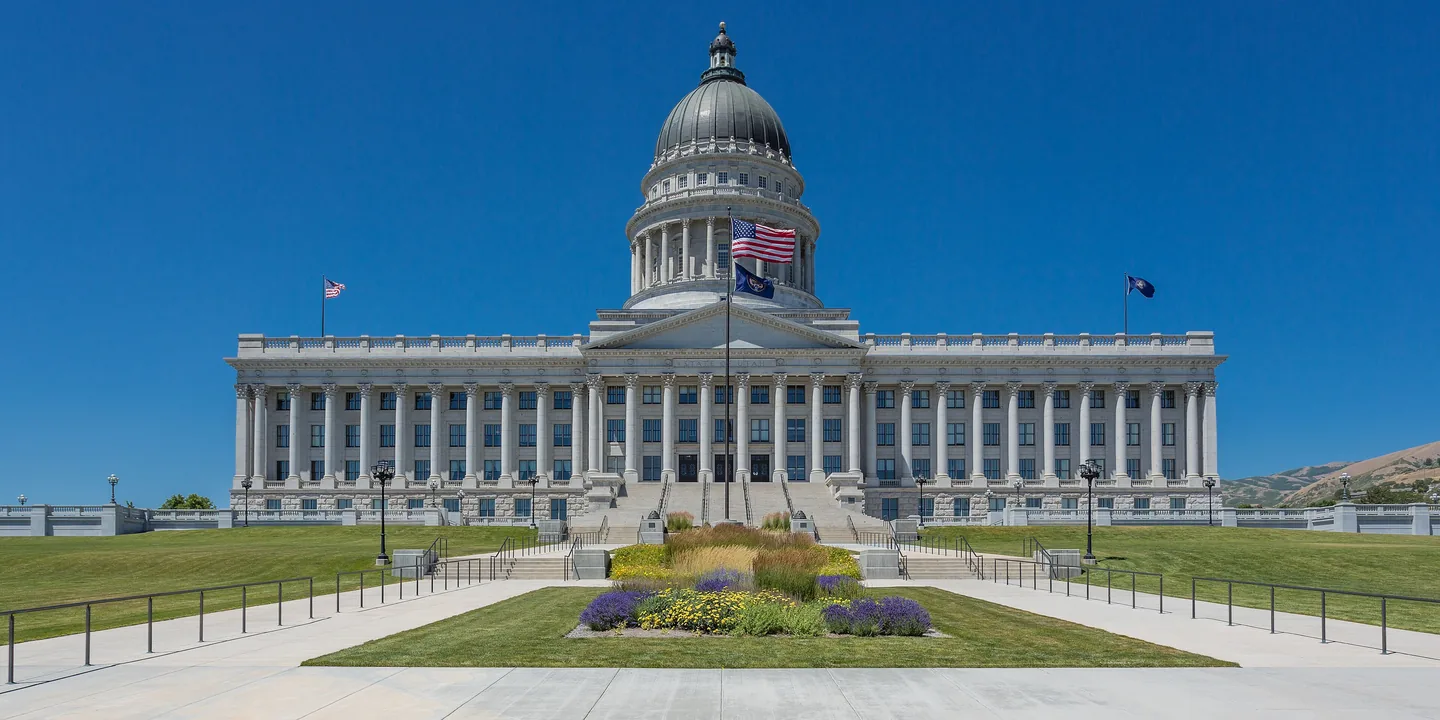

Pages organized by the stage of a case
Most firm sites are organized by practice area. For readers who have already started, a second layer works better: pages for "I've been served", "I have a mediation date", "I missed a deadline", "I have a hearing next week". Each links back to the practice page that owns the law, so the rule is stated in one place and the stage pages stay short.
Intake that asks about the open case
The intake form should ask whether a case is already open, what kind it is and when the next date is; a self-represented reader usually knows all three. The firm can then reply with something specific the same day, and our reports can show which pages bring in people already in a case.
AI search
AI answers in Utah: being the source after the court form
Google sends us readers who typed "salt lake city ai legal marketing company", and others who typed "ai seo services salt lake city", "utah aeo services" or a search for AI visibility platforms. We don't sell a platform; we do the writing and the measuring described here. The practical point under those searches: in Utah, the pages an AI tool draws on for a legal answer are often not a firm's at all.
Self-help pages win the do-it-yourself question
Ask an AI tool how to file for divorce in Utah, or how to answer a debt lawsuit, and the sources it pulls from are often the courts' own self-help pages, which are detailed, current and written for a person without a lawyer. A firm's page rarely beats them on "how do I do this myself", and it shouldn't try. Where a firm can be the cited source is the next question: what happens if mediation fails, how a default judgment is set aside, whether a debt is past the four-year limit for unwritten contracts in Utah Code 78B-2-307.
Writing for the question after the form
We look at the questions people ask once the court's tools have run out and write short, self-contained passages that answer them: the rule, the Utah code section, the practical consequence and the point at which a lawyer is worth calling. AI tools quote passages like that because they can lift them whole, and the firm's name travels with them when the firm's details are consistent across its site, its Business Profile and its Licensed Lawyer listing.
Keeping the old tool names out of the answers
AI answers are assembled from pages that exist, including outdated ones. A firm page that still says "OCAP" or cites a pre-2024 divorce section can feed that error into an answer. Correcting a firm's own pages is the part of the problem it controls, and the corrected page is a better source for the tool to cite.
What we track
Every Utah client gets its own standing set of prompts, worded as its clients would word them. Each run logs whether the firm appears, which of its pages gets cited and the date of the answer, and we read that next to Search Console data and visits from AI tools. The method, and what it can't measure, is explained in more depth on our AI search page for law firms.
Content planning
Utah rules a reader acting alone is most likely to need
Every Utah practice page should state the Utah rule that a self-represented reader is most likely to get wrong, with its citation, near the top. These are the ones we start from, each checked against the current code on the date of this page.
| Practice | The Utah rule | Why it belongs at the top of the page |
|---|---|---|
| Car crashes | A person with PIP coverage can sue for general damages only with death, dismemberment, permanent disability or disfigurement, a bone fracture or medical expenses over $3,000 (31A-22-309) | It decides whether a claim can go beyond the reader's own insurance |
| DUI | The limit is a blood or breath alcohol concentration of .05 (41-6a-502) | Readers who know only the .08 figure misjudge their own test |
| Divorce | No decree until 30 days after filing, a 90-day residency rule, and at least one mediation session when issues remain contested (81-4-402, 81-4-403) | Self-represented spouses often learn about mediation only when it is ordered |
| Small estates | Personal property can pass by affidavit 30 days after death when the estate is $100,000 or less after liens; water company shares are excluded (75-3-1201) | The water-share exception is a Utah detail families miss |
| Final pay | An employer that separates a worker must pay within 24 hours; a worker who quits is paid on the next regular payday (34-28-5) | The two rules are opposite, and readers confuse them |
| Wrongful death | Two years to sue, in a section amended effective May 6, 2026 (78B-2-304) | Summaries written before the amendment may be stale |
| Immigration | The Salt Lake City Immigration Court is at 2975 South Decker Lake Drive in West Valley City (EOIR) | Families look for the court by the city's name and expect downtown |
A table like this is a starting list, not a page. Each row becomes a page section in the firm's own voice, reviewed by its lawyers, with the date the rule was last checked shown on the page.
Utah County
Provo and Orem searches, and the courthouse that moved
Searches like "law firm seo company provo ut", "law firm website design provo ut" and "seo services utah county" reach this page because GLP has no separate Utah County page. Utah County is a distinct market: the Bar's Fourth Division had 1,527 active attorneys in 2025-26, about a quarter of the Salt Lake division's count (Impact Report), and federal data counted 253 law offices in the county in 2024 against 1,027 in Salt Lake County (BLS QCEW).
Venue pages written before 2025
The American Fork district court closed on December 31, 2024, and its cases moved to the Provo District Court at 137 North Freedom Boulevard (court directory). Firms in Lehi, American Fork and the north county that wrote "our local courthouse" pages around American Fork now have pages describing a court that no longer sits there.
"Silicon Slopes" searches
Some searches use the tech-corridor name rather than a city. For a law firm that serves the corridor's companies and employees, those words belong in the copy where they are true, alongside the city names (Lehi, Draper, American Fork) that people use when they want a lawyer nearby.

Working with GLP
Signing on with GLP as a Utah practice
How an engagement begins
Engagements open with the free audit offered at the foot of this page. If you decide to continue, we hold a strategy call, put the plan in writing (which pages, which corrections, which cities, which reports) and start work only after that. Each stage is listed on our how-we-work page.
The person you'll hear from
A single GLP contact handles your questions day to day, and the specialists in search, writing and development who do the work are introduced on our team page. Nothing that cites a Utah code section or names a court tool is published before a lawyer on your staff has checked it.
Price and terms
We bill by the month, at a figure set after we have studied the firm's market, and a firm can leave without a long lock-in. No Utah firm appears among our published case studies, so we cite no outcomes here; numbers from other markets would say nothing reliable about yours. Rankings are Google's decision, so we make no promise about them. Partners who would rather talk first can ring (661) 388-5526 and have the Utah audit set up on that call.
Nearby
GLP pages for the rest of the Mountain West
Searches naming Westlake Village and the Conejo Valley also reach this page; the section for those firms is on our Hollywood page.
Utah questions, each answered from the rule or the record
In short
Utah court data on people who go without a lawyer, the courts' own help tools, the current text of Rule 7.1 and the November 2026 fee rules, and the Innovation Office's sandbox reports: the record we work from when we plan search for a Salt Lake City or Utah firm.
We work alongside a sandbox entity. Can our ads say the Utah Supreme Court authorized it?
Be careful with that wording. In a September 5, 2024 letter the Court said some entities appeared to have misused their authorization to look more credible, by suggesting the Court had endorsed their services, and it retired the authorization badge (letter). The Innovation Office also states that authorization "is not an endorsement" (authorized entities). A plain factual line, with no hint of approval, is the safer choice. The sandbox ends on August 14, 2027, so any page that mentions it needs a date for review.
May a Utah firm post flat prices for a divorce answer or a single hearing?
Yes. Rule 7.1 itself is silent on prices, and its third comment treats a stated price for a specific service as permitted information, so long as the figure doesn't mislead. The trap is the price that leaves out a cost the client will certainly pay. Ethics Opinion 22-04 cites the example of advertising a "$99" bankruptcy while ignoring the court fees. A price page should say what the figure covers and what the client pays the court on top of it.
Can our site mention a "best lawyers" or "super lawyer" rating?
Under conditions. As summarized in Opinion 22-02, the earlier Utah opinion on these ratings still stands: the rating organization must have made an appropriate inquiry into the lawyer's fitness, the lawyer must not pay for the rating itself, the methodology must be disclosed and public, the factual basis must be verifiable, and the page must disclaim approval by the Utah Supreme Court and the Utah State Bar. Paying an organization to rank a lawyer as "best" stays misleading under Rule 7.1. We put the disclaimer next to the badge, not in the footer.
Our lawyers hold Idaho or Nevada licenses only. May we run ads in Utah?
Not without care. Ethics Opinion 22-04, issued April 11, 2022, says a firm that advertises or solicits legal services in Utah without an attorney member licensed in Utah violates Rule 7.1, unless an appropriate disclaimer or qualifying language is included. For out-of-state firms we write that qualification into the page and the ad, and we keep campaigns from targeting Utah searchers for matters only a Utah lawyer can handle.
Is there a Utah filing or record-keeping duty for ads?
The current Rule 7.1 contains no filing requirement and no copy-keeping requirement, and Rules 7.2 to 7.5 are reserved. Keeping dated copies is still sensible practice, because a complaint about an ad or a page turns on what it said on a particular day, and a dated archive answers that question.
Is the "Advertising Material" label still needed on mail and email in Utah?
Not under the current rule. The label lived in former Rule 7.3(c), which the 2020 order repealed along with the rest of Rules 7.2 to 7.5. What still governs a letter, text or email to someone who needs a lawyer is Rule 7.1 itself: nothing misleading, no coercion, duress or harassment, and the 30-day limit when the message concerns a disaster, a personal injury or a wrongful death. A firm that also practices in a state that still requires a label should keep it on anything that crosses the border.
Will GLP handle our firm's IT?
No. We don't manage networks, devices, email servers or security. We work on the parts of a firm's technology that touch search and intake: the website, analytics, call tracking and the forms that start a matter. A firm that needs an IT provider should hire one, and we coordinate with them when a site change touches their systems.
Are Utah Supreme Court rules on paralegal practitioners a reason to stop writing family law pages?
No, they are a reason to write more specific ones. A licensed paralegal practitioner's authority is set out in Rule 4-802 and stops at defined edges. A family law page that explains, without disparaging anyone, which parts of a divorce a firm handles that fall outside those edges answers the question a reader is already asking: do I need a lawyer for this part, or not?
Our firm is in St. George or Ogden. Is this page for us?
Mostly, yes. The Utah rules, the court tools and the sandbox apply statewide, and so does almost everything in the service section. What changes is the competition: the Utah State Bar's 2025-26 figures put 599 active attorneys in its Fifth Division (southern Utah) and 1,016 in its Second (Davis and Weber), against 5,663 in Salt Lake (Impact Report). Smaller fields usually mean a firm can rank for a wider set of practice searches with fewer pages. The same report notes a growing presence of licensed paralegal practitioners around St. George, so family firms there meet the boundary questions described above sooner than most.
What should a Utah debt-defense page lead with?
For debt settlement and debt relief firms, one Utah fact sits at the center: in the courts' FY2020 figures, 97% of people sued on a debt answered without a lawyer. A debt firm's pages should be written for the person holding a summons: in Utah a defendant served in the state has 21 days to answer, or 30 if served outside it (Rule of Civil Procedure 12(a)), and the page should say what happens on day 22. That reader needs the deadline and the court's forms in view, not a general "debt relief" pitch. Arizona's debt-management statute, which some of those searches turn up, is covered on our Scottsdale page.
Is a Salt Lake City Justice Court charge worth its own page?
For a defense firm, usually yes. The city describes its justice court as the part of the court system residents are most likely to deal with; it handles Class B and C misdemeanor cases, and a sixth judge was appointed to it in September 2026 (Salt Lake City Justice Court). Those readers have a court date in the Baxter Courthouse, not at the Matheson Courthouse, and a page that keeps justice-court charges apart from felony pages answers the question they actually have: what happens at a first appearance in a city court.
Is AEO a separate service from SEO?
Answer engine optimization means writing and structuring pages so that AI answers (Google's AI Overviews, ChatGPT, Perplexity and others) can quote them and credit the firm. For a Utah firm it isn't a separate product from SEO; it is the same pages, held to a stricter standard of clarity and accuracy. The AI section above describes what we measure. An AI tool decides for itself which firm to mention; what we control is whether your page gives it a reason.
What will the audit show us about our Utah site?
A short recorded walkthrough, made by someone on our team. They search your main practice areas in Google and in ChatGPT the way someone in Utah would, both with a city name and without, then point out which firms and court pages rank above you and what we'd fix first. On Utah sites we also look for two dated errors: family-law citations from before the 2024 move to Title 81, and links that still send readers to OCAP, which MyPaperwork replaced. You keep the recording whether or not we work together.
When a Utahn stops doing it alone, see whether they find your firm
Tell us which Utah cases you would like more of. Two days later at most, a recording reaches your inbox showing how Google and ChatGPT present your firm, court and paralegal pages that outrank you included.
Or call Call (661) 388-5526