For firms in all five boroughs, Long Island and Westchester

Lawyer SEO in New York City, NY

NYC lawyer SEO for firms whose clients live in other boroughs.

Most of New York City's lawyers work in Manhattan; most of their clients live in Brooklyn, Queens, the Bronx and Staten Island. GLP builds the pages, Business Profiles and AI-ready content that reach those clients in their own borough, written to New York's lawyer advertising rules.

Below: where the city's lawyers and clients are, how searchers name their borough, and New York's attorney advertising rules. National-level advice lives on our law firm SEO page.

Free, done by a real person, and in your inbox within 48 hours.

Working with New York City practices

NYC law firm SEO built around the borough each client lives in

As a law firm SEO company, GLP helps New York City practices get found in Google results, on the map and in the AI answers people read first. The gap this page keeps returning to is simple: law offices cluster in one borough, and potential clients are spread across the other four. Our NYC lawyer SEO starts from that gap: where your clients live, the words they use for their part of the city, and the New York advertising rules every page has to meet.

A page plan drawn from where your clients come from

The audit looks at your Search Console data and asks which cases you want more of and where those clients live. The written strategy then names the boroughs, Long Island towns or Westchester cities to target and the order to take them in. A Midtown firm whose injury clients mostly live in Queens needs pages a Queens resident recognizes as written for them; a Flatbush practice with clients in Nassau County needs content that knows Nassau's courts.

Business Profiles for the firm and for the lawyers clients meet

Google's guidelines treat lawyers as individual practitioners. A lawyer who can be reached at the verified office during stated hours may have a profile of their own, and where several lawyers practice at one address, the firm keeps a separate profile for the location. For a New York firm with five or ten partners, the firm profile and the lawyer profiles are planned together, with names, categories and phone numbers that don't compete with each other.

Reporting that follows a case back to the client's borough

Our reports tie search data to calls, forms and signed cases wherever your intake data allows. In this city that comparison is most useful when intake records the client's borough or county, because it shows whether the Queens pages are bringing Queens cases or just Queens traffic.

Copy drafted to the New York rules from the start

New York regulates lawyer advertising in more detail than most states: a label on the home page, a fixed disclaimer beside past results, dated copies of the site, limits on what a domain name may suggest. Your attorneys approve anything that states the law, and the rules sections further down set out each requirement as it applies to a website.

The free audit shows which parts of the city find your firm today and which don't. It is recorded by a person on our team, not generated, and arrives in two days.

Get My Free Audit

Before we plan anything

Registrations, offices, residents and rules: where a NYC plan starts

These are the facts that shape a five-borough search plan. Each row says where the number comes from and what it changes; the sections below go into each one.

The factWhere it comes fromWhat it means for the plan
85% of the city's registered attorneys give a Manhattan business addressNYS Attorney Registrations, data.ny.gov, pulled Nov. 4, 2026Treat Manhattan as the crowded borough and the other four as the places your clients search from.
6,854,367 of the city's 8,483,844 residents live outside Manhattan (81%)Census ACS 2020-2024, table B01003Name the outer boroughs on the pages meant for their residents.
5,504 private law offices in the five boroughs, 3,714 of them in ManhattanBureau of Labor Statistics QCEW (2024, offices of lawyers)Size up the competition in the borough each page targets, not the city as a whole.
74 of 96 sites shared by "nyc" and "new york city" results; 24 to 27 shared with a borough's nameGLP survey of Google results, Nov. 4, 2026One citywide page can serve both city wordings; borough searches need borough pages.
"Attorney Advertising" on the home pageN.Y. Rule of Professional Conduct 7.1(f)Every home page carries the label; marketing emails carry it in the subject line.
A saved copy of the website at least every 90 daysN.Y. Rule 7.1(k)Keep dated captures of every published version, so the firm can show it met the rule.
No solicitation about a specific injury incident before day 30 (day 15 if a claim filing is due sooner)N.Y. Rules 4.5 and 7.3(e)Keep accident outreach out of the plan; search brings people who looked for you.

The five-borough gap

Where New York's attorneys keep offices, and where the people who hire them live

New York State publishes every attorney's registration, including the county of the business address they report. Pulled on November 4, 2026 and limited to attorneys currently registered with a New York address, the file puts 85.3% of the five boroughs' lawyers in Manhattan. The Census Bureau puts 19.2% of the city's residents there. Nearly every borough-level comparison on this page follows from that mismatch.

Each borough's share of the city's residents, registered attorneys and law offices

New York City = 100% in each series. Attorneys by the county of their registered business address.

Use the arrow keys to read each value.

Each borough's share of the city's residents, registered attorneys and law offices
BoroughResidents (%)Registered attorneys (%)Law offices (%)
Manhattan / New York County 19.285.367.5
Brooklyn / Kings County 316.713.4
Queens / Queens County 27.44.613
The Bronx / Bronx County 16.62.43
Staten Island / Richmond County 5.813.1

Sources: U.S. Census Bureau, ACS 2020-2024 5-year, table B01003; NYS Attorney Registrations (data.ny.gov), status "Currently registered", pulled Nov. 4, 2026; BLS QCEW 2024 annual averages, NAICS 54111, private.

Manhattan holds a fifth of the people and most of the lawyers; Brooklyn and Queens together hold 58% of residents and 11% of registered attorneys.

Where registered attorneys say they work

By borough: Manhattan 77,650, Brooklyn 6,055, Queens 4,221, the Bronx 2,156 and Staten Island 907, out of 90,989 for the city as a whole. The file counts every kind of lawyer, from law firm partners to in-house counsel and government attorneys, so the totals say less about how many firms want your clients than about where legal work in this city is done. Brooklyn has about 435 residents for every registered attorney; Manhattan has about 21.

What the payroll data adds

Federal wage records tell the same story from the employer side. In 2024 the Bureau of Labor Statistics counted 3,714 private law offices in Manhattan, employing 71,534 people on average through the year, against 736 in Brooklyn, 718 in Queens, 172 on Staten Island and 164 in the Bronx. Average annual pay at a Manhattan law office was $239,320; in the other boroughs it ran from $88,051 to $107,028. A Manhattan law office averages about 19 jobs; in Brooklyn, Queens and Staten Island the figure is four to six. Outside Manhattan, the offices competing with you are mostly small neighborhood practices, and that is the field a borough page has to beat.

A Manhattan address and a client in Jamaica

Google lets a business list up to 20 service areas, and says the overall area shouldn't reach beyond about two hours of driving from where the business is based. A service area tells people where you work; it doesn't move your office. A firm on Broadway that lists Queens as a service area still sits in Manhattan on the map, so a Queens client finds it through its pages and reviews, not through the map pin. That is why pages carry more of the load for outer-borough clients than the Business Profile can.

How the gap reshapes a page plan

  • Practice pages name the boroughs your clients come from, with the institutions they deal with there.
  • Intake asks every caller which borough or county they live in, so reports can tie pages to cases.
  • Reviews from clients outside Manhattan are worth asking for by name of the matter, never by script.
  • Pages for Manhattan clients compete with far more firms, so they need more depth and more links to rank.

Our search survey

Abbreviation, state name or borough: what each wording returns on Google

People name this city in several ways, and Search Console shows all of them in the queries behind this page: "law firm seo company nyc", "seo for law firms new york", "law firm seo services new york city ny", "law firm seo brooklyn". To see whether Google treats those wordings as one search, we ran the same ten practice searches with six place names on November 4, 2026, from a New York location, through the Serper API: 60 searches, plus three DWI and DUI pairs covered further down. For each practice we compared the top ten results for the "nyc" wording with each of the others. Results move from day to day, so the counts guide the page plan rather than predict positions.

How many "nyc" results also appeared under other wordings of the same search

Ten practice searches ("personal injury lawyer nyc", "divorce lawyer nyc" and so on): 96 sites in the top ten for the "nyc" wording, compared with each other wording.

Use the arrow keys to read each value.

How many "nyc" results also appeared under other wordings of the same search
Wording compared with "nyc"Same siteSame page
"new york city" 7470
"new york" 6259
"brooklyn" 274
"queens" 264
"bronx" 241

Source: GLP Marketing survey of Google organic results via the Serper API, run from New York, NY on November 4, 2026. Ten practices, top ten results each.

Borough wordings shared about a quarter of the sites and almost none of the pages; "new york city" shared most of both.

Google reads the abbreviation and the full name almost alike

Across the ten practices, 74 of the 96 sites in the "nyc" top tens also appeared for "new york city", and 70 of the 97 exact pages did. For criminal defense, immigration and medical malpractice the overlap was nine sites out of ten. A firm doesn't need separate pages for the abbreviation and the full name; it needs one strong page that uses both naturally.

"New York" alone pulls in the state

Drop "city" and the results move. Only 62 sites carried over to the "new york" wording, and for personal injury just three of nine. The name belongs to a state as well as a city, and the results reflect that: more statewide firms, state-level directory pages, firms based outside the five boroughs. A NYC page that ranks for "new york" searches has to make clear early that it is about the city, and which boroughs it serves.

A borough's name brings up borough pages

With "brooklyn", "queens" or "bronx" in place of "nyc", only 24 to 27 of the 96 sites remained, and almost never with the same page: four identical pages for Brooklyn, four for Queens, one for the Bronx. The firms that held on did it with separate pages written for that borough. This is the measured case for borough pages, and the reason GLP keeps separate pages for Manhattan and Staten Island beside this one.

Place names inside domain names

Between five and ten of every hundred results on each wording came from firm websites with a borough or "ny" in the domain itself. Google ranks them on their content and links like any other site, but in New York a domain name is also lawyer advertising, with its own rule, explained under domain names and firm names.

Page architecture

A single New York City page, or a page for each borough?

The survey above says borough searches want borough pages. The courts say which topics can be written once for the whole city and which change at the county line. New York City has five counties, one per borough, and its court system is split between institutions that serve all five and institutions that belong to one.

Courts that serve the whole city

The Civil Court of the City of New York "serves the five counties of the City of New York". Money claims up to $50,000 belong there under section 202 of the New York City Civil Court Act, and its small claims part caps out at $10,000. The Criminal Court of the City of New York handles misdemeanors and lesser offenses, conducts felony arraignments, and sits in all five boroughs. A collections firm, a consumer practice or a misdemeanor defense practice can explain these courts once, on a citywide page, because the rules don't change from Brooklyn to the Bronx.

Institutions organized borough by borough

New York's main trial court, confusingly called the Supreme Court, is organized county by county, so Brooklyn's and Queens' are separate courts with separate courthouses and local practices. Federal cases split too, as the borough cards below show. An injury firm whose larger cases go to Supreme Court, or a defense firm whose clients are prosecuted in one borough, gets more from a page written for that county than from a citywide page that has to hedge every sentence.

How the choice is made

  • A citywide page for each practice, written around the citywide courts and city agencies that practice deals with.
  • A borough page only where the firm has real clients from that borough and something true to say about it that the citywide page doesn't.
  • No borough page that is the citywide page with the name swapped; Google's spam policies treat sets of near-identical place pages as doorway pages.
  • Pages for Nassau, Suffolk or Westchester only when the firm's lawyers take cases there.

Onyx Law Group: location pages for a firm with offices in Vancouver and New Westminster

The nearest published GLP example is a family law and estate litigation practice in British Columbia (read the case study). It came to us after a year of flat traffic with another agency. We rebuilt the website, mapped keywords by practice area and city, built 50 city pages and published about 100 articles, along with on-page and technical SEO, the Business Profile and link building. A Search Console screenshot on the case study shows 15.8K clicks in a 28-day window in September to October 2023, against 3.3K in the same window of 2022. The firm is Canadian, not a New York practice, and the data is from 2023 and hasn't been refreshed.

Prior results do not guarantee a similar outcome.

GLP's own pages are split the same way: what applies citywide is here, and Manhattan and Staten Island have pages of their own for borough-level questions.

No separate GLP page yet

Where most New Yorkers live: search outside Manhattan

Brooklyn has its own query in this page's Search Console data ("law firm seo brooklyn"), and together with Queens and the Bronx it is home to most of the city's potential clients. Brooklyn, Queens and the Bronx are home to 6.4 million people and have no separate GLP page, so the citywide picture for each one sits here.

Brooklyn, the most populous borough

Residents
2,631,580
Registered attorneys
6,055
Law offices
736

Each of its 736 law offices has about 3,600 residents to draw on. Federal claims arising here usually go to the Eastern District's courthouse at 225 Cadman Plaza East. The Brooklyn Bar Association's referral service says it is the only one in the borough certified by the American Bar Association, which makes it a competitor for the same first call.

Queens, a borough of small offices

Residents
2,323,052
Registered attorneys
4,221
Law offices
718

Queens has about 550 residents per registered attorney and almost as many law offices as Brooklyn, averaging under five jobs each. Like Brooklyn, it belongs to the Eastern District for federal cases. The Queens County Bar Association runs a lawyer referral service for its members, another route clients take before they search.

The Bronx, the thinnest field

Residents
1,404,779
Registered attorneys
2,156
Law offices
164

The Bronx has the most residents per law office of any borough: 164 offices for 1.4 million people, or about 8,600 residents per office, and about 650 residents per registered attorney. Its federal cases are heard across the Harlem River in the Southern District, alongside Manhattan's, not in Brooklyn. Callers can also reach a private lawyer through the Bronx County Bar Association.

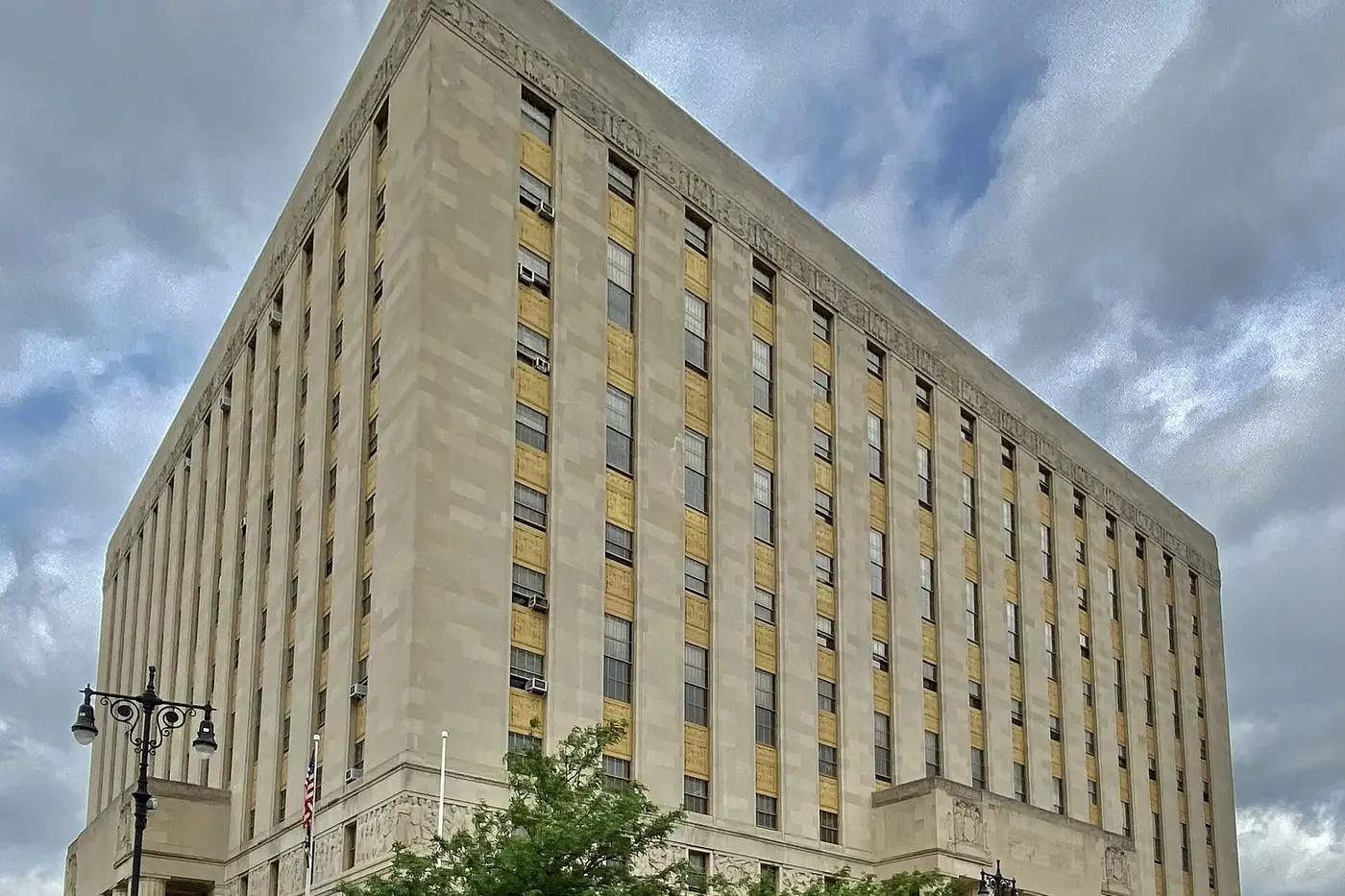
The Bronx County Courthouse, a tall limestone building on the Grand Concourse, seen from across the street.
The Bronx County Courthouse on the Grand Concourse. With 164 private law offices for 1.4 million residents, the Bronx is the thinnest field in the city, and a page written for Bronx clients faces far fewer local competitors than one written for Manhattan. Photo: Andre Carrotflower, CC BY-SA 4.0, cropped, via Wikimedia Commons.

Residents: Census ACS 2020-2024. Registered attorneys: NYS Attorney Registrations, Nov. 4, 2026. Law offices: BLS QCEW 2024. Federal districts: 28 U.S.C. § 112 and the Eastern District's pro se manual.

22 NYCRR Part 1200

The home-page label, the past-results disclaimer and the 90-day copy

In New York the advertising provisions are Rules 7.1 through 7.5 of the Rules of Professional Conduct, codified at 22 NYCRR Part 1200 and adopted by the Appellate Division. Rule 1.0 defines an advertisement as any communication about a lawyer's services whose primary purpose is getting hired, and it counts web sites, search engines, email and instant messaging as computer-accessed communications. A firm's website is advertising, and four provisions of Rule 7.1 decide what has to be on it.

"...shall be labeled 'Attorney Advertising' on the first page, or on the home page in the case of a web site."

Rule 7.1(f)

On the site: the label goes on the home page, and Rule 7.1(i) requires it to be clearly legible, not grey on grey in the footer's smallest type. An email that markets the firm puts the notation, in capitals, in its subject line. Radio, television, billboards, directories and periodicals are exempt; search ads and social posts aren't named either way, so whether they carry the label is the firm's call, and the landing page behind each ad gets the same review as the home page. Rule 7.1(h) adds that every advertisement must show the firm's name, principal office address and phone number.

"...accompanied by the following disclaimer: 'Prior results do not guarantee a similar outcome'"

Rule 7.1(e)(3)

On the site: results, comparisons with other lawyers, client testimonials and statements about the quality of the firm's work are all allowed under Rule 7.1(d), but only if they can be factually supported on the day they are published and carry that exact sentence. A testimonial about a matter still pending needs the client's informed consent, confirmed in writing. A Google review widget on a practice page is a set of testimonials, so the disclaimer sits beside it. The NYSBA's comments add that a bona fide rating may be shown with the same disclaimer, and that "Hard-Working" or "Compassionate" need no proof while "Best" or "Most Experienced" can't be used.

"...in no event less frequently than once every 90 days."

Rule 7.1(k)

On the site: every advertisement must be pre-approved by the lawyer or firm. Online advertisements must be kept for at least one year, other advertising for three. For the website itself, a copy must be saved when it first goes live, at any major redesign or "meaningful and extensive" content change, and at least every 90 days. An SEO program that publishes new pages every month makes the third trigger routine, so the archive needs a calendar, not good intentions.

"...blogs intended to educate recipients about new developments in the law are generally not considered advertising."

NYSBA Comment [7] to Rule 7.1

On the site: the same comment says a blog post that is mostly about the firm's own cases, people or achievements generally is advertising. An article explaining a change in the Civil Court's limits is information; a post announcing the firm's latest verdict is an ad, with the disclaimer and the retention that come with it.

Rules 7.1(c), 7.1(g) and 7.4

What a New York lawyer ad may not do, including in hidden code

New York's list of outright bans is shorter than it used to be. In Alexander v. Cahill (2d Cir. 2010), the Second Circuit struck down the state's earlier bans on testimonials about pending matters, portrayals of judges, attention-getting techniques and nicknames or mottos such as "Heavy Hitters", while upholding the ban on fictitious law firms and the 30-day moratorium on solicitation after an accident. What remains is narrower, and one part of it reaches into the code behind a page.

"An advertisement shall not... use actors to portray a judge, the lawyer, members of the law firm, or clients, or utilize depictions of fictionalized events or scenes, without disclosure of same"

Rule 7.1(c)(3)

On the site: Rule 7.1(c) bans four things: paid endorsements without disclosing the payment, fictitious firms or implied partnerships, undisclosed actors and dramatized scenes, and ads made to look like legal documents. A stock photo of a smiling "client" or an AI-generated courtroom scene is the kind of depiction that line is about, so it needs a disclosure or a different image.

"A lawyer or law firm shall not utilize meta-tags or other hidden computer codes that, if displayed, would violate these Rules."

Rule 7.1(g)

On the site: this is the rule SEO work runs into most directly. The NYSBA's comment gives its own example: a meta-tag reading "NY personal injury specialist" is prohibited, because the word "specialist" is restricted. Title tags, meta descriptions, image alt text and structured data are all read by search engines and AI tools even when visitors don't see them, and they are held to the same standard as the visible copy.

"This certification is not granted by any governmental authority."

Rule 7.4(c)(1)

On the site: Rule 7.4 lets a firm name the areas it practices in, or say its practice is limited to them, but not call a lawyer a specialist unless the lawyer is certified by an ABA-approved private organization or by another state. The certifying body must be named and the statement above made prominently; Rule 7.4(c)(3) defines that as at least two font sizes larger than the text stating the certification. A lawyer certified by another state uses "...not granted by any governmental authority within the State of New York" instead.

"A lawyer shall not compensate or give anything of value to representatives of the press... in return for professional publicity in a news item."

Rule 7.1(o)

On the site: earned press is valuable for links and for the firm's name in AI answers, and Search Console shows "pr for law firms nyc" among this page's queries. In New York, coverage has to be earned, not bought as a news item; a paid placement is an advertisement and follows Rule 7.1 like any other.

Rule 7.5

What a New York firm may call itself, online and on the phone

Keyword domains turned up on every wording in the survey above. New York allows them, within limits that the rule's comments spell out with unusual precision.

Descriptive names pass; promises don't

Rule 7.5(b)(1) bars practicing under a false, deceptive or misleading trade name or domain name, or a name misleading about who practices under it. The NYSBA's Comment [10] says a firm may practice as "Albany Personal Injury Lawyers" if it practices in Albany and handles injury cases, and may use a descriptive domain such as realestatelaw.com. Comment [11] rules out "Win Your Case" and winyourcase.com, because they imply results regardless of the facts.

A borough in the domain has to be true

By the same logic, a domain naming Queens or the Bronx is fine for a firm that practices there and misleading for one that doesn't. A borough-named microsite is only worth considering when the firm has the office or the practice the name implies, and even then a page on the main domain is usually the better choice, because it inherits the domain's links and reviews.

Phone numbers and other names

Rule 7.5(b)(2)(vi) allows a phone number that spells a trade name, domain name, nickname, moniker or motto, if nothing else in the rules is broken. Comment [12] gives the examples: 1-800-ACCIDENT and 1-800-INJURY-LAW are allowed, 1-800-WINNERS and 1-800-GET-CASH are not. A firm may not call itself "non-profit" unless it legally is one, and lawyers may not present themselves as partners unless they are.

Rules 4.5, 7.2 and 7.3; Judiciary Law 479 and 482

New York's 30-day bar, event pages and paying for leads

Anything published for the general public counts as advertising. Rule 7.3(b) defines solicitation more narrowly: an advertisement directed to or targeted at a specific recipient or group, or their families, whose primary purpose is getting hired and a significant motive for which is pecuniary gain. Search marketing stays on the right side of that line by default, with a few exceptions worth knowing.

"No solicitation relating to a specific incident involving potential claims for personal injury or wrongful death shall be disseminated before the 30th day after the date of the incident..."

Rule 7.3(e); see also Rule 4.5

On the site: if a filing is legally required within 30 days of the incident, the wait is 15 days instead. Rule 4.5 applies the same clock to lawyers working for the defense side. The trap for a search program is the landing page built around one crash, fire or building collapse. Rule 7.3(c)(5)(ii) exempts a firm's website from the filing requirement unless it is "designed for and directed to or targeted at persons affected by an identifiable actual event", so an event page counts as a solicitation: it waits out the 30 days and is filed like any other.

"A copy of the solicitation shall at the time of its dissemination be filed with the attorney disciplinary committee of the judicial district or judicial department wherein the lawyer or law firm maintains its principal office."

Rule 7.3(c)(1)

On the site: a solicitation in another language is filed with an English translation, and a list of recipients of a targeted mailing is kept for three years. A written or electronic solicitation prompted by a specific occurrence must say how the lawyer learned the person's identity and need (Rule 7.3(f)). Under Rule 7.3(i) all of this also binds lawyers from other states who solicit New York residents, which matters to New Jersey firms advertising across the Hudson.

"...a lawyer may pay others for generating clients leads, such as Internet-based client leads, as long as (i) the lead generator does not recommend the lawyers..."

NYSBA Comment [1] to Rule 7.2

On the site: Rule 7.2(a) bars paying anyone to recommend a lawyer, but the same comment confirms a firm may pay for online directory listings, domain names, internet ads "and search engine optimization". A lead seller that presents itself as recommending the firm, as giving the referral for free, or as having analyzed the person's legal problem is off limits. Behind both rules sit Judiciary Law sections 479 and 482, which make it unlawful to solicit legal business for an attorney, or for an attorney to employ someone to do it.

Who reviews a complaint

Which grievance committee reads a New York City firm's ads

New York City firms don't all answer to the same body. Grievance committees work by the location of the lawyer's office, and the five boroughs are split between two judicial departments. That decides where a complaint about a firm's advertising is investigated, and, under Rule 7.3(c)(1), where its solicitations are filed.

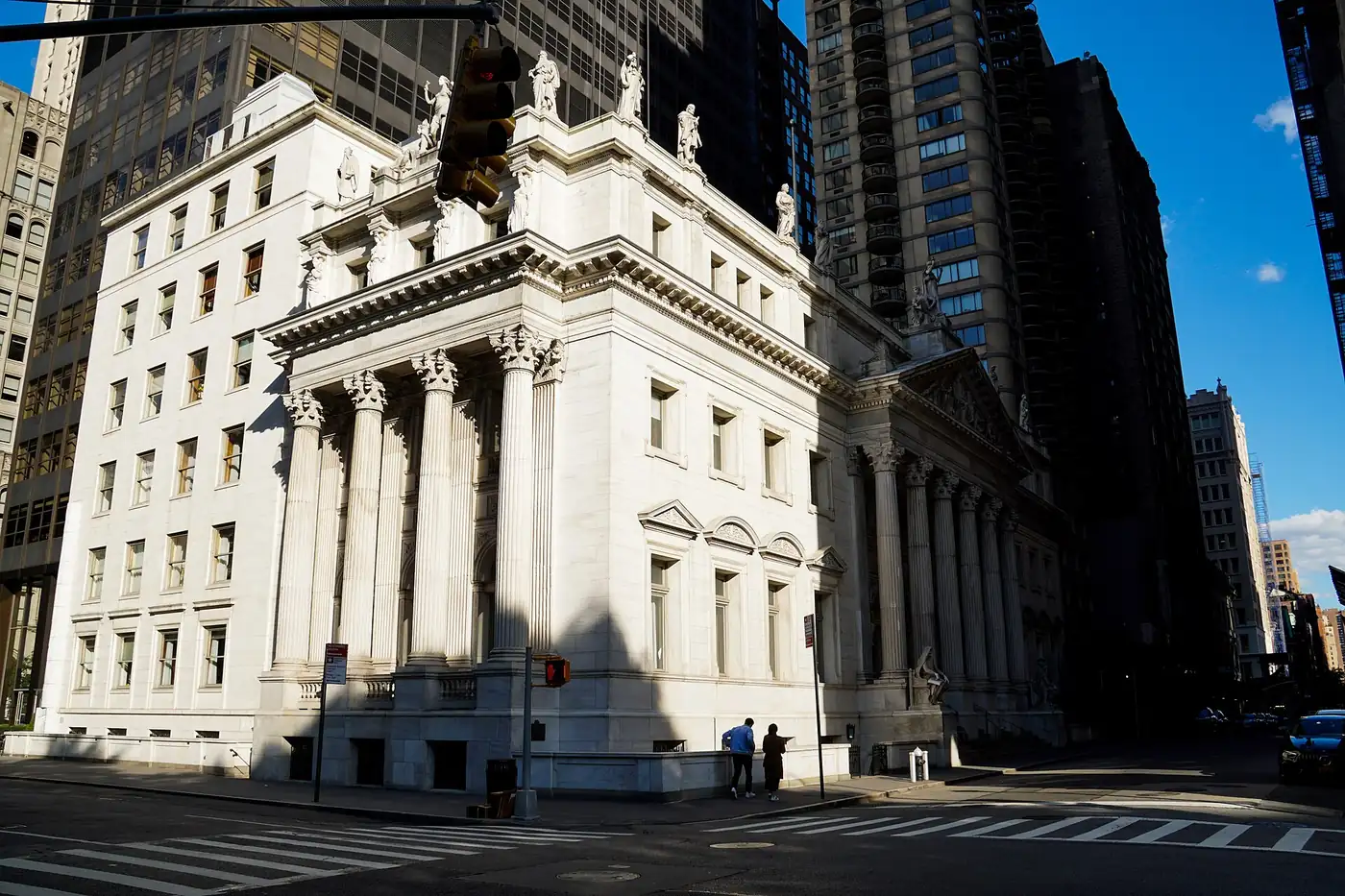
The white marble Appellate Division courthouse at Madison Square in Manhattan, with columns and rooftop statues, beside taller office towers.
The First Department's courthouse on Madison Square. A firm with its main office anywhere from the Battery to the north Bronx answers to this department. Photo: AnahitaR, CC BY-SA 4.0, via Wikimedia Commons.
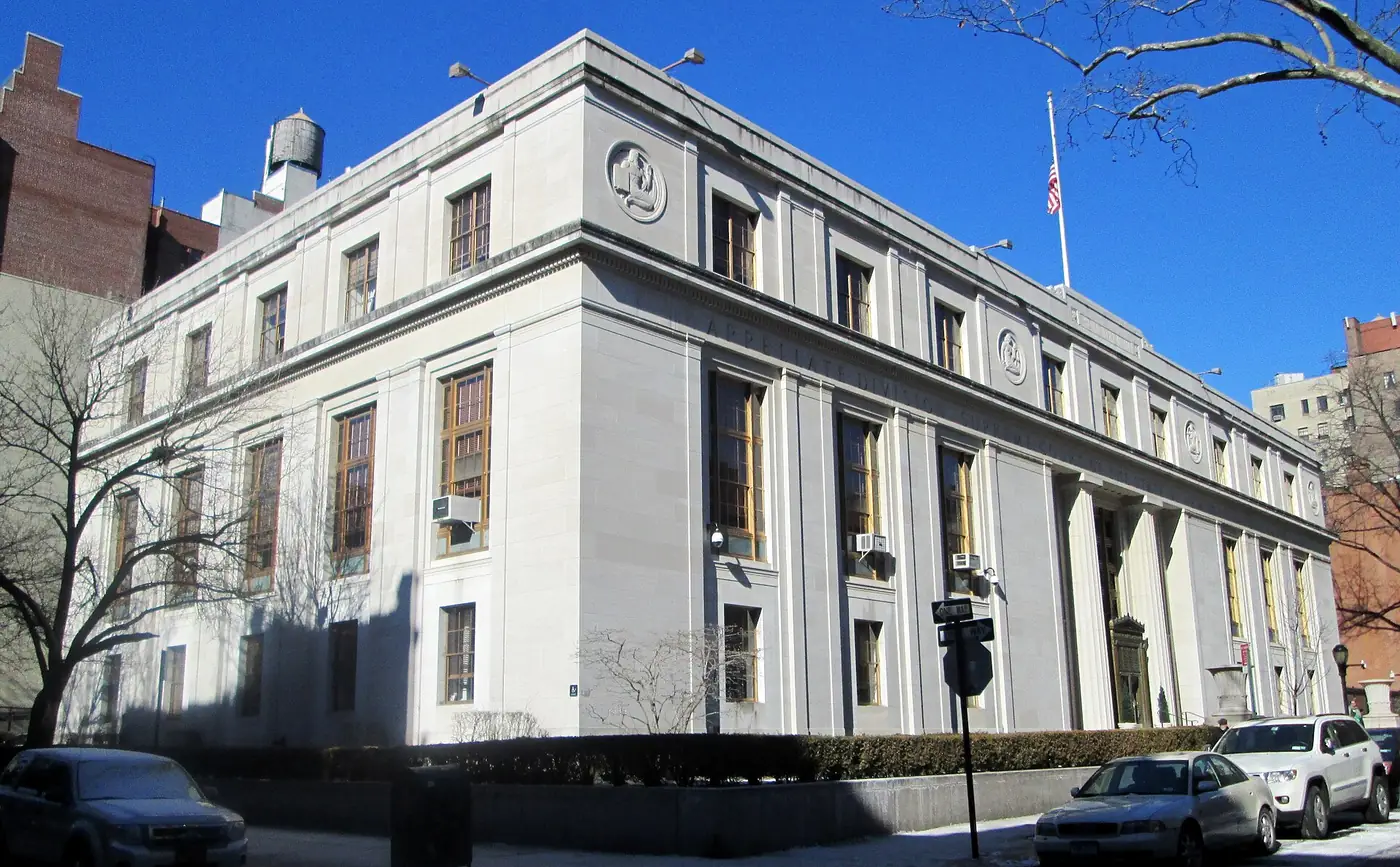
The pale stone Appellate Division courthouse for the Second Department on Monroe Place in Brooklyn Heights, seen from the street corner.
The Appellate Division, Second Department, in Brooklyn Heights. Firms with offices in Brooklyn, Queens or Staten Island, and on Long Island and in Westchester, fall within this department and its district grievance committees. Photo: Beyond My Ken, CC BY-SA 4.0, via Wikimedia Commons.

Manhattan and the Bronx

The First Department's Attorney Grievance Committee "investigates complaints against lawyers whose offices are located in Manhattan or the Bronx". Its office is at 180 Maiden Lane.

Brooklyn, Queens and Staten Island

Lawyers with offices in Kings, Queens and Richmond counties come under the Attorney Grievance Committee for the Second, Eleventh and Thirteenth Judicial Districts, at 335 Adams Street in Brooklyn, according to the NYSBA's guide to attorney discipline. The state constitution places the second, ninth, tenth and eleventh judicial districts in the Second Department, which is also where Long Island and Westchester firms sit.

What it changes in practice

Nothing in the rules differs by department; the text is the same statewide. What differs is the office a firm files its solicitations with and the committee that would read a complaint. A firm that moves its principal office from Court Street to Midtown changes both, and its filing routine has to move with it.

Paid search

Google Ads copy for New York attorneys, checked against Rule 7.1

Firms shopping for paid help reach this page too, through searches such as "new york attorney google ads services" and "new york lawyer google ads consultants". Paid search fills the gap while a firm's pages earn their rankings, and in this city it can reach a borough the office's map listing never will. It is also advertising under every rule above, in a format with very little room for words.

  • Name, address and phone. Rule 7.1(h) wants them in every advertisement. A search ad has no room for all three in its text, so location and call assets carry the address and number, and the landing page states them in full.
  • No superlatives that can't be proved. "Best NYC injury lawyer" fails the NYSBA's own example; "Free consultation, Queens office" doesn't.
  • No "specialist" in a headline. The Rule 7.4 limit applies to ad text the same as to page copy.
  • Results only with the disclaimer. A verdict in an ad needs "Prior results do not guarantee a similar outcome", which usually means the result belongs on the landing page instead.
  • Every version of the ad text, saved. Exporting the text before each edit leaves the firm a record that meets the retention rule described above.
  • Separate reporting. Ads and organic pages are reported apart, so the firm can see what a signed case from each one cost.

Google's Local Services Ads (LSA), which charge per lead rather than per click, are communications under the same rules; the profile text and any review shown with it get the same reading as an ad. How campaigns are built, and why the firm should own the account, is explained under PPC for lawyers.

East and north of the city line

Long Island DWI defense, Westchester and other firms just past the city line

Some of the queries behind this page aren't about the city at all: "long island dwi lawyers seo", "attorney seo long island", "long island law firm seo", "attorney seo marketing westchester", "law firm seo company yonkers ny". The registration data explains why. Nassau County has 9,835 currently registered attorneys, more than Brooklyn's 6,055 with about half Brooklyn's population; Suffolk has 5,921 and Westchester 7,353. Nassau also had 1,685 private law offices in 2024, Suffolk 1,030 and Westchester 867.

DWI is the statute's word; DUI is what many people type

New York's Vehicle and Traffic Law § 1192 names its offenses driving while ability impaired, driving while intoxicated, aggravated driving while intoxicated (a blood alcohol level of .18 or more, or driving drunk with a child aged 15 or under in the car) and driving while ability impaired by drugs. Searchers type both "dwi" and "dui"; this page's own queries include "long island dui lawyer seo" next to the DWI versions. In our survey, "dwi lawyer long island" and "dui lawyer long island" shared 8 of their top 10 sites, so Google treats them as nearly one search. A defense page should be built on the statute's terms, which are the ones the charging papers use, and mention "DUI" naturally where a reader would.

Pages for a Long Island defense practice

  • One page per offense in § 1192, using the charge names from the papers a client has in hand.
  • Separate pages for the aggravated and child-passenger charges, which carry their own penalties.
  • Nassau and Suffolk named separately, since a Hempstead client and a Riverhead client search their own county.
  • A plain explanation of what happens to the license after an arrest, the question asked most at 2 a.m.

Westchester and Yonkers

Westchester firms sit close to the Bronx line and compete for some of the same clients, but federal cases from Westchester go to the Southern District and the county has its own courts and bar. A Yonkers or White Plains firm gets a county plan of its own, and links to the city only for the Bronx clients it really serves.

AI answers and AI tools

AI search for New York firms, and when a website chat becomes solicitation

Firms reach this page searching "ai seo for lawyers", "new york law firm ai marketing" and "geo for lawyers new york". Being named when ChatGPT, Perplexity or Google's AI Overviews answer a New York legal question starts with pages that state facts clearly and consistently, which is the whole method behind this page. The wider method is written up as our GEO approach. Two New York sources add something specific.

A chat window can be "real-time" contact

Rule 7.3(a)(1) bars solicitation "by real-time or interactive computer-accessed communication" except with close friends, relatives and former or existing clients. The NYSBA's Comment [9] says websites, email and automated pop-ups are ordinarily not real-time, but instant messaging, chat rooms and "other similar types of conversational computer-accessed communications" are. No rule or comment names AI chatbots, yet a chat widget that opens a conversation and pitches the firm sits close to that line. A safer chat answers the visitor's own questions, offers a callback and leaves the decision to them.

The State Bar's AI task force on advertising

The New York State Bar Association's Task Force on Artificial Intelligence report, approved in April 2024, tells lawyers under Rule 7.1: "You are responsible for all content that you post publicly, including content generated by the Tools." Under Rule 7.3 it adds that lawyers may not use AI tools to generate calls, chat board posts or other solicitation automatically. For a firm's site that means AI may help draft, but a person checks every claim against its source and the firm's lawyers approve it before it is published.

Criminal defense and AI Overviews

Searches like "criminal defense law ai seo agency" and "google ai overview optimization for criminal defense law" reach this page because defense questions ("what happens at arraignment", "what is a DWAI") are the kind AI Overviews answer directly. A defense page earns a citation by answering one such question in its first lines, with the statute named, and by keeping the firm's name, office and phone identical on every profile an AI tool might cross-check.

Borough pages and neighbors

Borough pages, and the markets down the Turnpike

Manhattan and Staten Island are covered borough by borough elsewhere on this site. For practices with a second base along the corridor, each of these markets has its own page:

By practice, the methods behind this page are on our personal injury SEO, criminal defense SEO and immigration lawyer SEO pages.

Questions NYC partners bring to an opening call

A question about your own borough or practice that isn't here? Put it in the audit form and it gets answered with the audit.

In short

GLP plans lawyer SEO in New York City from where clients live and how they name their part of the city, with each page checked against New York's Rules of Professional Conduct on attorney advertising.

Where is GLP based, and how does it work with a New York City firm?

From West Hollywood, California: GLP runs New York engagements remotely, with a day-to-day contact who meets the firm by video and phone. The research behind each page comes from New York sources, such as the Rules of Professional Conduct, the courts' and city agencies' own sites, state attorney registration data and Census figures, as on this page.

Is there a GLP case study from a New York law firm?

Not from a New York firm. The published studies cover Los Angeles employment and injury practices, a British Columbia family and estate firm, a lemon law practice in California and a bail bonds company, which isn't a law firm at all. Every study names its date range and its data source. Onyx Law Group, described above, is the nearest match to a multi-borough firm. The full write-ups sit together in one place, under GLP's earnings disclaimer.

Does GLP handle law firm digital marketing in NYC beyond search?

Yes. A firm that wants paid media, intake and its other marketing vendors run under the same roof as search can hire GLP as its Consulting CMO. What a wider marketing program for a law firm includes is laid out on our law firm marketing and fractional CMO pages; this page stays on search.

What should NYC trip-and-fall and accident pages say about notice of claim?

The deadline and the notice rule, early. The Comptroller's Office says personal injury and property damage notices of claim must be served within 90 days of the occurrence under General Municipal Law § 50-e, and that claims against authorities such as NYCHA or MABSTOA go to the authority, not the Comptroller. For sidewalk and street falls, Administrative Code 7-201(c)(2) bars an action against the city unless written notice of the defect was given beforehand. A trip-and-fall page that explains those three points answers the questions callers bring. NYC Comptroller, claims.

Do you work with firms that defend businesses and drivers at OATH hearings?

Yes, and the city's own wording shapes those pages. The Office of Administrative Trials and Hearings tells people they don't need a lawyer at its hearings, keeps a Help Center at every Hearings Division location and holds most hearings by telephone. A defense page for restaurants or for-hire drivers has to explain what a lawyer adds over that free help, in concrete terms, or the reader will take the city's word for it. NYC OATH.

Which New York City laws give employment firms content no other city has?

Two examples. Since November 1, 2022 the NYC Human Rights Law has required employers to include a good-faith pay range in job advertisements, which gives a firm content for both workers and employers. And a discrimination complaint to the NYC Commission on Human Rights must be filed within one year of the last alleged act, or three years for gender-based harassment. City deadlines like these differ from state and federal ones, which is the reason to write them into the page. Worker-side and employer-side page plans are on our employment lawyer SEO page. CCHR, pay transparency, CCHR, the law.

How should a tenant-side firm write for a city with free eviction lawyers?

Honestly. According to the Human Resources Administration, a tenant with an eviction case in Housing Court or a NYCHA proceeding can get a lawyer free of charge in any ZIP code and whatever their immigration status; HRA tells tenants to say "I would like an attorney" at their first court appearance. A private tenant firm's page should say which cases and clients it takes beyond that, such as rent overcharge or repair actions, rather than compete with free counsel on the same promise. NYC HRA.

What should a landlord-side or property firm know about city housing law content?

That city law adds rules of its own. The Commission on Human Rights says source-of-income discrimination has been illegal in the city since 2008, covering Section 8, SSI, HASA, CityFHEPS and G.I. Bill housing allowances. Owners challenging a sidewalk repair assessment must first appeal to the Department of Design and Construction, and only then go to the Comptroller. Pages for owners and managers that explain both earn trust with the readers they want. CCHR, source of income, NYC Comptroller.

Immigration practices in NYC: how do they stand out next to free city legal help?

By being easy to verify. The Mayor's Office of Immigrant Affairs runs a free Immigration Legal Support Hotline at 800-354-0365, reachable through 311 by saying "Immigration Legal", and its home page warns readers to beware of legal immigration scams. Readers primed to look for fraud check credentials first, so an immigration page should make each lawyer's New York registration and admissions easy to confirm and say clearly which cases the firm takes. Removal-defense and visa page structures are on our immigration lawyer SEO page. NYC MOIA.

Does any of this apply to an upstate practice in Rochester, Syracuse, Buffalo or Albany?

Yes. Rules 7.1 to 7.5 are the same across New York State, so everything on this page about labels, disclaimers, domain names and solicitation applies to an upstate firm too. What changes is the market: an upstate firm competes with far fewer firms than a city practice, and its grievance committee sits in a different judicial department. The page plan starts from that firm's own county and courts.

Is a separate Brooklyn page worth it if our office is in Manhattan?

Only if Brooklyn clients are a real share of your caseload and the page has something true and specific to say to them. Our survey found borough searches returning borough pages, so a Brooklyn page can earn searches the citywide page won't. A Brooklyn page that is the Manhattan page with the name changed earns nothing and risks being read as a doorway page.

Does the free audit cover AI answers as well as Google?

Yes. A real person records a short walkthrough of how your firm appears when someone searches Google or asks ChatGPT for a lawyer like you, runs a quick competitor analysis of the firms ahead of you, and points out what to work on first. Expect it inside two days; it's yours to keep either way.

Find out which boroughs can find your firm

Tell us which borough your office is in and which cases you want. A real person records how your firm shows up on Google and in AI answers, borough by borough, within 48 hours.

Or call Call (661) 388-5526