For law firms across Miami-Dade County

Lawyer SEO in Miami, FL

Miami lawyer SEO for clients who google in two languages.

Most people who hire a lawyer in Miami were born in another country, and many of them search in Spanish first. GLP builds the English and Spanish pages, map listings and AI-answer groundwork a Miami-Dade firm needs, and checks each line against the Rules Regulating The Florida Bar.

This page covers the Miami side of lawyer SEO and law firm marketing: who your clients are, what they type in English and in Spanish, and what The Florida Bar allows a page to say. How we handle technical setup, writing and links for a firm anywhere is explained under law firm SEO.

Free, done by a real person, and in your inbox within 48 hours.

Before the plan

A client base mostly born abroad, set against the rest of Florida

A Miami-Dade firm serves a population unlike anywhere else in the state. The table puts each local figure next to its statewide (or English-side) counterpart; the sections below explain what we build because of it. Each source is linked in its row.

The questionWhat the data says for MiamiWhat it changes on your site
How many residents were born abroad?57.7% inside city limits and 54.5% countywide (ACS DP02), against 21.9% statewide (Florida profile)Practice pages explain U.S. steps from the start for readers raised under another legal system.
Is Spanish the household language?68.8% of the city and 66.7% of the county; 22.6% of FloridaSpanish is a main channel with its own page set, not a translated banner.
Where were the foreign-born born?Cuba first, with 682,735 county residents, 45.7% (ACS B05006); Venezuela second at 119,447Content written for the countries clients come from, in their own vocabulary.
How recent is the immigration?41.1% of the city's foreign-born and 38.4% of the county's came in 2010 or after; 36.6% in FloridaA large group of recent arrivals who have no lawyer yet and search for one.
How big is the Florida Bar's eligible membership?98,623 eligible, 82,392 with a Florida address and 15,804 living out of state (Florida Bar roster, Oct. 31, 2026)Out-of-state lawyers who advertise to Florida residents fall under the same Florida rules.
Do the same firms rank in English and Spanish?22 of 100 Spanish firm results also ranked in English, across 12 matched searches run from Miami (our survey)Ranking in English says little about ranking in Spanish; each needs its own pages.
What does filing an ad cost?$250 per advertisement, or $750 if filed late (Florida Bar); the firm's own website needs no filingPaid ads carry a Bar fee and a 20-day lead time; organic pages don't.

The service

Lawyer SEO in Miami for clients who move between English and Spanish

Firms that call us from Miami-Dade rarely lack traffic in general. What they lack is the right callers: the injured worker in Hialeah who searched in Spanish and found three other firms, or the family in Doral that asked an AI tool for an immigration lawyer and never saw their name. Law firm SEO in Miami starts from that gap, so each engagement is shaped by the office address, the cases the firm wants more of and the language its clients actually search in. Injury, defense and immigration firms each have a practice guide of ours behind this page (injury, defense, immigration). What you read here is the Miami-Dade part of that consulting work.

An audit that searches like your clients

Your practice searches go in twice, once in each language, and we note which Miami firms beat you in each, how your map listing compares, and how ChatGPT and Google's AI answers describe you. A person does this, and the written findings arrive within 48 hours, free.

Practice pages in both languages, written separately

The Spanish pages start from what Spanish speakers in Miami type, not from the English page run through a translator. Each one carries the facts a client needs: the municipality, the court, the agency and the deadline that apply.

A Business Profile that holds up

A listing for each office that has staff in it, kept current: the right categories, the services named in both languages, real photos, replies to reviews. Florida's bona fide office rule and Google's own guidelines point the same way, and we follow both.

Groundwork for AI answers

The firm's name, address, lawyers and practice areas match everywhere an AI tool might read them, and the pages answer questions in short, checkable statements, in English and in Spanish.

A Florida Bar read of every line

Before anything is published we check it against Rules 4-7.11 to 4-7.22, and we flag the ads that have to be filed with the Bar 20 days before they run. Questions that call for a lawyer's judgment go to your lawyer, marked up.

Reports from Search Console and your intake

A report every month built on Search Console and call tracking, with AI citations alongside. Where intake records allow it, we tie search to signed cases.

Want to know how your firm looks to a Spanish-speaking searcher in Miami-Dade today? Request the free audit.

Census birthplace data

Where Miami-Dade's clients were born, and why a law firm's pages should know

Census birthplace data for Miami-Dade, from the 2020-2024 table B05006, counts 1,493,272 people born outside the United States, and 92.8% of them come from Latin America. A few countries account for most of that total, and each brings its own legal questions.

Miami-Dade County's foreign-born residents, by country of birth

The ten largest countries of birth, out of 1,493,272 residents born outside the United States

Use the arrow keys to read each value.

Miami-Dade County's foreign-born residents, by country of birth
Country of birthMiami-Dade residents
Cuba 682,735
Venezuela 119,447
Colombia 105,537
Nicaragua 79,417
Haiti 74,691
Honduras 44,955
Dominican Republic 37,820
Peru 33,533
Mexico 29,887
Argentina 29,585

Data: Census Bureau ACS five-year file ending 2024, place-of-birth table B05006, Miami-Dade County.

Cuba alone accounts for 45.7% of the county's foreign-born residents, more than the next nine countries combined. Data: ACS table B05006.

Cuba, and the families of the exile years

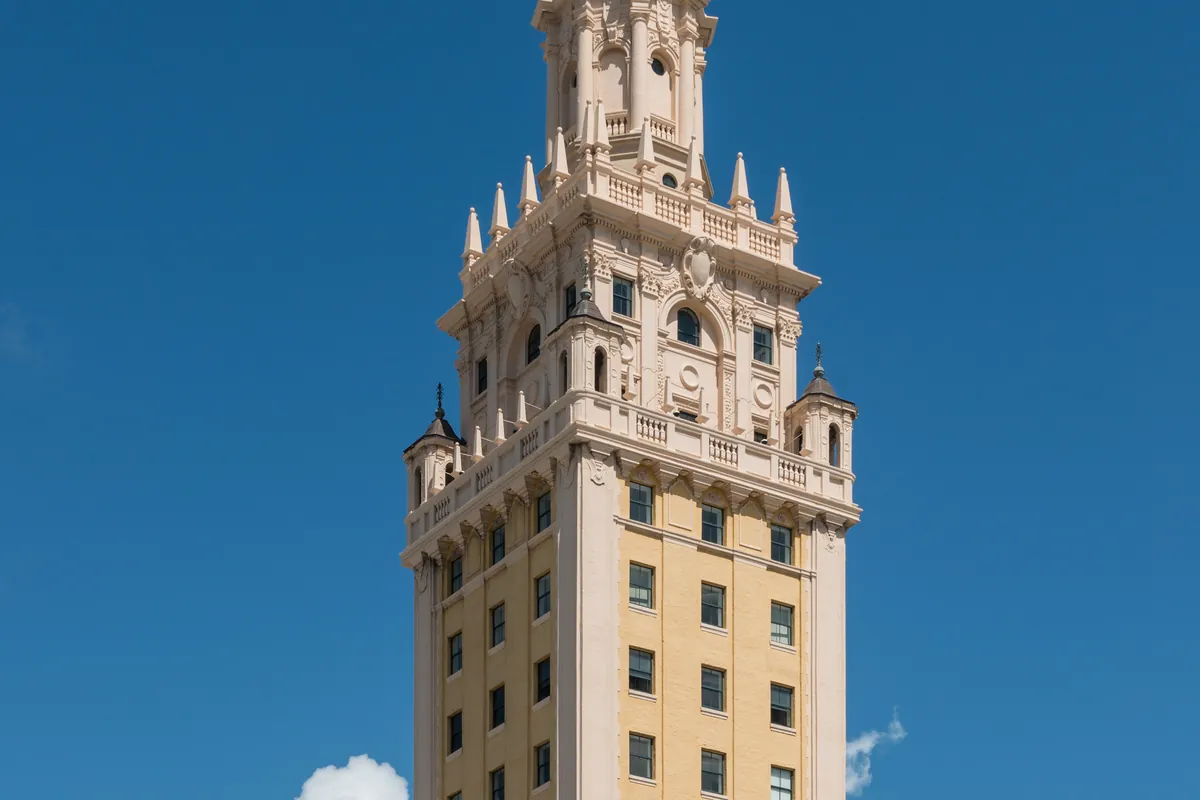
Cuba's lead is old. From 1962 through 1974 the federal government ran its Cuban Assistance Center out of the Freedom Tower on Biscayne Boulevard, which the National Park Service calls the "Ellis Island of the South". Many of today's Cuban-born residents arrived decades later, and their questions differ by generation: an exile family's estate plan, a recent arrival's status, a grandchild's property dispute. A practice page that reads as if it was written for one of those situations does better than one written for no one in particular.

The Freedom Tower in downtown Miami, a cream-colored Spanish Renaissance tower against a blue sky.
The Freedom Tower processed Cuban arrivals from 1962 to 1974; Cuba is still the birthplace of nearly half the county's foreign-born residents. Photo: DXR, Wikimedia Commons, CC BY-SA 4.0.
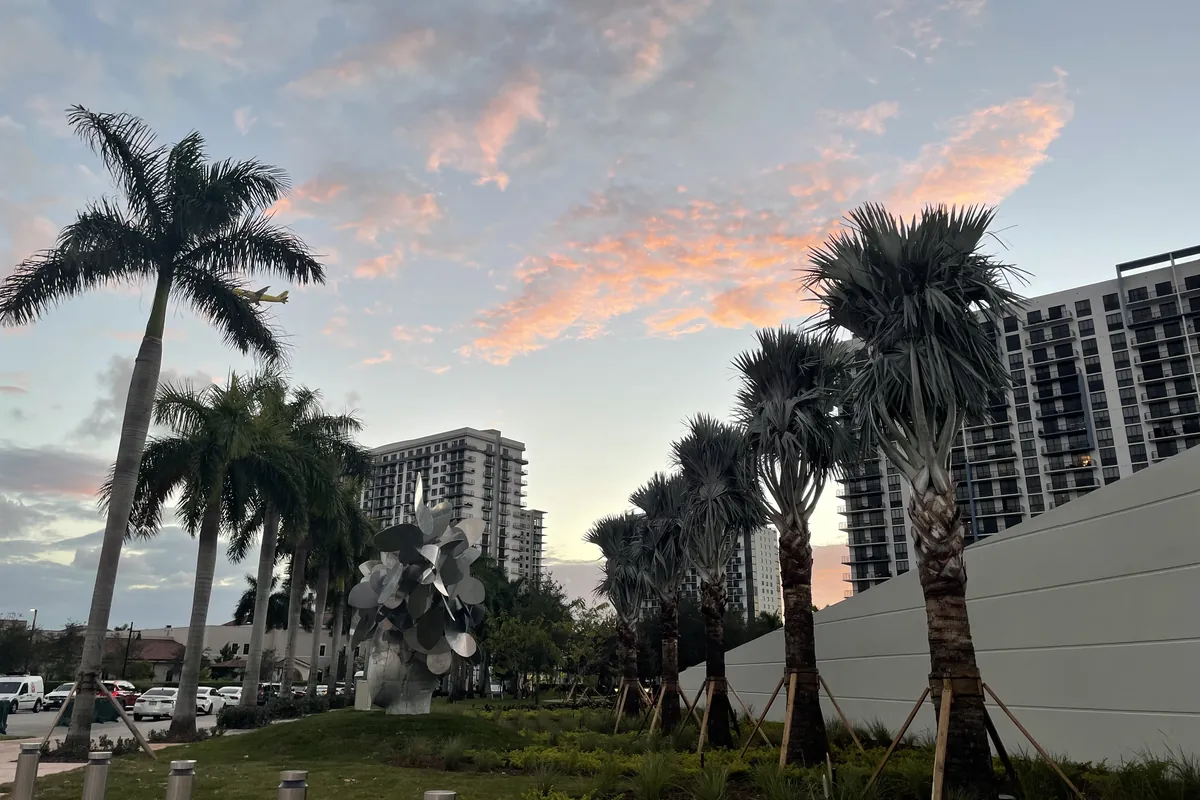
Palm trees, a public sculpture and new apartment towers in downtown Doral at sunset.
Downtown Doral. Of the city's 55,656 foreign-born residents, 27,730 were born in Venezuela (ACS B05006), so a Doral practice page reads differently from one for Little Havana. Photo: Ven-Lib, Wikimedia Commons, CC BY-SA 4.0.

Venezuela and Colombia, concentrated in western suburbs

Venezuelan and Colombian residents together outnumber every group but the Cuban one. They are concentrated in particular places rather than spread evenly: in Doral, 70.3% of residents were born abroad (ACS DP02), and Venezuela is the birthplace of about half of them. A firm with an office near Doral should treat that as a market in its own right, with pages and reviews that speak to it.

Nicaragua and Honduras, closer to downtown

Nicaraguan- and Honduran-born residents number 79,417 and 44,955 in the county. Inside the City of Miami the picture shifts: Nicaragua ranks second there (22,552) and Honduras fourth (19,382), both close to Venezuela (ACS B05006, City of Miami). A firm downtown or in Little Havana sees more Central American clients than the county totals suggest, and its Spanish pages should be written with them in mind.

The Caribbean beyond Cuba

Haiti (74,691), the Dominican Republic (37,820) and Jamaica (24,836) complete the county's Caribbean picture. Haitian-born clients are a sizable group in the north of the county, and Jamaican-born clients usually search in English. Neither fits a Spanish-only plan, which is why the language decision for each firm starts from its own intake records.

Writing for a country, not just a language

Spanish isn't one vocabulary. The word for a car, a crash or a workplace injury changes from one country to the next, and Google's suggestions pulled with a Miami location on November 4, 2026 offered "accidentes de carro", "de tránsito" and "de tráfico" side by side, along with mixed forms such as "abogado de accidente de carro near me". A Spanish page that uses only one term misses searches from the other groups. We build each Spanish page around the full set of words that its readers use, taken from Search Console and from the suggestions Google itself shows.

Arrival and citizenship

Recent arrivals, settled exiles and their children search for different things

Birthplace says where clients come from. Two other Census questions, the year a person entered the country and whether they hold citizenship, say where they are in their life here. The chart compares the City of Miami, the county and the state on four measures.

How the city, the county and the state compare

Percentages; the last two rows count only people born abroad. ACS five-year data, 2020-2024

Use the arrow keys to read each value.

How the city, the county and the state compare
MeasureCity of MiamiMiami-Dade CountyFlorida
Born outside the United States / share of all residents 57.754.521.9
Speak Spanish at home / share of residents aged 5 and older 68.866.722.6
Arrived in 2010 or later / share of the foreign-born 41.138.436.6
Not a U.S. citizen / share of the foreign-born 50.340.642.6

Source: ACS five-year file 2020-2024, DP02 profiles for the city, the county and the state.

Half of the city's foreign-born residents aren't U.S. citizens, the highest of the three. Census profile table DP02, one link per place: city, county, state.

The city and the county aren't the same market

The City of Miami is denser in recent arrivals and non-citizens than the county around it. Its foreign-born residents are evenly split between 131,769 naturalized citizens and 133,479 non-citizens, while in the county naturalized citizens make up 59.4%. A firm whose office sits in Little Havana or Allapattah serves a different mix from one in Coral Gables or Kendall, and its pages should reflect the clients at its own door.

Newer arrivals: urgent, status-driven searches

Someone who arrived in the last few years usually has an urgent question and a deadline they only half understand: a hearing notice, a work permit, an employer who didn't pay. These searches are short, often on a phone, and often in Spanish. For immigration and employment firms the pages that convert this group answer the immediate question first (what happens at the hearing, when the permit arrives), then explain the fee and the next step.

Naturalized residents: property, family and estates

Long-settled residents who became citizens ask about buying and selling property, bringing relatives over, divorce with assets in two countries and wills that cover property abroad. They compare firms more carefully and read more, so detailed practice pages and reviews from people like them carry the most weight.

Their children, searching in English for their parents

Almost a third of the county's residents (32.3%) were born in Florida itself, many of them children of immigrants. A grown son may search in English for a probate lawyer, then hand the phone to a mother who reads only Spanish. The page that wins that search lets him switch to Spanish in one tap and find the same lawyer, the same office and the same phone number on the other side.

  • For recent arrivals: short Spanish pages built around the first question and the first deadline.
  • For naturalized clients: depth, with cross-border topics such as foreign property, documents from abroad and family petitions.
  • For the second generation: an English page with a visible Spanish switch that keeps the reader on the same matter.

Our English and Spanish search survey

The same legal search in Miami, in English and in Spanish, turns up different firms

On November 4, 2026 we ran 12 matched pairs of searches through the Serper API with the location set to Miami, Florida: an English search such as "car accident lawyer miami" with the Google interface in English, and its Spanish counterpart ("abogado de accidentes de auto miami") with the interface in Spanish. For each pair we recorded the top 10 organic results and the top map listings, then compared which law firm websites appeared in both lists.

Firm websites in the top 10, English search vs Spanish search

12 matched searches run from Miami, FL on November 4, 2026; directories and forums excluded from the counts

Use the arrow keys to read each value.

Firm websites in the top 10, English search vs Spanish search
PracticeEnglish searchSpanish searchIn both
Car accident 881
Personal injury 8102
Immigration 881
Divorce 872
Criminal defense 793
DUI 894
Workers' comp 792
Employment 780
Probate 791
Real estate 670
Condo association 1062
Slip and fall 7104

Source: GLP Marketing survey of Google results via the Serper API, location Miami, Florida, November 4, 2026. 118 English and 119 Spanish organic results.

In no practice did more than four firm websites rank in both languages for the same search. Source: GLP survey, November 4, 2026.

Only 22 firm websites made both lists

Across the 12 pairs, the Spanish searches returned 100 firm websites and only 22 of them also ranked in the English top 10 for the same search. Employment and real estate had no overlap at all. For most practices, then, the firms a Spanish-speaking client sees are not the firms an English-speaking client sees, even when both are standing on the same corner in Little Havana.

A Spanish section can carry a firm across practices

One firm's website appeared in 8 of the 12 Spanish lists but in only 3 of the English ones. Its Spanish section covers injury, family, immigration, employment and civil matters, each with its own page written for Miami. That is the clearest sign in the survey of what a full Spanish build can do: a firm that is one name among many in English can be a constant presence in Spanish.

Where the ranking Spanish pages live

Of the 119 Spanish results, 68 sat in a Spanish folder of a mostly English website (such as /es/ or /espanol/), 6 on a Spanish subdomain, 15 on directory sites and 30 elsewhere, mostly on Spanish-only domains or English pages. About 101 of the 119 were Spanish-language pages, judged by their titles and addresses.

Spanish searches that still return English pages

DUI was the exception. For "abogado de dui miami", 8 of the 10 results were English pages, because "DUI" is an English term that Spanish speakers use as is and few firms have written Spanish pages around it. Gaps like that are where a Spanish page faces the least competition. We look for them practice by practice before deciding what to build.

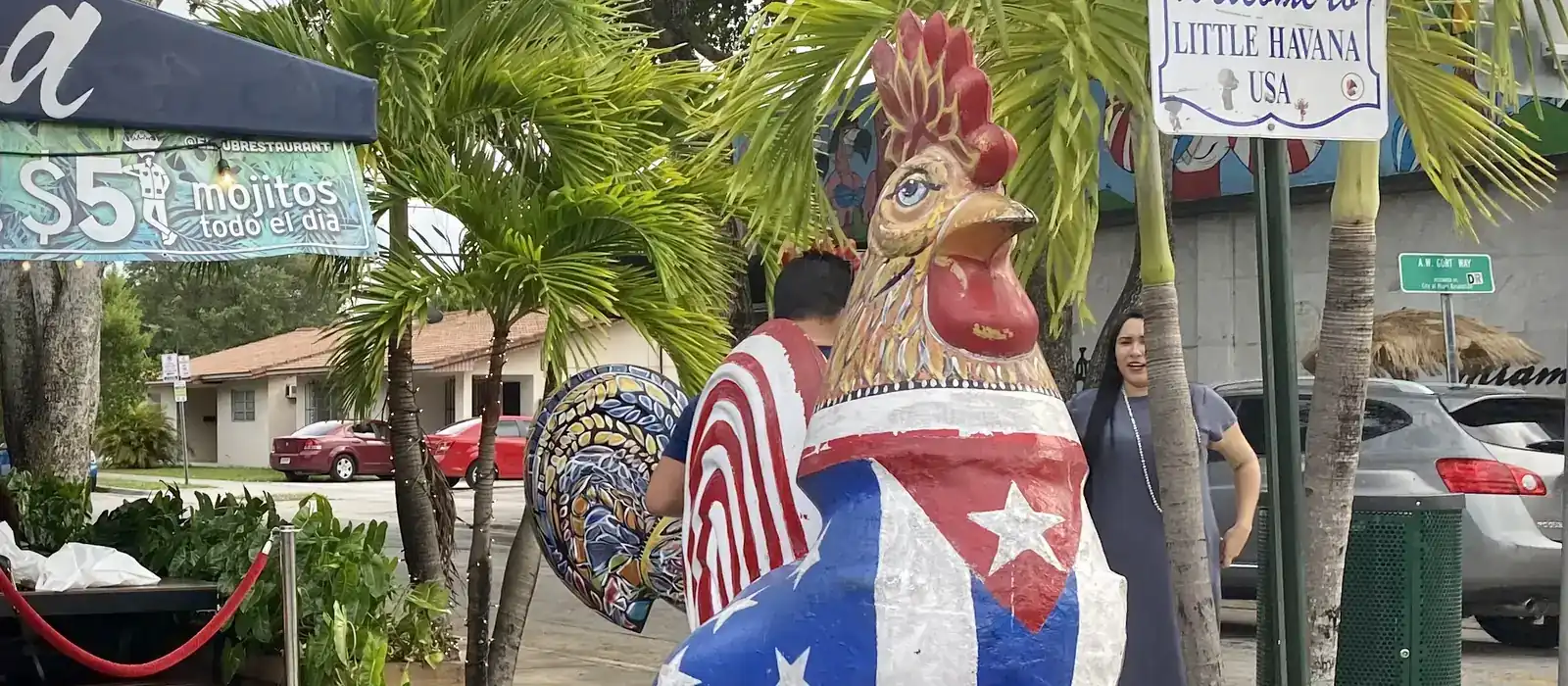
A painted rooster statue and Spanish-language signs on Calle Ocho, with a Welcome to Little Havana sign behind.
Calle Ocho in Little Havana, where the shop signs are in Spanish. In our survey, 78 of the 100 firm websites in the Spanish results were missing from the English top 10 for the same search. Photo: Sharon Hahn Darlin, Wikimedia Commons, CC BY 2.0.

Limits of a survey run on a single day

Everything above comes from searches on November 4 from a Miami location, using fixed wording. Google personalizes results, and another phrasing ("abogado de accidentes de carro" rather than "de auto") can bring up different firms. We use the survey to decide where a Miami firm should start, and then measure its own pages in Search Console, which shows what real searchers saw.

Google Business Profile

Map listings carry over between languages; organic results don't

The same survey also pulled the map listings for each search. They behaved very differently from the organic results: across the 12 pairs, 50 of the 120 English map listings also appeared for the Spanish search. Organic results depend on pages, and pages are written in one language. A Business Profile is a single record about a place, and Google shows it to searchers in either language.

A profile that serves English and Spanish searchers

That makes the profile the cheapest way to reach Spanish-speaking clients, as long as it gives them something to read. Reviews in Spanish from real clients, answers to Spanish questions, a services list that includes the Spanish terms clients use and photos of the actual office all help. Google's guidelines don't allow a business name that repeats itself in two languages, so the name stays the firm's real name and the Spanish lives everywhere else (Business Profile guidelines).

Where the overlap breaks down

Workers' compensation was the outlier: the Spanish search returned only 6 map listings and none of them matched the English set. Personal injury and DUI, by contrast, shared 8 of 10. Business names in Spanish mattered too: 14 of the 66 listings that appeared only for the Spanish search had Spanish words in the firm's name, against 4 of the 50 listings shared by both searches.

The office has to be real

Google says a rented mailing address where the business doesn't operate, a virtual office, can't have a Business Profile, and a co-working desk qualifies only with signage, staff and customers during business hours. Florida reaches the same place from the ethics side. The comment to Rule 4-7.12 defines a bona fide office as a physical location where the firm expects to provide legal services "in a substantial way on a regular and continuing basis", and bars ads that imply an office where there is none. A firm that wants to reach Doral or Hialeah without an office there may say it is "available by appointment" in that place, if true, but it may not list a profile there.

Think a second office would pay off in another part of the county? Request the audit with that area in the notes, and the findings will show which firms hold its map results now.

Local SEO in Miami-Dade

Local SEO across 34 municipalities and the unincorporated county

Miami-Dade is home to 34 incorporated municipalities, and large parts of the county belong to none of them (Miami-Dade County). The county's own list ranks the City of Miami first by population; Hialeah, Miami Gardens, Miami Beach, North Miami and Coral Gables follow in that order. Clients don't search by county. They type the name of the place they live, and that name may be a city, a neighborhood or an unincorporated community with no city government at all.

Which place names deserve a page

Miami-Dade has too many municipalities for a page each to say anything new, and pages that differ only by town name are what Google calls doorway pages. We pick the names that meet three tests: residents search with them, the firm actually takes cases from there, and there is something specific to say, such as a local ordinance, a branch court or a police department that writes the reports. Hialeah and Miami Beach usually pass for injury firms. Small municipalities like Bal Harbour or Medley rarely do.

Unincorporated areas and the county's own agencies

Kendall, Westchester and other unincorporated communities have no city hall, so the county runs their services directly. A page for a Kendall client therefore points to county offices, not to a municipal one, and that difference is easy to get wrong when a template swaps place names.

North of the county line

Miami firms take clients from the rest of South Florida too, and people find this page with searches that name Broward and Palm Beach cities. Those cities sit in other judicial circuits and other local results, so a Miami firm that wants Broward clients needs Broward pages, and ideally a Broward office, rather than a mention in a list.

Content marketing for Miami law firms

Local law that a statewide Florida page leaves out

Most Florida law firm content is written for the whole state, so it skips the county ordinances, court divisions and programs that only exist in Miami-Dade. Those gaps are where a Miami firm's pages can say something its competitors don't. Each idea below comes from a county or court source we checked in November 2026, and each fits a specific practice.

Employment: the county's wage theft program

Miami-Dade runs its own wage theft process. A worker files a signed complaint affidavit, with pay stubs or other proof, for an amount over $60 and no more than $15,000, for work done within the past 12 months, and the county notifies the employer (Miami-Dade wage theft program). A Spanish page that walks a worker through it, and explains when a lawsuit is the better route, answers a question generic Florida employment pages never raise.

Employment and housing: Chapter 11A's extra protections

The county's Human Rights Ordinance, Chapter 11A, bars discrimination based on source of income and on status as a victim of domestic violence, dating violence or stalking, beyond the usual protected traits. Its Commission on Human Rights takes employment complaints within 180 days and housing complaints within 365 (Commission on Human Rights). Employment and tenant firms can build pages around claims that exist only at county level.

Immigration: detained and non-detained courts

Removal cases in Miami split by custody. People who are free attend the downtown court in Suite 700 of 333 S. Miami Avenue (EOIR); people held in detention go before the Krome court at 18201 SW 12th Street, on the county's western edge (EOIR). Relatives of someone held at Krome search with different words and more urgency than a person preparing for a scheduled hearing downtown, so each audience deserves its own page.

Business disputes: complex and international sections

The Eleventh Judicial Circuit created its Complex Business Litigation division in 2006; two judges preside over Sections 43 and 44, and two more handle International Commercial Arbitration cases in Sections 46 and 47 (Circuit Civil Division). For commercial firms with clients in Latin America, pages that explain those sections show a reader that the firm knows where a cross-border dispute will be heard.

Condominium law after Surfside

The partial collapse of Champlain Towers South in Surfside on June 24, 2021 (NIST investigation) led to Florida's milestone inspection law. Under section 553.899, condominium and cooperative buildings three habitable stories or taller need an inspection by December 31 of the year they turn 30, then every 10 years, and the local building agency may require it at 25 years near salt water. Condo owners and boards across the county search for help with inspections, assessments and repairs, in both languages.

AI search

Google's AI Overviews and AI Mode now answer in Spanish

For AI legal marketing in Miami, where so many clients search in Spanish, the most important change happened quietly. In October 2024 Google wrote that people in the United States who speak Spanish "can now see AI Overviews in your preferred language" (Google). On September 23, 2025 it began rolling out AI Mode in Spanish worldwide (Google). Spanish legal questions asked in Miami now get AI-written answers, and those answers link to the pages they drew on.

What an AI answer can draw from a Spanish page

An answer engine quotes specific, self-contained statements. A Spanish page that only summarizes its English twin gives it little to work with. A Spanish page that states the Miami-Dade wage theft limits, or where a Krome detainee's hearing takes place, gives it a sentence worth citing. We write Spanish pages with the same density of facts as the English ones, because thinner pages are less likely to be picked up in either language.

The firm's facts, the same in both languages

AI tools cross-check what they read. If the Spanish page says the office is in Coral Gables and the English page says Miami, or the lawyer's name is spelled two ways, the tool has two versions of the firm to reconcile. We keep the name, address, phone, lawyers and practice areas identical across both language versions, the Business Profile and the directory listings.

Testing the answers in both languages

It is worth asking an AI tool the same question twice, once in English and once in Spanish, because the sources often differ. A firm cited in English may be absent in Spanish, or the reverse, and that difference shows which language version needs work.

Bar rules 4-7.11 and 4-7.20

The Florida Bar treats a firm's website as advertising, but doesn't make you file it

Florida regulates lawyer advertising more tightly than most states, and Chapter 4, Subchapter 4-7 of the Rules Regulating The Florida Bar (current text, October 1, 2026) is where the detail lives. The starting point for SEO work is how those rules treat a website.

Every medium is covered, websites included

Rule 4-7.11(a) applies the subchapter to communication "in any print or electronic forum", naming websites, social networking, banners, pop-ups and video sharing. The comment is blunt: websites "are subject to the general lawyer advertising requirements" and are treated like any other medium. So every page a Miami firm publishes, the Spanish ones included, must meet the content rules described in the sections below.

But the website isn't filed

Rule 4-7.20(g) exempts "information contained on the lawyer's Internet website(s)" from the filing requirement, and the Bar's filing page adds that pop-ups on the firm's own site are exempt as well (Florida Bar). The exemption saves time, not responsibility. If the Bar later finds part of a website noncompliant with Rules 4-7.14 or 4-7.15, Rule 4-7.19(f)(5) lets it discipline the lawyer for keeping that content up 15 days after notice.

What does have to be filed

  • Search, banner and pop-up ads on other sites, unless limited to the safe-harbor content of Rule 4-7.16.
  • Paid or "boosted" social media posts shown to people with no prior relationship with the lawyer (networking-site guidance).
  • Television, radio, print, billboards and signs.
  • Every unsolicited direct mail and direct email ad, with no tombstone exception.
  • Informational newsletters carrying the firm's contact details; if the promotional content doesn't change, only the first issue.

Exempt, but still bound by the content rules

A lawyer's own pages on networking sites are treated like the website and aren't filed, as are listings in a law list or bar publication, mailings to existing and former clients and other lawyers, and material a prospective client asked for (Rule 4-7.20(c) to (e)). The Bar's safe harbor goes further: an ad limited to the presumptively valid content of Rule 4-7.16, such as the firm name, lawyers, office locations, phone numbers, years admitted, languages spoken and fields of practice, needs no filing anywhere.

Rule 4-7.19

Filing an ad with The Florida Bar: timing, fees and translations

When an ad does need filing, Rule 4-7.19 and the Bar's filing requirements page set the process. It goes to the Ethics and Advertising Department in Tallahassee, and its timing decides when a campaign can start.

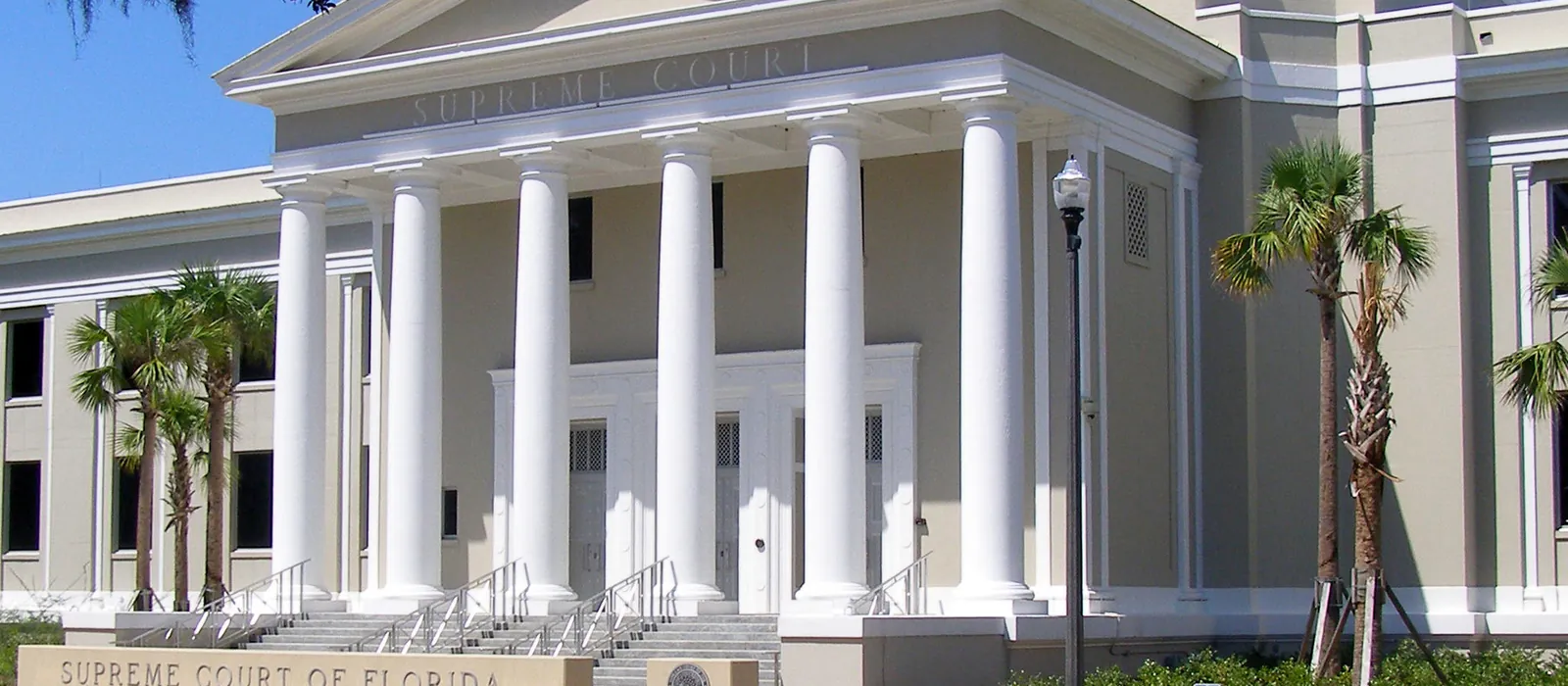
The front of the Supreme Court of Florida building in Tallahassee, with white columns and palm trees.
The Supreme Court of Florida adopts the Bar's rules; its order SC2025-0018, effective July 14, 2025, amended the filing and exemption rules a Miami firm works under today. Photo: Bruin79, Wikimedia Commons, CC BY-SA 3.0.

The 20-day lead time and the Bar's reply

The ad must reach the Bar at least 20 days before its first use. The Bar explains the number: 15 days for its evaluation and 5 days for mail. If the Bar sends nothing within 15 days of receiving a complete filing, the lawyer can't be disciplined for running the ad, unless the Bar later finds it noncompliant and the lawyer keeps running it after notice.

The fee, and what lateness costs

The filing fee is $250 per advertisement filed on time and $750 per advertisement filed fewer than 20 days before first use. A campaign with five ad variations is five filings. Since July 2026 filings can be made through the MyFloridaBar member portal; mailed filings still go with a check to 651 E. Jefferson St. in Tallahassee.

Spanish ads need an English translation

Rule 4-7.19(h)(4) requires "an accurate English translation of any portion of the advertisement that is in a language other than English". For a Miami firm advertising in Spanish, every filed ad goes in with its translation, alongside a transcript for audio or video, the full text, a list of the media and dates it will run, and the name of the responsible lawyer.

When circumstances change

If something changes after the Bar has reviewed an ad and the change raises a substantial possibility that the ad is now misleading (a lawyer leaves, an office closes, a stated fee changes), Rule 4-7.19(i) requires the lawyer to refile promptly, with an explanation and an extra fee of no more than $100.

Copies kept after an ad stops running

Rule 4-7.19(j) requires the lawyer to keep a copy or recording of each ad for 3 years after its last use, with a record of when and where it ran. For mailings sent to many people, one copy plus the list of recipients is enough.

An opinion on a single web page

A firm that wants certainty about website content can ask the Bar for an advisory opinion under Rule 4-7.19(d), but not for the whole site. It may submit "a specific page, provision, statement, illustration, or photograph". A finding of compliance then binds the Bar unless the content hides a misrepresentation, which makes it worth the fee for a page carrying a bold claim.

Rules 4-7.13 to 4-7.15

Lines we rewrite on Miami firm websites before they go live

The content rules are easiest to apply line by line. These are drafts of the kind we see on firm sites, in English and Spanish, with the Florida rule each one breaks and how we would put it.

  1. Draft"We will get you the money you deserve."

    A prediction of success, 4-7.13(b)(1). The comment lists "I will get you money for your injuries" as an example.

    Our version"We will pursue payment of your medical bills and the wages you lost."

  2. Draft"Over 60 years of combined experience."

    A material omission when it adds up several lawyers' years, per the comment to 4-7.13.

    Our versionEach lawyer's own years of practice, on that lawyer's bio.

  3. Draft"Miami's most trusted injury firm."

    A characterization of reputation that can't be objectively verified, 4-7.13(b)(3).

    Our versionA verifiable fact: the year the firm opened, or the number of lawyers.

  4. Draft"Expertos en inmigración."

    "Expert" claims need certification or objective proof, 4-7.14(a)(5); a firm-wide claim needs a disclaimer unless every lawyer qualifies, (a)(6).

    Our version"Nuestra práctica se dedica a casos de inmigración", or the claim tied to the named lawyer who qualifies.

  5. Draft"Board certified in personal injury."

    Certification is by area; the Bar certifies in civil trial law, not "personal injury", 4-7.14(a)(4).

    Our version"Board certified in civil trial law by The Florida Bar."

  6. Draft"No fee unless we win."

    Fee statements must disclose every fee and cost the client may owe, 4-7.14(a)(7).

    Our versionThe same line, followed by who pays case costs when there is no recovery.

  7. DraftA testimonial written by the firm for a client to sign.

    Drafted by the lawyer, 4-7.13(b)(9)(D).

    Our versionThe client's own words, with the "you may not get the same result" disclaimer.

  8. DraftA retired judge in a video saying "I recommend them."

    An authority figure endorsing the lawyer, 4-7.15(b).

    Our versionCut the endorsement; describe the firm's work instead.

Testimonials, Florida style

Florida allows testimonials, but Rule 4-7.13(b)(9) sets six conditions. The person must be qualified to judge what they describe, describe their own experience, reflect what the firm's clients generally experience, write it themselves, receive nothing of value for it, and appear with the disclaimer that a prospective client may not obtain the same or similar results. Every review a firm republishes on its site has to meet all six.

Past results that can be checked

Results are allowed only if "objectively verifiable", and the comment warns that an atypical result, or a judgment that was uncontested or obtained by default, can mislead if that context is left out. For a results page, that means each entry names the case type and the facts that made the result possible, and a default judgment says so.

Awards and their dates

An award may be listed if the organization is bona fide and chooses using objective criteria. The comment to 4-7.14 asks for the award's actual name and the date given, unless it was given in the current year or the rating is current. A badge row with undated logos needs dates added.

Board certification as a search asset

The Florida Bar certifies lawyers in 26 areas under Chapter 6 of its rules (Florida Certification Plan). Several fit Miami's market closely: immigration and nationality law, international law, international litigation and arbitration, condominium and planned development law, and marital and family law. A lawyer who holds one may say so with the area and the certifying body named; certification belongs to a person, and an ad may not call a firm "certified". For lawyers who hold it, the phrase is a real differentiator in both languages.

Rule 4-7.12

Name, office city and disclaimers, repeated in every language on the page

Rule 4-7.12 sets what every Florida ad must contain. For a bilingual firm, its third paragraph matters most.

Who is responsible, and where the office is

Every ad must name at least one lawyer, or the firm, responsible for its content, and give the city, town or county of at least one bona fide office of the lawyer who will do the work. On a website we place both in the footer so they appear on every page, and on landing pages built for ads we repeat them near the top.

Every language used

Rule 4-7.12(c) says any words the subchapter requires "must appear in each language used in the advertisement". The comment adds that a disclaimer needed to keep a statement from misleading must appear in the same language as that statement. In practice:

  • A Spanish page carries its required name, office city and disclaimers in Spanish.
  • A page that mixes English and Spanish carries them in both.
  • A Spanish testimonial gets its "results may differ" disclaimer in Spanish, next to it.
  • A Spanish fee line ("sin costo inicial") gets its cost disclosure in Spanish.

When a case may be passed on

If the firm expects to refer some of the cases its ads bring in, Rule 4-7.12(b) requires the ad to say so. The comment offers the wording: "Your case may be referred to another lawyer." Firms that sign cases in volume and refer out the ones outside their practice need that line, in each language, on the pages that generate those calls.

Clear and conspicuous

Rule 4-7.12(d) requires required information to be clear and conspicuous, and the comment spells out what that means for a web page: a disclaimer modifying a line of text should be the same size or larger, placed immediately with the text it modifies. A disclaimer in small grey type at the bottom of a long page doesn't meet that standard, so we design those lines into the page rather than add them at the end.

Rules 4-7.17, 4-7.21 and 4-7.22

Directories, lead sellers and keyword domains under the Florida rules

Much of local SEO happens off the firm's own site: directory listings, lead services, domains. Florida's rules reach all of it.

A directory is a "qualifying provider"

Rule 4-7.22(b) defines a qualifying provider as anyone paid, in money or otherwise, for referring prospective clients, and it names four kinds: matching services, pooled advertising programs with a shared phone number or website, anyone "publishing in any media a listing of lawyers or law firms together in one place", and sellers of tips or leads. Online directories that charge for listings or upgraded profiles fall within that definition. A voluntary bar association that only lists its members isn't one, under Rule 4-7.22(c)(2).

What a provider must do, and what the firm must report

  • The provider may not share fees, unless it is The Florida Bar's referral service or a Bar-approved one.
  • It must give the Bar, at least yearly, the names and bar numbers of participating lawyers.
  • It must disclose to each referred client where the lawyer's bona fide office is located.
  • It may not use a name that suggests it is a law firm, and it needs lawyers from at least four firms on its panel.
  • The lawyer must report to the Bar within 15 days of starting or ending participation, and becomes responsible for the provider's compliance without due diligence beforehand.

A premium directory spot or a batch of "exclusive leads" should come with the paperwork Rule 4-7.22(d)(6) obliges the vendor to supply; we request it before a Miami firm signs anything.

Paying for ads and recommendations

Rule 4-7.17 bars a lawyer from paying for another firm's advertising and from letting a nonlawyer pay for the lawyer's own. It also bars giving anything of value for a recommendation, apart from the reasonable cost of advertising and the usual charges of referral services and qualifying providers. Co-op campaigns between firms are allowed only if each firm pays its share and each is named with its required information.

Trade names and keyword domains

Domains such as "miamiinjuryhelp.com" are common in local search. Rule 4-7.21(c) allows advertising under a trade name only if the firm actually practices under that name, which means the same name on its letterhead, business cards, office sign, fee contracts and pleadings. A domain used only as a marketing name, on a site that doesn't say who the firm is, fails that test. Rule 4-7.13(b)(8) separately bars internet addresses that imply conduct the rules prohibit.

Searches for another lawyer's name

Rule 4-7.13(b)(12) bars contact or other information "presented in a way that misleads a person searching for a particular lawyer or law firm" into contacting a different one. Campaigns that bid on a competitor's name, or pages built around another firm's name, sit close to that line, and we don't build them for Florida clients.

Rule 4-7.18

Accident outreach, follow-up email and targeted posts

SEO brings inquiries; what a firm does next is regulated too. Rule 4-7.18 governs direct contact with prospective clients, and the Bar's guidance extends it to some social media.

No live solicitation

Rule 4-7.18(a) bars soliciting strangers in person, by phone or by real-time video for profit, whether done by the lawyer or by staff and agents. A web form or chat that the prospective client starts is different, because the client made the first contact.

Written outreach after an accident

Under Rule 4-7.18(b)(1)(A), a firm that writes to crash victims or their families has to wait: the mailing must go out more than 30 days after the accident or disaster that prompted it. Nor may a lawyer write to someone known to be represented, to someone who has asked not to be contacted, or to the respondent in an injunction petition before that person has been served.

What permitted letters and emails must carry

  • The word "advertisement" on each enclosure and envelope, and at the start of an email's subject line.
  • A statement of the lawyer's or firm's background, training and experience in the area of law.
  • "SAMPLE" at the top of any enclosed contract, and "DO NOT SIGN" on the signature line.
  • How the lawyer learned of the matter, when the letter was prompted by a specific event.
  • Nothing on the envelope that reveals the recipient's legal problem.

Posts aimed at people who signal a legal need

On January 31, 2020 the Bar's Board of Governors decided that a social media post paid to appear in the feeds of people who had self-identified with traits of a prospective class was a targeted electronic solicitation (Florida Bar). The Bar's position since is that a post targeted narrowly enough to reach only people with a specific legal need must meet Rule 4-7.18(b) and be filed. Broad local targeting, such as adults in Miami-Dade, is ordinary advertising; targeting people who recently posted about a crash is not.

After someone fills in the form

Replies to a prospective client's own request fall outside these requirements, under Rule 4-7.18(b)(3). The firm can answer a web inquiry fully, in the language the client wrote in, without the "advertisement" label. A follow-up campaign sent weeks later to people who never replied is another matter, and we set those up as filed communications.

Working with GLP

How a Miami-Dade engagement runs from the other coast

Where we work from

GLP has no Miami office. Our team works from West Hollywood, California, and serves Florida firms remotely, which is why the research on this page comes from public records and from searches run with a Miami location.

From the audit to a retainer

Step one costs nothing: the audit, then a call to go through its findings. Nothing beyond the audit is required; firms that go on agree the monthly fee and its terms on that call, before signing, with no long-term contract to lock them in. Most firms hire us for search and AI visibility; some want a Consulting CMO who also manages their ads, intake and outside vendors. Each stage from audit to reporting is described on how we work.

What to read before you decide

Our editorial policy explains how we source, check and correct the guides on our own site, this page included, the legal content page describes the writing we do for firms, and law firm website design covers site builds for firms whose current site holds the rest back.

En español

Marketing para abogados en Miami, en pocas palabras

GLP Marketing es una agencia de marketing digital para abogados y bufetes. En Miami-Dade, donde dos de cada tres residentes hablan español en casa, preparamos páginas en español que parten de lo que los clientes realmente escriben en Google, no de una traducción de la versión en inglés. Cada página explica el tribunal, la agencia y el plazo que corresponden en el condado.

También revisamos cada texto según las reglas de publicidad de The Florida Bar. La regla 4-7.12(c) exige que el nombre del abogado responsable, la ciudad de la oficina y cualquier aviso obligatorio aparezcan en cada idioma usado en el anuncio, y los anuncios en español que deben presentarse ante el Colegio de Abogados de Florida van acompañados de una traducción al inglés.

La auditoría es gratuita: revisamos cómo aparece su bufete en Google, en el mapa y en las respuestas de inteligencia artificial, en inglés y en español. Solicite su auditoría.

Elsewhere in Florida

Lawyer SEO pages for other Florida cities

The Florida Bar rules on this page apply statewide. The pages below cover the markets, courts and clients of other Florida cities.

Miami partners usually want these answered before they call us

Something else on your mind? Add it to the notes when you request the audit.

In short

This page explains how GLP plans lawyer SEO for Miami-Dade firms: who their clients are (Census birthplace, arrival and language data), what our own English and Spanish search survey found, and how Florida's advertising rules, from the website exemption to the Bar's filing desk, shape the copy we write.

Is GLP a Miami SEO consultant for businesses outside the legal field?

Our work is almost all for law firms, which is why this page talks about Florida Bar rules rather than general marketing. The one other field we publish a service for is healthcare: medical practices that search "local SEO for doctors in Miami" can read our medical SEO page. Restaurants, retailers and other Miami businesses are better served by an agency that specializes in them.

What does local SEO mean for a law firm in Miami?

It means showing up when someone in Miami-Dade searches for a lawyer near them: the map listings, the organic results beneath them, and the AI answer that sometimes sits above both. For a Miami firm that work covers the Business Profile (a real, staffed office, the right categories, reviews from clients), practice pages that name the municipality and the court a client will deal with, and the same groundwork in Spanish. The general version of this work, for any city, is on our local search page.

Do you work with firms in Miami Gardens, Hialeah, Doral or Homestead?

Yes. Miami Gardens is the county's third-largest municipality, after the City of Miami and Hialeah, and a firm there competes mainly with offices in the north of the county and in southern Broward. We plan the same way for each: start from the firm's own address and the places its clients come from, then decide which municipality names deserve a page of their own and which are covered by the main practice pages.

Can a Fort Lauderdale, Hollywood, Pembroke Pines or Boca Raton firm work with GLP?

Yes. Firms in Broward and Palm Beach counties work under the same Florida Bar rules described on this page, so the compliance side is identical. What changes is the court (the Seventeenth Circuit in Broward, the Fifteenth in Palm Beach) and the local results, which our audit checks from the firm's own area rather than from Miami.

Has GLP published results for a Florida law firm?

Not so far. The studies on our site come from clients in California and Canada, and we don't relabel them as Florida results. When a Florida engagement produces numbers its client agrees to publish, they will appear with the dates and the method, like the others. Our published studies, each with its measurement method, sit on the case studies page.

How soon does a Miami firm see movement from SEO?

Our get-started page puts the usual first movement at 90 to 120 days, with gains still building at the end of the first year, and Miami is no exception. Sites with little history usually need longer than that. Your own Search Console account is the scorecard, page by page and query by query.

Is affordable SEO for a Florida law firm realistic, and do Bar fees add to the cost?

We quote after the free audit, once we know the practice, the number of offices and how many Spanish pages the plan needs; there are no long-term contracts. Bar fees attach only to paid ads that have to be filed, never to the firm's own website, so a plan built on organic pages and the Business Profile carries none. Where a plan includes paid search, we count the filing fee per ad variation in the budget.

Do Google Ads for a Miami firm need to be filed with The Florida Bar?

Usually, yes. The Bar's filing page lists internet advertisements as filed media, with lawyer and law firm websites as the exception, and the only ads excused are "tombstone" ads limited to the safe-harbor content in Rule 4-7.16, such as the firm name, office locations, phone numbers and practice fields. A search ad with any persuasive line goes to Tallahassee 20 days before it runs. Our PPC page explains how we run paid search; for Florida clients the filing step is built into the launch date.

Do Florida law firm websites need an "attorney advertising" label?

No. Florida has no sitewide label like New York's. The marking requirement in Rule 4-7.18(b)(2)(B) is limited to targeted letters and emails, covered in the outreach section above. A website page's duties are the content rules and the Rule 4-7.12 identification, which a footer handles on every page at once.

Can a Florida firm reward clients for leaving reviews?

Not if the review is then used as a testimonial. Rule 4-7.13(b)(9)(E) treats a testimonial as inherently misleading when the person giving it received something of value in exchange, so a gift card for a five-star review turns the review into a problem the moment the firm republishes it. Asking every client for honest feedback, with no reward, avoids the issue entirely.

Should our Spanish pages sit in a folder, on a subdomain or on a separate domain?

For most Miami firms, a folder such as /es/ on the main domain. Spanish pages there share the main site's age and links, sit under the single website address on the Business Profile, and are easier to keep in step with the English versions. Our survey found the same choice among the firms ranking in Spanish today. A separate Spanish domain makes sense mainly when a firm practices under a different name for its Spanish-speaking clients, and in Florida that name then has to meet Rule 4-7.21 on trade names.

Does a lawyer admitted only in another state need different wording on a Miami page?

Yes. The comment to Rule 4-7.11 says a lawyer from another jurisdiction who practices only federal law in Florida, such as immigration, patent or tax, must state in every advertisement that the lawyer is "Not a Member of The Florida Bar", is admitted in another jurisdiction only, or practices only in that federal field. For Miami immigration firms with out-of-state lawyers, that line belongs on each attorney bio and practice page.

Are Business Profile posts advertisements that must be filed?

Not by name: the Bar's published guidance is silent on them. Its guidelines for networking sites treat a lawyer's own pages like the website, so they aren't filed, while paid or "boosted" posts are ads that must be filed unless they carry only safe-harbor content. We apply the same reading to a firm's own Business Profile posts, keep their wording inside Rules 4-7.13 to 4-7.15, and treat anything paid to reach new people as a filed ad.

Is there a way to make AI tools mention a Miami firm by name?

We can make the firm easier to cite: consistent facts across its site, profile and directory listings, and pages that answer questions plainly in both languages. Nobody can promise a citation: each AI tool picks its sources by its own logic, and even Google's map results cannot be bought. The reasoning behind that work is set out under AI search for law firms.

How should a firm read lists of "top SEO companies for Miami lawyers"?

With care. Many of those lists are paid placements, and none of them can see an agency's client results. Two checks tell you more: ask for Search Console screenshots for a firm in a similar practice, and ask the agency how it handles Rule 4-7.19 filings for the ads it runs. An agency that has never heard of the 20-day filing window has not worked much in Florida.

See how your firm shows up in English and in Spanish

Name your practices and the street your office is on. With that, we compare your firm against its Miami-Dade rivals in English, in Spanish and in AI answers, and the findings reach you within 48 hours.

Or call Call (661) 388-5526