
Baltimore City, one rowhouse block at a time
Lawyer SEO in Baltimore, MD
Baltimore lawyer SEO for firms whose cases start with the house.
Baltimore is a city of old, attached houses, and the house is where many of its legal problems start: paint applied before 1978, ground rent owed to a stranger, a tax bill sold at auction, a vacant shell sharing a wall. Firms that take those cases need to be the ones a worried owner or tenant finds first, and that is the job we do.
Everything that applies to any firm's site sits on our general service page (law firm SEO), so this one can begin from Baltimore's housing and the Maryland statutes that come with it.
Free, done by a real person, and in your inbox within 48 hours.
Baltimore at a glance, one part of the house at a time
The house, part by part, and the Maryland law each part brings
A Baltimore client often arrives with a problem that belongs to the building before it belongs to a person. The table walks through a city rowhouse from its walls to its water bill, with the figure that measures each part in Baltimore, the law that governs it and where the figure comes from.
| Part of the house | Baltimore figure | The law it brings in | Source |
|---|---|---|---|
| The walls' age | 41.5% built in 1939 or earlier; Maryland 10.7% | Lead-risk rules for rentals built before 1978 | ACS 2020-2024, DP04 |
| The shared wall | 50.4% single-family attached; U.S. 6.2% | Party-wall notice and repair duties in the City Building Code | ACS 2020-2024, DP04 |
| The paint | 1,100 children under 6 newly found at or above 3.5 µg/dL of lead in 2024, 46.8% of Maryland's | Environment Article, Title 6, Subtitle 8 | MDE, 2024 |
| The ground underneath | 57,781 city ground leases on the 2010 register (about 85,000 statewide) | Real Property 8-701 to 8-812 | DLS fiscal note, 2012 |
| The tax bill | 20,845 liens advertised for the city's 2024 tax sale; 4,044 sold | Tax-Property 14-808 and following | SDAT, 2025 |
| The empty house next door | 11,362 open Vacant Building Notices | Receivership (Building Code § 121); in rem tax foreclosure | Open Baltimore, Nov. 2026 |
| The lease | 21,594 pre-1978 rental units renewed with MDE in 2024, 46.6% of the state's | City rental license; lead registration | MDE, 2024 |
| The water bill | Water4All caps bills at 1% to 3% of income for households under 200% of the poverty line | City Code Article 24 | City Code 24-2-8 |
Law firm SEO in Baltimore
What we build for a Baltimore firm, starting from the notice in the client's hand
Baltimore practices that hire us, many of them after searching "baltimore law firm seo" or "maryland law firm seo company", want more of a certain kind of client. Here, a lot of those clients arrive with a notice about their house, so the rows below begin with the notice and end with the page we'd write for whoever is holding it.
Notice of elevated blood lead level
A lead-poisoning page for parents that explains the landlord's 30-day duty after notice, the registration and inspection certificate the landlord should have, and what the firm needs from the family to look into a claim.
Ground rent notice, 30 days to cure
A page that walks a homeowner through Maryland's two-notice process before an action for possession, the fee caps that apply, and how to redeem the ground rent for good.
Tax sale certificate holder's letter
A redemption page that explains what the owner owes, what the holder may add, and when the holder can first file to foreclose, with the owner-occupied rules stated separately.
Vacant Building Notice
A page for owners and buyers of vacant property that covers receivership, in rem foreclosure and the City's purchase incentives, written for the investor and for the heir who inherited a shell.
Failure-to-pay-rent complaint
A tenant-defense or landlord page that starts from what the complaint must state about lead registration and the rental license, because missing items can decide the case.
A contractor's unfinished job
A home-improvement page that explains the State's guaranty fund for losses caused by licensed contractors, and the party-wall rules that apply when the job touched the house next door.
Those pages are the visible part. The engagement also covers technical SEO, the firm's Google Business Profile, links from relevant sites, AI citation tracking and the reporting that ties enquiries back to pages; the two ways to set it up, SEO and AI search or Consulting CMO with paid media and intake added, are compared on our get started page.
See it from the homeowner's side first. Someone holding one of those notices goes looking for help; our free audit records that search, done by hand, and shows where your firm falls in it, within 48 hours. Get the audit.
Census housing tables, 2020 to 2024
A city built before 1940, wall to wall
Baltimore's housing is far older than Maryland's or the country's, and most of it shares walls. Those two facts shape a large part of the city's legal market, because they decide which statutes apply before anyone has done anything wrong.
Homes built before 1940: 41.5%
Of the city's 295,032 homes, 122,342 went up before 1940, while statewide and nationally the figure is about one in nine (ACS 2020-2024, DP04). Those homes are 44.7% of all the pre-1940 housing in Maryland. Add the 1940s and 1950s and two-thirds of the city's homes were standing before 1960.
When Baltimore's homes were built, against Maryland and the U.S.
Share of all housing units by year the structure was built, American Community Survey 2020-2024
- Built 1939 or earlier 41.5% 10.7% 11.7%
- 1940 to 1959 26.0% 15.5% 13.9%
- 1960 to 1979 14.1% 25.0% 24.1%
- 1980 to 1999 9.3% 27.9% 25.3%
- 2000 or later 9.1% 21.0% 25.0%
Use the arrow keys to read each value.
| Year built | Baltimore City | Maryland | United States |
|---|---|---|---|
| Built 1939 or earlier | 41.5 | 10.7 | 11.7 |
| 1940 to 1959 | 26 | 15.5 | 13.9 |
| 1960 to 1979 | 14.1 | 25 | 24.1 |
| 1980 to 1999 | 9.3 | 27.9 | 25.3 |
| 2000 or later | 9.1 | 21 | 25 |
Source: U.S. Census Bureau, American Community Survey 5-year estimates 2020-2024, table DP04 (year structure built).
Attached houses, shared problems
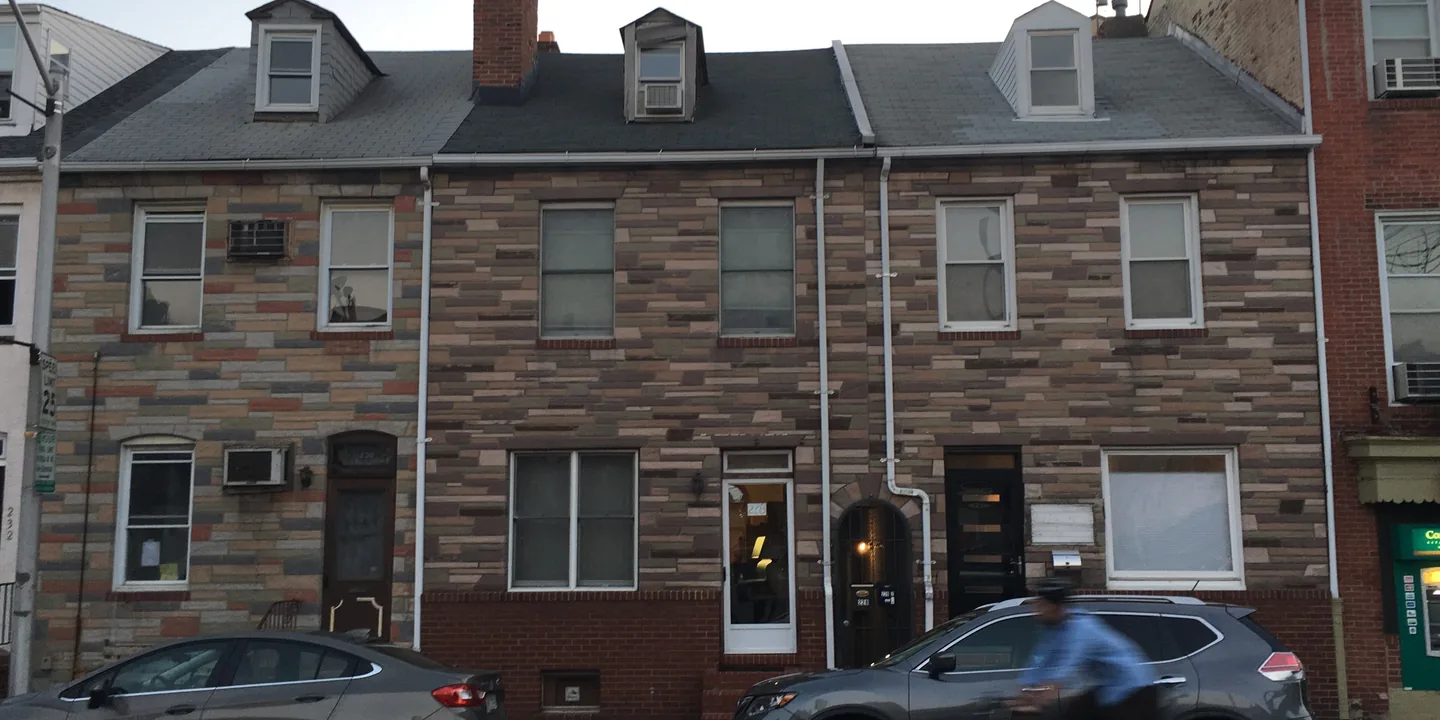
There are 148,790 single-family attached homes in the city, more than half its housing, against about one in sixteen nationally; Maryland as a whole sits at 21.3%. A rowhouse owner shares a wall, a roofline and often a drainage problem with neighbors, and a vacant house in the row is not someone else's problem: it is attached.
Homes standing empty: 13.3%
The Census Bureau counts 39,364 vacant housing units in the city, 13.3% of the total, against 7.7% statewide. Two-thirds of them, 25,726, fall in what the Census Bureau calls "other vacant": not for rent, not for sale, not held for seasonal use (table B25004). The City's own count of formally cited vacant buildings, discussed below, is the narrower and more useful number for a law firm.

Why age matters before any wrong is done
The lead law turns on construction date, ground rents survive on old deeds, and the vacant-building tools were written for houses that outlived their first owners. A page that starts from the house reaches readers when they learn it has a legal history.
Owners and renters
Owners live in the oldest houses; renters are spread across the decades
The Census Bureau also cross-tabulates tenure by the age of the building (ACS table B25036). In Baltimore owners and renters live in different housing stock, and each group brings different legal problems.
Owners: 78.8% in homes built before 1960
Of 121,471 owner-occupied homes, 55,794 were built in 1939 or earlier and 39,899 between 1940 and 1959. These are the readers who inherit a house with a ground rent on it, find a tax-sale notice after a parent's death, or learn that the rowhouse next door has been empty for years. Their searches are about title, money and the neighbors.
Renters: a larger share in buildings from 1960 on
Of 134,197 renter-occupied homes, 53.3% predate 1960 and 46.7% were built later. Renters in the older stock are the ones more likely to bring lead and repair cases; renters in newer buildings bring the landlord-tenant disputes any city has. A tenant practice that writes one page for both misses the first group's questions.
The renters' landlords
Behind the 42,499 rented homes built before 1940 stand landlords with legal duties that newer buildings don't carry: lead registration and inspection at every turnover, and in Baltimore a rental license that requires a passed inspection. Landlord-side firms have a large audience here, and their pages start from the inspection certificate.
Represent landlords or tenants? We can show you which pages appear when a Baltimore owner or renter searches for help with a pre-1978 rental, and where your firm stands among them. Ask for the audit.
Environment Article, Title 6, Subtitle 8
Lead paint: the case type Baltimore's housing produces
Lead-based paint was common in homes built before 1978, and Baltimore has far more of that housing, proportionally, than Maryland as a whole. The State's Reduction of Lead Risk in Housing law sets duties for owners of older rentals; the Maryland Department of the Environment's annual surveillance report measures what happens to children anyway.
Which rentals the law covers
An "affected property" is a property built before 1950 with at least one rental unit and, since January 1, 2015, any property built before 1978 with a rental unit (Env. 6-801). Owners must register those properties with MDE and renew the registration by December 31 of each year; a new owner registers within 30 days of buying (6-811, 6-812).
Turnover, notice and the 30-day duty
Before each new tenant moves in, the owner must meet the risk-reduction standard, pass a test for lead-contaminated dust and have the unit inspected (6-815). Tenants get a notice of their rights and a copy of the current inspection certificate when the lease is signed, and again at least every two years (6-820). After written notice of a defect, from the tenant or from any other source, the owner has 30 days to meet the modified risk-reduction standard (6-819).
Surveillance figures for 2024
MDE's report for calendar 2024 uses a reference level of 3.5 micrograms per deciliter, the level Maryland law has used since January 1, 2024. In Baltimore City, 9,075 of 46,996 children under six were tested, 19.3%, and 1,100 were newly found at or above 3.5 µg/dL; 156 were at or above 10 (MDE, Table 3). The city also carried 347 of the state's 1,109 open cases.
Rent court has to see the lead paperwork
In Maryland a landlord suing for unpaid rent on an affected property must state in the complaint that the property is registered with MDE and give the inspection certificate number for the current tenancy (Real Prop. 8-401). For tenant-defense firms this is the most practical lead fact there is, because it turns a compliance rule into a defense; for landlord firms, it is a filing checklist item.
Liability after Jackson v. Dackman
The statute still contains a "qualified offer" procedure that would have capped a compliant owner's liability at $7,500 for medical treatment and $9,500 for relocation (6-840). In 2011 the state's highest court held the immunity behind that cap invalid under the Maryland Declaration of Rights, because no adequate remedy replaced the one it took away (Jackson v. Dackman Co.). Pages that describe the cap as current law mislead a parent about what a claim can be worth.
A lead page for each reader
- For parents: what the blood-test numbers mean, which address matters, and what to keep (leases, notices, the inspection certificate they were given).
- For adults who were poisoned as children: that the filing period for an injury suffered as a minor runs from the 18th birthday (Cts. & Jud. Proc. 5-201), and that the firm will check how it applies.
- For landlords: registration, turnover inspections and the 30-day duty, stated as a checklist.
- For buyers of older rentals: the 30-day registration after purchase.

Courts and Judicial Proceedings 5-1101 and following
Selling a lead settlement: the transfer law Baltimore's cases shaped
Many lead-poisoning claims settle into structured payments that arrive over years. At least one company that bought those payment streams for a lump sum found most of its customers in Baltimore, and Maryland's law on transfers names lead paint explicitly.
A court must approve every transfer
No payment from a structured settlement may go to a buyer unless a court order finds the transfer "necessary, reasonable, and appropriate and in the best interest of the payee", among other findings, including that the payee had independent professional advice and received a disclosure in advance (Cts. & Jud. Proc. 5-1102). For a payee who lives in Maryland, the petition goes to the circuit court of the county where the payee lives (5-1103).
The lead-paint safeguard
Where the settlement arose from a claim for childhood exposure to lead paint, the buyer must tell the court that the payee may be cognitively impaired, and the court must consider appointing a guardian ad litem or requiring an independent mental-health examination (5-1104).
The Access Funding case
In May 2016 the Attorney General sued Access Funding, saying that more than 70% of its customers were victims of childhood lead poisoning and that most were young people living in Baltimore City (Attorney General release, archived). In March 2020 the state's highest court rejected a private class settlement that would have paid the plaintiffs about 4% of the value of the payments they had sold, and sent the case back to the Circuit Court for Baltimore City (Linton v. Consumer Protection Division).
Who searches for this
The likely searchers are the payees themselves, now adults; the Attorney General's 2016 release described most of Access Funding's customers as people aged 18 to 26. A firm handling transfer petitions or claims against buyers can tell that reader what the court must find and what a fair price looks like next to the present value.
Real Property Article, Title 8, Subtitles 7 and 8
Ground rent: owning the house but not the land under it
A Maryland ground lease splits a property in two: the homeowner owns a leasehold, and someone else owns the ground and collects a small annual rent, often for a century or more. It is an old arrangement, and Baltimore holds most of what remains of it.
Where the ground rents are
When the 2010 registration deadline passed, about 85,000 ground leases had been registered with the State Department of Assessments and Taxation, and 57,781 of them were in Baltimore City (fiscal note, 2012). No new residential ground rent may be created on or after January 22, 2007 (Real Prop. 8-803), so the number only shrinks, as owners redeem them.
Registration, and what an unregistered holder can't do
SDAT keeps an online registry of properties under ground leases (8-703). A holder whose ground lease isn't registered may not collect ground rent, late fees or costs, or sue for them; the homeowner can be required to hold no more than three years of ground rent in escrow until it is (8-707). The 2007 law that would have extinguished unregistered ground rents was struck down in 2011, though the court kept the registration requirement (Muskin, 2011).
From missed rent to an action for possession
The 2007 replacement of ejectment with a lien remedy was itself held unconstitutional in 2014 (State v. Goldberg). Current law allows an action for possession only for a registered ground lease and only when the rent is at least six months in arrears (8-807). The holder must first send a notice at least 60 days before filing and a second, in 14-point bold type, at least 30 days before; fees the owner can be charged are capped at $100 after the first notice and $650 after the second. The holder can recover no more than three years of past-due rent (8-806), and after a writ of possession is executed the homeowner has six months to pay and ask the court for relief.
Redeeming it for good
A ground rent reserved for more than 15 years can be redeemed by the homeowner on 30 days' notice. The price is the annual rent capitalized: multiplied by 16.66 for most older leases, by 8.33 for leases created after July 1, 1982, and by 25 for the few created between 1884 and 1888 (8-804). A $90 annual ground rent on a pre-1982 lease costs $1,499.40 to buy out. SDAT says the State runs a loan program for eligible homeowners and that ground rents once classed as irredeemable became redeemable after April 1, 2023 (SDAT).
Pages for every party to a ground lease
- Homeowners: how to find out whether a ground rent exists, what it costs to redeem, and what a notice means.
- Heirs: what happens when a ground rent comes with an inherited house.
- Buyers and title agents: checking the registry before settlement.
- Holders: registering, collecting lawfully and the notice sequence.
Tax-Property Article, Title 14, Subtitle 8
Tax sale and the water bill: how a city lien reaches the deed
When property taxes or other City charges go unpaid, Baltimore sells liens on the property at an annual tax sale. The buyer gets a certificate, interest and, eventually, the right to foreclose the owner's right to redeem. The State's annual report shows the scale.
Baltimore City tax sales: liens advertised, offered and sold
The 2023 and 2024 sales, as reported by SDAT each November
- Liens advertised 17,695 20,845
- Liens offered at the sale 5,724 7,015
- Liens sold to bidders 4,737 4,044
Use the arrow keys to read each value.
| Stage | 2023 sale | 2024 sale |
|---|---|---|
| Liens advertised | 17,695 | 20,845 |
| Liens offered at the sale | 5,724 | 7,015 |
| Liens sold to bidders | 4,737 | 4,044 |
Sources: Maryland State Department of Assessments and Taxation, Annual Maryland Tax Sale Report (Nov. 1, 2024 and Nov. 1, 2025), Baltimore City rows.
What the 2024 sale looked like in numbers
For the 2024 sale Baltimore advertised 20,845 liens, the most of any Maryland county, offered 7,015 and sold 4,044 for $15.1 million; another 2,971 were taken by the City itself (SDAT, 2025 report). The year before, 4,737 liens were sold, and 6,463 Baltimore liens were redeemed before foreclosure in that report's period (SDAT, 2024 report).
Homes the law now keeps out of the sale
From January 1, 2026, a collector must withhold from sale an owner-occupied home, or a home occupied by the heir of a deceased owner, when the total owed is under $1,000 (Tax-Prop. 14-811; Chapter 231 of 2025). In Baltimore City, residential property is also withheld when the only lien is for unpaid water and sewer charges. The Mayor has gone further by policy, removing owner-occupied homes assessed under $250,000 from the sale for five years running as of 2025 (City of Baltimore).
Redemption, interest and the foreclosure clock
The owner can redeem until the right of redemption is finally foreclosed, by paying the lien amount, interest and the holder's allowed expenses (14-828). The statute sets interest in Baltimore City at 6% a year "or as fixed by a law of the City Council", and SDAT's recent reports list the city at 18% for property that is not owner-occupied and 12% for owner-occupied homes. For owner-occupied homes, interest on certificates from sales held since January 1, 2026 may not exceed 10% a year (14-820), and the holder can't file to foreclose until nine months after the sale, against six months for other property (14-833). The case is filed in the circuit court for the county where the land is (14-835), which here means the Circuit Court for Baltimore City.
How an unpaid charge reaches the deed
Earliest steps, in months, for a ground lease in arrears and for a tax-sale certificate
-
Ground rent (Real Prop. 8-807)
- Month 0Ground rent unpaid
- Month 4First warning letter, 60+ days ahead
- Month 5Final 14-point notice, 30+ days ahead
- Month 6Earliest action for possession
-
Tax-sale certificate (Tax-Prop. 14-833)
- Month 0Lien sold at tax sale
- Month 6Holder may sue: non-owner-occupied
- Month 9Owner-occupied home: suit allowed from here
Use the arrow keys to read each date.
| Rule | Day | What happens |
|---|---|---|
| Ground rent (Real Prop. 8-807) | 0 | Ground rent unpaid |
| Ground rent (Real Prop. 8-807) | 4 | First warning letter, 60+ days ahead |
| Ground rent (Real Prop. 8-807) | 5 | Final 14-point notice, 30+ days ahead |
| Ground rent (Real Prop. 8-807) | 6 | Earliest action for possession |
| Tax-sale certificate (Tax-Prop. 14-833) | 0 | Lien sold at tax sale |
| Tax-sale certificate (Tax-Prop. 14-833) | 6 | Holder may sue: non-owner-occupied |
| Tax-sale certificate (Tax-Prop. 14-833) | 9 | Owner-occupied home: suit allowed from here |
Sources: Md. Code, Real Property 8-807; Tax-Property 14-833. Ground-rent notice months are the latest points that still allow a filing at month 6.
The water bill
Baltimore's Water Accountability and Equity Act, enacted January 13, 2020 and in effect July 1, 2021, created an Office of Water-Customer Advocacy and Appeals to handle billing disputes (City Code 24-2-17) and the Water4All discount for households under 200% of the federal poverty guidelines, tenants included (24-2-6). For a homeowner, a disputed water bill is now an appeal with a neutral office, not just an unpaid charge waiting for the tax sale.
The State's ombudsman
Maryland has a State Tax Sale Ombudsman in SDAT, whose job includes helping homeowners understand the tax-collection process (Tax-Prop. 2-112). A firm's tax-sale page should name the ombudsman and the City's own programs plainly. A homeowner who can solve the problem with a phone call should know it, and the ones who can't will remember which firm told them the truth.
Vacant Building Notices
The empty house in the row: receivership, in rem foreclosure and buyers
Baltimore's vacant houses are a legal market of their own: owners who can't afford to fix them, heirs who don't know they own them, investors who buy them, and neighbors who share a wall with them.
How many
The City's open-data layer of Vacant Building Notices counted 11,362 open notices on November 5, 2026 (Open Baltimore), down from about 14,663 in September 2022 (City of Baltimore). The same data service lists 768 receivership cases filed and open.
Receivership under the Building Code
When a vacant building has an outstanding notice or order to rehabilitate or demolish, the City's building official may petition the court to appoint a receiver to rehabilitate it, demolish it or sell it to a qualified buyer (Building Code § 121). For an owner, that petition can be the first sign that the property is about to be sold out from under them; for a buyer, a receivership sale is a way to acquire a vacant house with a court order behind the title.
In rem foreclosure
State law lets Baltimore foreclose, in the Circuit Court for Baltimore City, on vacant or nuisance property whose taxes have been delinquent for at least six months (Tax-Prop. 14-894; City Code 28-8.1-3). The City describes the tool as a way to take title where the liens exceed the property's assessed value. An heir who has never paid attention to a grandparent's vacant house may first hear of it in this kind of case.


The buyer's side
The City sells its own vacant properties through an open bid program and offers a $10,000 Vacants to Value Booster to buyers who purchase and fix up a home that has been vacant for at least a year (City of Baltimore). Buyers need title work, permits and, if they rent the house out, a rental license and lead compliance. A firm that handles closings and development can build a sequence of pages that follows the house from purchase to first tenant.
Which pages to write
- "I just learned I own a vacant house": heirship, the notice, and the options before receivership.
- "The City filed to appoint a receiver": what the owner can still do and how quickly.
- "Buying a vacant from the City or at a receivership sale": title, permits and timelines.
- "The vacant next door is damaging my house": the neighbor's options against the owner and the City.
City Code Article 13 and the District Court
Licensed rentals, rent escrow and the court that hears them
Renting out an old Baltimore rowhouse is a regulated business, and the rules are local, which is why a page has to quote the City Code rather than a general summary.
No license, no rent
Since amendments that took effect August 1, 2018, no one may rent or offer to rent a dwelling in Baltimore without a current rental license, or charge, accept or try to collect rent for any period when they weren't licensed (City Code 13-5-4). A license requires a passed inspection and compliance with federal, state and City lead-paint law (13-5-6), and the inspection must be done by a licensed home inspector registered with the City, no more than 90 days before the application (13-5-7).
Licensing changes in 2026
Under the City's Strengthening Renters' Safety Act, every rental license now runs a flat two years, licenses can no longer be transferred to a new owner (who must apply within 60 days), and the license number has to be posted in common areas, leases and advertisements; failing to post it is a $250 citation (City of Baltimore). A landlord's own website and listings are advertisements, so a landlord-side firm should tell clients that the number belongs there too.
Rent escrow for serious defects
Maryland's rent escrow statute lets a tenant pay rent into court when a landlord fails to fix conditions that threaten life, health or safety (Real Prop. 8-211), and the City's tenant guide lists lead paint on interior surfaces among the qualifying conditions (Tenants' Rights Guidebook). In an old housing stock, escrow cases are about the building: heat, water, rodents, structural defects and paint.
Any rent dispute, at any amount, starts in District Court
The District Court of Maryland has exclusive jurisdiction over landlord-tenant cases regardless of the amount, civil claims up to $30,000 and small claims up to $5,000 (Cts. & Jud. Proc. 4-401; 4-405). Combined with the rule that a failure-to-pay-rent complaint must state the lead registration and certificate, these facts make a short, concrete page for each side of a Baltimore rent case.
Party walls and contractors
Shared walls, renovations and the contractor who left
Fixing an old rowhouse means working on a wall someone else depends on. Baltimore's Building Code has specific rules for that, and Maryland has a fund for owners whose licensed contractor took the money and didn't finish.
Notice before underpinning a party wall
Lowering a basement floor usually means underpinning, and if the underpinning is on a party wall the applicant must give written notice to the owners of all adjoining properties at least 10 days before applying for the permit (Building Code § 1804). A neighbor who received no notice, and now has a cracked wall, has a starting point.
Demolition leaves the neighbor's wall to repair
When a building is demolished, its owner must repair and finish the party walls, including restoring or replacing flashing on the adjoining property (§ 3307). A vacant rowhouse demolished in the middle of an occupied row leaves this duty to the families on either side to enforce.
The Home Improvement Guaranty Fund
An owner can recover from the Maryland Home Improvement Commission's Guaranty Fund for an actual loss caused by a licensed contractor, up to $30,000 per claimant for one contractor, and must bring the claim within three years of discovering the loss. The fund pays nothing for attorney's fees, consequential or punitive damages, and only owners who live in the home or own no more than three residences can claim (Bus. Reg. 8-405). That last limit leaves out investors who own more than three residences.
Handle construction and home-improvement claims? We'll look for your firm in the results a Baltimore owner gets when asking about a cracked party wall or an abandoned renovation. Ask for the audit.
Rule 19-307.2(c) and the MSBA ethics opinions
Paying for marketing under Maryland's rules
Maryland's lawyer-advertising rules are Rules 19-307.1 to 19-307.5 of the Maryland Attorneys' Rules of Professional Conduct, adopted in their current form effective July 1, 2016 (19-307.1, 19-307.2, 19-307.3, 19-307.4, 19-307.5). Only 19-307.4 has changed since, in 2017. Maryland never adopted the ABA's 2018 consolidation of the Model Rules. The first question a firm asks a marketing agency is whether the agency's fee is allowed, so that is where this section starts.
The rule
Rule 19-307.2(c) opens with a flat bar, an attorney "shall not give anything of value to a person for recommending the attorney's services", and then permits payments for the reasonable cost of permitted advertising, the usual charges of a legal service plan or a not-for-profit attorney referral service, the price of a practice bought under the rules, and a non-exclusive reciprocal referral agreement the client knows about. Comment [7] says an attorney is not otherwise permitted "to pay another person for channeling professional work".
| Arrangement | Where Maryland lands | Source |
|---|---|---|
| A flat monthly fee to a marketing contractor | Permitted; paying the same contractor a share of the firm's overall revenue is fee-splitting with a non-lawyer | MSBA Op. 2024-01 |
| A directory that charges per retained client | A fee-sharing arrangement that does not fit within the rules | MSBA Op. 2004-21 |
| A flat annual fee for an online listing | A reasonable cost of advertising, not a referral fee | MSBA Op. 2007-1 |
| A paid upgrade in an online directory | Not barred | MSBA Op. 2016-13 |
| Buying a competitor's name as a search keyword | A violation of Rule 8.4, in the committee's majority view | MSBA Op. 2022-02 |
| Gifts to clients for five-star Google reviews | Reprimand: a lawyer bought 51 dashcams for clients in exchange for reviews and paid $200 per referral | AGC reprimand, 2022 |
| A vendor following up on mailers the lawyer sent | The vendor can't do what the rules forbid the lawyer to do | MSBA Op. 2004-27 |
Advisory opinions, and who decides
The MSBA Committee on Ethics describes its opinions as advisory, and the Attorney Grievance Commission does not have to follow them. They are still Maryland's most detailed guidance, and several apply rules renumbered in 2016 without change in substance. Read them as reasoning, not a safe harbor.
Rules 19-307.1, 19-307.2, 19-307.4 and 19-307.5
Results, specialists, an ad log and the word "Baltimore" in a firm name
Past results need Maryland's own disclaimer
Rule 19-307.1 bars communications "likely to create an unjustified expectation about results". Comment [2] spells out the consequence for a results page: a statement of the attorney's record in awards, verdicts, judgments or settlements is misleading unless it also "expressly and conspicuously states that each case is different and that the past record is no assurance" of success in a future case. Testimonials must come from bona fide former clients who actually benefited from the services, and comparisons with other lawyers must be factually substantiated (19-307.1(c)).
"Specialist" has been allowed since 2017
Until April 1, 2017, Maryland barred an attorney from holding out publicly as a specialist. The Rules Committee's 191st Report recommended deleting that prohibition while noting that all advertising stays subject to 19-307.1 (191st Report, archived), and the current Rule 19-307.4 lets an attorney state which fields they handle and which they don't, with "Patent Attorney" reserved for those admitted before the Patent and Trademark Office. Older opinions and the 2014 Zhang discipline case read the word as forbidden; that part of them is out of date.
A city name on the door, or in the web address
Maryland's firm-name rule bars a trade name that implies a connection with a government agency. Its comment [2] says a name could be the basis of a disciplinary proceeding if it included "Baltimore" or "Baltimore County", "Maryland" or "Maryland State", or "Annapolis"; comment [3] says geographical names that are not also government units ordinarily wouldn't violate the rule (Rule 19-307.5). The MSBA applied the same reasoning to a domain name, finding a ".us" address built on "Maryland" prohibited (Op. 2004-15). Keyword domains that are common in other cities are a real risk here. A domain without the lawyer's name is not a problem in itself, but the lawyer's identity should be fully disclosed wherever it is published (Op. 2002-18).
| Communication | Where it ran | Last shown | Keep at least until |
|---|---|---|---|
| Home page, version 3 | The firm's website | March 31, 2026 | March 31, 2029 |
| Search ad text, lead paint campaign | Google Ads | June 30, 2026 | June 30, 2029 |
| Ground rent guide | The firm's website and a printed handout | Still running | Three years after it comes down |
| Bus-shelter poster | North Avenue | December 31, 2025 | December 31, 2028 |
The when-and-where log behind every ad
Rule 19-307.2(b) requires a copy or recording of each advertisement or communication to be kept for at least three years after it was last disseminated, "along with a record of when and where it was used", and comment [10] notes that proving compliance may require keeping records longer. For a website, the practical answer is dated copies of each version of each page. Two other duties sit in the same rule: each advertisement names at least one attorney who answers for its content (19-307.2(d)), and an ad promising no fee without a recovery has to say whether the client still owes expenses (19-307.2(e)).
No review before publication
Maryland does not require advertising to be reviewed before it runs (comment [6]), and each attorney is personally responsible for compliance and must be prepared to substantiate it (19-307.2(f)). That is the reason for the log: it is the firm's evidence.
Rule 19-307.3 and Business Occupations 10-604 to 10-606
Letters after an accident: the envelope Maryland prescribes
Targeted letters and emails are where Maryland's rules and its statutes overlap, and where the most specific requirements sit. The drawing below shows what a lawful accident letter has to carry; the text explains why.
Advertising Material
this is an advertisement
On the outside: both labels. Nothing printed outside may hint at why the letter was sent.
this is an advertisement
Sent more than 30 days after the accident. Not styled as a pleading or legal document. Names the attorney responsible. Says nothing implying approval by Bar Counsel or the State.
this is an advertisement
Sent by email or as a recording instead? "Advertising Material" also goes at its beginning and end. Either way, a copy is filed with Bar Counsel within 3 days of sending, with the recipient list.
No live pitches; a label on targeted mail
Face-to-face pitches, live phone calls and real-time electronic exchanges are off limits under Rule 19-307.3(a) when the goal is a fee, unless the person is a lawyer or already has a family, close personal or professional tie to the attorney. When a letter targets someone known to need help with a particular matter, Rule 19-307.3(c) puts "Advertising Material" on its envelope; a recording or electronic message carries the phrase at its opening and close.
A statute with a 30-day clock
Separately, Maryland law bars a lawyer from sending a communication, directly or through an agent, concerning a wrongful-death or personal-injury claim, or an accident or disaster that involved the recipient or a relative, unless the accident occurred more than 30 days before it is sent (Bus. Occ. & Prof. 10-605.1). The statute lists the forms it covers, from letters and online transmissions to telephone and video, and exempts communications the person asked for.
Another label, and a filing with Bar Counsel
For targeted communications about an accident, or about a criminal prosecution or a jailable traffic offense, the statute adds its own requirements: the words "this is an advertisement" prominently at the beginning and end (five seconds at each end of a video), nothing on the envelope revealing the matter, no pleading-style documents, and a filing with Bar Counsel within three days of sending, with a copy and the recipient's contact details (10-605.2). Violations are misdemeanors, carrying a fine as high as $1,000, as much as a year in jail, or both (10-606).
Runners, reports and insurance fraud
No one may solicit for gain on a lawyer's behalf, and a lawyer may not pay anyone to do it (10-604); the same conduct involving motor-vehicle injuries is a fraudulent insurance act (Ins. 27-407). Police accident reports, unserved charging documents and traffic citations may not be inspected by attorneys, or people acting for them, who want them to solicit or market legal services (Gen. Prov. 4-315). A Baltimore criminal-defense or injury firm offered a "fresh case" list should ask how it was compiled, because the obvious sources are closed to that use.
Where search marketing fits
Search results, map listings and a firm's own pages reach people who are already looking. They are not targeted communications, so none of the labels, filings or 30-day waits above apply.
AI search
Pages that send a reader to the public record of their own house
Almost every problem on this page can be checked against a public database: whether a ground rent is registered, whether a rental is registered for lead and has a current certificate, whether a house carries a Vacant Building Notice, whether a landlord holds a license. A page that walks a reader through those lookups does two jobs at once. It helps the reader confirm their situation before calling, and it gives AI answer engines a sourced, step-by-step passage to quote when someone asks about a Baltimore house.
The lookups a Baltimore page can point to
- Ground rent: SDAT links its real property search to the Ground Rent Registry, which shows whether a lease is registered and its details (SDAT).
- Lead registration and certificates: MDE's public rental registry search and its certificate search (registry, certificates).
- Rental licenses: the City's licensing lookup named in its tenants' guide (Tenants' Rights Guidebook).
- Vacant notices and receivership filings: the City's public data layers (Open Baltimore).
Write the steps, not just the link
A bare link to a search tool helps nobody who has never used it. The useful passage says what to type (the property address or the account number from the tax bill), what the result shows, and what each possible answer means for the reader's next step. Written that way, each lookup is a section an answer engine can lift whole.
Dates on everything
Public records change: a lien is paid, a certificate expires, a notice is abated. Any registry figure a page quotes needs the date it was read. Every registry figure on this page was read on November 5, 2026.
The competition
Where Maryland's law offices are, and how big they run
Jobs per office: 11 in the city, 5 statewide
The federal wage census found 400 law practices in the private sector inside the city limits in 2024 (QCEW, Baltimore City). Between them they had 4,330 people on staff, at an average of $2,781 a week. The city has 12.8% of Maryland's 3,135 law offices but 26.7% of their jobs, about 11 jobs per office against a state average of five (QCEW, Maryland). Baltimore County, next door, counted more offices, 544, but only 2,420 jobs. The bigger offices are in the city; the county's average about four people each.
What that means for search
Big downtown offices bring big link profiles to broad searches. The house matters on this page are narrow and statute-bound, ground where a three-lawyer practice in Towson or Hampden can compete on accuracy instead of budget.
City and county are different places
Baltimore City is an independent city, outside Baltimore County, with separate courts and a separate government. A firm serving both should say which one each page is about, because a homeowner in Towson and a homeowner in Hamilton face different county offices even when they search for the same thing.

Our map survey, November 5, 2026
House cases searched from Towson: the county answers with its own offices
Baltimore City and Baltimore County are separate governments, and we wanted to know whether Google's map treats them as separate markets. On November 5, 2026 at 14:35 UTC we sent 24 queries to Google's Places service (the API's documentation). Twelve practices tied to the house problems above went in twice: "[practice] Baltimore", biased to downtown, and "[practice] Towson", biased to the county seat, each with a 20-kilometer radius. For every query, the top 20 places were logged along with whether each address fell within city limits.
| Practice searched | "Baltimore" search from downtown: city offices | Same search: Baltimore County offices | "Towson" search: Baltimore County offices |
|---|---|---|---|
| lead paint lawyer | 16 of 20 | 4 of 20 | 18 of 20 |
| ground rent attorney | 17 of 20 | 3 of 20 | 19 of 20 |
| tax sale attorney | 13 of 20 | 5 of 20 | 20 of 20 |
| landlord tenant lawyer | 17 of 20 | 3 of 20 | 20 of 20 |
| tenant rights lawyer | 17 of 20 | 3 of 20 | 20 of 20 |
| real estate attorney | 17 of 20 | 2 of 20 | 19 of 20 |
| foreclosure defense attorney | 12 of 20 | 6 of 20 | 20 of 20 |
| probate attorney | 14 of 20 | 6 of 20 | 20 of 20 |
| personal injury lawyer | 20 of 20 | 0 of 20 | 20 of 20 |
| contractor dispute lawyer | 18 of 20 | 2 of 20 | 20 of 20 |
| structured settlement attorney | 10 of 20 | 10 of 20 | 20 of 20 |
| property title attorney | 16 of 20 | 4 of 20 | 20 of 20 |
Source: GLP survey, Google Places API (New) text search, 2026-11-05 14:35 UTC; 12 practices, 2 search points, first 20 listings each. City or county taken from each listing's address.
Of the 240 listings for downtown searches, 187 had a Baltimore City address and 48 were in Baltimore County. Of the 240 for Towson searches, 236 were in Baltimore County and only 4 in the city. County offices held all 36 of the first-three places in the Towson searches and 5 of the 36 downtown. Inside the city, the listings bunched downtown: 148 of the 187 city addresses were in ZIP codes 21201 and 21202. For "property title attorney Baltimore", half of the 20 listings were insurance agencies rather than law offices.
The line runs one way
County offices reached into downtown results twelve times as often as city offices reached into Towson's. A firm in Mount Vernon that wants Baltimore County homeowners won't get there through its map listing alone; it needs pages that name the county's own courts and offices, and a staffed county office of its own if it really has one. A Towson firm that wants city clients starts closer, but the city's ground rent, vacant-house and rental-license rules still need their own pages.
What 24 searches can't tell you
The API is not a homeowner's phone, and a single afternoon's results can shift by next month. Read the table as a picture of where a listing struggles to appear, not as a forecast of rank.
SEO for lawyers in Baltimore
Companies, experts and consultants: the words Maryland firms search with
Search Console shows Baltimore and Maryland queries such as "seo for lawyers baltimore", "seo for law firms in baltimore", "baltimore law firm seo" and "attorney marketing baltimore". Others name a kind of provider instead of a place: "law firm seo experts", "legal seo company", "lawyer seo companies", "seo consultant for attorneys" and "maryland attorney seo expert". Those are partners comparing providers.
Experts, companies and consultants answer to the same rule
Lawyer SEO companies, solo consultants and self-described experts all sell search engine optimization, and in Maryland the label changes nothing about who is responsible: Rule 19-307.2(f) puts compliance on each attorney. So ask which writer handles the Maryland law on your pages, whether an attorney of yours approves each page before it runs, and whether the provider hands over the dated copies your three-year advertising log needs. Then ask whether its fee is a flat amount or a share of the firm's revenue, because MSBA Opinion 2024-01, discussed above, treats the second as fee-splitting.
What "seo for lawyers baltimore" asks for
A search with the city in it is often answered by the map first, and the survey above shows how strongly the searcher's location shapes that map. So SEO for lawyers in Baltimore is two jobs when a firm keeps offices in the city and in the county: a city Business Profile and a county one, each with its own reviews and categories, and site pages that say which jurisdiction each one serves.
"Attorney marketing" next to "organic"
"attorney marketing baltimore" and "digital marketing for law firms in baltimore" appear in the same list as "organic seo services baltimore". Organic search and AI visibility are our SEO work; paid search and intake come under Consulting CMO (compared on our get started page).
Working with GLP
GLP from a Maryland firm's side of the table
From California, without a Maryland office
Practices that find us while looking for a Baltimore or Maryland SEO agency usually ask first where we are. The answer is West Hollywood, California; GLP has never had a Maryland address, and a page we write will never imply one. Baltimore clients see the work on calls, in recorded screen walkthroughs and on a live dashboard. The pages themselves carry your firm's address and the name of the attorney responsible for them, which Rule 19-307.2(d) asks of every advertisement.
Scope, price and the calendar
The audit comes first. If the fit is right, a strategy conversation follows, then a written scope and a monthly retainer quote; there's no long-term contract, and the factors that set the price are on our how we work page. Since Rule 19-307.2(b) runs three years from an ad's last use, keep each dated version of a page we publish in the firm's own advertising log.
Your lawyers approve the law
Compliance with Rules 19-307.1 to 19-307.5 stays with the firm, so a lawyer at the firm approves each page that states Maryland law or describes the practice before it goes live. None of the firms in our case studies practices in Maryland, which is why this page quotes no results, and no agency can guarantee where a page will rank. Prefer the phone? Call (661) 388-5526.
Nearby
Neighboring jurisdictions, a page for each
This is GLP's only Maryland page. Below are the nearest others along the corridor, with the jurisdiction whose rules each explains.
| Page | Rules it covers | Why a Baltimore firm might read it |
|---|---|---|
| Washington, DC | District of Columbia | Firms with lawyers admitted in both Maryland and the District, and federal-sector work |
| Philadelphia, PA | Pennsylvania (plus NJ and DE) | How a firm's pages state admissions across several states |
| New York City, NY | New York | New York's labeling and filing requirements |
| Atlanta, GA | Georgia | Georgia's new, shorter rule set |
For estate work beyond this page, see estate and probate SEO; for map listings, local SEO for law firms.
Fine print for a Maryland practice
In short
Census housing tables, the Maryland Department of the Environment's lead registry, the State's tax-sale reports, the ground-rent and lead statutes, City Code and Rules 19-307.1 to 19-307.5: the record our Baltimore plans start from.
Our office sits outside the city line. What carries over?
The rules sections apply anywhere in Maryland, and so does the lead law, which covers older rentals statewide. Ground rents are concentrated in Baltimore City, and tax-sale practice differs by county: the State's tax-sale reports list each county's own redemption interest rates and lien rules. A county firm should write its tax-sale pages from its own county's figures, not the city's.
Can the word "Baltimore" go into the name Google shows for our firm?
Only if it is the firm's actual name. Google's guidelines say the profile name "should reflect your business's real-world name, as used consistently on your storefront, website, stationery" (Google Business Profile Help), so adding a city to rank better breaks Google's rules. In Maryland the real-world name itself is limited too: a trade name with "Baltimore" in it is the example Rule 19-307.5's comment gives of a possible disciplinary problem.
Is our website an advertisement under Maryland rules?
The MSBA ethics committee has treated it as one: its Opinion 2002-18 says "the use of an Internet web page is an advertisement within the meaning of Rule 7.2" (Op. 2002-18). That brings the site under the three-year record-keeping duty in Rule 19-307.2(b) and the requirement to name a responsible attorney. It does not make the site a targeted solicitation, so the "Advertising Material" label is not required on ordinary pages.
Has Maryland said anything about online reviews or social media?
Not directly. The MSBA's published ethics opinions from 2000 to 2025 include no opinion on online reviews or social media posts as such, so the general rules apply: testimonials must come from bona fide former clients, and anything of value given in exchange for a review risks the 2022 reprimand described above. Posts about results need the same "each case is different" statement as a results page.
Figures like tax-sale interest rates change. How do you keep them right on our pages?
Each figure carries its source and the date we read it, and the source is the primary one: the statute, SDAT's annual tax-sale report, the City's own data. We recheck the dated figures when a new report or law comes out (SDAT publishes its tax-sale report each November) and change the page's "updated" date only when the content changed. Your lawyer approves each change, and the old version goes into the firm's three-year advertising log.
Should our site have a ground rent redemption calculator?
It is one of the few calculators that is both simple and exact. It needs two inputs, the yearly ground rent and the date the lease was created, because that date picks the multiplier in Real Prop. 8-804: 25, 8.33 or 16.66. The page should add that SDAT's registry and the deed decide the facts, not the calculator.
A colleague is barred only in D.C. What goes on our Baltimore office page?
Rule 19-307.5(b) says that when a firm practices in more than one jurisdiction, the listing of the attorneys in an office must indicate the jurisdictional limits of those not licensed where the office is. On a Baltimore office page, that means a line under the lawyer's name saying where they are admitted. The Washington, DC page covers what D.C.'s own Rule 49 expects of the same lawyer.
We split rent with another solo. Can we brand ourselves together?
No. Lawyers who merely share space can't present themselves as a partnership or other organization (Rule 19-307.5(d)); the comment uses "Smith and Jones" as its example of a name office-sharers can't adopt. Shared rooms and a shared receptionist are fine; the websites and Business Profiles have to stay separate.
A name partner has been elected to office. Does the firm name change?
It may have to. Rule 19-307.5(c) keeps a public officeholder's name out of the firm name and its communications for any substantial stretch when that lawyer isn't actively and regularly practicing with the firm. Websites, domains and Business Profile names count as communications, so they change along with the letterhead.
Is a page about the Orphans' Court worth writing for a Baltimore estate practice?
Yes, because the name confuses clients. Maryland's probate court is the Orphans' Court, and Baltimore City has its own, separate from Baltimore County's; the Register of Wills handles the administrative side. An estate page that uses both names, says which office does what and links the Register of Wills' official estate search (Register of Wills) answers the question a family has when the paperwork arrives.
Can a landlord-side practice use this approach too?
Yes. A firm chooses its side, and its pages are written for that side's readers. Landlord pages in Baltimore are mostly compliance pages: lead registration, turnover inspections, the rental license and what a rent complaint must state. Tenant pages turn the same rules into defenses.
Who may use the title "Patent Attorney" in Maryland?
Only attorneys admitted to practice before the U.S. Patent and Trademark Office, under Rule 19-307.4(b), which also allows "a substantially similar designation". Other claims about fields of practice answer to the general test in Rule 19-307.1.
Where does GLP explain Pennsylvania's and Delaware's rules?
They are on our Philadelphia page, which compares Pennsylvania with its two neighbors.
Search like a Baltimore homeowner and see where your firm lands
Pick the housing matters you want to grow, from lead cases to tax-sale redemptions. A person on our team will run a city homeowner's searches, review your map listing, your site and your firm's name under Maryland's rules, and send the results inside two days.
Or call Call (661) 388-5526