
Content marketing and search engine optimization (SEO) help attorneys improve online visibility, reach potential clients, and build trust before the first consultation. Content gives prospective clients answers to the questions they're already searching, and SEO makes sure search engines find, understand, and rank those answers. When combined, these things bring high-quality leads organically via search rather than relying on paid clicks.
At GLP Marketing, we work as a consulting CMO for law firms, with a focus on AI SEO and full marketing attribution that ties every channel back to signed cases. Our work helped Onyx Law Group, a family and estate litigation firm, grow its Google clicks from 3,299 to 15,835 for the same 28-day window year over year, a 380% increase. We also took Cali Lemon Lawyers from no organic-search revenue to about half a million dollars a month in roughly a year. If you want content that ranks and signs cases, request a free audit and growth plan.
This guide explains how to combine content marketing and SEO for lawyers. We'll discuss strategies for doing this effectively, outline common pitfalls to avoid along the way, and show you how to gauge if what you're doing is attracting clients.
How Content Marketing and SEO Work Together for Attorneys
Content marketing and SEO do their best work when they share one goal: helping the right people find a law firm and understand how it can help. Content marketing is the creation of useful resources, such as blog posts, legal guides, and practice area pages, that answer prospective clients' questions. SEO, meanwhile, makes sure that this content and everything else on the site is easy for search engines to see, understand, and rank highly.
Neither works well on its own. Great articles on a site with weak structure, no keyword targeting, and slow pages rarely get found. Sites with excellent technology and little content also don't rank well because there's nothing of real value. People usually start looking into divorce, claims for injuries, or custody issues long before they know exactly which lawyer to contact, and firms only find those people when their content directly addresses the issue and proper SEO makes that content pop up first on search results.
This pairing also builds trust. An informative article letting readers know what to anticipate with a personal injury claim can help soothe a worried person's fears and direct them to the firm's page on injuries as their next logical step. People dealing with legal issues are usually unsure of what to do and how to proceed; straightforward answers that naturally lead into scheduling an appointment are very persuasive.
The payoffs build up over time. A well-ranked article can keep bringing in prospective clients for years, especially when the firm updates it as laws change.
How Can Attorneys Use Content Marketing and SEO to Attract Clients?
The firms that get the most from content and SEO treat them as one system rather than two separate tasks. Practically speaking, this involves three things.
1. Pair Every Piece of Content With a Search Need
Before writing anything, confirm that people actually search for the topic and decide what they want when they do. An article answering "what to do after a car accident" serves someone researching, while a page targeting "car accident lawyer in Los Angeles" serves someone ready to hire. Aligning content with intent is what turns that content into rankings and then those rankings into actual customer inquiries. For a full breakdown of which formats suit which searches, our guide to content marketing for law firms covers the options.
2. Connect Educational Content to Service Pages
Blog posts and guides attract readers early in their search, but practice area pages are where they decide to call. Make sure every piece of education is connected to a relevant service page, an attorney biography page, or location page so that people can go from researching to taking action and so that search engines can recognize how pages relate.
3. Get More Reach From Each Piece
Good legal content takes real time to produce, so make each piece work harder. Detailed guides can be transformed into short video clips, social media posts, emails with newsletters and downloadable checklists. Each one should point to the full article on your firm's website. Repurposing widens your audience and sends more visitors to the pages you want to rank. Adapt the format for each channel rather than pasting the same text everywhere, and keep the legal information accurate in every version.
How to Build a Content Marketing and SEO Strategy for Your Law Firm
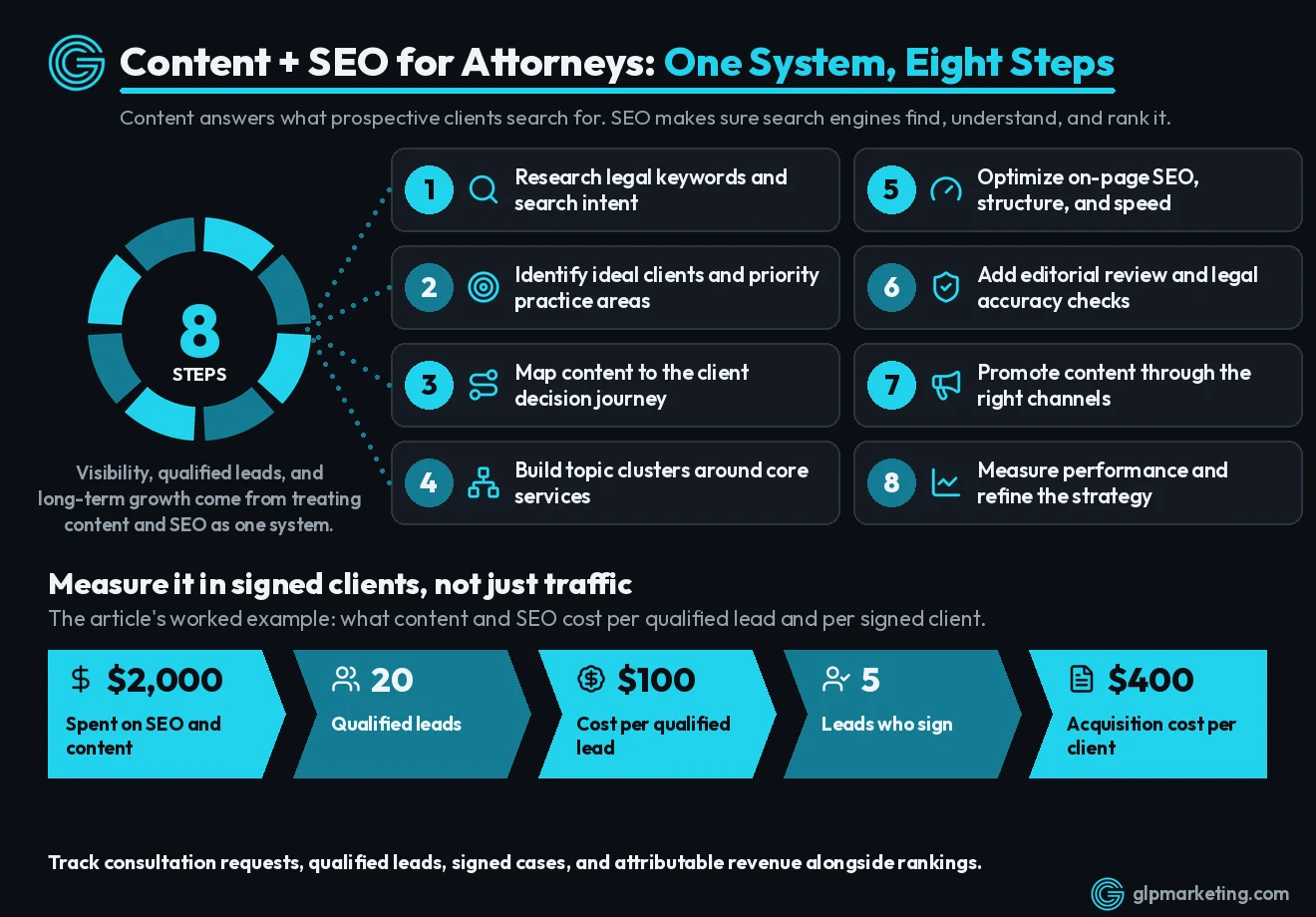
These eight steps bring content and SEO together into one plan that improves visibility, attracts qualified leads, and supports long-term growth.
Step 1: Research Relevant Legal Keywords and Search Intent

Use the words that people use when they search for legal information or look for a lawyer. Keyword research tools show related phrases along with volume of searches, level of competition and also variations for longer-tail keywords that relate to your fields of work. An injury law firm might aim for both "what to do after a car accident" and "personal injury attorney near me."
Look closely at the intent behind every search you do. Someone researching how to file for divorce needs an explanation, while someone searching for a divorce attorney in their city may be ready to call. Assign each keyword to the page type that fits it best, whether that's a blog article, an FAQ, or a practice area page, and choose relevance over raw search volume.
Step 2: Identify Your Ideal Clients and Priority Practice Areas
Identify which clients are most important to target and which services need the most priority. Weigh your firm's experience, service area, business goals, and the cases it handles best. A family law practice might prioritize divorce, custody, and adoption, while a personal injury firm might focus on car accidents and workplace injuries.
Priorities direct both the list of keywords and the content calendar. Keeping focus prevents the overall strategy from becoming diffuse. Concentrating on the practice areas that are important leads to richer content and draws in prospects whose needs align with what you offer.
Step 3: Map Content to the Client Decision-Making Journey
Prospective clients need different information at different points. Some are just trying to understand a legal problem, some are comparing options, and some are ready to book a consultation. So plan out your content for each stage accordingly.
Early on, educational blog posts that explain legal concepts and answer common questions do the most good. They help people who are trying to decide which way to go. Detailed guides and pages that break down different practice areas showing how the firm deals with specific issues also help people compare options. For visitors ready to act, clear service information, attorney bios, testimonials where permitted, and easy contact options close the gap.
Step 4: Build Topic Clusters Around Core Legal Services
Group your content around key practice areas you do work in. Build a comprehensive pillar page for each core service, then support it with articles that answer narrower questions. A child custody pillar page, for example, could link to articles on custody arrangements, parenting plans, modifications, and preparing for a custody hearing.
Link the cluster together so readers can move between related articles and the service page. This layout helps visitors quickly find what they want and demonstrates to search engines how well you cover a topic; this builds up credibility in that specific area.
Step 5: Optimize On-Page SEO, Site Structure, and Speed
Once the plan is in place, optimize each page so both search engines and visitors understand it. Incorporate your main keyword naturally into title tags, main headings, URLs, introductions, and important subtitles. Write meta descriptions that accurately summarize the page and give people a reason to click on them; avoid overloading with keywords or making promises that aren't true for the page content.
Design is equally important to content pages. Ensure that key service pages are easily accessible via clear navigation, use clear anchor text for internal linking, and regularly review for broken links and dangling pages too. Many prospective clients will land on your site from a phone, often in a stressful moment, so test every page on mobile, compress large images, and make contact forms and call buttons easy to use. Google's PageSpeed Insights shows where load times can improve.
Step 6: Establish Editorial Review and Legal Accuracy Checks

Legal content has to be accurate, current, and easy to follow. Have a review process check claims, sources, specific rules of different jurisdictions and clarity before anything goes public. Make sure that any content that clarifies legal rights, procedures or new changes in law undergoes review by an experienced lawyer.
Here credibility matters too. Google's guidance on helpful, reliable, people-first content describes E-E-A-T (Experience, Expertise, Authoritativeness, and Trustworthiness) and gives extra weight to trust on topics that affect people's lives and finances. Name the author or reviewing attorney, link to their bio, cite reliable sources for important legal claims, and keep credentials current. Strong support for all of this comes from attorney bios.
Strip out unsupported promises and anything that could create unrealistic expectations about case outcomes, and confirm that disclaimers and calls to action follow your state's advertising and professional conduct rules. Then schedule regular reviews of older articles, especially those on laws or procedures likely to change. An actual update should include new information or clarify confusing parts. Changing a publication date is not an update.
Step 7: Promote Content Through Appropriate Channels
Publishing is only half the job. Share your best resources through channels your audience uses, such as email newsletters, professional social media accounts, and community platforms.
To get good local visibility, be sure to keep your Google Business Profile information current and active, and keep your company name, address, and phone number consistent among directories. Get high-quality backlinks from respected legitimate directories, professional associations, and genuine partnerships with relevant organizations. Make sure all marketing activities comply with advertising rules and respect client confidentiality as well.
Step 8: Measure Performance and Refine the Strategy
Finally, check if this work is generating business. Track rankings and traffic, but also consultation requests, calls, form submissions, qualified leads, and new clients. Ask every new inquiry how they found you, and compare pages to see which ones contribute to signed cases.
Use what you learn. Update outdated articles, strengthen pages that get relevant traffic but few inquiries, and build more content around topics that attract qualified prospects. SEO is a long game, so don't try to react every week when things swing; we have a guide on how long it takes to see results that sets realistic expectations.
Common Content Marketing and SEO Mistakes Attorneys Should Avoid
One of the most common mistakes is publishing generic legal articles that repeat what's already on hundreds of other sites. Readers won't see why they should pick your law firm. Instead, focus on specific client issues, clarify local procedures and draw upon real experiences of your lawyers directly.
Another thing is to target keywords without thinking about intent. Someone researching personal injury law needs something different from someone looking for a personal injury attorney nearby, so match each keyword to the right format, whether that's an educational post, a guide, or a practice area page built to generate inquiries.
Thin location pages cause trouble too. Pages for multiple cities can support local SEO, but swapping city names into identical copy adds nothing, and Google's spam policies treat pages like that as doorway pages. Give each page real local information and explain which services the firm offers there.
Uncorrected or out-of-date legal information hurts a firm's reputation badly. Laws and procedures change, so review content on a schedule, verify claims against reliable sources, and bring in a qualified attorney when needed.
Using content generated from unreliable AI introduces unnecessary risk. AI tools can help with outlines and readability, but their drafts can include wrong legal claims, invented citations, or advice that doesn't apply in your jurisdiction. Review every article for accuracy, originality, confidentiality, and compliance before it goes live. If you want AI tools to cite your firm, our guide on how to rank in AI Overviews explains what works.
Strong content still underperforms when technical SEO and internal links are neglected. Pages with broken links, slow load times and poor site organization complicate matters for both users and crawlers. Make sure your high-quality articles link to relevant practice pages; keep important pages easily accessible to search engines and monitor regularly for technical performance.
It is important to follow confidentiality and advertising rules for both ads and other content. Before publishing testimonials, case studies, or client details, check your state's professional conduct rules and get any required permissions. In California, SB 37, effective January 1, 2026, bans outcome predictions in attorney advertising and limits past-result claims to those that are objectively verifiable. At the federal level, the FTC also prohibits buying reviews and posting fake or generated content through its rule banning fake reviews and testimonials.
Finally, don't measure traffic without tracking qualified inquiries and signed cases. More visitors don't automatically mean more business. Track consultation requests, qualified leads, signed cases, and attributable revenue alongside rankings.
How to Measure the Success of Content Marketing and SEO for Attorneys

Focus on getting traffic that comes directly through searches and organic visits. Track which blog posts or guides and practice pages are attracting these visitors. Rising relevant traffic is a good sign, but visitor counts don't tell the whole story. A few hundred visitors who need your services are worth more than thousands from outside your service area.
To understand why traffic moves, look at queries, impressions, clicks, click-through rate, and average position in Google Search Console. If you get lots of impressions but not many clicks, then tweak your title tags or meta descriptions so they better match up with what people are searching for.
Once visitors arrive, look at engagement and landing-page performance. See if readers move from reading an article to pages that relate to services. If a guide draws strong traffic but few readers click through to the practice page, add better internal links or a clearer call to action.
Engagement is only part of the picture, so track qualified inquiries and consultation bookings as well. Monitor form submissions, phone calls, and consultation requests, and wherever possible record how each person found the firm and which page contributed. That separates content that attracts general interest from content that produces qualified leads.
Then connect those inquiries to signed clients and revenue. See how many high-quality prospects convert into paying clients and track their contribution to revenue if you have good records. A narrow post with modest traffic can deliver more business than a broad guide if it reaches people looking for a service you offer. Because clients often touch several channels before calling, use consistent tracking and treat attribution with care.
From there, calculate cost per qualified lead and client acquisition cost. If your firm spends $2,000 on SEO and content and gets 20 qualified leads, the cost per qualified lead is $100. If five of those leads sign, the acquisition cost is $400 per client, counting the full $2,000. Our law firm SEO ROI calculator can also crunch numbers for your specific case values too.
Combine everything by matching up your data with client records. Google Analytics monitors visitor traffic, activity on landing pages and things like form fills, and Search Console looks at performance of pages in Google Search. Combined with intake records and your client management system, they give a clear picture of how much SEO contributes to new business.
Want Help Growing Your Law Firm With Content Marketing and SEO?
Content marketing and SEO work best as one system with one goal: helping prospective clients find your firm, trust your expertise, and take the next step. That means content built around real searches, pages optimized and linked so search engines understand them, legal information kept accurate, and results measured in signed cases rather than traffic alone.
GLP Marketing works only with law firms, connecting content strategy, law firm SEO, and attribution so every piece of content can be traced to the business it brings in. Want to attract better-quality leads? Get a free audit from GLP Marketing and a content and SEO plan built around your firm's practice areas and goals.
Frequently Asked Questions
Content marketing and SEO can help law firms improve visibility, build credibility, and attract prospective clients. We answer some of the most common questions lawyers have about working these together.
Why Do Attorneys Need Both Content Marketing and SEO?
Content marketing produces things that answer questions of potential clients and show that your law firm is knowledgeable about law. SEO helps search engines find and rank those resources, so potential clients see the firm when they search for legal help. Without content, SEO has nothing to rank; without SEO, good content goes unseen.
Which Should a Law Firm Start With, Content or SEO?
Start both at once: begin by researching keywords. Keyword research tells you what topics to focus on and which pages to create. And doing a basic technical check makes sure your site is crawlable and loads quickly before you publish new content.
How Long Does SEO Take to Generate Leads for Attorneys?
SEO usually takes several months to produce real gains in visibility and leads, depending on competition, website quality, location, and strategy. Consistent content creation, continuous technical fixes and regular review of performance gradually build steady traffic that endures.
Can Small Law Firms Compete With Larger Firms Through Content Marketing?
Yes indeed. Small firms can win by targeting specific practice areas, local searches, and long-tail keywords that larger firms often ignore. Helpful, locally relevant content that shows real expertise lets a smaller firm attract qualified prospects without matching a big firm's budget.
Can Attorneys Use AI to Create SEO Content?
Attorneys can use AI to brainstorm topics, build outlines, and improve readability, but every piece of legal content needs review for accuracy, jurisdiction, confidentiality, and professional rules. AI should support attorney expertise, not replace attorney oversight or churn out generic keyword-driven articles.