
District practices, and suburban practices with District clients
Lawyer SEO in Washington, DC
SEO for lawyers in Washington, DC: for clients who work for the government and for nonprofits.
GLP helps Washington, DC law firms show up in Google, the local map and AI answers for the searches District clients make, many of them about federal jobs, federal contracts and nonprofits. Every page we write is checked against D.C. Rule of Professional Conduct 7.1 and the Court of Appeals' Rule 49 before it is published.
Below is the District-specific part of lawyer SEO and law firm marketing: who the District's clients are, who ranks for their searches, and what local rules require of a firm's website, bios and ads. Technical work that is identical in every market lives under law firm SEO.
Free, done by a real person, and in your inbox within 48 hours.
The service
What GLP takes on for a Washington, DC law firm
District firms come to GLP for SEO and AI search, and the planning starts from a client base unlike any other city's. Almost one employed District resident in five works for the federal government and about the same share for a nonprofit, against fewer than three in a hundred and fewer than one in eleven nationally. Many District firms therefore run two practices in one: work for people and organizations tied to federal agencies, which competes nationally, and work for District residents, which competes block by block. We plan for both.
National pages for federal-sector practices
Federal employment, security clearances, whistleblower matters and contract protests are argued before federal agencies, and the competing pages come from firms across the country. Each federal process gets its own page, written to the regulation that governs it, with the deadline stated exactly and the District office named as where the work is done.
District pages for District residents
Custody, landlord and tenant matters, criminal charges and injury claims in the city run through one trial court and two prosecuting offices. Pages for those cases are local in every detail, and they carry the firm's Business Profile and reviews in the map results.
Attorney bios written for Rule 49
In the District a website biography is a business document. So anyone on the team who isn't a D.C. Bar member, including the lawyer whose practice here is limited to federal agencies, needs a notice on that page. Ours read naturally and meet the rule.
Reports that separate national from local demand
A month in which federal-sector pages grow nationally and District pages stall looks fine in a total. We report the two halves of the site separately, from Search Console and call tracking, so you can see which one is working.
Our free audit splits your current search visibility into federal-sector and District searches, and lists the bios on your site that need a Rule 49 notice.
Get My Free AuditThe District at a glance
The District's working residents and its legal market, from public data
Two questions come before any District proposal: who would hire the firm, and how many others are competing for them. The public numbers below answer both, each with a link to the table it came from.
| Figure | District of Columbia | United States | Effect on a firm's plan |
|---|---|---|---|
| On the federal payroll (ACS S2408) | 19.0% | 2.7% | Federal employment, clearance and retirement matters are a local demand here, not a niche. |
| Employed by a private nonprofit (ACS S2408) | 20.8% | 8.8% | Nonprofits and associations hire counsel for governance, employment and tax-exempt work. |
| Working for a for-profit business (ACS S2408) | 48.4% | 70.4% | Generic employment pages written for private-sector workers miss half the District. |
| Residents 25 and older with a bachelor's degree or higher (ACS DP02) | 64.2% | 35.7% | Readers who check citations; pages that name the regulation earn more trust. |
| Workers who worked from home (ACS DP03) | 33.0% | 15.1% | Searches happen at a desk during the working day as much as on the move. |
| D.C. Bar members (D.C. Bar) | more than 120,000 | n/a | Members live in all 50 states and more than 80 countries, so many rivals for DC searches aren't in DC. |
| Private law offices in the District, 2024 (BLS QCEW) | 1,460 offices, 27,725 jobs | n/a | Average annual pay at those offices was $260,857, a sign of how much large-firm work sits downtown. |
The first three rows are shares of all employed civilians aged 16 and over; every Census row uses the 2020-2024 five-year American Community Survey, District against nation.
Who the clients are
A workforce built around federal agencies and nonprofits
The Census Bureau's class-of-worker table sorts employed people by who pays them. For the District of Columbia it shows 71,335 residents working for the federal government and 77,986 for private nonprofits, out of 374,990 employed civilians (ACS S2408, 2020-2024). The chart below sets the District beside the national pattern.
Federal, nonprofit or private: who pays the District's workers
Percent of the civilian employed population aged 16 and older, 2020-2024
- Federal government 19% 2.7%
- Private nonprofit 20.8% 8.8%
- State and local government 7.3% 11.8%
- Private for-profit companies 48.4% 70.4%
- Self-employed, unincorporated 4.5% 6.2%
Use the arrow keys to read each value.
| Employer type | District of Columbia (%) | United States (%) |
|---|---|---|
| Federal government | 19 | 2.7 |
| Private nonprofit | 20.8 | 8.8 |
| State and local government | 7.3 | 11.8 |
| Private for-profit companies | 48.4 | 70.4 |
| Self-employed, unincorporated | 4.5 | 6.2 |
Source: U.S. Census Bureau, American Community Survey 5-year estimates 2020-2024, table S2408 (District of Columbia; United States). Private for-profit includes the self-employed in their own incorporated business.
Employment law looks different when the employer is an agency
In most cities an employment practice means private-sector discrimination, wage and severance cases. In the District, a large share of the people who need an employment lawyer work under federal personnel law, where the forum is an agency, the deadlines are set by regulation and the remedies differ. A District firm's site that offers only private-sector employment pages is speaking past a fifth of its potential clients.
Nonprofits are employers and clients at once
The nonprofit share matters twice. Nonprofit staff are employees with ordinary employment questions, and the organizations themselves hire counsel for governance, contracts, tax-exempt status and their own staff problems. Those two audiences search differently and should never land on the same page.
Readers who check the citation
Almost two in three District adults hold a bachelor's degree or higher, and many of the federal employees among them work with regulations daily. A page that says "you have a limited time to file" will lose that reader to a page that says "29 CFR 1614.105 gives you 45 days to contact a counselor", with the link. Precision is a ranking advantage here because it is what this audience reads for.
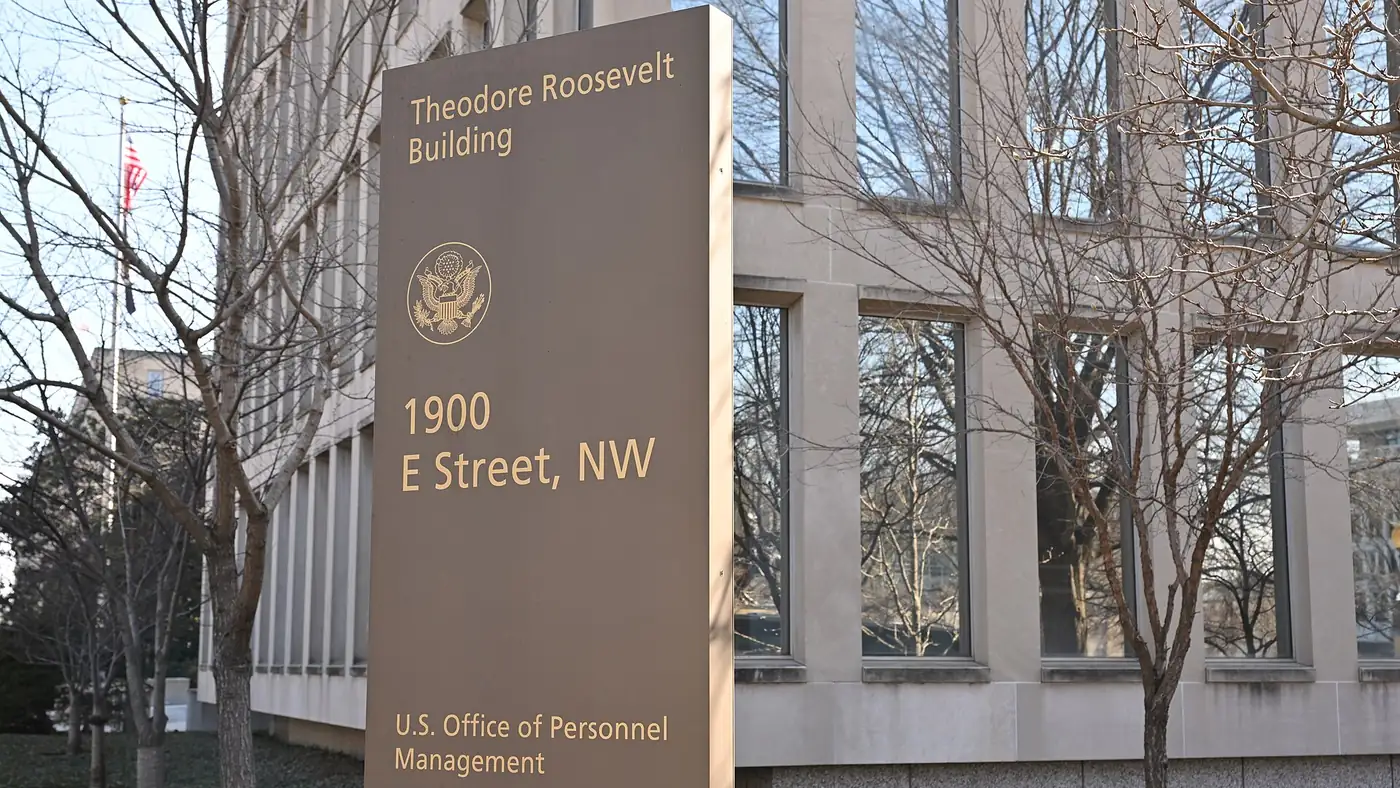
Agencies, boards and the OPM
Federal employees as clients: agencies, appeals and the deadlines a page must state
A federal worker's problem rarely starts in a courtroom. Discrimination complaints begin with an agency EEO counselor, appeals of removals and suspensions go to the Merit Systems Protection Board, disability retirement applications are decided by the Office of Personnel Management, and a civil suit comes, if at all, after those steps. Every one of them runs on a deadline set in the Code of Federal Regulations, and a missed deadline can end the matter before a lawyer sees it. The timeline below sets the main ones side by side.
Federal deadlines a District employment or contracts page has to state exactly
-
Counselor contact (EEO) (29 CFR 1614.105(a)(1))
- Day 0Discriminatory act, or effective date of the personnel action
- Day 45Last day to contact an EEO counselor
-
Formal complaint (EEO) (29 CFR 1614.106(b))
- Day 0Notice of the right to file arrives
- Day 15Formal complaint due
-
MSPB appeal (5 CFR 1201.22(b)(1))
- Day 0Action takes effect (or decision received, if later)
- Day 30Appeal due (60 days if both sides agreed to try ADR first)
-
Lawsuit in federal court (29 CFR 1614.407(a))
- Day 0Final agency action received
- Day 90Last day to file in federal district court
-
GAO bid protest (most protests) (4 CFR 21.2(a)(2))
- Day 0Basis of the protest known
- Day 10Protest due at GAO
Use the arrow keys to read each date.
| Rule | Day | What happens |
|---|---|---|
| Counselor contact (EEO) (29 CFR 1614.105(a)(1)) | 0 | Discriminatory act, or effective date of the personnel action |
| Counselor contact (EEO) (29 CFR 1614.105(a)(1)) | 45 | Last day to contact an EEO counselor |
| Formal complaint (EEO) (29 CFR 1614.106(b)) | 0 | Notice of the right to file arrives |
| Formal complaint (EEO) (29 CFR 1614.106(b)) | 15 | Formal complaint due |
| MSPB appeal (5 CFR 1201.22(b)(1)) | 0 | Action takes effect (or decision received, if later) |
| MSPB appeal (5 CFR 1201.22(b)(1)) | 30 | Appeal due (60 days if both sides agreed to try ADR first) |
| Lawsuit in federal court (29 CFR 1614.407(a)) | 0 | Final agency action received |
| Lawsuit in federal court (29 CFR 1614.407(a)) | 90 | Last day to file in federal district court |
| GAO bid protest (most protests) (4 CFR 21.2(a)(2)) | 0 | Basis of the protest known |
| GAO bid protest (most protests) (4 CFR 21.2(a)(2)) | 10 | Protest due at GAO |
Sources: 29 CFR 1614.105(a)(1), 1614.106(b) and 1614.407(a); 5 CFR 1201.22(b)(1); 4 CFR 21.2(a)(2) (eCFR, current as of November 1, 2026). Extensions and exceptions in each section are not shown.
The 45-day counselor contact
A federal employee or applicant who believes an agency discriminated must contact an EEO counselor within 45 days of the matter, or of the effective date of a personnel action (29 CFR 1614.105(a)(1)). The regulation lets the agency extend the limit in listed situations, such as when the person was never told about it. After counseling, the formal complaint is due within 15 days of receiving the notice of the right to file (29 CFR 1614.106(b)), and a civil action may follow within 90 days of receiving the agency's final action (29 CFR 1614.407(a)). A page that gets these numbers wrong does real harm, so we quote them from the regulation and link it.
The 30-day MSPB appeal
An appeal to the Merit Systems Protection Board is due no later than 30 days after the effective date of the action, or 30 days after the employee receives the agency's decision, whichever is later. If both sides agree in writing to try alternative dispute resolution first, the limit becomes 60 days (5 CFR 1201.22(b)(1)). Removal and suspension pages should open with that count and the event that starts it.

Disability retirement: an evidence file, not a hearing
OPM's own form tells applicants that they must obtain the evidence that will allow OPM to decide their condition prevents useful and efficient service (SF 3112). A firm's page on FERS disability retirement is most useful when it explains what that evidence looks like, who supplies each part and what happens if OPM says no, in the order an applicant will face them.
Unions, advocates and pro bono help
Before the Board, a party may choose any representative who is willing and available to serve (5 CFR 1201.31(b)), and union representatives and nonlawyer advocates do this work. The MSPB's own page about pro bono representation ranked second for "mspb appeal lawyer" in our survey, and Google's related searches included "pro bono lawyers for federal employees" and "MSPB pro bono representation". A firm's federal-employee pages have to explain plainly what a lawyer adds at each step, without disparaging the other options, which Rule 7.1 would not allow anyway unless every comparison could be substantiated.
Our search survey, November 4, 2026
Who ranks when a federal worker searches from Washington
On November 4, 2026, we ran 15 searches from a Washington, DC location through the Serper API and recorded the top 10 Google results for each. Seven were federal-workforce searches, from "federal employment lawyer dc" to "federal employee reduction in force lawyer". Five were everyday District searches, such as "car accident lawyer washington dc" and "criminal defense lawyer dc". The other three covered bid protests, nonprofits and associations.
A small group of firm sites, search after search
Across the seven federal-workforce searches, 42 different sites filled the 70 places, but eight firm sites each appeared in at least three searches and together held 29 of the 70 results. Their pattern is plain: a separate page for each federal process (EEO complaints, MSPB appeals, disability retirement, reductions in force), each matching the words people search. In the five everyday searches the only sites to appear three or more times were two lawyer directories, which held 9 of 50 results.
Out-of-state firms in the top results
For "federal employee disability retirement lawyer", searched from Washington, three of the top 10 titles named California or San Diego. For the EEO search, one result was a page titled for Atlanta. Federal-sector clients search by process, not by city, and Google treats a strong page about the process as relevant even when the firm is across the country. A District firm competes nationally on these searches whether it chooses to or not.
Everyday searches looked local
The car accident, divorce, criminal defense, landlord-tenant and immigration searches returned District firms with pages named for Washington, alongside directories and free public help: two D.C. Bar assistance pages, the Attorney General's tenant help, the Public Defender Service, and Reddit. Local pages for a District firm are up against that mix, and specificity to the District is what lets them win.
What a federal-sector site plan looks like
For a firm with a federal practice we plan one page per federal process, each tied to its regulation and deadline, plus a page per agency forum where the firm appears often. The District office anchors them, and local pages for District residents sit in a separate branch of the site, with their own Business Profile signals.
Government contractors
Government contractors and the 10-day bid protest window
The searches with the shortest fuse in the District come from companies that lost a federal contract award. Most protests to the Government Accountability Office must be filed within 10 days after the basis of the protest is known or should have been known, with a separate rule for protests that turn on a required debriefing (4 CFR 21.2(a)(2)). Problems apparent in the solicitation itself must be protested before bids or proposals are due.
Who searches, and how fast they need an answer
A contracts manager or a small-business owner searching "bid protest attorney washington dc" is counting days. In our survey that search returned large national firms with government contracts groups, mid-size contracts boutiques and a small-business contracting blog. None of the results was a directory. A protest page that buries the 10-day rule under firm history is answering the wrong question.

Pages written for a reader with a deadline
We build protest pages to answer, in order: how many days are left and from what date, what the firm needs from the client today (the award notice, the debriefing request or record, the solicitation), and how to reach a lawyer the same day. Contact details sit above the explanation, and the page is reviewed whenever GAO updates its rules or its filing procedures.
Contractors are also employers
Contractors near the District employ people who hold clearances and work on federal sites, which links this practice to the employment and clearance searches above. A firm that handles both can connect its pages for the company and for the employee only if the conflict rules allow it to represent both kinds of client, and its pages should make clear which side each one serves.
Nonprofits and associations
Nonprofit and association clients, and how they look for counsel
One District resident in five who works is employed by a private nonprofit, and the organizations behind those jobs are clients in their own right. They buy legal work differently from individuals: a board or an executive director decides, often after asking peers, and the search is a check on a name as much as a discovery.
Free help ranks beside the firms
For "nonprofit lawyer washington dc", the D.C. Bar's Help for Nonprofits page ranked second in our survey. Since 1999 the Bar's Pro Bono Center has run a Nonprofit Legal Assistance Program for the District's community-based nonprofits, with pro bono matches, clinics, weekly office hours and trainings (D.C. Bar Pro Bono Center). A firm that serves larger nonprofits and associations should say whom it serves, by size and type, so the organizations the program is built for find the program and the ones that need a firm find the firm.
"Association" means several different things in a DC search
Our "association lawyer dc" search returned bar associations, a law library guide, a homeowners' and condominium association practice and a trial lawyers' association. In the District, trade and professional associations are a major client group, and their counsel competes with all of those meanings. A page for association clients has to name the kind of association in its title and first lines, or it will rank for the wrong readers.
Fee sharing with a nonprofit under Rule 5.4(a)(5)
The District lets a lawyer share legal fees, whether court-awarded or received in settlement, with a nonprofit organization that employed, retained or recommended the lawyer in the matter and qualifies under section 501(c)(3) (D.C. Rule 5.4(a)(5)). Firms that work with advocacy groups on fee-shifting cases can describe those partnerships on their sites accurately, while keeping in mind Comment [11]: the lawyer's judgment must stay solely in the client's interest.
Topics nonprofits search for
The program's own list of matters is a fair map of nonprofit legal demand in the District: employment law, real estate, corporate governance, contract review, intellectual property and tax-exempt status. A firm serving nonprofits can build a page for each, written for a board member rather than a lawyer, with the steps and documents involved.
The District's advertising rule
D.C. Rule 7.1: the standard behind every District law firm ad
The District's advertising rules are compact. Where many states spread lawyer advertising across Rules 7.1 to 7.5, the District puts communications, solicitation and paid recommendations into Rule 7.1 and keeps firm names in Rule 7.5 (D.C. Bar). What the rule lacks matters as much as what it says.
Misleading includes what can't be substantiated
Under Rule 7.1(a), a communication is false or misleading if it contains a material misrepresentation of fact or law, omits a fact needed to keep it from misleading, or contains an assertion about the lawyer or the lawyer's services that cannot be substantiated. The last clause is broader than in many states. "The District's most trusted federal employment firm" is an assertion; unless the firm can prove it, it can't run. We keep claims to facts the firm can document: years in practice, forums appeared before, languages spoken.
Verdicts, awards and client endorsements
Comment [1] names three kinds of ad that can mislead by creating an unjustified expectation, unless suitably qualified: those describing the amount of a damage award, those describing the lawyer's record of favorable verdicts, and those containing client endorsements. It also says comparisons with other lawyers are misleading if the claims can't be substantiated. On results and reviews pages we place the qualifier next to the result or review it qualifies.
No filing, no labels and no specialist rule
Comment [4] says some jurisdictions regulate the type and content of lawyer advertising beyond banning false or misleading statements, that such rules create unneeded barriers, and that the District subjects lawyer advertising only to the requirement that it not be false or misleading. So the District has no ad-filing office, no required "advertising" label and no separate rule on the word "specialist". The word still has to be true and provable under Rule 7.1(a)(2), and a firm advertising to Maryland or Virginia readers still meets those states' rules there.
In-person contact, telephone calls and email
Rule 7.1(b) restricts seeking employment by in-person contact with a nonlawyer who hasn't asked for advice, when the contact involves a false claim, coercion or harassment, or a person apparently unable to exercise reasonable judgment. Comment [5] says in-person solicitation includes telephone contact but not email, and gives as examples of improper circumstances repeated or late-night calls and approaching an accident victim shortly after the accident. It adds that a lawyer may no longer conduct in-person solicitation through a paid intermediary who is neither a partner nor an employee.
What a District firm may pay for
Money or anything of material value for a recommendation may go only to the lawyer's partners and employees, says Rule 7.1(c), apart from a short list: the reasonable costs of permitted advertising, the usual fees or dues of a legal service plan or lawyer referral service, buying a practice under Rule 1.17, and non-exclusive reciprocal referral arrangements that the client is told about. Comment [8] confirms that a lawyer may pay for advertising and marketing, which is the basis on which a firm pays an agency for its work.
Notice before a fee from a jailed person
Rule 7.1(f) applies when a lawyer, or someone acting for a lawyer, solicits a person held at the D.C. Jail, the Correctional Treatment Facility or a District juvenile facility in a pending criminal case where that person already has counsel. Before taking any fee, the new lawyer must give the current one timely and adequate notice. When a detained client's family calls, that step belongs in the intake script.
Rule 7.1(e)
The solicitation zone around the Moultrie Courthouse
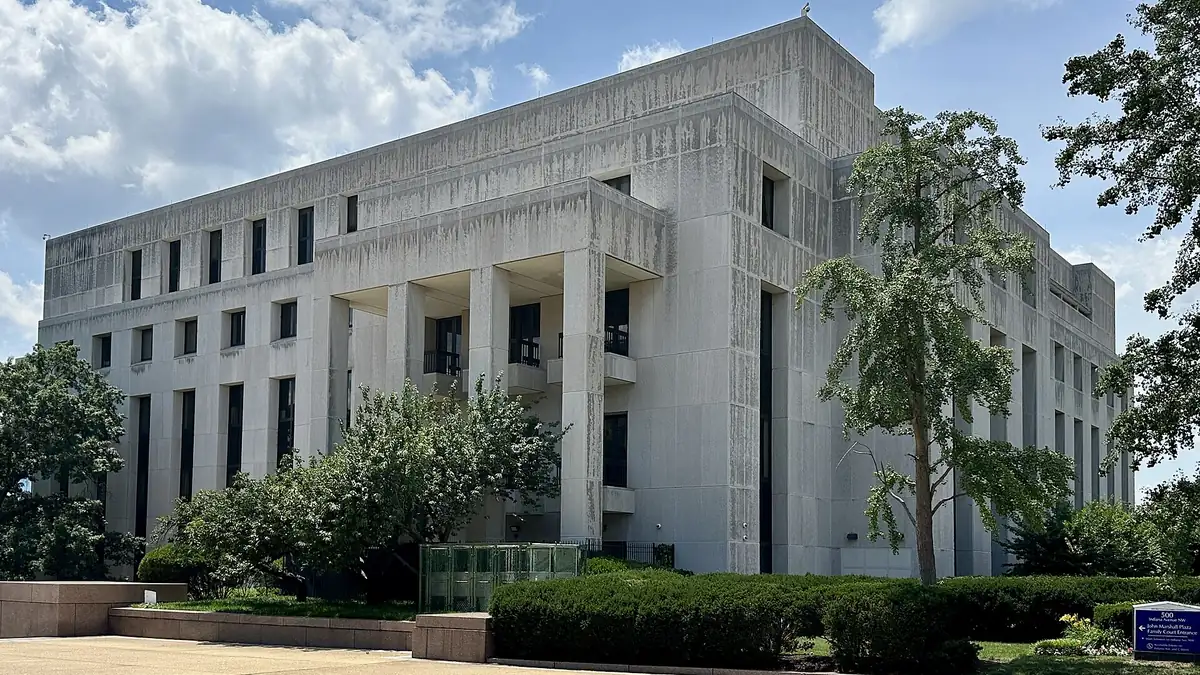
The District has a rule written about a single building. Rule 7.1(e) forbids any lawyer, or any person acting for a lawyer, to solicit or seek to solicit anyone for representation for a fee paid by or for a client, or under the Criminal Justice Act, in any present or future case, inside the District of Columbia Courthouse, on the sidewalks on its north, south and west sides, or within 50 feet of the building on the east side (D.C. Rule 7.1(e)).

The pro bono exception
Comment [9] explains that the words "for a fee paid by or on behalf of a client or under the Criminal Justice Act" were added so that solicitation for pro bono representation in the courthouse would be allowed. Cases where fees are awarded under the Criminal Justice Act don't count as pro bono, but the possibility of fees under the Equal Access to Justice Act or civil rights fee statutes doesn't stop representation from being pro bono. Legal services organizations can therefore describe courthouse outreach on their sites; fee-earning firms cannot.
Why we don't geofence ads around 500 Indiana Avenue
Ad platforms let an advertiser show ads to phones inside a drawn area. The rule speaks of soliciting a person in or around the courthouse; whether an ad delivered to a phone on those sidewalks is a solicitation there is a question no District authority we have found has answered. We don't test it with our clients' licenses. Campaigns for defense and family firms target the District or a radius around the firm's office, and we exclude the courthouse block where the platform allows exclusions.
Who prosecutes a District misdemeanor
Defense pages for District clients need one fact most cities don't have. The court explains that US misdemeanors, the more serious ones such as simple assault and misdemeanor drug possession, are prosecuted by the United States Attorney's Office (DC Superior Court), while DC misdemeanors such as disorderly conduct and open-container offenses are prosecuted by the DC Attorney General's office (DC Superior Court). A page that tells a reader which office has the case, and why that matters, answers a question every new client has.
D.C. Court of Appeals Rule 49
Rule 49 and the attorney bios on a District firm's website
Rule 49 of the District of Columbia Court of Appeals is the District's unauthorized-practice rule. It matters to marketing because of how it defines its terms. No person may practice law in the District or hold out as authorized to do so unless the person is a D.C. Bar member or the conduct is permitted by one of the rule's listed exceptions (D.C. Court of Appeals Rules). Many District firms employ lawyers who rely on those exceptions, and the exceptions come with notice requirements that land on the website.
Website biographies are business documents
Rule 49(b)(8) defines a "business document" as any document made available to a client, third party, the public or an official body in connection with legal or law-related services, and lists letters, emails, business cards, website biographies, pleadings, advertisements and social media. Where an exception requires "prominent notice in all business documents", the bio page, the firm's LinkedIn posts and its ads all count.
Notices for agency-only and federal-court-only practice
Rule 49(c)(2) lets a person who isn't a D.C. Bar member practice before federal and District agencies when a statute or agency rule permits and regulates that practice, and Rule 49(c)(3) does the same for proceedings in federal courts, for a person admitted or expecting admission there. Both require prominent notice that the person is not a D.C. Bar member, that the person's practice in the District is limited to the types of services those exceptions authorize, and which of those services the person provides; under (c)(3) the notice applies if the person has an office in the District. The rule adds that the D.C. Court of Appeals and Superior Court are not courts of the United States for this purpose. For a federal employment or contracts practice, this describes several lawyers on many District websites.
New lawyers whose D.C. Bar application is pending
A lawyer licensed in another U.S. jurisdiction whose first D.C. Bar application is pending may practice here for as long as 365 days under Rule 49(c)(8), if a D.C. Bar member supervises each matter and agrees to be jointly responsible, and if the lawyer's business documents give prominent notice that the practice is supervised by D.C. Bar members and that the lawyer is not one. A firm that hires laterals or new graduates needs the notice on the bio from the first day, and needs to remove it once admission comes through.
Words that hold someone out as a lawyer
Rule 49(b)(4) lists terms that ordinarily indicate a person is authorized to practice law in the District: "esquire", "lawyer", "attorney", "attorney at law", "counsel", "counselor", "contract lawyer", "trial advocate", "legal representative", "legal advocate", "notario" and "judge". Titles like "Of Counsel" or "Senior Counsel" on a team page are holding out. A former judge who isn't a D.C. Bar member, or a nonlawyer principal, needs a title that uses none of them.
Firms with offices in several jurisdictions
Rule 7.5(b) reaches the same pages from another direction. A multi-office firm keeps one name everywhere, yet the lawyers listed for its District office who lack a District license must have that limit stated beside their names (D.C. Rule 7.5). The bio and the office roster are where it goes.
How we write the notice
We put the notice directly under the lawyer's name and title, in the same type size as the bio, not in a footer. For a lawyer practicing only before federal agencies, our draft reads along these lines: "Not a member of the D.C. Bar. Practice in the District of Columbia is limited to matters before federal agencies, as authorized by D.C. Court of Appeals Rule 49(c)(2)." The firm's lawyers make the final call on the wording, because the exception that applies depends on facts only they know.
D.C. Rules 7.5 and 5.4(b)
Firm names, departing partners and nonlawyer principals in the District
Names on a District firm's site carry more rules than they appear to. A firm name, a former partner's name on the masthead, or a nonlawyer on the leadership page can each create a problem the rest of the copy can't fix.
Trade names and domain names
The District's version of Rule 7.5(a) has particular bite in a city of agencies: a name that sounds official can mislead a federal employee into thinking the firm is part of the government. The comment also treats a distinctive website address as a firm designation, so the same test applies to the domain. In a city full of agencies, a name or domain that sounds like an office of the government, such as one built around "Federal Employee Legal Services", deserves a hard look before it goes on a sign or a site.
A partner who leaves, or who takes public office
The comment to Rule 7.5 says it is misleading to keep using the name of a lawyer formerly with the firm who now practices elsewhere, citing D.C. Bar Legal Ethics Committee Opinion 277. Rule 7.5(c) adds that the name of a lawyer holding public office may not be used in the firm name or in communications on its behalf during any substantial period when that lawyer is not actively and regularly practicing with the firm. In Washington, where partners leave for government posts and come back, the firm name, the logo, the domain and the "about" page all need a plan for the day a name partner is sworn in.
Nonlawyer partners under Rule 5.4(b)
The District allows something most states don't: a nonlawyer who performs professional services that help the firm provide legal services may hold a financial interest or managerial authority in it, if the organization's sole purpose is providing legal services, everyone with an interest agrees in writing to abide by the rules, and the lawyers take responsibility for the nonlawyers as they would for lawyers (D.C. Rule 5.4(b)). Comment [7] gives examples, including economists working with antitrust lawyers, nonlawyer lobbyists working with lawyers who do legislative work, and accountants working with tax lawyers. Comment [8] adds that passive investors are not allowed.
Presenting nonlawyer principals on a team page
A firm with a nonlawyer principal under Rule 5.4(b) can feature that person on its site, with a title that describes the work, such as "Principal, Economic Analysis" or "Director of Government Relations", and without any of the Rule 49(b)(4) words. We also keep these profiles out of the attorney structured data, so search engines and AI tools don't list a nonlawyer as one of the firm's lawyers.
Courts and content
Superior Court for every ward, and what District practice pages should say about it
There is no county layer in the District. Its government acts as state, county and city at once (DC Office of Planning), and DC Superior Court is the single trial court for local matters, with the D.C. Court of Appeals above it. Federal suits go a few blocks away, to the E. Barrett Prettyman Courthouse and the federal trial court that sits there (federal district court). That structure is simpler than most, and pages copied from a state template get it wrong in predictable ways.
No county name to put in a heading
Templates written for states insert a county name into headings and schema fields. A District page that mentions a "District of Columbia County" or a "county court" tells readers, and AI tools, that it was not written for the District. We use "the District", "DC Superior Court" and the ward or neighborhood where a local fact needs a place.
Vehicle claims of $50,000 or less without a jury
Superior Court's Civil Division created a Non-Jury Fast Track for vehicle cases. To qualify, the complaint must seek $50,000 or less and every party must waive a jury trial; plaintiffs serve a Notice of Intent on the defendants and request the track by praecipe (DC Superior Court, Civil Actions). An injury firm's DC car accident page can explain when that track fits and when the ordinary civil route does, which few pages do.
Where a District injury or family page should send the reader
Because there is one trial court, a District practice page can be more exact about the path of a case than a page for a sprawling state system: the division, the branch and the first filing a reader will see. We write those paths from the court's own division pages, link them, and review them when the court changes a procedure.
AI search optimization in Washington, DC
AI search optimization for District firms: an unambiguous place name and cited regulations
Firms ask us about AI SEO in Washington, DC and about an AI legal marketing agency because clients now ask ChatGPT, Gemini and Google's AI answers before they search for a firm. For District firms the work has a local twist: the place name itself is ambiguous, and the most common federal questions have government sources that compete for the citation.
Naming the District the same way everywhere
"Washington" is also a state, and search systems mix the two. In our survey, a Washington DC immigration search returned the Google question "Who is the best immigration lawyer in Washington state?". An AI tool deciding which firm serves a District client weighs the same signals. We make the firm's place unambiguous: "Washington, DC" with the ZIP code in the address everywhere it appears, "District of Columbia" in structured data, and the same form on the Business Profile and in directories.
Citing the regulation an AI tool can check
For federal questions, a sentence an AI tool can lift and verify, such as the MSPB's 30-day limit with its CFR citation, is more likely to be used than a paraphrase. We write the key answers on federal-sector pages that way.
Adding what the agency page can't
The MSPB, OPM and the EEOC publish their own explanations, and those pages will often be cited first. A firm's page earns a place beside them by covering what an agency can't say: how a District lawyer prepares the file, the mistakes that cost appellants their cases, and what happens at each stage from the client's side. That is information gain an AI tool can't get from the regulation alone.
What we check every month
We keep a fixed list of questions for each client, split between federal-sector and District matters, and record whether AI tools name the firm, cite one of its pages or send the reader to an agency instead. We report it with Search Console data and calls, and we say which results reflect our work and which reflect changes in the tools themselves.
Paid search
Washington lawyer Google Ads: a national budget and a District budget
Firms looking for a Washington lawyer Google Ads expert, company or consultant usually have the same split as their organic search. We plan their paid search alongside the organic work, using the campaign method described under law firm PPC. Three decisions are particular to the District.
Separate campaigns for federal-sector and District cases
A campaign for MSPB appeals can target federal employees anywhere the firm's lawyers are allowed to represent them, while a campaign for custody cases targets the District and the nearby suburbs the firm serves. Mixing them in one campaign lets the cheaper clicks take the budget. We keep them apart, with separate landing pages and separate reporting.
Ad claims that can be proven
Rule 7.1(a)(2) applies to ad headlines like any other communication: an assertion about the lawyer that can't be substantiated is misleading. Automatically generated headlines often include phrases like "top-rated" or "most trusted". We switch off automatic assets where the platform allows, approve every headline before it runs and keep a record of what each claim rests on.
Search terms worth excluding
In our survey, Google's related searches around District lawyer queries included salary searches from job seekers ("Criminal defense attorney salary", "National Security Lawyer salary"), several pro bono searches, and a question about Washington State. Paid campaigns for District firms start with negative keywords for those, so the budget goes to people looking for the firm's paid work.
Along the East Coast
Up the I-95 corridor, from Baltimore to Boston
Firms up the I-95 corridor practice under other states' rules and courts, so each market has its own page. The complete list of markets is under areas we serve.
What District partners want settled before signing with an agency
In short
In short: two in five employed District residents work for a federal agency or a nonprofit, their legal searches compete with specialist firms nationwide, and the District's own rules reach every bio and ad. GLP plans District firm sites around those three facts.
We are a Washington State firm. Is this the right page?
No. This page is about Washington, D.C. Firms in Washington State can start from our Seattle or Vancouver, WA pages, which cover that state's courts and its own lawyer advertising rules.
Where is GLP based, and how do District firms meet with you?
Nobody at GLP works from Washington; the company is based in West Hollywood, California. Meetings happen on video and by phone, documents are shared online, and with the District three hours ahead, the overlap runs from your late morning to the close of your afternoon.
Can GLP help law firms in Maryland and Northern Virginia?
Yes. Google's related searches in our District survey drifted across the line on their own: "Fairfax divorce lawyer", "Divorce Lawyers Rockville", "Immigration lawyer Silver Spring", "Landlord tenant Lawyer pg County". Offices in Bethesda, Arlington, Alexandria, Woodbridge or Potomac serve District clients as well; when one of them looks for a Maryland lawyer SEO expert, that cross-border reach is usually the point. The federal-sector pages described above work the same way wherever the office is, and Virginia firms as far south as Virginia Beach follow their own state bar's advertising rules. Each state across the line writes its own lawyer advertising rules; for Maryland, our Baltimore page covers that state.
When do federal-sector and District pages start bringing calls?
It depends on which half of the practice you mean. A page about a District matter, such as a Superior Court custody case, competes with a few dozen local firms and can move within months. A page about a federal process, such as an MSPB appeal, competes with specialist firms nationwide that have built those pages for years, so it usually takes longer. We report both separately so the slower one doesn't hide the faster one.
Do you build attorney websites in Washington, DC?
Yes. We build fast, accessible sites (WCAG 2.2 level AA) with structured data and call tracking from launch, and on a District site the attorney bio template includes a slot for the Rule 49 notice so it can't be forgotten when a new lawyer joins. A full build, start to finish, is explained in how we build law firm websites.
If GLP runs our Google Ads, who owns the account?
Your firm does. For Washington law firms, as everywhere, we ask that the Google Ads account sit in the firm's name with GLP added as a user, so years of data stay with you if the relationship ends. Our law firm PPC write-up explains structure and tracking.
Does a District speeding ticket go to Superior Court?
No. The court sends minor traffic offenses to the DC Department of Motor Vehicles, while Superior Court hears criminal traffic charges such as driving while intoxicated (DC Superior Court). A traffic-defense page that sends a reader with a speeding ticket to the courthouse loses that reader's trust in the first paragraph.
Does AI search work cost extra on top of an SEO retainer?
No. AI search is part of the same retainer as SEO, and the price is set in writing after the free audit and a strategy call. If you also want us to manage ad spend, intake and outside vendors, that is a different engagement, which we call Consulting CMO. Both are explained under how we work.
What do District residents type when they need a tenant lawyer?
In our November 4, 2026 survey, Google's related searches around "landlord tenant lawyer dc" were "DC Tenant lawyer", "Free landlord tenant lawyer", "Landlord Tenant legal Assistance Network", "D.C. tenants' rights Center", "DC Landlord Tenant Court Case search" and "Landlord tenant Lawyer pg County". Free help and court records sit right next to firm searches, so a tenant-side firm's page should say plainly what it charges and how it differs from the free programs, and a landlord-side page should not read like either.
Do you work with security clearance lawyers?
Yes. Clearance searches behave unlike the rest of federal employment in our survey: none of the eight sites that recurred across other federal searches appeared, and page one went to firms focused on clearances, plus a clearance-jobs forum and Reddit. Google's related searches included "security clearance lawyer free consultation" and questions about a named firm's cost and reviews. Clearance pages win on specifics: the adjudicative process, what a statement of reasons asks for, and how long each step takes.
Do you work with immigration firms in the District?
Yes. Immigration searches from a DC location in our survey returned District firms, a large national firm and a nonprofit directory of immigration legal services in the top 10, and Google's related questions mixed in Washington State. An immigration page here has to say "Washington, D.C." in full and early. For immigration practices in any market, see immigration lawyer SEO.
Can any agency guarantee a District firm's rankings?
We won't, and a promise like that from anyone should worry you. Google's AI features documentation makes no promise that any page will be shown (Google Search Central). What we put in writing is the work: which pages, which fixes, which reports, and when.
How is a downtown DC office made visible in Google Maps?
Categories that match the practice, services and hours that are true, photos of the real office, steady reviews with replies, and the same name, address, suite number and phone in every directory. Many downtown firms share a building with dozens of other offices, so the suite number has to be identical everywhere. Our local SEO services cover the rest of this work.
See who Google and ChatGPT name for District legal searches
Tell us your practice and whether your clients are federal employees, contractors, nonprofits or District residents. In 48 hours you get a free audit of the searches your firm wins, and the ones a competitor or an agency page wins instead.
Or call Call (661) 388-5526