
Ontario, CA: law offices near ONT and along the I-10
Lawyer SEO in Ontario, CA
Search work for Ontario lawyers in a city of full houses.
One Ontario home in eight holds more people than it has rooms. Converted garages, rented bedrooms and shared policies follow from that, and so do the searches your next clients make. Our attorney SEO work starts from those searches and ends at a phone call to your office.
Below: the law firm SEO services we run for a firm here, the Census count behind that opening line, and the law a stretched house brings to land-use, landlord and tenant, injury, workers' compensation and immigration practices, with every source linked. The plumbing that works the same in every market, crawling and ranking among it, has its own explainer: our law firm SEO page.
Free, done by a real person, and in your inbox within 48 hours.
Ontario, counted
Ontario homes, counted person by person and room by room
Every figure below names its unit, because the unit decides what a firm can do with it. A count of homes points to household law, a count of permits to land-use work, a count of rented homes to the landlord and tenant side. The source code beside each count leads to the table it came from.
| Count | What is counted | Source | Where it shows up in a firm's content |
|---|---|---|---|
| 6,684 | occupied homes with more than one person per room, 12.4% of 53,770; California 8.2%, U.S. 3.4% | ACS B25014 | Pages on converted space, occupancy and shared policies reach a larger share of the city than they would almost anywhere else. |
| 4,346 | rented homes above one person per room, 19.3% of renter households | ACS B25014 | Landlord and tenant pages need occupancy and fair-housing content, not only rent and eviction. |
| 2,074 | homes above 1.5 people per room, 3.9% of the city | ACS B25014 | A tightly packed house is where code complaints and lodger disputes start. |
| 662 | accessory dwelling units given building permits, 2019 to 2025 | HCD APR A2 | Owners are adding space, and some will also bring an older conversion that never had a permit. |
| 5,962 | rented homes with three or more bedrooms, 26.4% of the rental stock | ACS B25042 | Large families compete for a quarter of the rentals, which is where occupancy limits get tested. |
| 4 years | years between scheduled city visits to older rental units | City program | Owners renting a room or a second unit meet the city's inspection cycle sooner or later. |
| 2.7 sq mi | of airport grounds under a dedicated police bureau | Ontario PD | Airport-area matters pass through a police bureau of their own. |
The engagement, in Ontario terms
A floor plan of our work for an Ontario, CA law firm
GLP only works for law firms. When an Ontario partner asks what a law firm SEO company actually does, a floor plan is a fair way to answer, because each part of the work has a place in the house a client walks through before calling. The six rooms make up our search engagement. Hand us the ad accounts, the intake desk and your other vendors too, and the same plan grows into the Consulting CMO engagement with all six rooms still in it.
Front door
Practice pages built on Ontario facts
The pages a searcher lands on: one per practice and situation, written from the city's own rules, such as its ban on sleeping in accessory structures or its rental inspection cycle, and checked against current California law.
Front window
Your Google Business Profile
Categories, services, hours, photos and reviews kept accurate, so the map listing shows the office for the searches it should and matches what the website says.
Hallway
Technical SEO and site structure
Speed on a phone, clean redirects, structured data and the internal links that let a reader, and Google, move from one related page to the next.
Study
Answers the AI tools can repeat
We log how ChatGPT, Google's AI Overviews and similar assistants describe your firm, then give them short, sourced passages to cite. Citation tracking is part of the reporting.
Porch
Links and mentions from outside
Authority link building, plus directory listings that carry one name, address and phone number everywhere, which is how the wider web confirms the firm is where it says it is.
Office
Reports tied to signed cases
Monthly strategy calls and a report linking each call and consultation to the page it started on, as far as your intake data allows.
It begins with the free audit. A member of our staff compares your site and Business Profile with the firms ranked above you on crowded-housing and tenant searches, then records a walkthrough of what we'd fix first. It arrives within 48 hours. After that, the work runs on a monthly retainer set for your practice areas and for how contested Ontario searches are, and you see the terms in writing first. Search Console tends to show the first changes within a few months and larger gains over a year, and nobody can commit to a date, since the ranking decision is Google's.
Lawyer SEO, attorney SEO, legal SEO: what Search Console shows people typing before they reach this page
Search Console shows this page appearing for the profession's broadest searches, not only Ontario ones: "lawyer seo", "attorney seo", "lawyer seo marketing", "law firm seo services", "legal seo" and "law firm seo". The words people add say what they are comparing. Some ask for a business: "law firm seo company", "seo companies for law firms", "attorney seo agency", "seo agency for lawyers". Some ask for a person: "law firm seo expert", "lawyer seo experts", "law firm seo specialists", "lawyer seo consulting", "seo consultant for attorneys". Others name the place, as in "seo for lawyers ontario", "legal seo ontario" and "law firm seo company ontario ca".
Those are attorneys and office managers shopping for help, so here is what each word means at GLP. We are an agency that works only for law firms, and the expertise a firm buys sits with the people who research and write its pages, check them against California's rules and run the monthly strategy call. The consultant's role is the Consulting CMO engagement described above, where the same team also oversees ads, intake and outside vendors. Whichever word a partner types, the free audit is the same first step.
One group of searches isn't ours to answer. Queries such as "seo for lawyers toronto" show Google sometimes pairing this page with the Canadian province, whose lawyers follow the Law Society of Ontario's marketing rules. The survey below measures how far that mix-up reaches in Google's map results.
"Ontario" on its own against "Ontario, CA": a map survey from November 5, 2026
On November 5, 2026 at 14:23 UTC we submitted 24 searches to the Places API from Google (API documentation): 12 practices, each searched once as "[practice] Ontario" with no location set, and once as "[practice] Ontario, CA" with a 20-kilometer location bias centered on central Ontario, saving at most 20 results per query. We recorded the country and city in every office's address. One practice, wrongful death lawyer, returned almost nothing in either form (no listings, then 2), so the table and the counts below cover the other 11. A phone in someone's hand also uses where they are standing, so a person searching inside Ontario sees more local offices than this; what the survey shows is how Google reads the words on their own.
| Practice searched | "Ontario": offices in Canada | "Ontario": offices in Ontario, CA | "Ontario, CA": offices in Ontario, CA |
|---|---|---|---|
| Personal injury lawyer | 20 of 20 | 0 | 16 of 20 |
| Car accident lawyer | 16 of 20 | 4 | 16 of 20 |
| Landlord tenant lawyer | 20 of 20 | 0 | 16 of 20 |
| Eviction lawyer | 19 of 20 | 1 | 13 of 20 |
| Real estate attorney | 20 of 20 | 0 | 9 of 13 |
| Immigration lawyer | 20 of 20 | 0 | 11 of 20 |
| Workers compensation lawyer | 20 of 20 | 0 | 20 of 20 |
| Family law attorney | 20 of 20 | 0 | 9 of 20 |
| Criminal defense attorney | 20 of 20 | 0 | 7 of 20 |
| Estate planning attorney | 13 of 18 | 1 | 8 of 20 |
| Bankruptcy attorney | 15 of 20 | 3 | 10 of 20 |
Source: GLP survey, Google Places API (New) text search, 2026-11-05 14:23 UTC; 11 practices × 2 wordings, up to 20 listings each. Country and city taken from each listing's address.
Without "CA", the map moves to Canada
The searches without "CA" returned 218 listings, and 203 of them were Canadian offices, from Toronto, Hamilton, Windsor, Mississauga and other cities in the province. Only 9 had an address in Ontario, California, and they came from four practices: car accidents, eviction, estate planning and bankruptcy. The first listing was Canadian in 10 of the 11 searches; bankruptcy was the exception. Adding "CA" and a location reversed the picture: not one Canadian office, and 135 of 213 listings in Ontario itself, with most of the rest in Rancho Cucamonga and Upland.
What the survey changes on a firm's own site
- Write "Ontario, CA" or "Ontario, California" in titles, headings and the Business Profile, never "Ontario" alone.
- Name San Bernardino County and a neighboring city early on each page, so neither Google nor a reader has to guess which Ontario is meant.
- Expect a neighbor in the results: family law and criminal defense searches returned about as many offices in Rancho Cucamonga, home of the Superior Court's Rancho Cucamonga District courthouse on Haven Avenue, as in Ontario itself.
Find out where your site stands on the Ontario searches that matter to your practice. Get My Free Audit
Who lives in an Ontario home
More people than rooms: where Ontario sits in the west valley
Ontario has 53,770 occupied homes in the latest five-year Census survey. In 6,684 of them, 12.4%, the people living there outnumber the rooms (ACS B25014). Across California the share is 8.2%, and across the United States 3.4%, so an Ontario home is close to four times as likely as the average American home to be over that line.
How the Census draws the line
Occupants per room is simply the number of residents divided by the number of rooms. The Census counts living rooms, dining rooms, kitchens, bedrooms, finished recreation rooms and lodgers' rooms, and leaves out bathrooms, halls, open porches and unfinished space used for storage (ACS subject definitions). A family of six in a five-room house is over the line; so is a couple renting out one of their three rooms to two cousins. An unfinished garage isn't a room at all in this count, which matters for what follows.
A belt of fuller homes from Pomona to Fontana
The chart shows that Ontario is not an outlier among its neighbors. Pomona, Montclair and Fontana run slightly higher, and the county as a whole sits at 9.3%. The contrast is to the north and south: Rancho Cucamonga is at 5.2% and Upland at 6.9%. A firm that serves the whole west end of the county is writing for two kinds of household at once, and a page built for the Rancho Cucamonga foothills reads differently from one built for central Ontario.
Owners and renters compared: the same line, two different shares
Owners and renters measured separately against the one-person-per-room line
- Ontario 7.5% 19.3%
- San Bernardino County 6.2% 14.5%
- California 4.5% 13.0%
- United States 1.9% 6.3%
Use the arrow keys to read each value.
| Area | Owner-occupied homes above one per room (%) | Rented homes above one per room (%) |
|---|---|---|
| Ontario | 7.5 | 19.3 |
| San Bernardino County | 6.2 | 14.5 |
| California | 4.5 | 13 |
| United States | 1.9 | 6.3 |
Source: U.S. Census Bureau, American Community Survey 2020-2024 5-year estimates, table B25014.
Renters carry most of it
Of the 6,684 crowded homes, 4,346 are rented and 2,338 are owned. That is 19.3% of rented homes against 7.5% of owned ones. For a firm the split matters: the renter side brings questions about how many people a landlord can refuse, and the owner side brings questions about adding space and taking in someone who pays rent.
When a home is very full
2,074 Ontario homes, 3.9%, have more than one and a half people per room, against 3.2% statewide and 1.2% nationally. Those are the houses where a garage becomes a bedroom, where a code complaint from a neighbor tends to land, and where an argument over a rented room can end with someone asking how to make a lodger leave.
What the count can't tell a firm
- It doesn't say who the extra people are. They may be grown children, tenants, friends or relatives, and the legal question changes with each.
- It doesn't measure square footage. Five people in five large rooms count the same as five in five small ones.
- As a five-year survey figure it carries a margin of error, and it describes the city as a whole rather than any one street.
- It has no legal effect. Crossing the Census line is not a code violation, as one of the questions at the end of this page explains.

Real estate and land use
Garages turned into bedrooms: the permit questions behind converted space
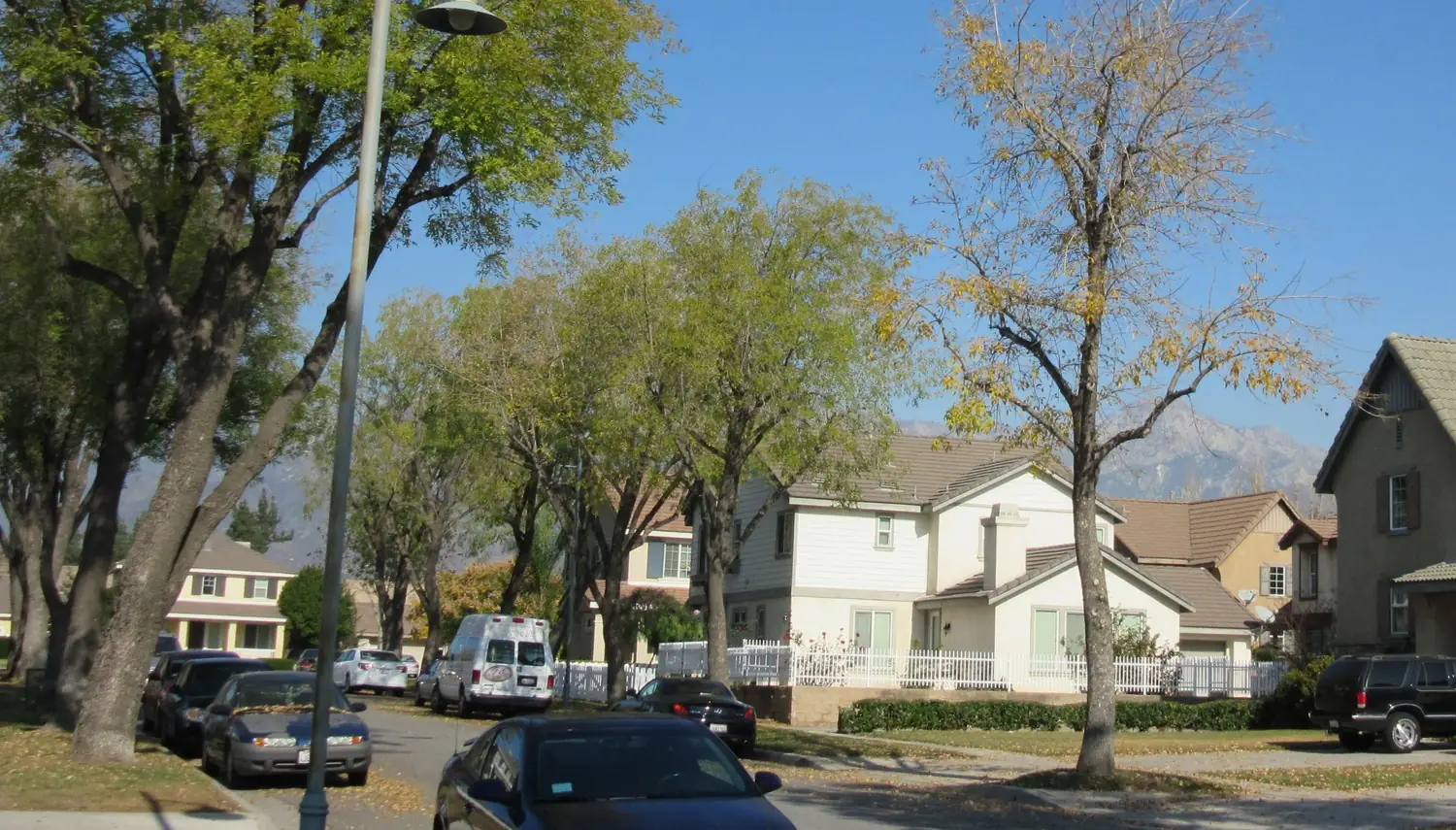
A house that holds more people than it was built for tends to grow from the inside. In Ontario the first place owners look is usually the garage. California has spent years opening that door through its accessory dwelling unit laws, while the city still enforces its own line against living in space that was never permitted for it. The gap between the two is where an owner needs a lawyer, and where a real-estate or land-use practice can write pages nobody else in the city has.
Ontario's own rule about sleeping in a garage
The city's residential standards say it plainly: workshops, storage buildings and garages are not designed as living areas, often lack light, ventilation and fire exits, and "living or sleeping in an accessory structure is not allowed." Recreational vehicles and trailers may be lived in only in an approved trailer park (City of Ontario, Residential Code Compliance). So the question an owner brings to a firm is rarely whether the family may use the space. It is how to make the space legal, and what happens in the meantime.
What state law lets an owner convert
Under Government Code § 66323(a)(1), a city must approve, without discretionary review, one accessory dwelling unit and one junior unit on a lot with a single-family home when the unit sits within the existing house or an existing accessory structure. The unit may grow by up to 150 square feet beyond the old structure, but only to fit an entrance and exit, and it needs exterior access and side and rear setbacks that are sufficient for fire safety. Section 66314 adds that a converted attached or detached garage counts as a valid location, and that no new setback can be required for a structure converted in place (§ 66314(d)(3), (d)(7)).
Parking the city can't ask the owner to replace
When a garage, carport or parking space is demolished for an accessory unit, or converted into one, the city may not require the lost off-street spaces to be replaced (§ 66314(d)(11)). In a neighborhood where the driveway already holds three cars, that sentence answers the first objection an owner hears at the counter, and it belongs near the top of any conversion page.
Junior units inside the house
A junior accessory dwelling unit is capped at 500 square feet and must sit entirely inside a single-family home; an attached garage counts as part of the home for this purpose (§ 66313(d); § 66333(d)). It needs its own entrance and an efficiency kitchen. If it shares a bathroom with the main house, the owner must live on the property, and a deed restriction is recorded that bars selling the junior unit separately (§ 66333(b)-(c)). Ontario's own guidance adds that a junior unit may not be built in a detached structure (City of Ontario, ADUs).
At City Hall
Ontario's permit path for a second unit, and the clock the city runs on
Owners don't only ask whether a unit is allowed. They ask how long the city can take, and they ask it most often after weeks of silence. Ontario's own counts show how many of them are now in that position.
Applications go through the Citizen Portal
Ontario takes accessory unit applications only through its Citizen Portal, where plans may be reviewed by the Building, Planning, Engineering and Fire departments and by the Ontario Municipal Utilities Company (ADU permit process). The city doesn't publish its own standard plans; owners can use a private vendor's preapproved plan, and an unchanged preapproved plan is checked within 30 days of a complete submittal (Preapproved ADUs). State law sets the outer limits shown in the chart below.
Clocks in a stretched house: permits and rented rooms
Days from the starting event; the 15-business-day check is drawn at about three calendar weeks
-
Completeness check, ADU or junior unit (Gov. Code § 66317(a)(2))
- Day 0Application reaches the permitting agency
- 15 business daysAgency answers: complete, or here is what is missing; silence counts as complete
-
Decision on a complete application (Gov. Code §§ 66317(a)(3), 66335(a)(3))
- Day 0Complete application received, existing house on the lot
- Day 60Decision due; an ADU application not acted on is deemed approved
-
Lodger paying by the week (Civ. Code §§ 1946, 1946.5(a))
- Day 0Notice handed or mailed to a weekly lodger
- Day 7Hiring ends: notice as long as the rental period
-
Lodger paying by the month (Civ. Code §§ 1946, 1946.5(a))
- Day 0Monthly lodger receives written notice
- Day 30Hiring ends; staying on becomes an infraction (Pen. Code § 602.3)
Use the arrow keys to read each date.
| Rule | Day | What happens |
|---|---|---|
| Completeness check, ADU or junior unit (Gov. Code § 66317(a)(2)) | 0 | Application reaches the permitting agency |
| Completeness check, ADU or junior unit (Gov. Code § 66317(a)(2)) | 15 business days | Agency answers: complete, or here is what is missing; silence counts as complete |
| Decision on a complete application (Gov. Code §§ 66317(a)(3), 66335(a)(3)) | 0 | Complete application received, existing house on the lot |
| Decision on a complete application (Gov. Code §§ 66317(a)(3), 66335(a)(3)) | 60 | Decision due; an ADU application not acted on is deemed approved |
| Lodger paying by the week (Civ. Code §§ 1946, 1946.5(a)) | 0 | Notice handed or mailed to a weekly lodger |
| Lodger paying by the week (Civ. Code §§ 1946, 1946.5(a)) | 7 | Hiring ends: notice as long as the rental period |
| Lodger paying by the month (Civ. Code §§ 1946, 1946.5(a)) | 0 | Monthly lodger receives written notice |
| Lodger paying by the month (Civ. Code §§ 1946, 1946.5(a)) | 30 | Hiring ends; staying on becomes an infraction (Pen. Code § 602.3) |
Sources: Government Code §§ 66317 and 66335, Civil Code §§ 1946 and 1946.5, Penal Code § 602.3, read in the Legislature's official database, November 5, 2026. Exceptions in each section are not shown.
Deemed approval when the city runs out its clock
The permitting agency has 15 business days to say in writing whether an application is complete, with a list of anything missing; if it says nothing, the application is deemed complete. After that, an application for a lot that already has a house must be approved or denied within 60 days, and an accessory unit application the city hasn't acted on by then is deemed approved (Gov. Code § 66317(a)). Junior units follow the same 15-day and 60-day steps (§ 66335(a)). Owners who have waited months for an answer search for exactly this, usually in words like "how long does the city have to approve my ADU."
If conversions and second units are part of your practice, we can show you which of those Ontario searches reach any law firm at all.
Older conversions
Units built before 2020 without a permit
Many of the converted garages in a city like this were built years ago, without plans or inspections. California now treats those units differently from new ones, under what is today Government Code § 66311.7. The section was numbered 66332 until SB 543 renumbered it on January 1, 2026, so older guides still cite the old number. Its rules are the most useful legal content an Ontario real-estate practice can publish, because the owner reading it is usually afraid that asking for a permit will bring a penalty.
The only ground for refusing the permit
A city may not deny a permit for an unpermitted accessory unit or junior unit built before January 1, 2020, because it breaks building standards or doesn't match the current ADU rules or local ordinance. It may refuse only after finding that correcting the violation is necessary to meet the health and safety conditions in Health and Safety Code § 17920.3, the list that defines a substandard building. A building already deemed substandard falls outside the protection.
Fees the owner doesn't owe
The owner legalizing such a unit can't be charged impact fees, connection fees or capacity charges, except where utility work is needed to meet those same health and safety conditions (§ 66311.7(e)). For a family that converted a garage cheaply because money was tight, the fee question often decides whether they apply at all.
An inspection that can't be used to punish
On receiving the application, a city inspector may inspect the unit and recommend what is needed to meet health and safety standards. If the inspector finds problems, the city may not penalize the owner for having had the unpermitted unit, and must approve the permits needed to fix them (§ 66311.7(f)).
A private look before the city's
Cities must tell the public, through permit checklists and their websites, that a homeowner may get a confidential code inspection from a licensed contractor before applying, along with a checklist of the conditions that would make a building substandard (§ 66311.7(d)). A page that walks an owner through that first private step does more good than one that starts with the permit fee.
Facts to collect before an owner applies
- When was the unit built, and what proof exists of the date, such as photos, utility bills or an old listing.
- Has the city already sent a notice or citation about it.
- Does anyone live there now, and on what terms.
- Is there a separate bathroom and entrance, which decides whether it can be a junior unit.
Landlord and tenant
Large families looking for a rental: occupancy limits under fair housing law
Crowding among renters is where Ontario differs most from the state, and it shows up in one recurring dispute: a family is told it has too many people for the unit. California's fair housing law makes familial status a protected category, and makes it unlawful for an owner to discriminate because of it, to ask about it, or to publish a listing that shows a preference against it (Gov. Code § 12955(a)-(c)).
A headcount per bedroom is a starting point, not a rule
The federal government's long-standing position, published in 1998, is that a policy of two people per bedroom is generally reasonable under the Fair Housing Act, but that reasonableness can be rebutted by the size of the bedrooms and the unit and by other circumstances (63 Fed. Reg. 70256). California's civil rights agency follows that policy. When it settled a Bakersfield case over a family of twelve refused a 2,583-square-foot house, it listed the factors that decide whether a limit is reasonable: the home's size and layout, bedroom sizes, physical limits, the occupancy state and local law allow, the children's ages and any discriminatory comments (Civil Rights Department).
Few big rentals for big families
Of Ontario's 22,568 rented homes, 5,962 have three or more bedrooms, 26.4%, and 1,909 have four or more (ACS B25042). With so few large units, a mechanical two-plus-one rule shuts big families out of most of the market, which is the effect the Bakersfield settlement described. A tenant-side page that explains the factors gives a rejected family something concrete to measure the landlord's reason against.
Listings and screening questions
The advertising clause catches owners more often than outright refusals. A rental post that says "ideal for a couple" or "no more than four people" in a three-bedroom house can be the evidence in a complaint. Landlord-side firms can earn trust with a page that shows owners how to write a listing and a screening policy that state law allows, using the factors above instead of a bare headcount.
Ontario's inspection cycle for rentals
The city's Rental Inspection Program covers every rental unit more than seven years old, inspected once every four years; violations get 30 days to be corrected before penalties, and the fee is $51 per unit a year. A property with three or more rental units also needs a city business license. The city lists the Inland Fair Housing and Mediation Board at (909) 984-2254 for landlord and tenant help (Rental Inspection Program). City staff look for interior and exterior code violations, so the condition of a rented room or second unit is checked whether or not anyone complains.
Pages for each side of the lease
- For families: what makes an occupancy limit unlawful, what to keep from the application, and where to file a complaint.
- For owners: a lawful occupancy policy, wording for listings, and what to do before the city inspector's visit.
- For both: a plain account of how the four-year inspection works and what a correction notice requires.
Rooms in an owner's home
A spare room let to a single lodger: the shortcut California allows
Owners stretching a mortgage often let a single room. When that arrangement goes wrong, the owner wants to know whether the person in the spare room is a tenant who has to be evicted through the courts. California has a narrow answer in Civil Code § 1946.5 and Penal Code § 602.3, and the details decide whether it applies.
Who counts as a lodger
A lodger is someone who contracts with the owner for a room, or room and board, in a home the owner personally lives in, where the owner keeps access to all areas the lodger uses and overall control of the home. The procedure applies only where a single lodger lives in the owner-occupied home. With two or more lodgers, these sections say nothing about their rights, and the owner is back to the ordinary rules.
The notice and how it is served
Either side can end a periodic lodging by written notice at least as long as the rental period, which under Civil Code § 1946 means up to 30 days for a month-to-month arrangement. The notice must be served the way Code of Civil Procedure § 1162 provides, or sent by certified or registered mail, restricted delivery, with a return receipt. When the notice period runs out, the lodger's right to stay ends by operation of law.
When staying on becomes an infraction
A lodger who remains after the notice period is guilty of an infraction under § 602.3, and the owner may make a private arrest; a peace officer who assists may remove the lodger without the usual written promise to appear. The removal is not a forcible entry and can't be the basis of civil liability under that statute. Any belongings left behind are handled under the abandoned-property rules in Civil Code § 1980 and following.
What the shortcut leaves untouched
Either side can still sue for breach of the lodging agreement. And because the shortcut depends on facts an owner may misjudge, such as whether a second person also rents a room, a page on this subject should tell the owner what to check before relying on it.
Landlord and general-practice firms can ask us whether "how to remove a roommate" searches in Ontario lead to their site or to a forum.
Injury and insurance
When the injured person lives in the same house as the policyholder
In a home with several adults, an injury often involves two people from the same household: a relative who borrowed the car, a housemate who fell on a stair the owner never fixed. The insurance that pays for most injury claims was written with that situation in mind, and California lets policies exclude it in ways that surprise families.
The exclusion California permits in auto policies
Insurance Code § 11580.1(c)(5) allows an auto liability policy to exclude "liability for bodily injury to an insured," and to exclude it whenever the benefit would flow, directly or indirectly, to an insured (Ins. Code § 11580.1(c)). Policy forms commonly define the insured to include relatives living in the named insured's household, so a person hurt by a family member's driving may find that the policy covering that car excludes them.
A household member named as an excluded driver
Subdivision (d)(1) lets the insurer and the named insured agree that coverage won't apply while a vehicle is driven by a person designated by name. The same paragraph keeps a duty to defend the named insured in some suits where the excluded driver lives in the same household. Families sometimes sign these exclusions to bring a premium down and forget about them until the excluded person is behind the wheel.
Homeowner and renter policies
Homeowner and renter policies commonly leave out injuries to people who live in the insured home, and the policy's own definition of a resident decides who is left out. A lodger who rents the spare room, a cousin who stays most nights and a sister who lives in the converted garage may each fall on a different side of that definition. The answer is in the policy, not the statute book, which is why an injury page should ask to see it early.
Questions an injury page should put first
- Did the person who caused the injury live at the same address as the injured person?
- Whose name is on the policy, and who is listed as a driver or an excluded driver?
- Does the injured person have their own auto or health coverage that could respond?
- Was anyone else, such as a contractor or a landlord, responsible for the condition that caused the fall?
Workers' compensation
A death at work in a shared household: who the Labor Code treats as a dependent
When a worker dies from a job injury, California's workers' compensation system pays a death benefit to dependents. In a household with several earners and several relatives, the first question is who those dependents are, and the Labor Code answers it more broadly than most families expect.
Dependents the law presumes
A child under 18 living with the employee-parent, or for whose support the parent was legally liable, is conclusively presumed wholly dependent; so is a surviving spouse who earned $30,000 or less in the 12 months before the death (Lab. Code § 3501). Everyone else's dependency is decided on the facts as they stood at the time of the injury (§ 3502).
A household member outside the family
Section 3503 lists the relatives who can be dependents, from parents and siblings to in-laws, nephews and nieces, and then adds anyone who was "in good faith a member of the family or household of the employee" (§ 3503). An unrelated person who shared the home and relied on the worker's pay can qualify. In an Ontario household of extended family and friends, a death-benefit page that lists only spouses and children leaves out people the statute includes.
Dollar amounts under section 4702
For injuries on or after January 1, 2006, the death benefit is $250,000 for one total dependent, $290,000 for two and $320,000 for three or more (§ 4702). Where there are no total dependents, partial dependents receive eight times the amount the worker spent on their support each year, capped at $250,000. With one total dependent, partial dependents share no more than $25,000 between them, and with two or more total dependents they receive nothing (§ 4703). A family that pooled wages in one house needs these rules explained before it divides anything.
What the death-benefit page has to gather
- Who lived at the address on the date of the injury, and for how long.
- Which household costs the worker paid, with receipts, transfers or statements.
- Each claimant's own income in the year before the death.
Immigration
Sponsoring a relative from a full house: the I-864 household arithmetic
The affidavit of support that most family-based immigrants need asks the sponsor to show income above a threshold set by household size. Federal law controls here, not California's, but the arithmetic plays out differently in a city where homes hold more people. A household of seven needs more income than a household of three, and the regulation lets some of the people under the same roof help meet it.
Who counts toward household size
Under 8 CFR 213a.1, household size always includes the sponsor, the sponsor's spouse and children (with exceptions for some adult children and stepchildren), anyone the sponsor claimed as a dependent on the latest federal tax return, every immigrant the sponsor still supports under an earlier affidavit, and the immigrants being sponsored now. Living at the address doesn't by itself add a person to the count.
Relatives who live there can add their income
The sponsor may add relatives who share the same principal residence to the household size, and their income can count toward the requirement if they are at least 18 and sign the contract that goes with the affidavit, Form I-864A (8 CFR 213a.1; 8 CFR 213a.2). Each one must provide tax returns for the same tax year as the sponsor's.
Relatives the rule doesn't reach
For this purpose a relative means a husband, wife, father, mother, child, adult son or daughter, brother or sister. A cousin, an in-law or a family friend in the same house doesn't qualify as a household member under that definition, however much they earn. That gap is exactly the question a large household brings to an immigration firm, and a page that says so saves the first consultation for the harder issues.
Ontario International Airport
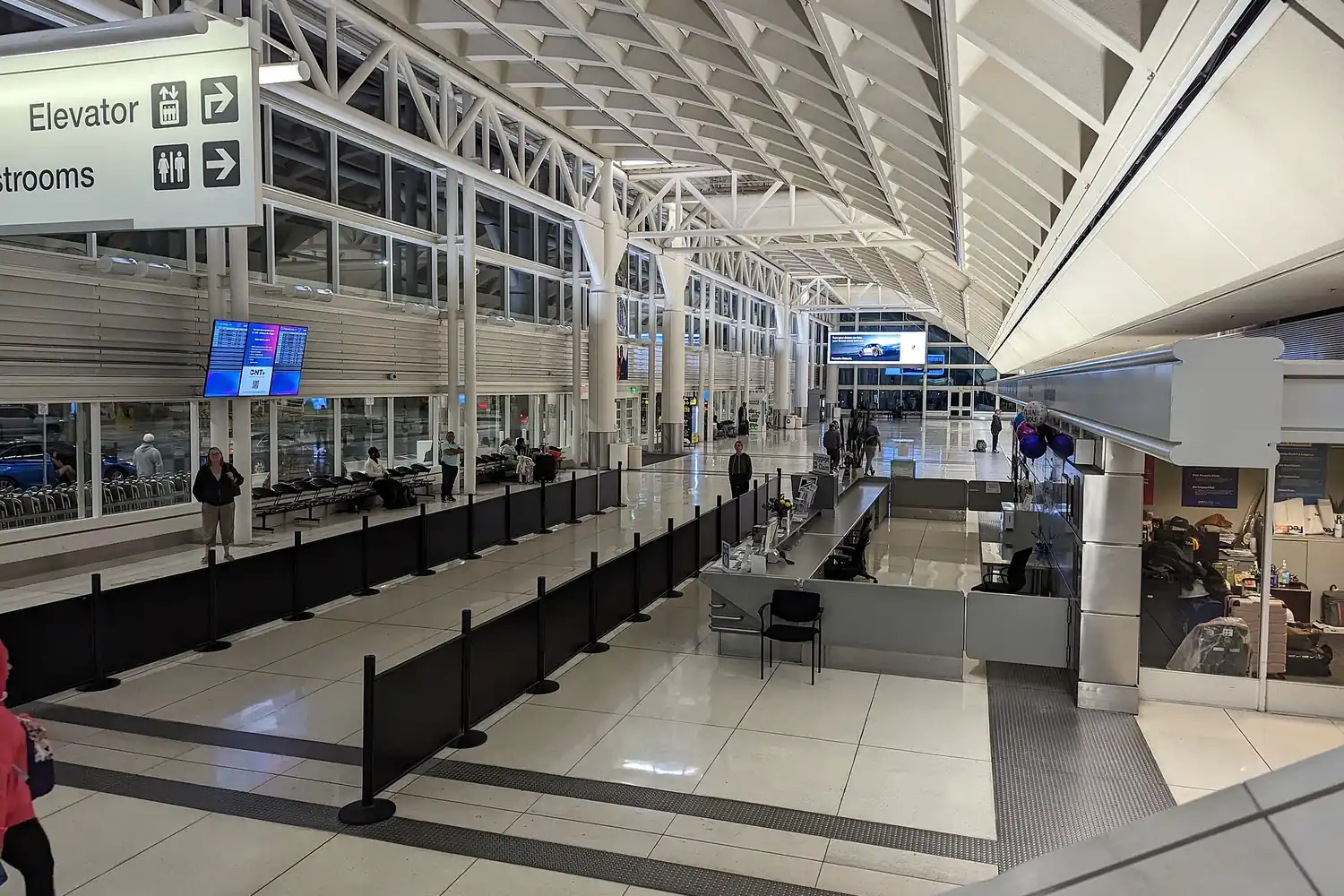
Cases that start at ONT: police, reports and the land around the runways
People search for an "Ontario International Airport corridor accident attorney" because the airport is how most outsiders know the city. It also changes the institutions a case passes through, and those details make a page about the airport area worth more than a generic injury page with the airport's name added.


The Airport Operations Bureau
The Ontario Police Department runs a bureau just for the airport, made up of police officers, explosive and narcotic detection canines and community service officers. It patrols the airport's roughly 2.7 square miles, investigates crimes, manages traffic flow and responds to emergencies, while enforcing Transportation Security Administration regulations and the airport's security programs (Ontario PD). The department describes ONT as handling more than 5.1 million passengers a year and as a major West Coast hub for two cargo carriers.
Crash reports from the airport corridor
Collisions on Ontario's own streets, including the roads around the terminals, go to the Traffic Services Division when someone is hurt or killed or a driver leaves the scene (Traffic Division). Reports are released at the Records Bureau front desk, open weekdays from 7 a.m. to 6 p.m., and the city's fee schedule lists police reports at $35 each (Police Records). An airport-area injury page that tells a reader which agency wrote the report and how to get it answers the question they have on the first day.
Arrests and seizures at the terminal
Because the airport bureau works with detection dogs and enforces federal security rules, the cases it produces differ from street arrests: items found at screening, narcotics alerts, conduct on a flight that ends at the gate. A defense firm can give these their own page, written for the traveler who was stopped, and for the family member who flew home without them.

Land use around the runways
New development near the airport is checked against the Airport Land Use Compatibility Plan by the ONT Inter Agency Collaborative, which the city of Ontario administers for San Bernardino County and the cities of Chino, Fontana, Montclair, Ontario, Rancho Cucamonga and Upland (ONT-IAC). The plan doesn't address land uses that already exist or restrict the airport's operations. For a land-use practice, the review is a step to explain to developers of projects inside the airport influence area, separate from the city's ordinary approvals.
Site structure and AI answers
A house full of related questions: linking the practice pages together
The topics on this page rarely arrive alone. A sister living in a converted garage gets hurt on the outside stairs. The owner wonders whether the unit was legal, whether the homeowner policy covers her, and whether she is a tenant or a lodger. Each of those questions belongs to a different practice page, and a reader, or an AI assistant, only sees the connection if the site draws it.
Questions that cross practices
- An injury in an unpermitted unit: premises liability, the household definition in the policy and the legalization rules.
- A lodger who won't leave a converted garage: the lodger procedure, and whether the space is a legal unit at all.
- A death benefit claimed by a housemate: workers' compensation dependency and proof of a shared household.
- A sponsor counting relatives in the home: household size, and which of them can sign Form I-864A.
Links written as the reader's next question
Internal links do the most good when the anchor text is the question the reader is about to ask, placed in the paragraph where it arises: "was the garage ever permitted?" on the injury page, linking to the legalization page, rather than a "related services" box at the bottom. Those links show Google how the pages connect, and the reader follows them because they answer something they were already wondering.
Passages an assistant can lift whole
An assistant usually answers the single question it was asked. A page section headed with the combined question, "Is my sister a tenant or a lodger in my converted garage?", followed by a short answer that names both statutes and links to each full page, gives an assistant a passage it can quote without stitching two sources together. Our GEO guide covers the method; the audit shows what the tools currently say about your firm.
Around the city line
Fontana to Moreno Valley: how Ontario compares with the cities next door
Clients of an Ontario office often live a few miles off, in another city. The share of crowded homes is a fair guide to whether this page's topics travel, and it shows that Ontario is typical of the inland Southland rather than unique: the city of Los Angeles, San Bernardino and Moreno Valley sit at similar levels, and Riverside a little lower (ACS B25014). Cities with a page of their own are linked in the table.
| City | Homes above one person per room | Page |
|---|---|---|
| Fontana | 13.4% | No page of its own; the topics here apply |
| Rancho Cucamonga | 5.2% | Rancho Cucamonga lawyer SEO |
| San Bernardino | 14.2% | San Bernardino lawyer SEO |
| Riverside | 10.4% | Riverside lawyer SEO |
| Moreno Valley | 12.0% | Moreno Valley lawyer SEO |
| Los Angeles | 12.1% | Los Angeles lawyer SEO |
Rule 7.1 and the State Bar Act, read on the Los Angeles page
Lawyer advertising in Ontario follows California's statewide limits, set by the State Bar Act's advertising provisions and by Rules 7.1 through 7.5. Both are explained clause by clause on the Los Angeles page, in its rules section and in its section on SB 37 and sections 6157 to 6159.2.
Asked by Ontario firms about converted rooms, rules and the free audit
Anything still open after reading these can come up on the call that follows your free audit, which you're free to skip.
In short
Ontario law firm SEO, worked out from the share of homes with more people than rooms: the permits and rules that come with converted space, rentals for large families, lodgers, household insurance exclusions, household dependents and sponsors, and the cases that start at ONT.
Is this page about Ontario, California, or the province of Ontario in Canada?
The California one: the Inland Empire city on Interstate 10, in San Bernardino County. The mix-up is real. In our November 5, 2026 map survey, 203 of the 218 listings returned for practice searches typed as "Ontario" alone were in the Canadian province, and only 9 were in Ontario, California. Typing "Ontario, CA" with a local location bias brought back no Canadian offices at all. That is why we write "Ontario, CA" into a client's titles and Business Profile. Lawyers in the province answer to the Law Society of Ontario, whose marketing rules this page doesn't address.
Can an agency in West Hollywood get Ontario, CA details right?
Only if every detail comes from a source it can link. Ontario City Hall is roughly 40 miles from our Shoreham Drive office, and we meet Inland Empire firms on screen or by phone. The rental inspection cycle, the rule against sleeping in accessory structures and the police department's airport bureau, which covers 2.7 square miles around ONT, were each read on the city's own pages (Ontario PD). What a firm knows from years in the local courthouses and bar is something we ask you for, not something we claim.
Ads and intake as well as SEO: does GLP cover the whole of a firm's marketing in Ontario, CA?
Yes. Our Consulting CMO engagement puts paid media, intake and conversion work, outside vendors and a live dashboard under the same team that runs search, with a call every week; it is law firm marketing in Ontario handled as one program. Firms that want organic search only get a monthly call instead. Both options are laid out on this sign-up page.
Can a garage-conversion page tell an owner the city will approve their unit?
It can explain the rules that bind the city, such as the 60-day decision clock and the narrow ground for refusing a pre-2020 unit, but it can't promise an approval for a unit nobody has inspected. California's Rule 7.1 bars statements that create unjustified expectations; the Los Angeles page goes through it line by line, as the last section here notes. A page that says what the owner should bring and what the inspector will look at is both honest and more useful.
Our pages quote the Census crowding figure. Could a reader take it for a code violation?
They could, so the page should say plainly that it isn't one. The Census count is a statistic and has no legal effect. A building becomes substandard under Health and Safety Code § 17920.3 when listed conditions endanger the occupants, and one of those conditions is room and space dimensions smaller than the housing code requires. When we build a landlord or tenant page around the figure, that sentence sits next to it, along with Ontario's Community Improvement Department, which enforces the city's own standards and takes complaints on a 24-hour hotline (City of Ontario).
We write about rented ADUs. How do you keep details like Ontario's inspection cycle current?
Each rule is linked to the city page it came from, and those pages are read again whenever the content is reviewed. Ontario's systematic program is a good example: it reaches rental units older than seven years, so a second unit permitted recently stays outside it for its early years, though a complaint can still bring an out-of-cycle visit, and an owner who stops renting must send the city proof, such as a Schedule E showing no rental income, to come off the list (City of Ontario). If the city changes the program, the page changes with it, and its "updated" date moves only when the content does.
Can a page on renting out a converted garage bring our firm clients without overpromising?
Yes, if it sends the owner to two rules before they list the unit anywhere. State law lets a city require that an accessory unit be rented only for terms of 30 days or longer (Gov. Code § 66315). Separately, Ontario requires a Short-Term Rental Permit for any stay of 30 consecutive days or less, and the host must be the owner, the owner's spouse, parent or adult child, or a tenant living there with the owner's written authorization (City of Ontario). A page that sets out both checks, without saying any particular unit qualifies, stays within Rule 7.1 and still gives the owner a reason to call a real-estate lawyer.
Simi Valley and Moorpark firms: is this the right page?
No. Searches for attorney search engine optimization in Simi Valley and Moorpark sometimes reach this page, but those cities sit in Ventura County, more than 60 miles west, with their own courts and their own search results. Simi Valley and Moorpark firms practice in the Ventura County market, which the Oxnard page covers, while the Highway 101 corridor appears on the Hollywood page.
Our firm is in San Bernardino. Is there a separate page?
The county seat has its own page: law firm SEO in San Bernardino. A firm with offices in both cities can use the two together, because each page covers its own city's market and courts.
Can GLP work with an office in Fontana, Corona, Lancaster or Stockton?
Yes. A city without a page of its own is no obstacle to working with us. Fontana sits next to Ontario and shares its crowding pattern, as the first chart on this page shows. Corona belongs to Riverside County, so its cases go to a different superior court. Lancaster and Stockton are separate markets with their own courts. Santa Clarita firms can turn to the Santa Clarita page.
We searched for law firm IT services in Ontario. Is that something GLP does?
No. Networks, computers and help desks are outside what we do. The one part of IT that touches marketing directly, the email and domain settings that stop someone from sending mail as your firm, is a job for a local IT provider, who can apply it to your domain.
I am looking for an attorney myself. Can GLP help?
We work for lawyers rather than for the public, so your matter has to go to a law office. The fastest route is a lawyer referral service certified by the State Bar of California, and the Bar publishes the list. If your question is about a housing condition or a code complaint, the City of Ontario's Community Improvement office can be reached at (909) 395-2007 during business hours.
We are comparing marketing agencies for our Ontario firm. What should we ask each one?
Ask who will write your pages and where their facts come from, what you will own if you leave, how leads are tied back to pages, and which of their claims you can check in your own Search Console. A longer list sits in our buyer's guide for SEO agencies. We'd rather not judge other agencies by name.
See what an Ontario homeowner finds when they search for your practice
Start with whichever of your practices needs cases most. Someone here goes through your website and Business Profile, puts questions about the firm to the AI assistants, and records a walkthrough for you within 48 hours.
Or call Call (661) 388-5526