Santa Clarita, CA: Val Verde, Castaic, Saugus and Valencia

Lawyer SEO in Santa Clarita, CA

Law firm SEO for a valley that lives beside its landfill.

Since 2022 a reaction deep inside the Chiquita Canyon Landfill has sent odor complaints, federal orders and lawsuits into Val Verde and Castaic, towns where more than eight homes in ten are owner-occupied. Our search plans for Santa Clarita practices start from those households.

Below: the people who live closest to the Chiquita Canyon Landfill, the federal and state orders that followed its underground reaction, a tract-by-tract reading of the valley's environmental scores, our November 9 survey of who answers landfill and property searches, and the legal questions those neighbors bring to injury, real estate, property tax and environmental practices. Every number carries a link to where we read it. General ranking mechanics are covered on the law firm SEO page.

Free, done by a real person, and in your inbox within 48 hours.

The valley's file

Landfill neighbors in Santa Clarita, entered line by line

Every row holds a fact a valley firm could publish and defend. The first column says who it describes, the last names the source to verify it. We read every source on November 9, 2026.

EntryWhat it recordsWhere it matters to a firmChecked at
639 acresChiquita Canyon Landfill, in operation since 1972, next to Val Verde and CastaicWho the neighbors are and where they search fromEPA Region 9
May 2022Approximate start of the elevated-temperature reaction under 30 to 35 acres of the siteThe earliest date a claim timeline can point toEPA Region 9
6,800Odor complaints in 2023, as the EPA counts them ("almost")Proof that the harm was reported, and by many peopleEPA Region 9
27,000+Complaints about odors made to the South Coast air district, as CalEPA counted them on April 1, 2025A record many neighbors already started on their ownCalEPA
1 million+Gallons of leachate a week by December 2023, up from about 150,000 in January 2022Water and soil questions alongside the odorEPA Region 9
Feb. 21, 2024EPA's unilateral order under RCRA and CERCLAThe document injury and property pages cite firstEPA order
85.0%Of Val Verde's 849 occupied homes are owner-occupied; Castaic 83.1%Owners who can't walk away from a leaseACS DP04
21,290Residents of Val Verde (3,291) and Castaic (17,999), the two communities state officials named in April 2025The size of the audience for a landfill pageACS DP05
2 of 52Firm sitemaps we could read that listed a page about a landfillHow little content exists for these searchersOur survey, below

The engagement

Santa Clarita law firm SEO while the emergency next door continues

Most local search work assumes a stable world: the same practices, the same questions, the same courthouse. A practice whose clients live in Val Verde or Castaic works in a valley where federal letters arrive every few months and each one changes what a neighbor wants to know. The engagement below is the same five parts we run for any firm; what changes here is how often the pages are reread against the record.

Audit
What you get: a human review of the firm's website and Google listing beside valley rivals, including the answers ChatGPT and Google's AI give about you, narrated on video within two days. No charge.
What we read for it: your Search Console queries plus the map searches from our survey.
Pages
What you get: its own page for every practice and for each situation clients describe, each signed off by your attorney before anyone can read it.
What we read for it: statutes, the EPA and state orders, county notices and Census data, linked where they're used.
Listing
What you get: categories, services, hours and an address that follow Google's rules and match the site.
What we read for it: map results pulled from Val Verde, Castaic and Valencia for the practice terms that matter to you.
Repairs
What you get: phone speed, tap-to-call, structured data, redirects and internal links.
What we read for it: crawl logs and Google's own reports.
Review
What you get: a monthly report and call matching each consultation with the page that brought the caller in, if your intake system saves a referral source.
What we read for it: the agencies' pages, for any update that makes one of yours out of date.

Once the free audit is done, billing is monthly, at a rate that tracks the practice and how many valley and basin firms chase its searches, and put in a signed agreement. Search Console impressions tend to rise before calls, and calls before signed cases, over a span of months. Nobody can promise a firm a date for page one, and we don't.

"Santa Clarita search engine optimization" and "seo company santa clarita" in Search Console

We exported the queries behind this page's Google impressions from July 2025 through November 7, 2026. Most are general service searches with no legal word in them: "santa clarita search engine optimization", "seo company santa clarita", "seo santa clarita", "santa clarita seo company", "local seo santa clarita", "seo agency santa clarita", "seo services santa clarita" and "search engine optimization in santa clarita". A smaller set names law: "law firm seo company santa clarita ca", "legal marketing agency santa clarita ca", "website design for lawyer santa clarita" and "santa clarita law firms".

To both sets the answer is the same. This page is for law firms, and GLP is a search agency that works only with legal practices, so "SEO company", "SEO agency" and "legal marketing agency" all point to one team: those who dig up the facts, draft the pages, run the map listing, repair the site and report what each page produces. A valley business outside law can still ask for the audit, but every example here is a legal one.

A third set is typed by people who need representation: "lemon law attorney santa clarita", "santa clarita real estate lawyer", "santa clarita real estate attorney", "workers comp lawyer santa clarita", "business attorney santa clarita" and "probate in santa clarita ca". GLP doesn't represent anyone, and the last question on this page points readers to the State Bar's referral list. For the firms that do take them, the queries show demand that already exists, and the real estate queries line up with the disclosure section below.

Who answers a landfill neighbor's search: a Places survey, November 9, 2026

Our 15 searches hit Google's map data at 17:19 UTC that day, sent through the Places API (its text-search method). Ten ended in "Santa Clarita, CA" and were weighted toward a 15 km circle over the valley; five ended in "Castaic, CA" and were weighted toward a 10 km circle around Castaic. They were the searches a neighbor of the landfill or a cleanup site might run: environmental, toxic tort, nuisance, property damage, class action, personal injury, real estate, disclosure, landlord and tenant, and property tax appeal, plus "landfill lawsuit lawyer" from Castaic. After that, a script fetched every listed website's front page and, when one existed, its sitemap, looking for pages about the landfill.

CountOffices
Distinct offices returned by the 15 searches83
At a valley ZIP code (91321 to 91390)76
With a Castaic street address1
With a website on the listing79
Whose sitemap we could read52
With a page address naming a landfill2 (one in the valley, one in Encino)
Whose home page mentions Chiquita Canyon1 of 62 readable home pages

How we counted: each office once across all searches; valley means a Santa Clarita Valley ZIP code; sitemap and home-page checks are automated text searches for "Chiquita", "landfill" and "Val Verde" and miss pages that a sitemap doesn't list.

The same offices answer very different searches

For "environmental lawyer Santa Clarita, CA" all 20 results had a valley address, and so did all 20 for "nuisance attorney" and "class action lawyer". But the lists overlapped heavily with general practice searches: 13 of the 20 "toxic tort lawyer" listings showed up again in the "personal injury lawyer" list of 20, and three offices appeared in nine of the ten Santa Clarita searches. Google is filling these results with nearby firms because few valley firms have told it, on their sites, that they handle these matters.

Almost nobody has written the page

Only two of the 52 sitemaps we could read listed a page whose web address named a landfill, and one of those firms is in Encino. A neighbor in Val Verde who searches for help with the odor, the value of a house or a cough that won't go away finds valley offices with nothing written about the subject. A firm that does handle these matters, and writes accurate pages about them, isn't competing with a crowd.

Find out whether your site tells Google you handle what a landfill neighbor searches for. Get My Free Audit

Residents

Val Verde and Castaic are towns of owners, with homes they can't easily leave

When the state's toxic substances department issued its April 2025 order, its director wrote that "residents in Val Verde and Castaic have suffered as this environmental crisis worsens" (CalEPA). Neither community lies inside Santa Clarita's city limits; both are unincorporated places with valley ZIP codes, and their residents shop, bank and hire lawyers in Valencia and Newhall. The Census profiles of the two places explain why their legal problems look the way they do.

Owner-occupied homes beside the landfill and around it

Owner-occupied share of occupied homes, ACS 2020-24

Use the arrow keys to read each value.

Owner-occupied homes beside the landfill and around it
AreaOwner-occupied (%)
Val Verde / 849 occupied homes 85
Castaic / 5,797 occupied homes 83.1
Santa Clarita city / 75,808 occupied homes 71.8
California / 13.5 million occupied homes 55.9
Los Angeles County / 3.4 million occupied homes 45.9

Housing tenure, table DP04 of the Census Bureau's five-year ACS covering 2020-2024. Val Verde's margin of error is 6.4 points, Castaic's 2.8.

The two communities next to the landfill sit well above Santa Clarita itself, Los Angeles County and California. Data: DP04 for each area.

Ownership changes the legal question

A tenant bothered by a smell can, in time, move. An owner carries a loan, pays an annual tax bill and holds a house whose resale price depends on what buyers think of the neighborhood. Val Verde's owner share is 85.0% and Castaic's 83.1%, against 45.9% in Los Angeles County (ACS DP04). For a firm, that points the content toward property: the value of the home, what must be disclosed on sale, whether the assessment can be lowered, and what a nuisance claim can recover for the loss of use and enjoyment of a place someone owns.

Long tenure in Val Verde

14.4% of Val Verde householders have lived in their homes since 1989 or before; compare 7.9% for the city and 9.9% for the county. Those families were there decades before the reaction began. When they describe the change, they are comparing it with thirty years of living with an ordinary landfill, and that history is part of what a nuisance case has to show.

A lower-priced house next door to an expensive city

Val Verde's owners put the median worth of their homes at $564,400, against $784,700 in Santa Clarita and $792,000 in Castaic (ACS DP04). Val Verde's median is uncertain by roughly $46,500 either way and predates any market reaction to the landfill that a five-year survey hasn't yet caught. A page shouldn't present the gap as damage caused by the landfill; it can say that the community's homes were already the valley's least expensive, which makes any further loss harder to absorb.

Small numbers, wide margins

Val Verde has 3,291 residents, give or take 845. Figures for a place that size are directional. They sketch a community; they never put a number on a single client's loss.

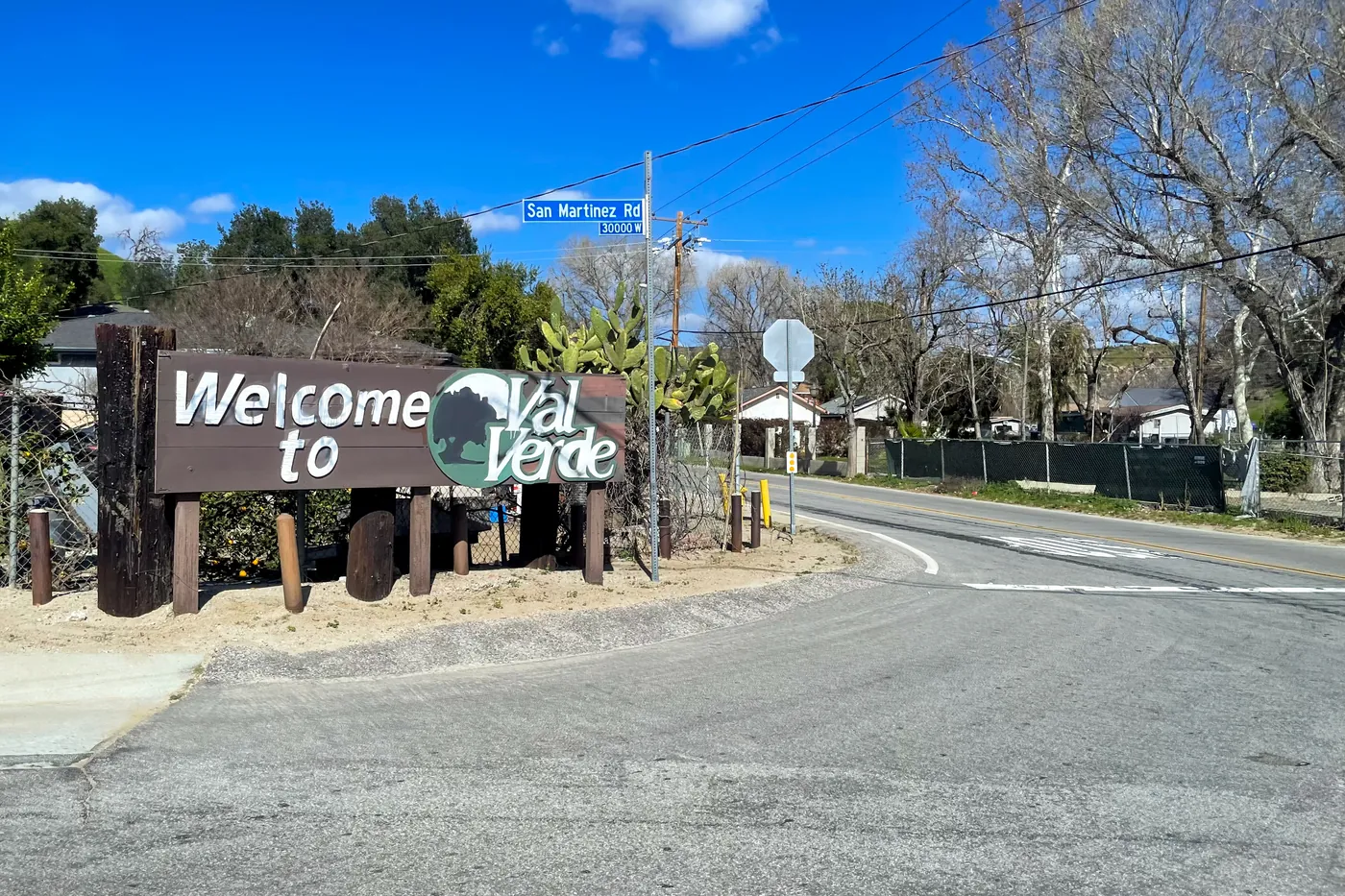
A wooden Welcome to Val Verde sign with an oak tree logo at a road corner, below a San Martinez Road street sign, with single-story homes and bare winter trees along the street behind it.
The Val Verde welcome sign at San Martinez Road, February 2023. State officials named Val Verde and Castaic when the April 2025 order was announced. Photo: Ponderosapine210, CC BY-SA 4.0, via Wikimedia Commons.

The public record

Orders at Chiquita Canyon since 2022, read from the agencies' own files

A page about the landfill is only as good as its dates. The timeline below places the main actions on one axis from the approximate start of the reaction, using the EPA's page as updated on November 6, 2026, and the documents it links. Each lane is a level of government.

Agency actions at Chiquita Canyon Landfill

Days from May 1, 2022, the approximate start of the reaction as the EPA dates it

Use the arrow keys to read each date.

Agency actions at Chiquita Canyon Landfill
RuleDayWhat happens
Federal (EPA)Nov. 2023Multi-agency task force formed
Federal (EPA)Feb. 2024Unilateral order
Federal (EPA)June 2024Clean Air Act finding of violation
Federal (EPA)July 2025Order for 100+ more acres of cover
Federal (EPA)Mar. 2026Slope and leachate letters
Federal (EPA)Oct. 2026Amended gas-system letter
State and air districtSept. 2023Air district abatement order
State and air districtDec. 2023Benzene makes leachate hazardous
State and air districtMay 2024CalRecycle violations list
State and air districtApr. 2025DTSC endangerment order
CountyMay 2025Local Enforcement Agency compliance order

Source: EPA Region 9, Chiquita Canyon Landfill (page updated November 6, 2026) and the orders and letters linked there. The EPA gives the start of the reaction as approximately May 2022.

What the federal finding says, and what it doesn't

On February 22, 2024, the EPA announced that the landfill "presents an imminent and substantial endangerment" to nearby communities, the day after it issued its unilateral order (EPA order). That phrase comes from the federal statutes that let the agency order cleanup work. It is a regulatory finding that justifies an order. It is not a court's finding that any particular resident was harmed, and a firm's page should never blur them.

Hazardous waste at a municipal landfill

The EPA's page says that sampling on December 12, 2023, found elevated benzene in leachate condensate, which made the leachate a hazardous waste under federal law. That single test is why the case left the ordinary rules for household trash and why both the EPA and the state's toxic substances department now issue orders about it.

The record keeps moving

The latest entries are letters, not final orders: two on March 17, 2026, about the west slope and leachate treatment, a joint EPA and DTSC letter on June 26 asking for long-term treatment options, and a gas-collection letter on September 24, replaced by an amended one on October 19 (EPA letter). A page written in spring 2026 is already missing three of them. That is the practical reason this page sets a review schedule for any landfill content a firm publishes.

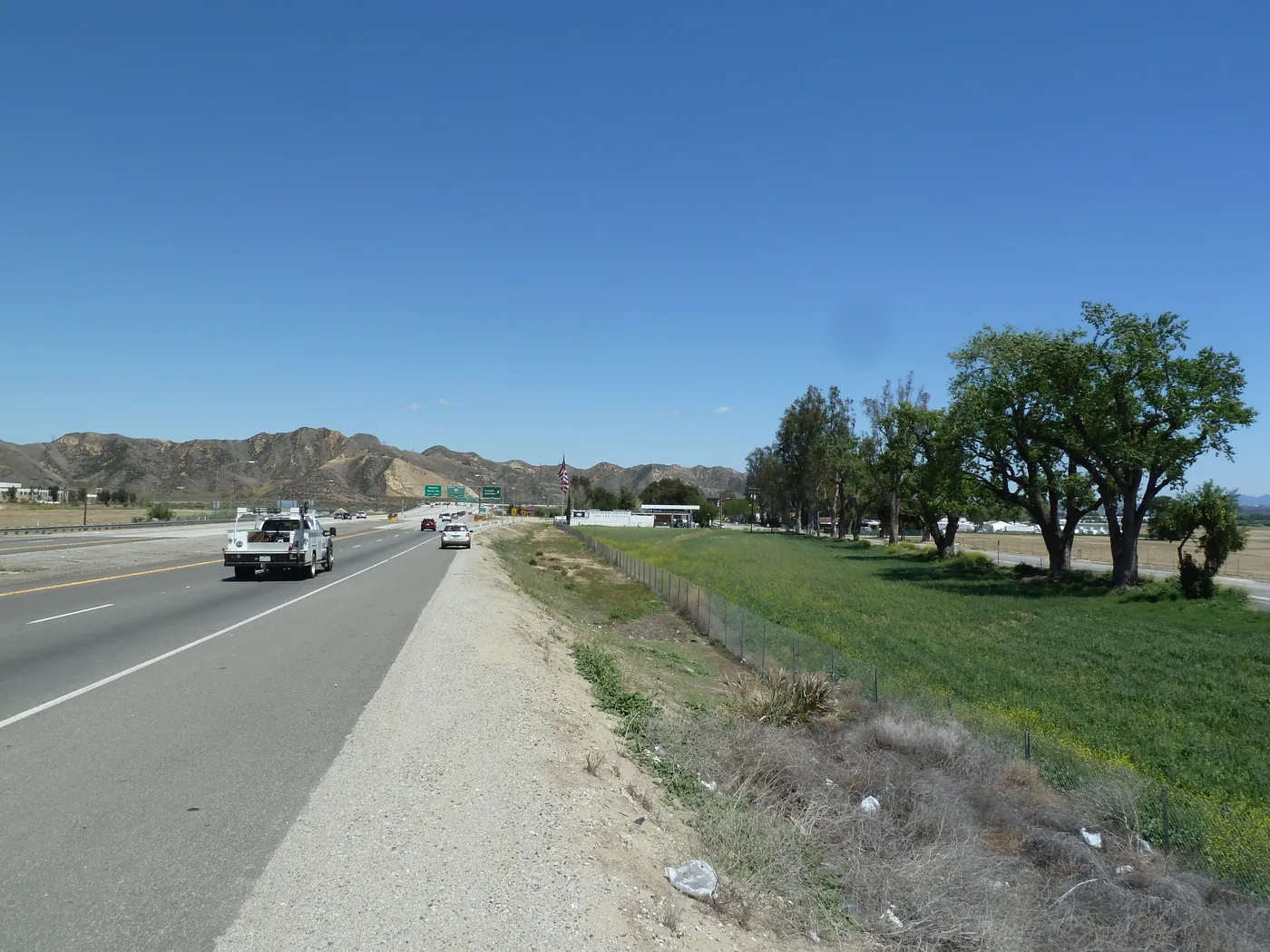
Cars and a white pickup on a divided highway with green freeway signs ahead, a fenced grassy field and large trees on the right, and bare tan mountains on the horizon.
Looking east on State Route 126 at Castaic Junction in Valencia. The highway runs west from here out of the valley floor toward Ventura County. Photo: Chris English, 2012, CC BY-SA 3.0, via Wikimedia Commons.

CalEnviroScreen 5.0

The valley scores low on the state's screen; its burdens sit in a few tracts

California's Office of Environmental Health Hazard Assessment scores every census tract on pollution and population indicators; the final CalEnviroScreen 5.0 results came out on July 1, 2026 (OEHHA). We pulled the 62 tracts the tool places in the Santa Clarita Valley, home to 288,801 people by its count, and asked a simple question: on each indicator, what share of the valley's residents live in a tract in the state's highest quarter?

Valley residents living in a tract in the state's highest quarter

By CalEnviroScreen 5.0 indicator, 62 Santa Clarita Valley tracts, 288,801 residents

Use the arrow keys to read each value.

Valley residents living in a tract in the state's highest quarter
IndicatorResidents in a tract at the 75th percentile or higher (%)
Ozone / 62 of 62 tracts 100
Traffic density / 24 of 62 tracts 42.5
Hazardous waste sites and generators / 15 of 62 tracts 28.2
Solid waste sites and facilities / 10 of 62 tracts 21.9
Impaired streams and lakes / 9 of 62 tracts 18.7
Groundwater threats / 3 of 62 tracts 8.7
Cleanup sites / 4 of 62 tracts 6.8
Toxic releases from facilities / 0 of 62 tracts 0

Source: OEHHA, CalEnviroScreen 5.0 final results (July 1, 2026), tract layer, retrieved November 9, 2026. Highest quarter means a statewide percentile of 75 or more. Tracts selected by the ZIP code or approximate location the tool assigns them.

If burdens were spread evenly, about a quarter of residents would fall in the highest quarter on each line. Data: CalEnviroScreen 5.0.

Ozone everywhere, everything else in pockets

Every one of the 62 tracts is in the state's highest quarter for ozone, the valley's shared problem. On the overall score, none is. On the solid-waste indicator, ten tracts with 63,254 residents reach the highest quarter, and on hazardous waste, fifteen tracts with 81,435. Those are close to what an even spread would produce. The valley as a whole is not an environmental hot spot, and a firm's page shouldn't say it is.

A Castaic tract near the state's ceiling

One tract the tool places in Castaic stands at the 99.1st percentile statewide for hazardous waste and the 94.7th for solid-waste sites, with groundwater threats at the 77.3rd. No other valley tract scores higher on hazardous waste. Three tracts in Canyon Country and Newhall also pass the 94th percentile for solid waste. The honest summary is that a few neighborhoods carry heavy burdens inside a valley that otherwise scores low.

What a page can do with a tract score

  • Name the tract's percentile on a specific indicator and link the tool, rather than calling a neighborhood "toxic".
  • Explain that a percentile ranks a tract against every other California tract, not with a safety threshold.
  • Leave out the overall score when it is low; quoting it selectively misleads in both directions.
  • Recheck after each new release; version 5.0 replaced 4.0's numbers.

Nuisance

Nuisance claims when the odor reaches the kitchen table

Most neighbor cases about a landfill start with California's nuisance statutes, which are old, short and broad. A page for a valley injury, real estate or environmental practice should quote them, because the words themselves answer the reader's first question: does a smell count?

The definition reaches what offends the senses

Civil Code § 3479 defines a nuisance as anything injurious to health, or "indecent or offensive to the senses", or an obstruction to the free use of property, "so as to interfere with the comfortable enjoyment of life or property". An odor that keeps a family indoors fits the words of the statute. Whether a given odor is serious enough is a question of fact for the case.

Public and private at the same time

A public nuisance is one that "affects at the same time an entire community or neighborhood, or any considerable number of persons", even when the harm to each person is unequal (§ 3480); every other nuisance is private (§ 3481). A landfill odor across two communities can be both. The distinction matters for who may sue: a private person may bring an action for a public nuisance only if it is "specially injurious to himself" (§ 3493). A neighbor's page has to spell out how a household's harm differs from everyone else's.

Agencies sue too

Los Angeles County filed its own suit against the landfill, and on August 30, 2025, Supervisor Kathryn Barger's office announced that Judge Frimpong had granted the county a preliminary injunction and asked the parties to confer on which homes it should cover (Supervisor Barger). The air district, the EPA and the state have used their own powers as well. A household's claim runs alongside those cases; it isn't replaced by them. Readers often assume the government's case covers them. A short paragraph saying that it usually doesn't, and why, prevents a missed deadline.

Filing deadlines

Filing clocks for exposure and property, and when each one starts

A neighbor who first smelled the landfill in 2022 and first saw a doctor in 2024 asks whether time has run out. California answers with different clocks for different harms, and a page setting them next to each other serves that reader better than a single deadline would.

Illness from exposure

Exposure claims run from awareness

For injury or illness from exposure to a hazardous material or toxic substance, Code of Civil Procedure § 340.8 allows two years from injury, or two years after the person becomes aware, or reasonably should have, of the injury, its physical cause and facts suggesting someone else's wrongful act caused it, whichever is later.

Harm to the property

Injury to real property has its own period

Section 338(b) sets three years for an action for trespass upon or injury to real property. Whether a nuisance counts as permanent or continuing affects when that period runs, which is why the page should urge readers to get advice early instead of working out the dates themselves.

Time and a public nuisance

Age doesn't make it lawful

Under Civil Code § 3490, no lapse of time legalizes a public nuisance amounting to an actual obstruction of public right. That is not a deadline for a household's own damages claim, and a page shouldn't present it as one.

Why the dates on a landfill page matter for these clocks

The discovery rule turns on what a reasonable person knew and when. Public dates, such as the EPA's February 2024 finding or a 2023 news report, can be argued to have put residents on notice. A firm page saying "if you live near the landfill, the clock may already be running" is accurate and cautious; a promise of "two years from your diagnosis" may be wrong for a given reader.

Real estate

Selling a home near the landfill or the old Bermite ground: what the forms ask

"Santa clarita real estate lawyer" and "santa clarita real estate attorney" both appear among the Search Console queries we exported. For a valley real estate practice, the landfill and the city's old munitions site raise disclosure questions that ordinary listing advice doesn't cover.

The statutory form comes first

Most sellers of a house in California must hand the buyer the Real Estate Transfer Disclosure Statement, the form that Civil Code § 1102.6 requires; the Legislature publishes its full text in the 2020 statutes (chapter 370) rather than in the code. A seller in Val Verde who has filed odor complaints, or received a notice about the landfill, knows something a buyer would want to hear. A seller page should walk through the form's questions in order and say that the honest answer is the safe one.

Former munitions land at the center of Santa Clarita

The city describes Whittaker-Bermite as "an undeveloped 996-acre site" at the center of Santa Clarita, a former munitions testing and manufacturing site with "perchlorate, volatile organic compounds, and both soil and groundwater contamination", whose cleanup the state's toxic substances department supervises (City of Santa Clarita). A buyer's attorney near it will ask about soil and water. A property page describing the cleanup's current stage and linking the state's file, answers the buyer and protects the seller.

What a seller page and a buyer page each need

For the seller

  • What the form asks, quoted, with the duty to answer from actual knowledge.
  • Which records to gather: complaint numbers, notices, relocation or hardening paperwork.
  • When to call a lawyer: before the form is signed, not after a buyer complains.

For the buyer

  • How to read the form's answers and the agencies' public files on the area.
  • What an inspection covers and what it can't detect, such as an intermittent odor.
  • When a missing disclosure becomes a claim, and how long that claim lasts.

Property tax

A lower assessment after a fall in value: the Proposition 8 review

Owners near the landfill often ask whether their property tax can go down if the house is worth less. California's answer is the decline-in-value rule in Revenue and Taxation Code § 51: each year the taxable value is the lower of the Proposition 13 base value, adjusted for inflation, and the property's full cash value on the January 1 lien date, taking into account reductions in value from causes such as damage and obsolescence.

A deadline this month

The Los Angeles County Assessor began accepting decline-in-value applications for the 2026-2027 tax year on July 2, 2026, and "the deadline to file is November 30, 2026" (LA County Assessor). Owners can apply through the Assessor's website. A page published in November should lead with that date, and one read in December should say when the next window opens.

The valley's assessor office moved

The same page says the North District office in Sylmar closed on March 26, 2026, with its public services moved to the downtown headquarters, and it lists a location at the Castaic Library on Sloan Canyon Road. A valley owner asking where to go in person wants that answer, and few firm pages give it.

When a professional helps

An owner can file the application alone. A tax or real estate firm's page earns trust by admitting that, then explaining when help is worth paying for: a denied request that needs a formal appeal, evidence of value that the Assessor's sales data doesn't reflect, or a rental or commercial property in the area.

Evidence a valley owner can collect

  • Recent sales of comparable homes in the same community, with dates.
  • Listings that sat unsold or were withdrawn, and buyers' written reasons when they gave them.
  • Appraisals, and any disclosure statements that mention odors or the landfill.

Groundwater

Perchlorate under Saugus, and the treatment that followed

Before the landfill, the valley's most familiar contamination story was underground. SCV Water says perchlorate "was first detected in groundwater wells in the Santa Clarita Valley in 1997", traced to the former Whittaker-Bermite site, and that the solvents TCE and PCE "have been detected in several groundwater wells" (SCV Water). The defendants in the agency's case paid $5 million toward a perchlorate treatment plant, and SCV Water says it "continues to install wellhead treatment and build treatment plants". The city expected the groundwater cleanup to take 20 years or more (City of Santa Clarita).

The story matters to a firm now for two reasons: owners near the old site still raise it, and the way it has been handled, through decades of state oversight and water-agency treatment, shapes how residents expect the landfill to end.

A long cleanup is a long content subject

A cleanup that lasts decades produces records at each stage: investigation, remedy selection, construction, monitoring. A real estate or environmental firm can keep one page that follows the site through those stages, each with a dated link, rather than writing a new post every time something happens. That page becomes the reference other sites and AI assistants cite.

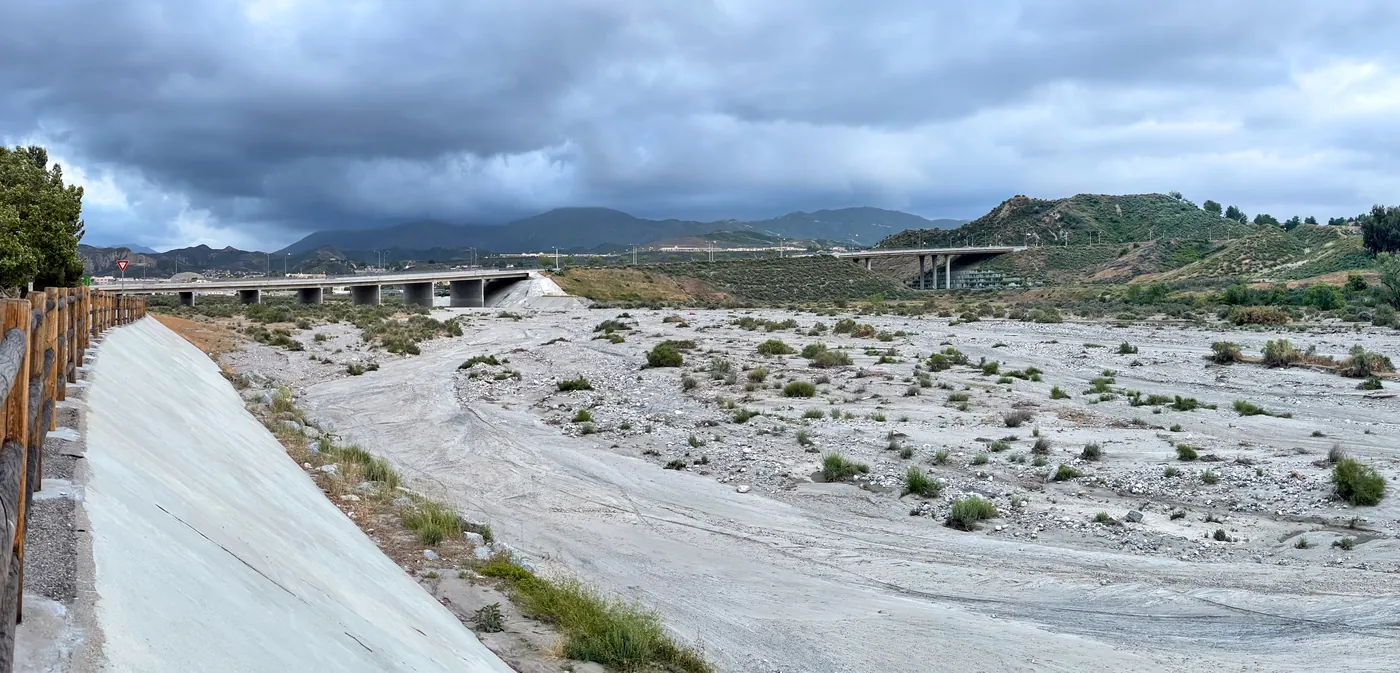
A wide, mostly dry riverbed of sand and rocks with scattered shrubs, a concrete embankment and wooden rail on the left, two road bridges crossing in the distance, and green hills under dark storm clouds.
The Santa Clara River in Canyon Country, with the Whites Canyon Road bridges in the distance, May 2023. The regional water board released Santa Clara River sampling data collected in April 2026, according to the EPA. Photo: Ponderosapine210, CC BY-SA 4.0, via Wikimedia Commons.

Intake

The neighbor's file: records worth asking for on the first call

An intake form built for a car crash asks for a date, a place and a police report. A landfill neighbor's case has none of those in a single moment. Both the form and the practice page above it should ask for the records that show a long exposure.

  1. Complaint history

    CalEPA counted more than 27,000 odor complaints to the South Coast air district by April 2025. A resident who kept a record of the ones they made has dated proof of what they reported and when.

  2. Relief paperwork

    Any application, approval or denial for relocation, home hardening or utility help, and any letter about the county's court case.

  3. A diary

    Dates and times of odors, days kept indoors, nights away from home. Written at the time, it outweighs memory.

  4. Medical visits

    Only the dates and the doctors' names at intake; the records themselves come later under a proper authorization.

  5. Property records

    Purchase date, refinance or sale attempts, appraisals and the transfer disclosure statement if the home was sold.

Screening questions that save both sides an hour

  • Which street does the household live on, and since what year? Distance and tenure shape both the nuisance and the property questions.
  • Does the caller own, rent or manage the home? Owners, tenants and landlords each have a different claim and a different page.
  • Has anyone in the household already signed a release, joined a group case or accepted a payment? A yes changes what the firm can offer.
  • Is a sale, refinance or move planned within the year? Disclosure and assessment deadlines may arrive before any lawsuit does.

None of these asks for a diagnosis or a dollar figure, which keeps the first call short and keeps sensitive details out of a web form.

How the page leads to the form

The practice page should list these records before the contact form, so a reader gathers them before calling. That makes the first consultation shorter and the firm's screening more accurate, and it gives the page useful, specific text that an all-purpose injury page lacks.

Content rules

Writing about an open environmental case without getting ahead of it

Pages about a live matter fail in two ways. Some go stale, describing a February 2024 order as the latest news in November 2026. Others overreach, promising compensation from a case nobody has won. We plan landfill content to avoid both.

Date every claim

"On April 1, 2025, DTSC issued an endangerment order" ages well. "Regulators recently acted" doesn't.

Quote, then explain

Put the agency's words in quotation marks with a link, then restate what they mean for a neighbor.

No predicted outcomes

Describe what a claim can seek under the statutes; never what a reader will receive.

A review line

"Last checked against the EPA's page on (date)" placed above the first section, updated on a schedule the firm keeps.

Each such page counts as attorney advertising under California's rules, which limit how a firm describes past results and pending matters. Every California page relies on the summary kept in the rules section of GLP's Los Angeles page.

Other searches

Lemon law, workers' compensation and business queries that also land here

Plenty of searches reaching this page concern other matters entirely. Among the Search Console queries are "lemon law attorney santa clarita", "workers comp lawyer santa clarita" and "business attorney santa clarita" among them. Those readers deserve a straight answer about where to go.

Search people ranWho it fitsWhere to read more
Lemon law attorney santa claritaCar owners; firms that represent themLemon law SEO and our lemon law case study
Workers comp lawyer santa claritaInjured workers; comp and injury firmsLaw firm SEO, plus an audit that sketches a plan for that practice
Business attorney santa claritaOwners of valley companies; business and litigation firmsLaw firm SEO
Website design for lawyer santa claritaFirms rebuilding a siteWebsites for law firms
Legal marketing agency santa clarita caFirms wanting paid search and intake tooLaw firm PPC

Honest limits

From West Hollywood to Val Verde: what we bring and what we lack

We are a basin agency writing about a valley problem, and the distance shows in a few places. Here is where.

What we bring

  • Agency records read at the source and cited where they are used, with dates.
  • Technical work on speed, structured data and tracking, and reports that link calls to pages.
  • Starting at the audit, we put Chiquita Canyon questions to ChatGPT and Gemini and keep a dated log of whether they name the firm.

What we lack

  • An office in the valley, or anyone who has lived beside the landfill.
  • Legal judgment about any case: your attorneys review and sign off on every page.
  • The air district's complaint data by street, which its site didn't let us retrieve; we use the EPA's yearly count instead.
  • A promised ranking, date or number of calls.

Nearby

Down the 5 to the basin, west on the 126 to the coast

The valley's main road out is the 5, south over the Newhall Pass. Glendale, down the 5, is about older residents whose later years are paid for by public programs. Los Angeles covers the county as a whole, including where the Superior Court lets a case be filed, and Hollywood is written for the people who make entertainment, many of them one-person businesses. Going west, Highway 126 follows the Santa Clara River Valley toward Ventura and Oxnard, where the page belongs to farmworker households.

Valley firms ask about the landfill, their listings and the audit

Save other questions for our follow-up call on the free audit.

In short

How GLP approaches search for Santa Clarita, California practices whose clients live beside the Chiquita Canyon Landfill or the valley's old cleanup sites: who those neighbors are, what the agencies have ordered, where CalEnviroScreen places the valley, nuisance law, filing clocks that start on discovery, seller disclosure, decline-in-value reviews, perchlorate in the groundwater, intake records, and how to write about an open environmental case.

Does GLP have anyone working out of Valencia or Newhall?

No. Every GLP desk is in West Hollywood, south of the Newhall Pass. Valley clients see us on video calls or hear us by phone, and we drive up for a kickoff meeting whenever a firm wants one. What is local about the work is the evidence: the EPA's file on Chiquita Canyon, the Census tables for Val Verde and Castaic, the state's tract scores and our map survey describe this valley and no other place.

Which parts of the work does a valley firm get for its retainer?

A page per practice and per client situation, built on statutes, agency files and Census data; the Business Profile; site repairs such as phone speed and structured data; matching directory listings; and a monthly report linking signed matters back to the page a client first read. Paid search, intake and outside vendors can be added under our Consulting CMO arrangement. The engagement section early on this page lists each part.

Our firm is in Castaic, not Valencia. Will a Castaic address help or hurt us in the map results?

It is rare, which can help. Across the 15 map searches we ran on November 9, 76 of 83 offices sat at valley ZIP codes, but only one had a Castaic street address. A Castaic office near the people searching about the landfill is a real, checkable fact, and the Google listing, the website and each directory should give it identically. It doesn't override relevance or reviews, so the pages still have to earn the click.

Is a Chiquita Canyon Landfill page worth the effort?

Only if the firm handles those matters and can keep the page current. In our survey, two of the 52 firm sitemaps we could read listed a page whose address named a landfill. That gap is an opening, but an out-of-date page about an open EPA matter hurts more than having none. We plan these pages with a dated "last reviewed" line and a schedule tied to the agency's own updates.

Can a page say the landfill made people sick?

Not as a statement of fact unless a court or an agency has said so in those words. Instead, quote the agencies accurately: the EPA's 2024 finding of an imminent and substantial endangerment, the hazardous-waste test results, the odor complaint count. Health questions belong in a consultation with the facts of one person's case. California's limits on what advertising can imply are explained once for every California city, on GLP's Los Angeles page.

Do real estate firms in the valley need content about the landfill?

If they handle sales in Val Verde, Castaic or along Highway 126, yes. Sellers ask what they must say about odors and nearby sites, and buyers ask what they should have been told. Our disclosure section lists the form items involved, and Search Console already records valley visitors who typed a real estate lawyer query before landing here.

We handle property tax appeals. Is the decline-in-value review worth a page?

It can be, with care. The county takes decline-in-value applications online and an owner can file one without a lawyer; this year's window closes November 30, 2026, and the page must admit plainly when paying a professional adds something: a disputed value, a denied request or a commercial property. Spelling out the window and then telling owners when they can file alone earns more trust than one that hides the free route.

How do we write about a lawsuit that is still being decided?

With dates and sources in every claim. Say what was filed, by whom and when; link the agency or court record; and avoid predicting results. Then review the page on a schedule, because orders change. Our content-rules section, under "Writing about an open environmental case", lists the habits we keep.

Will AI assistants cite a small valley firm on a landfill question?

Assistants quote pages whose answers come with sources they can verify. An assistant asked about Chiquita Canyon tends to draw on the EPA's page and news coverage; a firm page that summarizes the orders accurately, links them and adds what a neighbor should do next gives the assistant something it can quote. We test those answers in the audit and again during the engagement. The method is in our GEO guide.

Can GLP translate our landfill pages into Spanish?

We can produce them, reviewed by a fluent attorney or staff member at your firm before anything goes live. A Spanish page is a second page with its own sources and dates, not a machine copy of the English one, and it has to be kept current on the same schedule.

What does it cost, and how soon does anything change?

There's no charge for the audit, and its recorded walkthrough reaches you inside two days. The ongoing work carries a monthly price that reflects your practices and how crowded their searches are, written into the agreement. Over several months, impressions tend to climb ahead of clicks, which in turn come ahead of calls. Google alone sets rankings; each month we show what moved and never commit to a spot.

We are in Santa Clara, not Santa Clarita. Is there a page for us?

The two names get mixed up in Search Console. Santa Clara is in the Bay Area, so for a firm there the San Jose page is the closer fit.

I live by the landfill. Which lawyer should I call?

We market law firms; we can't take your case or steer you to one lawyer. The State Bar certifies lawyer referral services, and its list of them is a sound place to start. For the agencies' side, the EPA keeps the federal record on its Chiquita Canyon page.

Learn what turns up when a Val Verde neighbor looks for your kind of firm

Name your practices and your office's street. We run the searches a landfill neighbor would run, read what comes back and send a recorded review within two days.

Or call Call (661) 388-5526