For firms on the Washington shore of the Columbia

Lawyer SEO in Vancouver, WA

Lawyer search work in Vancouver, WA, sized to a county of builders.

Clark County builds more, for its size, than any other county in Washington or Oregon. The people who frame, wire, pour and pay for that work are the clients many Vancouver firms serve, and the search plans we write here start from them.

Below: the service, the counts that make Clark County a construction county, the Washington law that follows from them, and the Oregon advertising rules for lawyers who practice on both sides of the river, with every source linked. For the parts of search that work identically in every market, start with our law firm SEO page.

Free, done by a real person, and in your inbox within 48 hours.

The takeoff sheet

A takeoff of the market a Vancouver firm bids into, counted before any page is drawn

A contractor starts a bid with a takeoff: every material counted off the drawings, with its quantity and its unit. The table below counts a Vancouver firm's market that way. Each line is a count someone else published, the source is one click away, and the last column says what that count changes on a firm's website.

LineItem measuredQuantitySourceBearing on a Vancouver firm's site
T-01Private jobs in Clark County on construction payrolls, 202411.4%BLS QCEWContractors, trades and the people they hire are a bigger slice of the client base here than in almost any large county.
T-02Rank among 268 U.S. counties with 100,000+ private jobs16thBLS QCEWFirst in Washington and Oregon; construction pages are core work, not a side practice.
T-03Construction establishments in Clark County2,063BLS QCEWTwo thousand small businesses with contracts, crews and receivables, each a possible business client.
T-04Homes approved by the county's permit offices over six years25,162Census BPSMore than Multnomah County's 16,231 over the same years; disputes over that work arrive for years afterward.
T-05Active L&I contractor registrations at Clark County ZIP codes5,687L&I registryA public, searchable list of the businesses a construction practice writes for.
T-06Oregon contractor licenses held at the same ZIP codes2,457Oregon CCBMany Clark County contractors also work under Oregon's licensing law, so some pages need an Oregon version.
T-07Days to record a construction lien after the last work90RCW 60.04.091The deadline unpaid subcontractors search for, and the one a page has to state exactly.

Lawyer SEO for Vancouver, WA

The engagement for a Vancouver firm, written up like a construction specification

Construction documents describe work in sections, each split into the same three parts: general requirements, the products to be supplied and how the work is executed. That format fits the engagement we run for Vancouver firms too. Firms looking for SEO for attorneys in Vancouver, WA usually ask what they would be paying for; the four rows below are the answer.

Section 01

Audit and baseline

Part 1 General

We start from your Search Console, analytics and Business Profile, and from the firms that outrank you for the searches your clients make in Clark County.

Part 2 Products

A recorded walkthrough of what we found, then a written baseline of impressions, clicks and calls by page.

Part 3 Execution

Technical problems are fixed first, because pages Google can't crawl or index don't count for anything else.

Section 02

Pages built on Washington law

Part 1 General

Each practice page answers one reader's question and cites the Washington statute, agency or court that decides it.

Part 2 Products

Practice pages, deadline pages and FAQs written for Clark County readers, with your lawyers named and their licenses stated.

Part 3 Execution

Your attorneys clear any statement of Washington law before it runs. A statute change, or a question Search Console shows a page missing, triggers a revision.

Section 03

Map listing and local signals

Part 1 General

The Business Profile is often the first thing a contractor sees, usually on a phone between jobs.

Part 2 Products

A profile with the right primary category, services, attributes, hours, photos and attorney names, and directory listings that match it.

Part 3 Execution

Posts, questions and answers and a review plan built on real clients, at real, staffed offices only.

Section 04

AI answers and reporting

Part 1 General

A contractor with a lien question may get an answer from an AI assistant without opening a single website.

Part 2 Products

Reporting on rankings, AI citations, calls and form leads, with the keywords targeted and the pages published visible between calls.

Part 3 Execution

We track how AI Overviews, ChatGPT, Perplexity and Claude represent your firm using a fixed set of questions, which is a sample, not a census.

All of this is planned for law firms only; we don't work for contractors or other businesses, so a construction practice never shares its agency with the companies it might sue. Our office is in California, not Clark County; you get a monthly strategy call, or a weekly one under Consulting CMO.

For a Clark County firm with construction clients, the audit is the place to start: it shows which contractor searches currently reach no law firm at all. Get my free audit

Jobs, establishments and pay

Where Clark County's paychecks come from: the job site

Each quarter employers report their workers to the state for unemployment insurance, and the Bureau of Labor Statistics publishes the totals by county and industry. In 2024 Clark County had 154,127 private jobs and 17,588 of them, 11.4%, were in construction, close to double the 6.1% recorded across the United States.

How much of each area's private employment is construction work, 2024 (%)

Clark County beside other Pacific Northwest counties, the state total and the national total

Use the arrow keys to read each value.

How much of each area's private employment is construction work, 2024 (%)
AreaConstruction share of private jobs (%)
Clark County, WA / 17,588 construction jobs 11.4
Snohomish County, WA / 24,847 jobs 9.7
Clackamas County, OR / Portland metro 9.3
Pierce County, WA / Tacoma 8.8
Washington State / all counties 7.1
Washington County, OR / Portland metro 6.7
Spokane County, WA 6.7
Multnomah County, OR / Portland 6.1
United States / all counties 6.1
King County, WA / Seattle 5.6

Source: BLS Quarterly Census of Employment and Wages, 2024 annual averages, private ownership, construction supersector divided by all private industries.

A rank no other county in the region matches

Of the 268 U.S. counties with at least 100,000 private jobs, Clark County ranks 16th for construction's share. The 15 counties above it are spread across eight other states, with Texas and Florida holding six of them. No other county in Washington or Oregon ranks higher: Snohomish is next at 23rd, Clackamas 27th and Pierce 35th, while King County, at 5.6%, sits below the national figure. For a Vancouver firm, that ranking is the market in one number: a much larger share of your possible clients either works in construction or employs people who do.

Small shops with payrolls of their own

The 17,588 construction jobs are spread over 2,063 establishments, about 8.5 jobs per business. That shape matters to a law firm. A county of small contractors has owners who sign their own contracts, chase their own receivables and answer their own L&I audits, without an in-house lawyer. They search for help the way consumers do, on a phone and by the name of their problem, even though the problem is a business one.

Pay above the county average

Construction jobs in Clark County paid an average of $1,543 a week in 2024, against $1,373 across all private industries. Heavy and civil engineering work paid $2,260. Higher pay means larger wage claims, higher income-replacement figures after an injury and more at stake in a dispute over who was an employee, which is why the injury and classification sections further down carry more weight here than on a page written for a city of office jobs.

The Census survey of residents says the same

The job count describes businesses located in the county. The Census Bureau's survey of residents points the same way: 8.7% of employed Clark County residents work in the construction industry, against 7.1% statewide, 6.9% nationally and 4.2% in the city of Portland, with Vancouver itself at 8.4% (ACS 2020-2024).

Census Building Permits Survey

Permits pulled on the Washington bank of the Columbia

Every new home starts with a building permit, and the Census Bureau collects the counts from local permit offices. Between 2020 and 2025 permit offices in Clark County authorized 25,162 housing units, more than any of the three Oregon counties at the core of the Portland area: Multnomah authorized 16,231, Washington County 16,038 and Clackamas 9,626.

New homes approved for construction each year, 2019 to 2025

Units authorized each year in Clark County and in the three Oregon counties at the core of the Portland area

Use the arrow keys to read each value.

New homes approved for construction each year, 2019 to 2025
YearClark County, WAMultnomah County, ORWashington County, ORClackamas County, OR
2019 4,7226,0983,3961,784
2020 5,0222,7093,0622,011
2021 5,6023,5473,0961,803
2022 4,1942,7343,0612,284
2023 3,5003,6072,6601,153
2024 3,5942,0402,2731,140
2025 3,2501,5941,8861,235

Source: U.S. Census Bureau, Building Permits Survey, annual county files 2019-2025, units in buildings of all sizes.

Ahead of its Oregon neighbors in almost every recent year

Multnomah County authorized more units than Clark in 2019 and again, narrowly, in 2023 (3,607 against 3,500). In every other year from 2020 to 2025, Clark County's permit offices approved the most housing in the group, with a peak of 5,602 units in 2021. Counts fell after that year on both sides of the river, and Clark County's 2025 figure of 3,250 was still about double Multnomah's 1,594.

Single-family houses, then apartment buildings

Of the units authorized in Clark County from 2020 to 2025, 58.7% were single-family houses and 38.9% were in buildings with five or more units. The split tells a firm who its clients are likely to be. A single-family subdivision brings home builders, framing and concrete subcontractors and individual buyers. A large apartment building brings commercial general contractors, lenders and an owner whose construction contract runs to hundreds of pages.

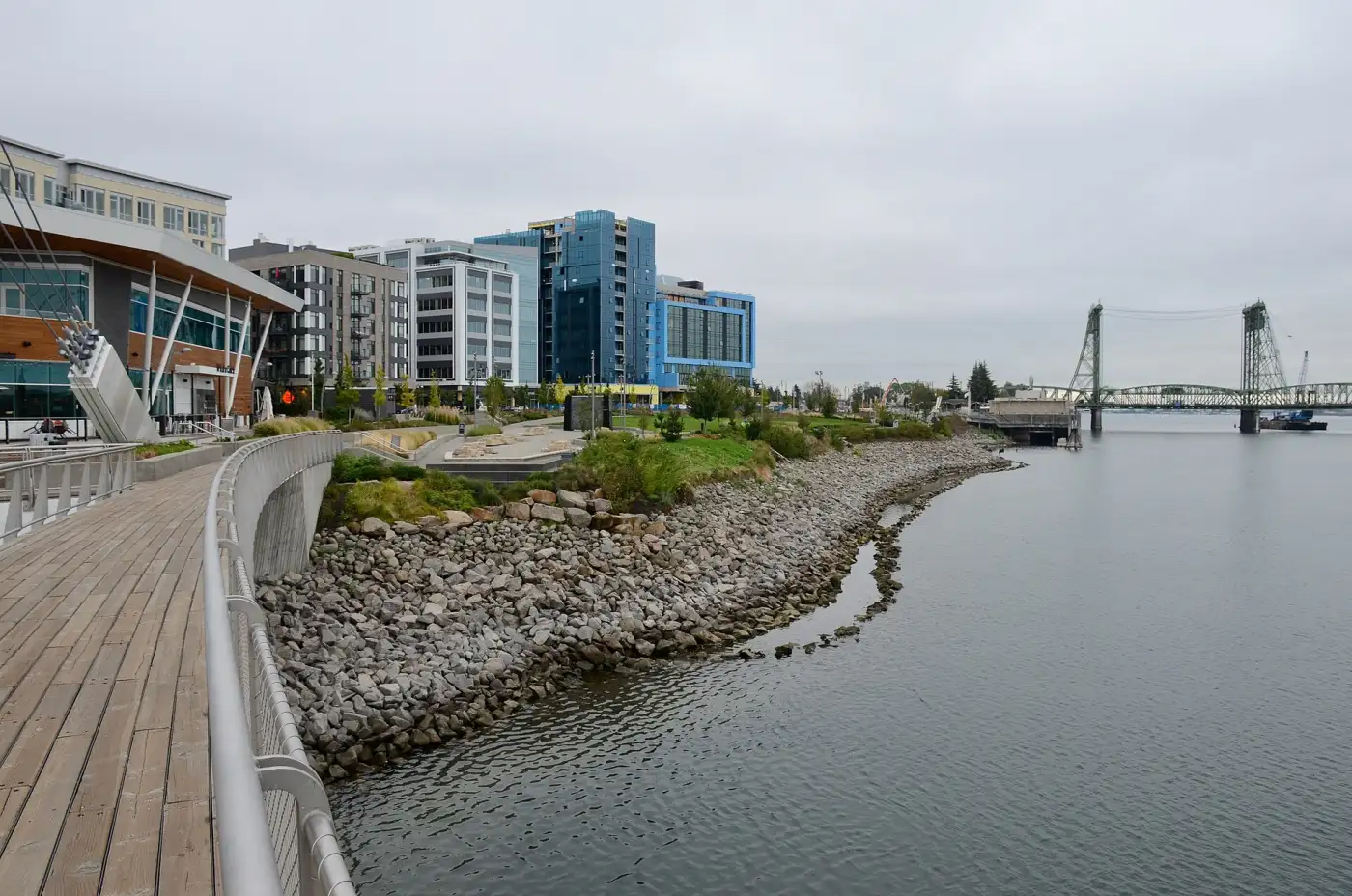
Mid-rise apartment and office buildings along the Vancouver Waterfront, seen from the Grant Street Pier walkway, with the Interstate Bridge over the Columbia River in the distance.
Mid-rise buildings on the Vancouver Waterfront in 2020. Buildings of five or more units like these made up 38.9% of the housing Clark County authorized from 2020 to 2025, and each one ran through a general contractor, a lender and dozens of subcontractors. Photo: Steve Morgan, Wikimedia Commons, CC BY-SA 4.0.

Why a permit count predicts legal work

A permit marks the start of a project, and the legal work arrives later and in stages: payment disputes during the build, lien claims in the 90 days after the last delivery, warranty and defect claims after move-in, and Washington's six-year construction statute of repose, which runs from substantial completion (RCW 4.16.310). A county that permitted more than 25,000 homes in six years has a long tail of that work still to come, and a firm that publishes pages for each stage now is the one those clients find.

Washington Department of Labor and Industries

The L&I contractor registry, read as a list of future clients

Every construction contractor working in Washington must register with the Department of Labor and Industries (RCW 18.27.020), and the state publishes the registry as open data. We read it on November 5, 2026: 5,687 active construction-contractor registrations had a mailing address at a Clark County ZIP code, 2,414 of them in the city of Vancouver. Statewide the registry held 60,147 active registrations with a Washington address.

Clark County construction jobs by type of work, 2024

The eight largest construction industries; the sublabel gives the location quotient (1.00 = the national share)

Use the arrow keys to read each value.

Clark County construction jobs by type of work, 2024
IndustryJobs, 2024
Building equipment contractors / electrical, plumbing, HVAC · LQ 1.87 5,566
Residential building construction / home builders and remodelers · LQ 3.08 3,383
Foundation, structure and exterior / concrete, framing, roofing · LQ 1.95 2,262
Building finishing contractors / drywall, painting, flooring · LQ 1.72 1,685
Other specialty trades / site preparation and other · LQ 1.79 1,660
Utility system construction / LQ 1.56 1,088
Nonresidential building construction / LQ 0.67 715
Highway, street and bridge / LQ 1.37 601

Source: BLS QCEW, Clark County, 2024 annual averages, private ownership, NAICS 2361-2389.

A county that builds homes, not office towers

Residential building construction employs 3.08 times its national share of jobs in Clark County, the highest concentration of any large construction industry in the county. Nonresidential building sits at 0.67. Offices, warehouses and schools are built here less than the national pattern would predict. The trades that work inside houses, from electricians to drywall crews, are all at 1.7 to 2.0 times their national share. For content planning that points to residential disputes, small-crew employment questions and homeowner contracts before commercial construction litigation.

Most registrations belong to companies

Of the 5,687 Clark County registrations, 3,861 were limited liability companies, 1,092 corporations and 683 individuals. The owner of a two-person LLC still has an entity to protect, a bond on file with the state and an industrial insurance account, and the questions that follow (who signs, who is personally liable, what happens to the registration when a partner leaves) belong on business-law pages written for that owner.

General contractors outnumber the trades in the registry

The registry lists each business under a primary specialty. In Clark County 4,408 registrations were listed as general contractors, followed by painting (161), floor covering and countertops (151) and landscaping (106). The large general count reflects how Washington registers small firms that take on whole jobs, which in turn means many of them carry the $30,000 general-contractor bond described in the homeowner section below.

What the registry means for search

Because the registry is public and searchable by name, a contractor's legal history starts to be visible the moment a claim is filed against its bond: suits on a bond are served on L&I, which keeps a public record of them under RCW 18.27.040(3). Contractors search for their own names, and so do their customers. A firm that writes plainly about bond claims, suspensions and reinstatement is answering questions that already exist in Clark County search, from both sides.

If contractors are your clients, we can show you which of their questions, from bond claims to suspended registrations, already send searchers to other firms. Book the audit

RCW 60.04, 60.28 and 18.27

Unpaid on a Clark County job: liens, bonds and retainage

The most common legal problem in a construction economy is money that didn't arrive. Washington gives the people who improve real property three main ways to collect beyond a breach-of-contract suit: a lien on the property, a claim on the contractor's bond and, on public jobs, a claim on the retained funds. Each runs on its own clock, and a page that gets a clock wrong does more harm than no page at all.

Clocks a Clark County contractor or tradesperson runs on

Day zero differs from lane to lane

Use the arrow keys to read each date.

Clocks a Clark County contractor or tradesperson runs on
RuleDayWhat happens
Construction lien on private work (RCW 60.04.091, .141)0Last day labor, materials or equipment were furnished
Construction lien on private work (RCW 60.04.091, .141)90Claim of lien must be recorded with the county; copy to the owner within 14 days
Construction lien on private work (RCW 60.04.091, .141)8 months after recordingLast day to sue to foreclose (lien recorded on day 90)
Claim on the retainage of a public job (RCW 60.28.011(2))0Contract work on the public improvement completed
Claim on the retainage of a public job (RCW 60.28.011(2))45Notice of claim against the retained funds due
Claimants other than a homeowner (RCW 18.27.040(3))0Labor performed, materials furnished or work completed
Claimants other than a homeowner (RCW 18.27.040(3))365Suit on the bond filed with the superior court clerk
An L&I order a worker or employer disagrees with (RCW 51.52.050, .060)0Order communicated to the worker or employer
An L&I order a worker or employer disagrees with (RCW 51.52.050, .060)Day 60 (65 if sent electronically)Order is final unless challenged

Sources: RCW 60.04.091, 60.04.141, 60.28.011, 18.27.040, 51.52.050 and 51.52.060, read at app.leg.wa.gov on November 5, 2026. Exceptions and credit terms are not shown.

The eight-month foreclosure window starts on the day the lien is recorded, not on the last day of work.

Recording the lien: 90 days after the last delivery

A claim of lien must be filed for recording in the county where the property sits no later than 90 days after the claimant stopped furnishing labor, professional services, materials or equipment (RCW 60.04.091). In Clark County that means the Auditor's recording office, which records liens alongside deeds and plats and accepts documents electronically (Clark County Auditor). The claimant then has 14 days to send the owner a copy by certified or registered mail or personal service; missing that step forfeits any right to attorneys' fees and costs against the owner.

The notice that protects suppliers and lower-tier subs

Suppliers and others who didn't contract with the owner generally have to give the owner a written notice of the right to claim a lien, and that notice only protects work and materials supplied from 60 days before it was sent. On a new single-family home the look-back shrinks to 10 days. Laborers and subcontractors hired directly by the prime contractor are mostly exempt (RCW 60.04.031). A supplier's page should say this in the first screen, because a supplier who learns it after delivery has usually already lost part of the claim.

The foreclosure deadline and the order of payment

A recorded lien stops binding the property eight calendar months after recording unless a foreclosure suit is filed in that county's superior court within that time and served on the owner within 90 days of filing (RCW 60.04.141). When several liens compete for the sale proceeds, the court ranks them: labor first, then employee benefit contributions, materials and equipment, subcontractors, and finally prime contractors and professional services (RCW 60.04.181). The same section lets the court award attorneys' fees to the prevailing party, whichever side that is.

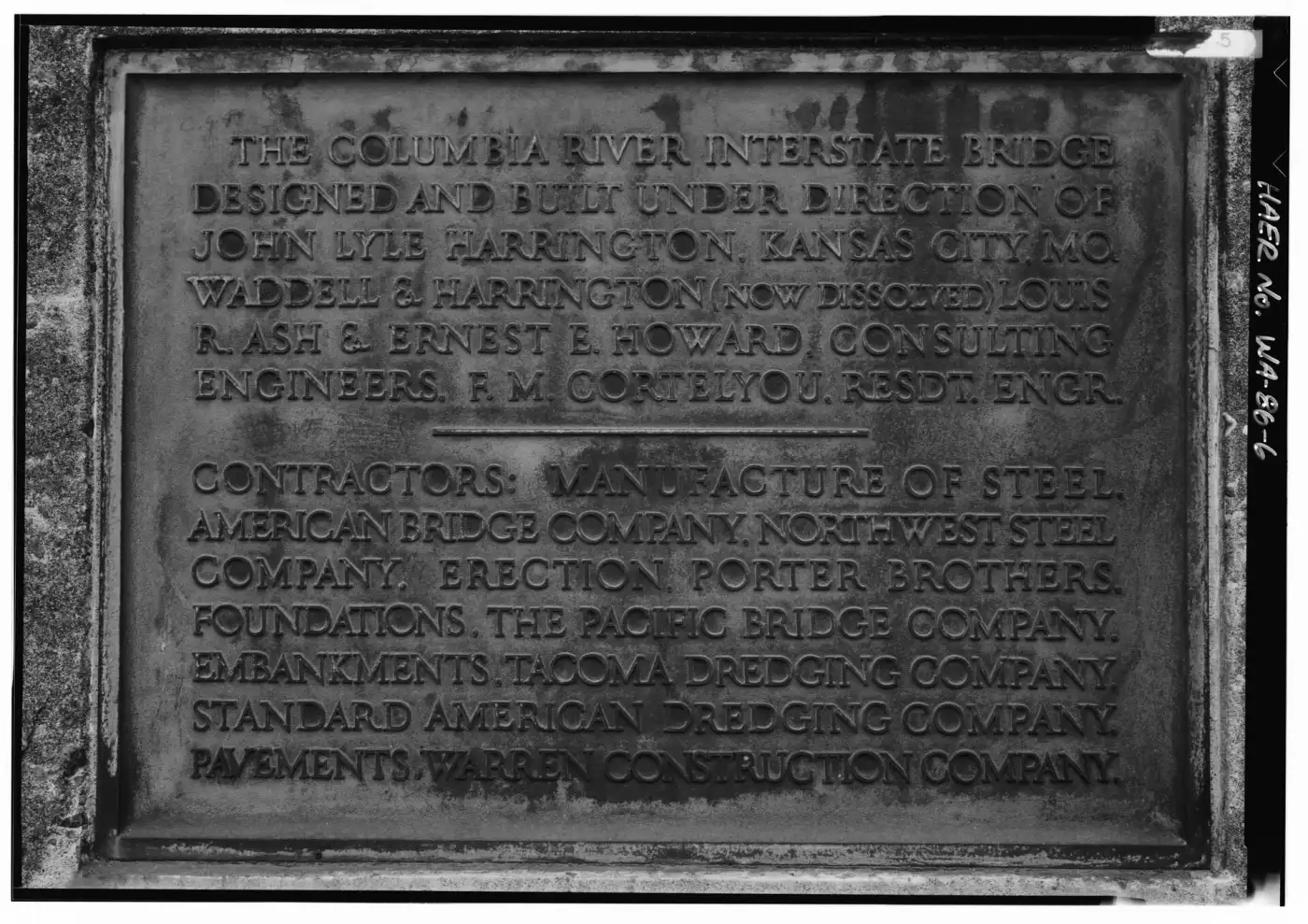
Bronze plate on the Columbia River Interstate Bridge naming its designers and, separately, the contractors for manufacture of steel, erection, foundations, embankments and pavements.
The builders' plate on the 1917 Interstate Bridge lists a separate contractor for steel, erection, foundations, embankments and paving. A Clark County job is still split by trade and tier the same way, and Washington's lien statute ranks each tier's claim differently when there isn't enough money to pay everyone. Photo: Jet Lowe, Historic American Engineering Record, Wikimedia Commons, public domain.

The bond claim: a year for most claimants

Every registered contractor keeps a bond or deposit with L&I. Workers owed wages and benefits, the other party to the construction contract, registered subcontractors, suppliers and equipment providers, and the state for taxes can all claim against it, but anyone other than a residential homeowner must file suit within one year of the date the labor was performed, the materials were furnished or the work was substantially completed or abandoned. Their combined share is capped at half of what the contractor posted (RCW 18.27.040). Service is made on the Department, with three copies of the summons and complaint and a filing fee.

An unregistered contractor can't use the courts to collect

Washington closes its courts to contractors who weren't registered. A contractor suing to collect for work, or for breach of a contract that required registration, must allege and prove it was registered when it bid and while it worked, unless the court finds substantial compliance (RCW 18.27.080). A collection page for contractors should open with that question, because it decides whether a claim exists before anything else does.

The papers a contractor should have in hand for that first conversation:

  • Contract, change orders and the dates of the last labor or delivery
  • The registration number and its status on the dates the work was bid and performed
  • The pre-claim notice sent to the owner, with proof of mailing or delivery
  • The signed disclosure statement on residential jobs of $1,000 or more
  • Invoices, payments received and the amount still owed, by phase
  • Names of the owner, the prime contractor and every tier above the claimant

RCW 18.27.114 and the contractor's bond

Owners who hired the contractor: disclosures, bonds and paying twice

Clark County's new homes and remodels each have an owner, and Washington law gives those owners rights that a residential practice can explain better than anyone else in local search. Those rights start with a document most homeowners sign without reading.

What the customer signs before work starts

A contractor agreeing to repair, alter or build four or fewer residential units for $1,000 or more must, before starting work, hand the customer a disclosure statement in a form set by statute. It gives the contractor's registration number and bond amount and warns, in capital letters, that the bond might not be enough to cover a claim, that the customer may withhold retainage, that the property may be liened if a supplier or subcontractor goes unpaid, and that the customer "could pay twice for the same work" (RCW 18.27.114). A contractor who skipped the statement can't bring a lien claim on that contract.

The homeowner's longer window and the bond amounts

Since July 1, 2024, a general contractor's bond is $30,000 and a specialty contractor's $15,000 (RCW 18.27.040(1)). A residential homeowner suing on the bond for breach of contract has two years from substantial completion or abandonment, twice the window other claimants get, and the prevailing party in that suit recovers costs, interest and reasonable attorneys' fees. Because other claimants are capped at half the bond, the homeowner's share is protected even when suppliers and workers claim too.

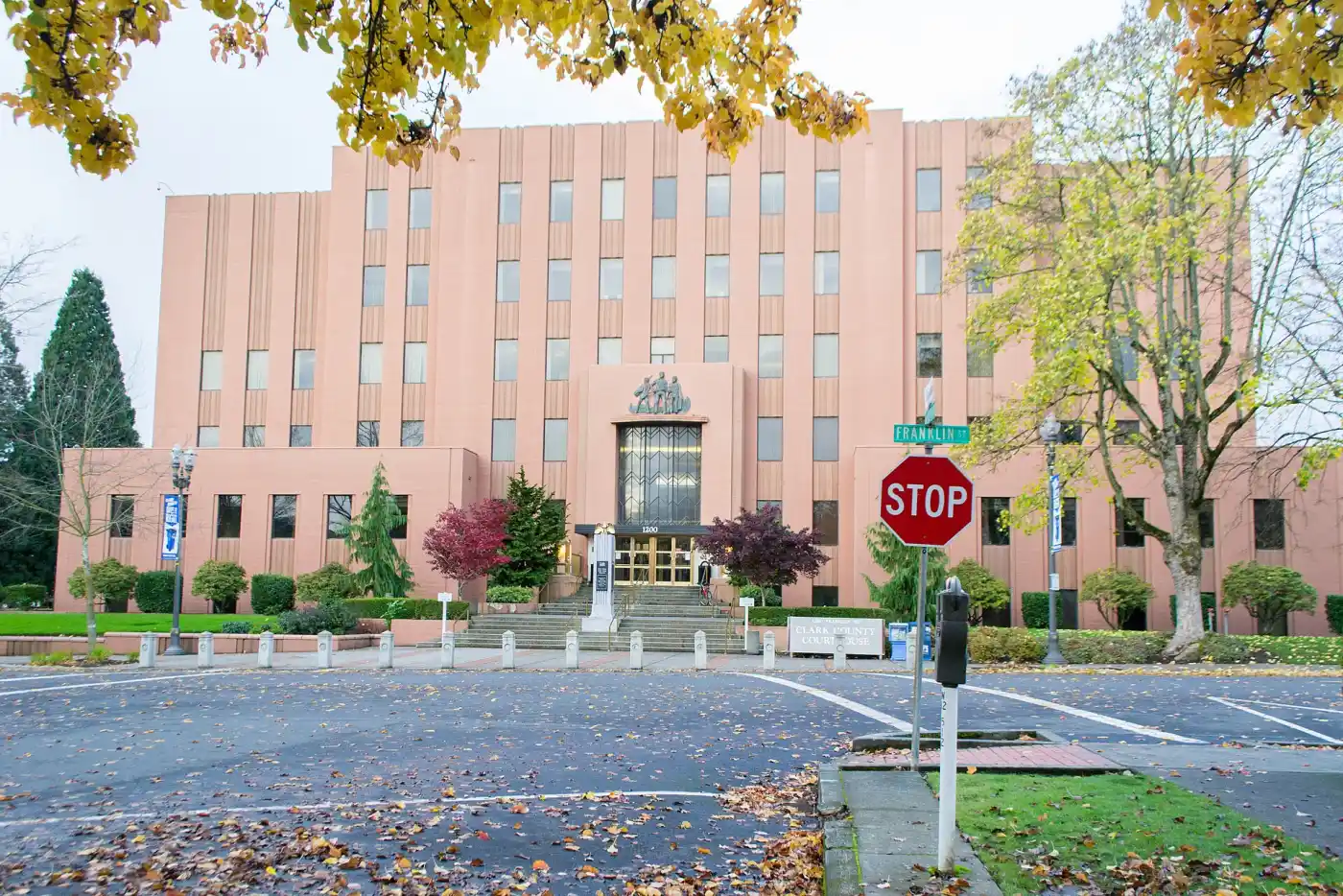
The pink Art Deco Clark County Courthouse on Franklin Street in Vancouver, Washington, with autumn trees and a stop sign in front.
The county courthouse in downtown Vancouver. A homeowner's suit on a contractor's bond can be filed in the superior court of the county where the work was done, so work on a Clark County house leads to this building. Photo: Visitor7, Wikimedia Commons, CC BY-SA 3.0.

Paying twice on a remodel

For a remodel of an owner-occupied single-family home, a subcontractor or supplier who didn't contract with the owner must give the owner notice, and its lien can only be paid from money the owner hadn't yet paid the prime contractor when the notice arrived (RCW 60.04.031(3)). An owner who has already paid the contractor in full is protected; one who paid in advance and then received a notice is not. Lien-release documents from each supplier, which the disclosure statement tells owners to ask for, are the practical defense, and a homeowner page can list them.

What an owner can check before a dispute

  • The contractor's registration, bond and insurance in L&I's verification tool, on the day of signing and again before final payment
  • A signed copy of the disclosure statement, which the contractor must also keep for three years
  • Any notice of the right to claim a lien received from a supplier or subcontractor, with its date
  • Lien releases collected before each progress payment
  • The date of substantial completion, which starts the homeowner's two-year bond clock

Some firms write for the owners instead of the builders. For them, we'll point out which owner questions in Clark County no firm has answered yet. See the audit

Title 51 RCW and WISHA

Hurt on a jobsite: L&I, the general contractor and the other companies on site

In a county where one private job in nine is in construction, jobsite injuries make up a larger part of an injury practice than in a city of office work. Washington's industrial insurance system decides most of what happens after one, but not all of it, and the exceptions are where an injury firm's pages earn their calls.

The claim and the 60-day window

An injured worker's claim runs through L&I. When the Department issues an order the worker or employer disagrees with, the choice is a written request for reconsideration to L&I or an appeal to the Board of Industrial Insurance Appeals. Under RCW 51.52.050 the order becomes final 60 days after it was communicated by mail, or 65 days when it was sent electronically, unless one of those is filed, and the appeal window in RCW 51.52.060 runs on the same 60 days. A page that tells a worker to "wait and see" what L&I decides can cost them the case.

Suing the employer: deliberate intention only

Industrial insurance replaces most lawsuits against the employer. The exception is narrow: when injury results from the employer's deliberate intention to produce it, the worker may take benefits and also sue for damages beyond them (RCW 51.24.020). Pages that hint at suing an employer for an ordinary jobsite accident invite calls the firm can't take; pages that explain the exception honestly attract the few that qualify.

Suing another company on the same site

A construction site holds many employers. When someone other than the worker's own employer is liable (another subcontractor, the general contractor, an equipment maker, a property owner), the worker may sue that third party while keeping industrial insurance benefits, giving notice to L&I or the self-insurer when the suit is filed so it can protect its statutory interest in the recovery (RCW 51.24.030). On a site with a dozen trades, this is where most of an injured worker's legal questions lead, and what an injury firm's construction pages should be built around.

The general contractor's duty to every worker on the site

In Stute v. P.B.M.C. (1990), the Washington Supreme Court held that a general contractor has a nondelegable duty to ensure compliance with the safety regulations for every employee on the jobsite, not just its own. L&I's enforcement directive on general and upper-tier contractor responsibility applies that holding and lists its extensions: to upper-tier subcontractors, to owner-developers in a comparable position and, in Afoa v. Port of Seattle (2013), to any employee who may be harmed by the violation (DOSH Directive 27.00). For a subcontractor's employee who fell from an unguarded roof edge, this is often the claim.

Contracts that try to move the risk

Construction contracts often require a subcontractor to indemnify the general contractor or owner. Washington voids indemnity for the indemnitee's sole negligence, limits it to the indemnitor's own share when both were negligent, and allows a waiver of the subcontractor's industrial insurance immunity only when the agreement says so expressly and the waiver was mutually negotiated (RCW 4.24.115). Contractor-side business pages and injury pages both need this statute, from opposite directions.

RCW 51.08.181 and 51.08.195

Subcontractor or employee: the registration-linked test for construction work

Small contractors hire each other constantly, and the question of whether a one-person crew is a subcontractor or an employee decides who pays industrial insurance premiums, who covers an injury and what the hiring contractor owes if L&I audits it. Washington answers it with a test written specifically for work that requires contractor registration or a plumbing or electrical license.

Every condition, on the contract's effective date

An individual doing that kind of work under an independent contract is not a "worker" for industrial insurance only when all of the following are true (RCW 51.08.181):

  • Free from control or direction over the work, under the contract and in fact
  • The work is outside the hiring business's usual course, or done outside all of its places of business, or the individual pays for their own principal place of business
  • Customarily engaged in an independently established business of the same kind
  • Responsible for filing a schedule of business expenses with the IRS for the next filing period
  • Registered with the Department of Revenue, holding a unified business identifier and the state accounts the business requires
  • Keeping a separate set of books for the business
  • Holding a valid contractor registration, or a plumbing or electrical contractor license, on the contract's effective date

Why the registration condition changes the search

The last condition ties classification directly to the registry described above. A framer who let a registration lapse can fail the test on that point alone, whatever the other six show. Outside licensed work the general exception in RCW 51.08.195 uses a similar list without the registration requirement. A firm that serves either side of this question, the small contractor facing a premium assessment or the worker told they were "a sub", can build a page around the seven conditions and link the registry lookup next to the last one.

Subcontracting to an unregistered crew

Hiring an unregistered contractor is itself a gross misdemeanor under RCW 18.27.020(2)(e), unless the crew was registered when the contract was signed and the hiring contractor hadn't been told in writing by L&I that the registration had lapsed. Contractor-defense pages and pages for injured workers on such crews both start from this rule.

RCW 39.12 and 60.28

Public works in Clark County: prevailing wage and the share held back

Schools, roads, utilities and port projects are built by contractors from the same registry, under extra rules. Two statutes shape most of the questions those jobs produce.

Prevailing wage and the statement of intent

Laborers, workers and mechanics on public works must be paid at least the prevailing wage for their trade in the locality where the work is done. On contracts above $10,000 the contractor must post at the jobsite a copy of its approved statement of intent to pay prevailing wages and the address and phone number of L&I's industrial statistician, where workers can complain or ask questions (RCW 39.12.020). A worker who finds no posting, or a rate below the one posted, has a specific agency to call, and a page that names it does more for that worker than one stopping at "you may be owed money".

The retainage held in trust

On public improvement contracts the public body must hold back retainage of up to 5% of the money the contractor earns, as a trust fund for the people who supplied labor and materials and for taxes owed the state. Anyone performing labor or furnishing supplies has a lien on that fund, but must give notice within 45 days of completion of the contract work (RCW 60.28.011). Projects funded with federal transportation money rely on the contract bond instead, which a page for subcontractors on road work needs to say.

Different paperwork, same small contractors

The firms on public jobs in Clark County are often the same small contractors described above, bidding a school addition one month and a subdivision the next. Their legal pages need to separate the private-job rules, where the claim is a lien on the property, from the public-job rules, where claims run against the retained funds and the contract bond. Mixing the two on one page is a common reason a contractor calls the wrong deadline the right one.

Oregon Construction Contractors Board

Clark County contractors licensed to work in Oregon

A Vancouver contractor who takes a job in Portland needs an Oregon license, not just a Washington registration. Oregon publishes its own list, and on the same day it showed 2,457 active Construction Contractors Board licenses carried a mailing address at a Clark County ZIP code, 1,436 of them in Vancouver.

Matching the registries by business name

Matching the two state lists by business name, 1,158 of the 5,676 distinct business names on Clark County's active L&I registrations also appear on the Oregon list. That is a lower bound, since any difference in how a name is written breaks the match, but it means about one Clark County contractor business in five can work on both sides of the river. Their legal questions come in two versions, and a firm that represents them needs pages that say which state's law each answer comes from.

Oregon's version of "no license, no lawsuit"

Oregon requires a current CCB license with the right endorsement to bid on or perform work as a contractor (ORS 701.021). A contractor who wasn't licensed and properly endorsed when it bid and throughout the work can't perfect a construction lien, file a complaint with the Board or bring a court or arbitration claim for payment, subject to narrow exceptions (ORS 701.131). Oregon also moves faster after a lien is filed: the lien stops binding the property 120 days after filing unless a suit to enforce it has been started (ORS 87.055), against eight months in Washington.

Pages for a contractor who works both sides

For this client the useful structure is one page per question per state, each naming its state in the title and the first line, rather than a single page that hedges between two sets of rules. The firm also needs to be precise about which of its own lawyers can advise on the Oregon version, which is where Oregon's advertising rules, set out in the next section, come in.

Oregon Rules of Professional Conduct, as effective September 3, 2026

How Oregon regulates lawyer ads, letters and firm names, for Vancouver lawyers with an Oregon license

Many Vancouver lawyers also hold an Oregon license, and Portland firms advertise into Clark County every day. When a Vancouver firm's website, ad or letter reaches Oregon readers, or its lawyers are Oregon licensees, Oregon's rules apply alongside Washington's. Washington's own rules are summed up at the end of this section; what follows is the Oregon side, which no other GLP page covers.

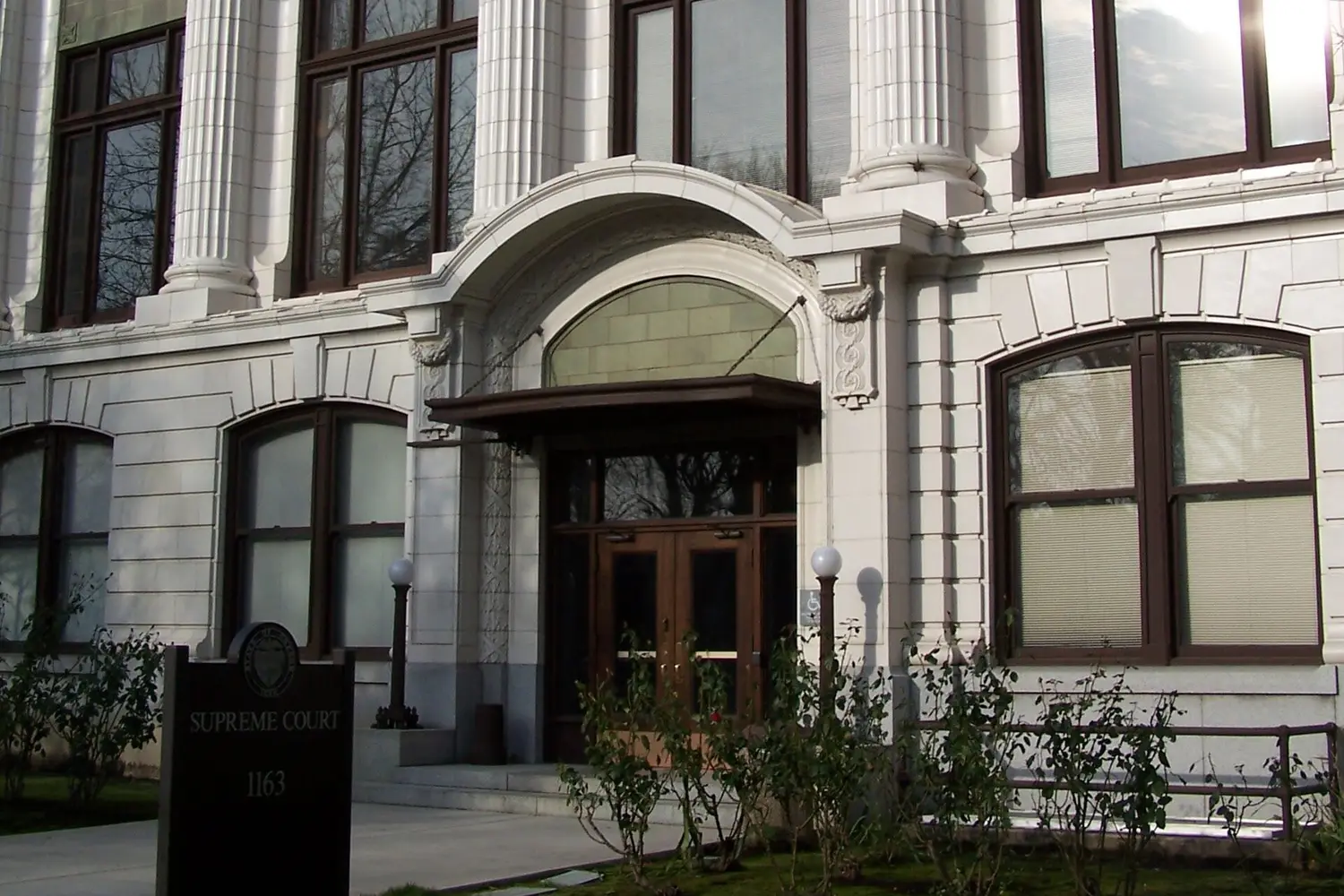
Front entrance of the white terra-cotta Supreme Court Building in Salem, Oregon, with a sign reading Supreme Court 1163 on the lawn.
The Supreme Court Building in Salem. Oregon's rules of professional conduct are drafted by the Oregon State Bar and bind its licensees once the Supreme Court adopts them (ORS 9.490); the Bar's current edition is dated September 3, 2026. Photo: M.O. Stevens, Wikimedia Commons, public domain (cropped).

Rule 7.1: a single sentence and no list

Oregon RPC 7.1 forbids a false or misleading communication about the lawyer or the lawyer's services, and defines misleading as a material misrepresentation of fact or law, or an omission that makes the statement as a whole materially misleading (Oregon RPC). Since 2014 that is the whole rule: Oregon replaced its older version, which listed specific forbidden kinds of statements, with the ABA model language. The Bar's edition prints each rule with its amendment history and a comparison with the former Oregon Code, but no numbered commentary, so the formal ethics opinions do the interpretive work that comments do elsewhere.

Rule 7.2: contact information, nominal gifts and referral clubs

Each Oregon ad has to identify by name a lawyer or firm who answers for its content and say how to reach them. Oregon swapped "office address" for "contact information" in 2017, so an Oregon ad doesn't need a street address. A lawyer may not give anything of value for a recommendation, except the reasonable cost of advertising, the usual charges of a legal service plan or lawyer referral service, payment for a practice under Rule 1.17 and, since January 2020, nominal gifts given as thanks that are neither intended nor reasonably expected to be compensation for the recommendation.

Two formal opinions apply this to networking. Formal Opinion 2005-175 (revised 2021) says a lawyer may not join a business-referral club whose membership depends on passing referrals to other members, because each referral given or received is a thing of value (OSB). Formal Opinion 2005-2 reaches the same result for a reciprocal referral deal with a trust company, while allowing a lawyer to share office space with a CPA when the practices stay separate (OSB). For a construction lawyer who meets clients at builders' association breakfasts, the line is the quid pro quo: attend, speak and network, but don't commit to sending work in exchange for work.

Rule 7.3: what is still forbidden, and the statutes beside it

Since 2018 Oregon has left only three bars in Rule 7.3, and they apply whatever the channel: a target whose physical, emotional or mental state rules out a reasoned choice of lawyer, a target who has told that lawyer to stop, and pressure amounting to coercion, duress or harassment. Oregon deleted its "Advertising Material" label requirement in 2017 and its specific rules on in-person, telephone and real-time electronic contact in January 2018.

Formal Opinion 2021-196 is built on a construction-defect case. A lawyer representing some condominium owners against the builder mailed a flyer to every owner in the building, then phoned the rest a week later. The flyer was allowed, and so was the first call. When one owner said "don't bother me again!", a same-day email asking them to reconsider violated Rule 7.3 (OSB). The opinion also flags ORS 9.510, which still bars a lawyer from soliciting personal-injury business at factories, mills, hospitals or other places and from using runners; neighboring sections void agreements with nonlawyer solicitors and bar paying for personal-injury referrals (ORS 9.500 to 9.520). An Oregon injury practice has to plan its outreach around both the rule and the statutes.

Rule 7.5: names, multi-state offices and "Associated Office"

Rule 7.4 is reserved in Oregon, so claims about certification or specialization are judged under Rule 7.1 alone. Rule 7.5 allows a trade name that doesn't imply a link to a government agency or a public or charitable legal services organization, bars using the name of a lawyer holding public office while that lawyer isn't actively practicing with the firm, and lets lawyers imply a partnership or other organization only when one exists. Formal Opinion 2005-12 applies that last point to lawyers who share a suite: they may not call themselves associates, "of counsel" or "A, B & C, Lawyers" unless they actually practice together (OSB). Formal Opinion 2005-31 adds that a receptionist answering "Senator Smith's office" at a lawyer-legislator's practice breaks both Rule 7.1 and Rule 8.4 (OSB).

Oregon lets a firm keep one name in every state where it has offices, on one condition from Rule 7.5(b): wherever the firm lists who works in a given office, lawyers without a license in that office's state must be shown with that limit. Formal Opinion 2005-103 lets a multistate firm advertise the availability of its non-Oregon lawyers to Oregon clients, provided it doesn't state or imply that they are Oregon State Bar members (OSB). Formal Opinion 2005-109 is a Washington-Oregon case: an Oregon firm that handles a Washington firm's Oregon litigation may list it as an "Associated Office" on its stationery, and vice versa, because the relationship is close, regular and continuing rather than an exchange of referrals (OSB).

Practicing in Oregon from a Vancouver office

A lawyer not admitted in Oregon may not establish an office or other systematic and continuous presence there for the practice of law, though Rule 5.5(c) and (d) allow temporary services in association with an Oregon lawyer, in or related to a proceeding, in arbitration or mediation, or arising out of the lawyer's home-state practice. Rule 8.5 subjects a lawyer who isn't admitted in Oregon to Oregon discipline when they provide or offer legal services there, and, outside a pending matter, applies the rules of the jurisdiction where the conduct has its predominant effect. A website written for Portland readers is the kind of conduct whose effect may land in Oregon, so a Washington-only lawyer's pages should describe Oregon matters as matters handled with Oregon counsel, never as the lawyer's own Oregon practice.

Answering a bad review

Formal Opinion 2022-201 deals with a former client posting harsh comments about a lawyer on review sites and social media (OSB). It rests on In re Conry (2021), where the Oregon Supreme Court disciplined a lawyer who answered online reviews with information about the client, and held that the disclosure wasn't reasonably necessary to establish a claim or defense. The opinion allows a generic, truthful reply about the lawyer's practice that reveals nothing about the representation, or a public note that the lawyer doesn't respond to posts because of ethical obligations. It warns that falsely denying the representation to get a review removed is itself misconduct. A firm's review-reply guidelines for Oregon should be written from those limits.

Out-of-state firms owned by nonlawyers

Formal Opinion 2026-209 answers a question that national advertising has made common: an Oregon lawyer may not split fees with an out-of-state alternative business structure that has a nonlawyer owner, on a matter involving an Oregon client, Oregon law, an Oregon tribunal, services performed in Oregon or conduct whose predominant effect is in Oregon (OSB). The restriction on nonlawyer ownership remains in force in Oregon. A Vancouver firm whose lawyers hold Oregon licenses and are approached to act as local counsel for a nationally advertised entity should read this opinion before agreeing to any split.

The Washington side, briefly

Washington condensed its advertising rules by order effective January 26, 2021, leaving RPC 7.2 reserved, and its Rule 7.3 also starts from permission to solicit with listed exceptions. The detail, including what Washington says about firms with offices in both states, is on the Seattle page's rules section; this page doesn't repeat it.

Search Console, 16 months

Oregon searchers who find a Washington page and what it owes them

Our own Search Console shows people looking for lawyer SEO in Portland and Oregon ("legal seo portland", "law firm seo company portland or", "seo for lawyers portland", "seo for law firms in oregon", "lawyer seo services beaverton"), and none of those searches has an Oregon page of ours to land on. The Oregon rules above apply to every Oregon firm.

A shared market for clients, separate bodies of law

Portland and Vancouver share television stations, newspapers and many of the same Google results. Google can't tell from a search like "construction lien attorney" which state's law the reader needs. A page that names its state in the title, the first sentence and the statute citations gives Google, and the reader, what the search itself leaves out.

Oregon-licensed Vancouver lawyers

A Vancouver lawyer who also holds an Oregon license can publish Oregon pages from a Vancouver office, as long as the pages identify which lawyers are licensed where and the Business Profile shows only real offices. What that lawyer can't do is let a Washington-only colleague's bio sit on an Oregon page as though both could advise there.

Beaverton, Hillsboro and the west side

Searches naming Beaverton and other Washington County, Oregon cities belong to Oregon's courts and Oregon's contractor board, even when the searcher's lawyer is in Vancouver. If your firm takes those matters, the pages should be written for that county's courts and agencies, not adapted from a Clark County page by swapping the city name.

Site architecture

Pages a Clark County construction practice needs, by who is reading

Construction law has more distinct readers than most practices, and each arrives with a different statute and a different deadline. Building one page per reader, rather than one page per legal theory, matches how they search and keeps every page short enough to answer its question on the first screen.

For the people owed money

  • Subcontractor: the 90-day recording deadline and the 14-day owner copy
  • Supplier: the pre-delivery notice to the owner and how far back it reaches
  • Worker owed wages on a public job: the posted prevailing-wage statement and the industrial statistician
  • Bond claimant: the filing deadline, service on the Department and the cap

For the people being asked to pay

  • Homeowner: the disclosure statement, lien releases and the two-year bond window
  • General contractor facing a subcontractor's lien: ranking, release bonds and fee exposure
  • Small contractor facing an L&I premium assessment: the seven-part test, condition by condition

For the people hurt or accused

  • Injured tradesperson: the 60-day protest window and third-party claims on a shared site
  • Subcontractor's employee hurt by another trade's hazard: the general contractor's jobsite duty
  • Contractor cited for unregistered work: the gross misdemeanor and the per-worksite count

How the pages link to each other

The lien page links to the bond page, because a claimant who missed the lien deadline may still have the bond; the homeowner page links to the lien page, because the owner's risk is the supplier's lien; the classification page links to the injury page, because a "sub" who is really a worker is covered by industrial insurance. Those links follow the questions a reader asks next, and AI assistants and search engines read the same links to understand which page answers what.

Our map survey, November 5, 2026

Who Google lists for a mechanics lien search from downtown Vancouver

Twelve searches were sent to the Places API at 15:35 UTC on November 5, 2026 (Places API text search), each phrased as "[practice] Vancouver WA" from downtown, with results weighted to a 20-kilometer radius and the top 20 saved. Four were construction searches ("construction lawyer", "construction defect attorney", "mechanics lien attorney", "contractor dispute lawyer"); eight covered other practices. We then read the home page of every listing the construction searches returned.

  • The river held. 234 of the 240 listings carried a Washington address; five were in Portland and one in British Columbia.
  • A short list, repeated. The four construction searches returned 26 different listings, and 15 appeared in all four.
  • Mostly generalists. 13 of the 26 also came up for family law, criminal defense, injury or estate planning, and one office appeared in 11 of the 12 searches.
  • Few home pages say construction. Of 21 readable home pages, seven used the word "construction". None used "lien" or cited RCW 60.04.

Where a Clark County construction practice can stand out

A contractor searching "mechanics lien attorney" here mostly sees firms that also handle divorces and DUIs, with home pages that never name the claim. A firm that does this work can say so in its first lines and give the recording window, the owner notice and the bond claim pages of their own.

What a one-day read leaves out

We read home pages only, so a firm may cover liens on a deeper page. The map on a contractor's phone also weighs the phone's location and history, and a listing says nothing about a lawyer's skill. This is one day's front-door view.

Beyond construction law

Firms in Vancouver that never take a construction case still write for this economy

Most Vancouver firms aren't construction firms, but their clients still earn their living on job sites.

Personal injury firms

Jobsite injuries reach injury firms through the third-party route, so an injury firm's site needs a page on construction-site claims even if it never handles an L&I appeal.

Family law firms

When one spouse owns a contracting business, a divorce has to deal with the registration, the bond on file, the industrial insurance account and the equipment, as well as the business's value. A valuation page written for a small contractor's spouse reads as written for Clark County.

Estate and business planning firms

A contractor registration can't be handed to someone else: transferring it, or letting an unregistered contractor work under it, is a gross misdemeanor under RCW 18.27.020(2)(d). When a trade-business owner retires or dies, the registration, the bond and the right to collect for finished jobs have to be planned together, and succession pages can say so.

Criminal defense firms

Unregistered contracting, subcontracting to an unregistered crew and advertising without a registration number are criminal matters in Washington, prosecuted in the county where they happen. Few defense websites cover them, though contractors search for them after a citation.

Related GLP pages

Pages a Clark County firm tends to read next

We have no other Southwest Washington or Portland page. Our one other Washington page is Seattle, written for King County firms whose clients mostly don't live as married couples with children; the pages below come closest in law or subject.

Asked across a conference table in Vancouver, answered before the audit

Anything not covered here can wait for the strategy call that may follow your free audit, which you are free to skip.

In short

Search planning for Vancouver, Washington law firms: construction's share of Clark County jobs, the county's housing permits and contractor registrations, the Washington law behind unpaid invoices, jobsite injuries and classification, and the Oregon advertising rules for lawyers who practice on both sides of the Columbia.

Is GLP's team in Vancouver, WA?

No. GLP is a Southern California agency, our address is in the footer of every page, and Clark County clients talk with us over video or the phone. What has to be local is the material behind the pages, and on this page that means Clark County's job and permit counts, the L&I registry and the Washington statutes a construction practice cites, each linked to its source.

After signing, what happens during the first four weeks?

First comes the free audit, a recording of your firm in Clark County searches, your site and your Business Profile, sent within 48 hours. If you go ahead, the first month is discovery: your Search Console and analytics data, your Business Profile and the firms that currently outrank you. That baseline is what later reports are measured against.

Can one team handle a Vancouver firm's paid campaigns and call handling as well as search?

Yes. Firms that want search and AI answers handled get a monthly strategy call. The Consulting CMO engagement goes further: one team for ads, call handling and the other agencies you pay, with a live dashboard and a call every week. How we work sets out both.

Who decides what a Vancouver engagement costs, and when?

There is no single price. The retainer is monthly and is priced only after we have seen your market, practices, offices and site, with no long-term contract. A construction practice that needs new statute-based pages costs more to start than a firm whose pages only need repair, which is one reason the audit comes first.

How many months before Search Console shows a change for a Clark County firm?

Months, and in a fixed order: impressions in Search Console first, then clicks, then calls and signed matters. Clark County competition and your practice areas set the pace. Nobody can promise a ranking or a date, as Google's own guidance warns; what you get from us is the monthly numbers so you can judge for yourself.

We practice in Portland or Beaverton. Is this page for us too?

Yes. GLP has no separate Portland page, and Oregon firms get the same method applied to their own law, starting from Oregon's rules above.

Which court hears a lien foreclosure on a house in Camas, Battle Ground or Ridgefield?

Clark County Superior Court, because the lien statute puts the foreclosure in the superior court of the county where the property sits, and all three cities are in Clark County. The court lists its address as 1200 Franklin St., Vancouver, WA 98660 (Clark County Superior Court). A page about liens on homes in those cities can say exactly that rather than "the appropriate court".

Can a contractor get in trouble for the way it advertises in Washington?

Yes. Advertising that shows a contractor's name or address must also show its current registration number, and the name used has to be the registered one (RCW 18.27.100). Advertising or bidding while unregistered, or while a registration is suspended, is a gross misdemeanor under RCW 18.27.020, prosecuted in the county where it happened. Firms that advise contractors can publish a short page on exactly this, since many contractors learn it only after a citation.

Where is the Labor and Industries office for Vancouver?

L&I's Vancouver office is at 312 SE Stonemill Drive, Suite 120, Vancouver, WA 98684, phone (360) 896-2300 (L&I). Injury pages and contractor pages can name it, with a note that Oregon workers' compensation and Oregon contractor licensing are handled by Oregon agencies instead.

We represent subcontractors in lien disputes. Which date should our lien page lead with?

The 90 days. A claim of lien has to be recorded in the county where the property sits within 90 days after the claimant last furnished labor, materials or equipment (RCW 60.04.091), and the owner gets a copy within 14 days or the claimant loses the right to fees against the owner. The second date is the one people misread: the eight-month window to sue for foreclosure runs from recording, not from the last day of work (RCW 60.04.141). In Clark County, recording happens at the Auditor's office.

Is this page about Vancouver, British Columbia?

No. It covers the Washington city on the north shore of the Columbia River, the seat of its county. Lawyers in British Columbia follow the Law Society of British Columbia's marketing rules, which this page doesn't cover, and searches such as "lawyer marketing vancouver" are shared with Canadian firms, so a Washington firm's titles should say "Vancouver, WA".

A Clark County firm is interviewing several SEO agencies. Which questions separate them?

Ask who writes your pages and where their legal citations come from, what you keep if you leave, how a phone call gets tied to the page it came from, and which of the agency's claims your own Search Console can confirm. The full checklist is in our guide for firms choosing an agency.

Our injury firm takes construction-site falls. How should those pages treat a claim against the employer?

Honestly and narrowly. Washington's industrial insurance replaces most suits against an employer; the exception is an injury the employer deliberately intended to produce (RCW 51.24.020). The wider opening is a third party. Another subcontractor, the general contractor, an equipment maker or the property owner can be sued while the worker keeps benefits, with notice to L&I or the self-insurer when suit is filed (RCW 51.24.030). Build the page around that route, because a site with a dozen trades on it is where most of these questions begin.

Run your practice past the Clark County search results before a contractor does

Name the practice you most want calls for. Within 48 hours one of our staff records your site, map listing and AI answers as a contractor would meet them.

Or call Call (661) 388-5526