
For firms whose clients work for, retire from or answer to the State
Lawyer SEO in Sacramento, CA
Lawyer SEO for Sacramento firms, planned around the State as employer, pension payer and regulator.
In Sacramento the State of California is the employer, the pension fund, the licensing board and, now and then, the party on the other side. We plan a firm's search presence around the clients that creates.
This page explains how we run law firm SEO, AI search and paid search for attorneys in Sacramento and the surrounding counties. The general method is on our law firm SEO page; what follows is how it changes in California's capital.
Free, done by a real person, and in your inbox within 48 hours.
The capital, measured
The State's footprint on a Sacramento firm's client list
Most city pages for law firms start with population. In Sacramento the more useful number is how often the State itself sits somewhere in a client's story: as the employer, the source of a pension, the board that issued a license, the defendant in a claim or the body writing next year's law. Each row below is one of those roles, with its figure, its source and the section of this page that deals with it.
| The State as | Figure | Source | Pages a firm here needs | On this page |
|---|---|---|---|---|
| Employer of residents | 14.9% of employed city residents (California: 4.2%) | ACS S2408 | State-employee discipline, whistleblower and leave pages | Residents · SPB |
| Employer in the county | 118,823 state-government jobs, 22.6% of the State's total | BLS QCEW 2024 | Pages written for people who work downtown and live elsewhere in the region | Payroll |
| Pension payer | $3.07 billion paid to county residents in 2024-25 | CalPERS | Disability retirement and pension-division pages | Pensions |
| Licensing regulator | 3,457 accusation referrals from consumer-affairs boards statewide, 2024-25 | Attorney General | A page per board the firm appears before | Boards · DUI |
| Defendant | Six months to present an injury claim to the State | Gov. Code 911.2 | Claim pages for injuries on state property, plus writ pages | Claims · Writs |
| Workplace enforcer | 65% of PAGA penalties go to the State's labor agency | Lab. Code 2699(m) | Discrimination intake and PAGA notice pages | Agencies |
| Lawmaker | September 30: the Governor's last day to sign or veto; January 1: new statutes take effect | 2026 legislative calendar | Lobbying and campaign-law pages, timed to the session | Capitol · Bios |
Also on this page: the service · Google Ads · AI search · Placer, Yolo and El Dorado · related pages · questions
The service
What GLP does for a Sacramento firm, from the audit onward
Our office is in West Hollywood, so a firm in Sacramento County or the counties around it works with GLP remotely, over video and through shared reporting. The work begins with the free audit described at the foot of this page and then runs in three parts.
To start
- A review of your site, Business Profile and Search Console data, and of the firms that outrank you.
- A conversation about the matters you want more of and how your intake works today.
- A written strategy: which pages, which fixes, which markets, and in what order.
- Technical fixes for crawling, indexing, redirects, speed and structured data.
Every month
- Practice pages written or expanded, each signed off by the lawyer whose work it describes before it goes live.
- Business Profile, reviews and citations kept current for each city you actually serve.
- Calls, forms and signed cases traced back to pages wherever intake records make that possible.
- A strategy call to agree on the next month's work.
For AI answers
- Whether AI assistants mention your firm when clients ask them for help.
- Clear, quotable answers on your practice pages, with the statute and the number in the sentence.
- Firm details that match across your site, profile and directories.
- Tracking of which AI answers cite you, reported with the rest.
You pay a fixed amount each month, set after the audit, and there is no lock-in term; the factors behind the figure are on our how we work page. Rankings and AI mentions can't be promised by anyone, and our written scope says so.
Each draft is read against California's Rules of Professional Conduct 7.1 to 7.5 and the State Bar Act sections that SB 37 changed on January 1, 2026. We keep the rule-by-rule reading in one place, on our Los Angeles page, with the Business and Professions Code sections beside it.
Where does your firm appear for the cases you want? The audit answers that, at no cost.
Who the clients are
State workers in the client base, from Davis to Citrus Heights
The Census Bureau sorts every employed resident by the kind of employer they work for: a private company, a nonprofit, local, state or federal government, or themselves. The state-government line is where the Sacramento region stands apart from the rest of California.
14.9% of employed city residents
38,721 of the 259,276 employed people living in the City of Sacramento work for state government, 14.9% of them, against 4.2% across California and the same 4.2% nationally. Local government employs another 8.0% of city residents and the federal government 2.2%. Put plainly, a Sacramento firm that takes employment, family, estate or injury work meets state employees about three and a half times as often as the statewide rate would suggest.
The suburbs carry the same pattern
Two suburbs exceed the city: Elk Grove at 16.4 percent and West Sacramento at 16.8 percent. Rancho Cordova comes next at 11.6 percent, with Folsom just behind at 11.3. Roseville, across the line in Placer County, is at 8.6%, still double the statewide rate. A page written for "state employees in Sacramento" therefore reaches readers who live in four counties and commute to the same downtown blocks.
What the Census line includes
The state-government category covers anyone whose employer is a state entity, which includes the University of California and California State University. That is why Davis reaches 26.7%. It also means the label hides very different rule books: a civil servant in a department, a university employee and a correctional officer each have their own discipline process, benefits and union. The sections below take the civil-service and pension rules one at a time.
Why this shapes a page plan
- Discipline and termination pages written for the State Personnel Board rather than for a private employer.
- Disability and retirement pages that start from CalPERS rules rather than private disability insurance.
- Divorce pages that explain how a state pension is divided.
- Criminal defense pages that mention the licensing or employment consequence a state worker worries about first.
The State's payroll
Where California's state jobs sit, county against county
The Census figure counts residents. A second federal count looks at the same question from the employer's side, tallying jobs at the worksite. For 2024 the Bureau of Labor Statistics' Quarterly Census of Employment and Wages puts 525,101 state-government jobs in California, and more of them in Sacramento County than anywhere else.
22.6% of the State's jobs in a single county
That count is 22.6% of the State's whole workforce and 16.3% of every job located in the county. Yolo County, across the river, adds 22,360, about a fifth of its jobs. Los Angeles County comes second with 87,533. No other California market has this concentration of one employer.
Pay that changes who can hire a lawyer
The same file puts the average weekly wage for state-government jobs in Sacramento County at $2,236, against $1,541 for all jobs in the county. State workers are steadily employed and, for many matters, able to pay a retainer. They are also careful readers who compare a firm's page with the agency's own guidance before they call. A page that gets a deadline wrong loses them.
A downtown job and a suburban court
Jobs are counted where they are and residents where they live, so the two charts overlap: a department analyst may work downtown and live in Roseville or Davis. Their work problem belongs to a downtown agency, while a divorce or a DUI goes to the court of the county they live in. Pages that name both the agency and the right county court match that person's situation.
State-employee discipline
Notices of adverse action and the State Personnel Board: pages state workers look for
When a California civil servant is suspended, demoted or dismissed, the process follows the Government Code and the State Personnel Board's rules, not the at-will rules a private employee lives under. Firms that represent state employees win the search by explaining that process in its own vocabulary.
What the notice has to contain
Under Gov. Code 19574, an adverse action is valid only if a written notice is served before it takes effect, and the notice must state the nature of the action, its effective date, the reasons in ordinary language, the right to answer orally or in writing, and the time limit for an appeal. The employer files it with the Board within 15 calendar days after the effective date. Each of those items is something a worker can check against the paper in their hand, so a page that lists them gives the reader a reason to call.
30 calendar days to answer
The employee has 30 calendar days after the effective date of the action to file a written answer with the Board, and the answer counts as a denial of everything not expressly admitted and as a request for a hearing. If no answer arrives in time, the action becomes final (Gov. Code 19575). That window opens on the effective date, not the date the employee first learned of the action, and a page should say so in those words.
The meeting before the discipline
Before discipline is imposed, a state civil servant is entitled at a minimum to notice of the charges and a chance to respond, a rule that comes from Skelly v. State Personnel Board (1975) and is applied through Section 19574 and the Board's own rules, which call for written notice at least five days before the effective date (SPB Precedential Decision 14-01). Workers search for "Skelly hearing" by name. A firm with a page on how to prepare for that meeting, and what it cannot do, answers a query most private-sector employment pages never mention.
Whistleblower retaliation has its own clock
A state employee who reports wrongdoing and then faces reprisal can file a sworn copy of the complaint with the Board within 12 months of the most recent act of retaliation (Gov. Code 8547.8). The Board must start a hearing or investigation within 10 working days and complete its findings within 60 working days after that (Gov. Code 19683). Retaliation pages for private employees cite other statutes and other deadlines; mixing them up on one page confuses both readers.
Pages that follow from this
- "I received a notice of adverse action": what it must say, with the five required items.
- Preparing for a Skelly meeting, and what happens if the employer skips it.
- The Board appeal itself: answer, hearing, decision.
- Retaliation after a protected disclosure, with the 12-month filing window.
- Separate pages for union grievances, which go to a different board (see the questions below).
CalPERS and CalSTRS
Pension law in a pension town: disability retirement and divorce
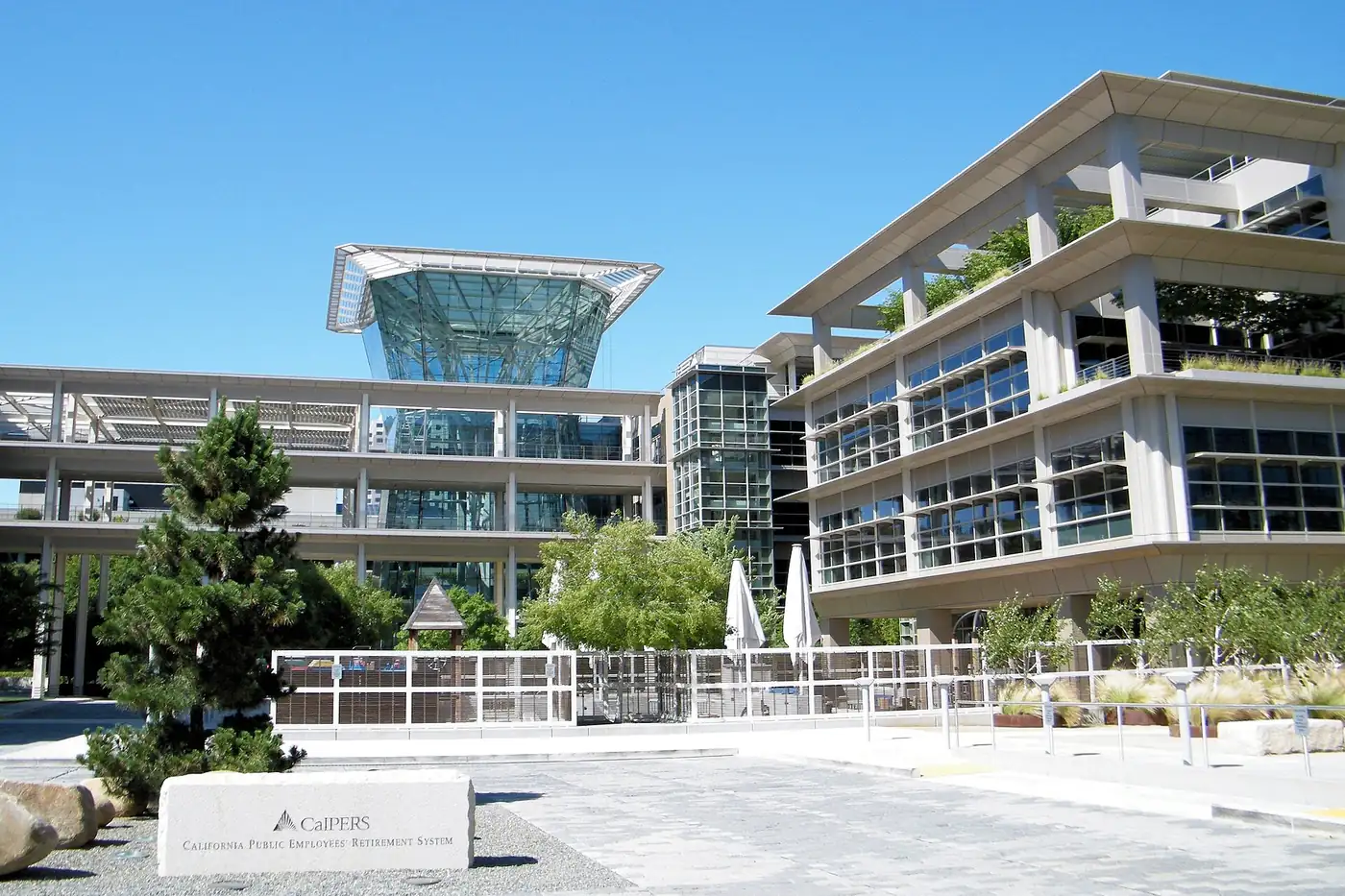
The California Public Employees' Retirement System is headquartered in downtown Sacramento and the State Teachers' Retirement System across the river in West Sacramento. Their retirees live all over the state, but the money concentrates here.
Second only to Los Angeles County
CalPERS reports that retirees and beneficiaries living in Sacramento County received $3.07 billion in pension payments in fiscal 2024-25, up from $2.37 billion five years earlier, and that the county "consistently ranks second statewide, reflecting its concentration of public sector retirees (particularly from state service)" (CalPERS). Placer County ranks ninth at $901 million. Across the system, CalPERS paid $34.6 billion to its 714,696 retired members in 2024-25, and the average state retiree receives $4,274 a month (CalPERS by the numbers).

Disability retirement: what "incapacity" means here
CalPERS disability is not the private-insurance idea of disability. The Government Code defines it as an incapacity for the member's own duties, of permanent or extended duration, expected to last at least 12 consecutive months or to result in death, decided on competent medical opinion (Gov. Code 20026). A state member must apply while still in state service, or within four months after leaving it, unless the incapacity has continued since the separation (Gov. Code 21154). Pages that open with these two rules screen out the readers who can't qualify and keep the ones who can.
Not a substitute for discipline
The statute also says the Board "shall not use disability retirement as a substitute for the disciplinary process" (Gov. Code 21156(a)(2)). That sentence is where the pension and personnel topics meet: an employee facing dismissal who also has a medical condition needs both a Personnel Board strategy and a CalPERS one, and a firm that practices both can link the two pages and say why.
The 30-day appeal to the CalPERS Board
Under the Board's regulation, an applicant dissatisfied with a staff decision appeals by filing a written notice within 30 days of the date the notice was mailed, with a statement of the facts and law; staff may grant up to 30 more days for good cause (Cal. Code Regs., tit. 2, § 555.1). The CalPERS Board's agendas then carry the administrative law judges' proposed decisions in these appeals (example, September 2026), which are public and show how similar cases came out. A firm's disability page can describe that path without promising any result.

Dividing a state pension in a divorce
Family Code 2610 tells the court to make whatever orders ensure each spouse receives their community share of any retirement plan, public or private, and, if the non-employee spouse agrees, to divide the accumulated contributions into a separate account (Fam. Code 2610). For CalPERS members, the judgment must state the date of separation, and when the account is divided the contributions and service credit earned during the marriage become two separate accounts; anything not expressly awarded stays with the member (Gov. Code 21290). Teachers fall under a parallel chapter of the Education Code (Ed. Code 22650).
That last rule, that credit not mentioned in the judgment stays with the member, is the kind of detail a spouse reads twice. Family law pages in Sacramento County that walk through it, with the system named, cover a question generic "dividing retirement" pages don't answer.
Professional license defense
Accusations before California's licensing boards, and the 15 days after service
The Department of Consumer Affairs is based on North Market Boulevard in Sacramento (DCA), and license discipline for its boards is prosecuted under the State's Administrative Procedure Act. The clients are anywhere in California: nurses, contractors, physicians, pharmacists, dentists. For a Sacramento firm this is a statewide practice run from a local office, and its search competition is statewide too.
From complaint to accusation
The Attorney General's office prosecutes license discipline for 36 consumer-affairs agencies. In fiscal 2024-25 it received 3,457 accusation referrals, and it adjudicated 2,542 matters: 55% by stipulated settlement, 29% by default, 12% after an administrative hearing and 4% by withdrawal (Attorney General's report). The same report notes that every one of those agencies can recover its investigation and prosecution costs from the licensee.
29% end by default
A licensee served with an accusation has 15 days to file a notice of defense, and the agency must send a form for it along with a statement that missing the deadline waives the right to a hearing (Gov. Code 11506; 11505). Defaults made up 29% of the adjudicated matters. Some of those licensees had left the profession, but some simply didn't understand the paper. A page titled for the exact document, "served with an accusation by the Board of Registered Nursing", reaches them inside that window.
A page for each board
Each board has its own practice act, its own disciplinary guidelines and, for some, its own statute of limitations; the report counts 16 agencies with a prescribed limitation period, generally one to five years. Most charges must be proved by clear and convincing evidence, but a few licenses tied to a business location, such as an auto repair dealer or a pharmacy, need only a preponderance. A nurse and a contractor searching from opposite ends of California type different words and need different answers, so we plan a page for each board a firm appears before, ranked by the referral counts above and by the firm's own caseload.
What each board page should carry
- The board's name as licensees say it, and the license types it covers.
- The 15-day notice of defense and what the form looks like.
- How a stipulated settlement, probation or surrender differs from a hearing.
- Cost recovery, stated as a possibility, without a figure the firm can't support.
- What happens after the board's decision, with a link to the writ page below.
Criminal defense and licensing
When a DUI arrest is also a licensing case
Search Console shows Sacramento queries such as "healthcare dui defense". The phrase is clumsy, but the need is real: for a nurse, doctor or pharmacist, the criminal case and the license case run on separate tracks, and the second one often worries the client more.
Physicians report within 30 days
Physicians, osteopathic physicians, podiatrists and physician assistants must report in writing to their licensing board any felony charge by indictment or information, and any conviction, felony or misdemeanor, including a plea of no contest, within 30 days. Not reporting is a separate offense, with a fine that can reach $5,000 (Bus. & Prof. Code 802.1). A misdemeanor DUI plea is therefore a reporting event for these licensees, and a defense page for them should say so before the plea, not after.
Nurses: alcohol is written into the practice act
For registered nurses, the Nursing Practice Act makes it unprofessional conduct to use alcoholic beverages in a way dangerous to the nurse, others or the public, or to be convicted of a criminal offense involving their consumption (Bus. & Prof. Code 2762). With the nursing board sending more accusations than any other board in the state, the overlap between a DUI page and a license page is not hypothetical in Sacramento.
The general rule for other licenses
For most other licensees, a board may suspend or revoke on a conviction only if the crime is substantially related to the qualifications, functions or duties of the license (Bus. & Prof. Code 490). Whether a single DUI is "substantially related" depends on the profession, which is exactly the question a contractor or a real estate appraiser types into a search box.
How we'd build the pages
- A DUI page for licensed professionals, separate from the general DUI page, that names the reporting duties.
- Profession-specific sections for the boards with the most referrals.
- Cross-links between the criminal defense lawyer's page and the license defense lawyer's page, if the firm has both.
- No promise about the board's outcome; a plain account of the two tracks and their timing.
For firms that defend licensees and drivers: the criminal-defense side of our work is explained here, and the audit request is here.
After the agency decides
Writs, venue and the Third District: suing the State where it sits
Every board decision, CalPERS ruling and personnel action described above can end up in court, and a lot of that litigation starts in Sacramento. The law that sends it here is old and specific, and it gives Sacramento firms a set of topics that firms in other cities rarely write about.
30 days for a writ after a state agency decides
Judicial review of a decision under the Administrative Procedure Act is by petition for a writ of mandate, filed within 30 days after the last day on which the agency could order reconsideration; the record is prepared by the Office of Administrative Hearings or the agency on request (Gov. Code 11523). The Attorney General's report notes that review under Code of Civil Procedure 1094.5 only rarely sends a case back to the agency, which is useful context for a client deciding whether to file.
Local agencies get 90 days
For decisions of a city, county or other local agency, the deadline is different: the petition must be filed no later than the 90th day after the decision becomes final (Code Civ. Proc. 1094.6). A page that covers "challenging a government decision" without separating state from local agencies hands the reader the wrong number.
Where the State can be sued
When a statute says an action against the State or one of its agencies may be brought in Sacramento County, it may also be brought in any city where the Attorney General has an office, and when the State sues in Sacramento, defendants can move the case to the Attorney General's office nearest them (Code Civ. Proc. 401). Sacramento firms that handle writs know this; writing it down tells a client in Redding or Fresno why a Sacramento lawyer can take the case.

An appeals district that runs to the Oregon border
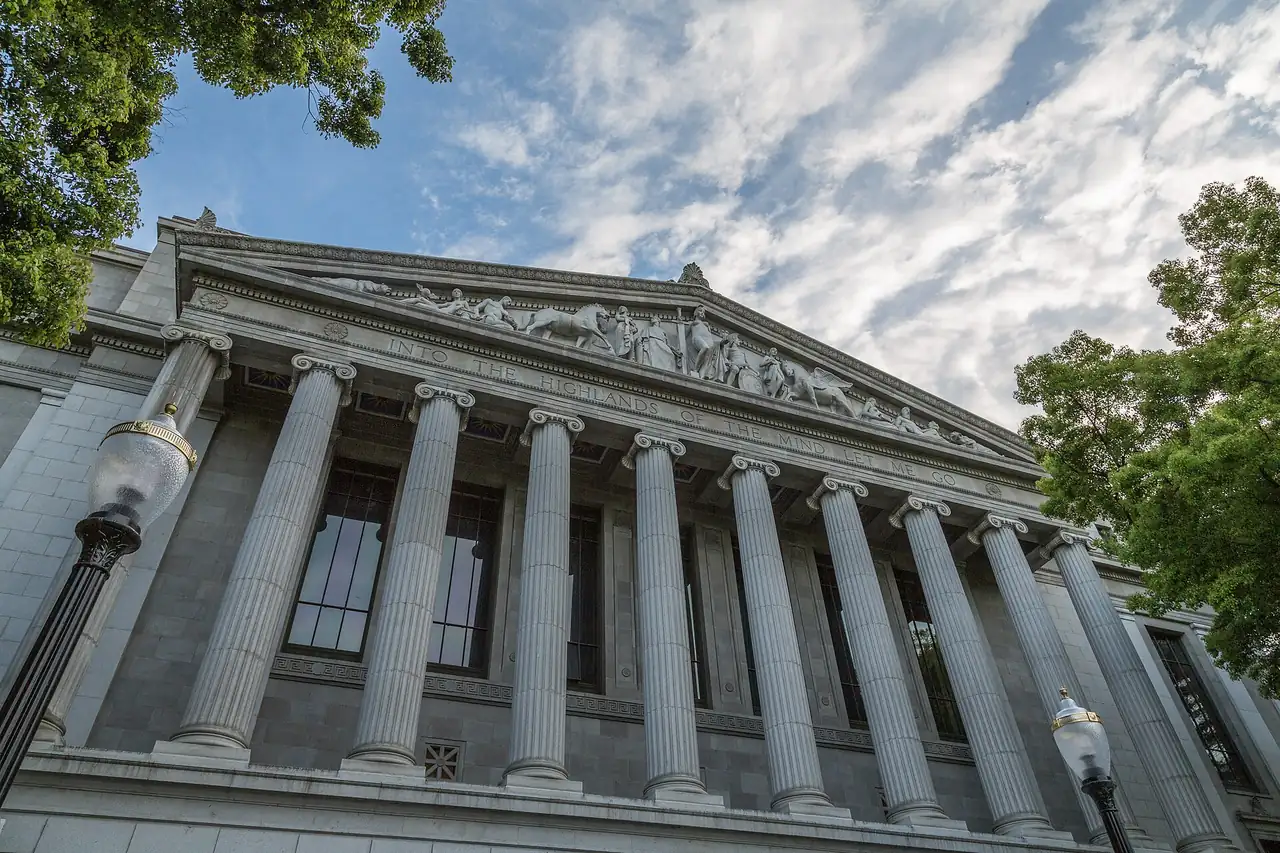
The Court of Appeal for the Third Appellate District sits in the Mosk building near the Capitol and covers 23 counties: Alpine, Amador, Butte, Calaveras, Colusa, El Dorado, Glenn, Lassen, Modoc, Mono, Nevada, Placer, Plumas, Sacramento, San Joaquin, Shasta, Sierra, Siskiyou, Sutter, Tehama, Trinity, Yolo and Yuba (Third District). For an appellate practice in Sacramento, that list is the service area, and an appeals page can say so county by county.
Mediation comes first in civil appeals
The court runs a mandatory mediation program that begins when the notice of appeal is filed. Most civil appeals are reviewed for it, and while that review is pending, the rules for designating the record and proposing a briefing schedule are suspended; conservatorship, guardianship and sterilization appeals are exempt (Third District mediation program, archived October 2026). Clients who expect an appeal to move straight to briefing are surprised by this, so an appeals page that explains it sets expectations before the first meeting.
Injury claims against the State
Before any lawsuit: the Government Claims Program
Injury firms in Sacramento handle accidents in state buildings, on state property and with state vehicles more often than firms elsewhere, simply because there is more of the State here. None of those cases can go to court until a claim has been presented and rejected, and the claim has its own office, form, fee and deadlines.
A 6-month window and a $25 fee
Injury, death and property claims have the shortest window: six months from the day the cause of action accrues, against one year for other claims. A claim against the State counts as presented on the date it reaches the Department of General Services with the $25 filing fee, or with a fee-waiver request (Gov. Code 911.2). Claims go to the Department's Government Claims Program on form DGS ORIM 006 (DGS).
Highway damage under $12,500 goes elsewhere
The program's own guidance says claims of $12,500 or less for damage on state highways, such as potholes or road debris, must be filed directly with Caltrans, and that a claim sent to the wrong office risks rejection; it also points out that the Caltrans form still says "$10,000 or less" although the limit is $12,500 (Government Claims Program FAQ, rev. September 2025). That is a small fact, but a page that states it saves a client weeks.
Late claims and the 45-day answer
A claimant who missed the six months can ask for leave to present a late claim within one year of the incident, explaining the delay; the Department must act within 45 days or the request is deemed denied (Government Claims Program FAQ). Once a claim is rejected with written notice, the lawsuit must be filed within six months of that notice; without a written notice, the limit is two years from accrual (Gov. Code 945.6).
Writing the claim page
- Lead with the six-month rule and the date it counts from.
- Name the office: the State's program for state entities, Caltrans directly for small highway claims, the city or county for local property.
- Explain the late-claim request without suggesting it is routine.
- Keep the lawsuit deadline after rejection on the same page, in its own short section.
For injury firms, our personal injury SEO page covers the rest of the work; the claim page is where Sacramento differs.
Employment cases
Civil rights and wage cases that start at a state agency
Many California employment cases begin with a filing to a state agency rather than a court. Pages that explain those filings step by step are easy to write well and rarely done.
The Civil Rights Department's intake
The California Civil Rights Department is at 651 Bannon Street, Suite 200. In employment cases, a worker must submit an intake form within three years of the date they were last harmed, and must obtain a Right-to-Sue notice from the Department before filing their own lawsuit (CRD complaint process). An employment firm's discrimination page can turn that into the first two steps of its own process.
PAGA notices go through the labor agency
Before a representative action under the Private Attorneys General Act, the employee or their lawyer must give written notice by online filing with the Labor and Workforce Development Agency and by certified mail to the employer, with a $75 filing fee (Lab. Code 2699.3). Civil penalties recovered are split 65% to the agency and 35% to the aggrieved employees (Lab. Code 2699(m)). Clients are often surprised that most of the penalty goes to the State, which is a good reason to say so on the page.
Departments 8A and 8B: class and PAGA settlement approval
Complex civil cases in Sacramento are assigned for all purposes to Department 8A or 8B. For class action and PAGA settlements the court publishes a checklist, and under Local Rule 2.99.05 moving counsel must attest that they reviewed it and that the briefing complies, or the motion is denied without prejudice; the court also posts model settlement agreements (Sacramento Superior Court, archived July 2026). A wage-and-hour firm that writes about this process shows prospective co-counsel and clients it knows the local practice.
For employment practices, the wider program is on our employment law SEO page.
The Capitol
Political law, lobbying and a calendar set by the Legislature
Only Sacramento has the Legislature, the Governor's office and the agencies that police political money within a few blocks of each other. Firms that practice political and government law compete for a small set of searches with a highly informed audience.
Who has to register as a lobbyist
Under the Political Reform Act of 1974, lobbying firms, lobbyist employers that employ in-house lobbyists, and lobbying coalitions register with the Secretary of State, and each individual lobbyist files a certification as part of that registration (Gov. Code 86100). The certification includes a photograph and a statement that the lobbyist has read and understands the Act's prohibitions (Gov. Code 86103). A political law page that walks a trade association through those filings answers a question its executive director will ask once a year.
Written advice from the FPPC
Anyone may ask the Fair Political Practices Commission for an opinion on their own duties under the Act; the Commission must issue it, or say whether it will, within 14 days. Written advice is due within 21 working days, and acting in good faith on it is a complete defense if the facts were as stated (Gov. Code 83114). For a client, the difference between an opinion and advice is not obvious, and a page that explains it is useful long after it is published.

A content calendar the Legislature writes
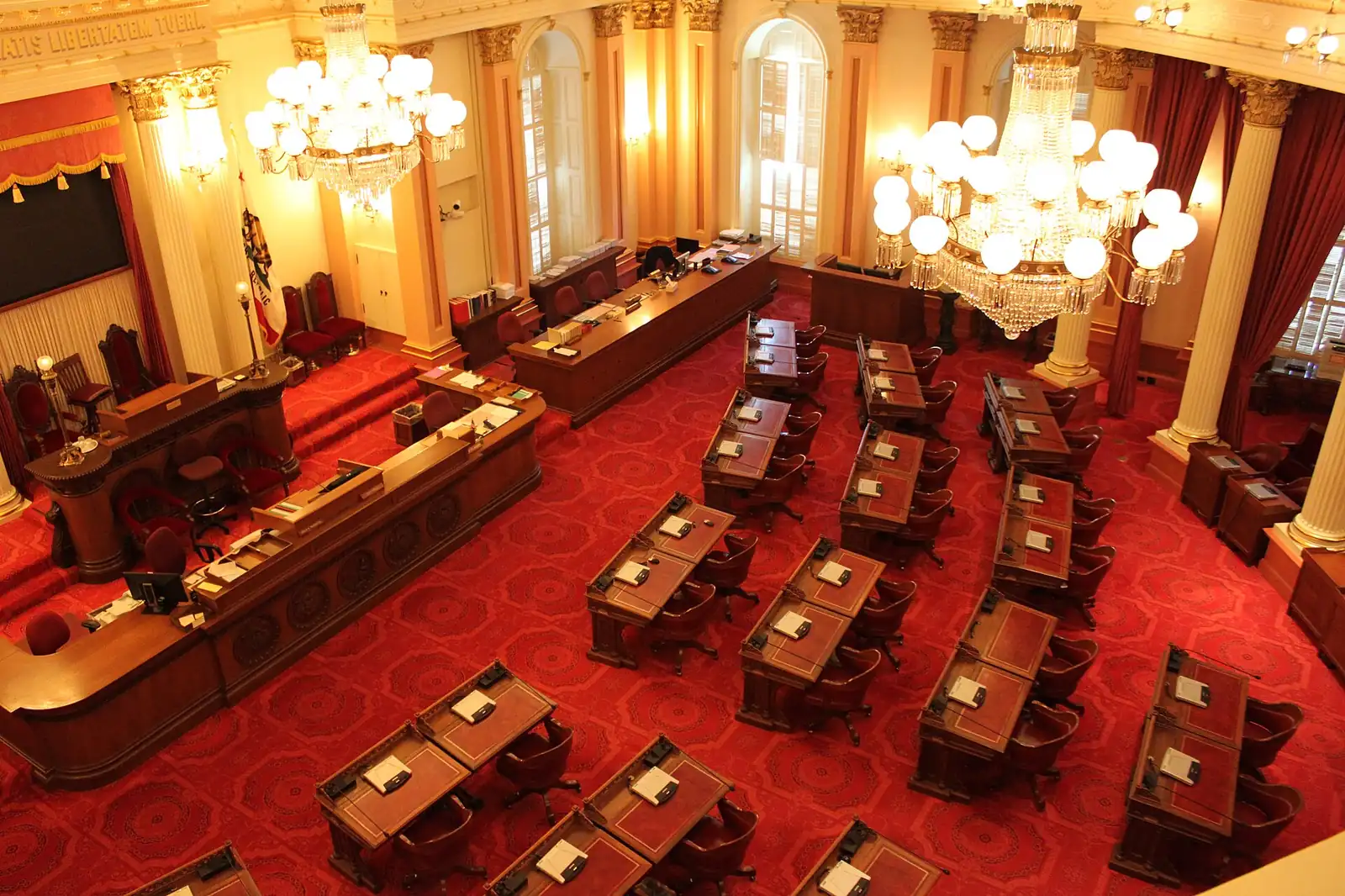
The 2026 calendar set August 31 as the last day for each house to pass bills and September 30 as the last day for the Governor to sign or veto bills passed before September 1; statutes enacted in the regular session take effect the following January 1 (2026 legislative calendar). For a Sacramento firm that gives the year a shape: explain the bills that matter to clients as they move, publish when they are chaptered, and update the practice pages themselves for January 1. Practice areas that change most often, such as employment, landlord-tenant and family law, benefit most.
Dates on a page only when the law changed
A page's "updated" date should move only when its legal content does. Bumping dates on every page each January, without new substance, teaches readers and search engines that the date means nothing. In a city where many readers can check the statute themselves, accuracy is the selling point.
Attorney bios
Former state lawyers on the bio page, and what the postgovernment rule allows
Many Sacramento attorneys spent years at a state agency, the Attorney General's office or the Legislature before joining a private firm. That history is often the strongest reason a client in a licensing, pension or regulatory matter chooses them, and the bio page is where it should be stated precisely.
The postgovernment restriction
The Milton Marks Postgovernment Employment Restrictions Act bars a designated employee or member of a state administrative agency, for one year after leaving, from representing anyone for pay before the agency they worked for or represented during their last 12 months, when the purpose is to influence administrative or legislative action or a proceeding on a permit, license, grant or contract. Appearing in a court of law is not counted as an appearance before the agency (Gov. Code 87406(d)). Members of the Legislature have a separate one-year ban on lobbying the Legislature for pay (87406(b)).
What a bio should say
- The agency and the role, in the agency's own title, with the years.
- The kind of matters handled there, without suggesting inside access or influence.
- For a lawyer in their first year out, which work they take now, if the restriction limits it.
- Bar admission and current status, matching what the State Bar shows.
Why it matters for search
Clients in this city often search for a lawyer "who used to work at" a named department. Google and AI tools can only connect a lawyer to that history if the bio states it in plain words, consistently with the lawyer's other profiles. That means writing the bio with the lawyer, keeping it to facts the lawyer confirms, and reading every line against the advertising rules linked in the service section above.
Paid search
Paid search in the capital: keeping state-job hunters off a firm's ad budget
Search Console shows Sacramento and Roseville searches for "google ads for lawyers". GLP runs Google Ads and Local Services Ads for law firms as part of our consulting CMO engagement, built around call tracking and intake so spending can be traced to consultations and signed cases. The law firm PPC page explains the program; in Sacramento, three details change how an account is set up.
Job seekers search the same words
The State hires its own attorneys, legal analysts, hearing officers and investigators, and many of them live in this market. Searches like "attorney state of california", "legal analyst sacramento" or the name of a department with "attorney" attached can come from job seekers rather than clients. Our standard negative-keyword list blocks job seekers early; a Sacramento account adds state job titles and exam names to it, then keeps adding from the weekly search-term review.
Statewide practices, local office
License defense and CalPERS appeals draw clients from all over California, while a family or DUI practice draws from the region. Campaigns can follow the same split: statewide location targeting for the first group, county-level targeting for the second, so the budget for one doesn't drain into the other.
Local Services Ads
Local Services Ads charge per lead rather than per click and rank largely on proximity, reviews and responsiveness. They work only for the legal categories Google offers, so they suit some practices on this page and not others; where no category fits, a search campaign with its own landing page does the job.
AI search
Getting a Sacramento firm into AI answers about state procedures
Search Console shows "ai seo for law firms sacramento" and "sacramento ai legal marketing company" among this page's queries. The people typing them want to know why an AI assistant names one firm and not another. We review how those tools describe a firm and write content they can quote. Here is how that work changes for the practices on this page.
The agency explains the rule; the firm explains the next step
When someone asks an AI tool about a notice of adverse action or a CalPERS denial, the answer usually draws the rule from the government page that states it. What the agency page doesn't give is the practical sequence: what to gather in the first week, what the hearing is like, how long the Board took in similar cases. A firm page that provides those details, with its lawyer named, gives the tool something to cite that the agency page doesn't.
Exact names and numbers
AI answers are built from passages, and the passages that get used carry specifics: the section number, the day count, the board's full name. A paragraph that says "you have a short time to respond" is less useful than one that says "15 days after service, under Government Code 11506". Pages should carry the second kind, with every number checked against the code before the lawyer approves it.
The same identity everywhere
Before naming a firm, these systems compare what its site says with its Google profile, its directory listings and its lawyers' bios. In Sacramento, where many lawyers have moved between government and private practice, old agency listings and outdated bios are common. Part of the work is finding those mismatches and correcting what the firm controls. The rest of the AI method is set out on our AI SEO page.
Around Sacramento
Commuter suburbs with trial courts of their own
Roseville and Elk Grove searches also reach this page ("legal marketing agency roseville", "ai seo for law firms roseville"). The region is one labor market but not one court system, and firm pages have to follow the courts.
Placer County: Roseville, Rocklin, Lincoln, Auburn
A Roseville divorce or DUI is heard in Placer's courts (Placer court), not downtown. Placer has 1,402 active attorneys against 9,001 in Sacramento County (State Bar of California), and its residents received $901 million from CalPERS in 2024-25. A Roseville page that discusses Placer's court and its many public-sector retirees is a page about Placer, not Sacramento with a different name.
Yolo County: Davis and West Sacramento
West Sacramento faces downtown across the river, but its cases go to Yolo County Superior Court. Yolo has 608 active attorneys and the region's highest share of state workers, mostly university employees in Davis. Its pages need the university's own rules for employment matters, which differ from the civil-service rules above.
El Dorado Hills sits in another county
Folsom is in Sacramento County, but El Dorado Hills, just east of it along Highway 50, is in El Dorado County, with its own Superior Court and 401 active attorneys. A family or DUI page for "Folsom and El Dorado Hills" should say which court each address uses.
Elk Grove, inside the county line
Elk Grove sits inside the county line, so a page for it needs no separate court section. It has the region's largest state-worker population outside the city: 13,899 residents, 16.4% of its employed. A firm targeting Elk Grove needs a page that mentions the commute and the employers, not a second court section.
Related pages
Elsewhere on GLP: Northern California and the state rules
Loose ends Sacramento-area firms raise
In short
Census class-of-worker data, the federal count of state-government jobs by county, CalPERS pension payments by county and the Attorney General's report on licensing accusations: the material behind a Sacramento plan, with the State Personnel Board, CalPERS, licensing, claims and Capitol work each written as its own set of pages.
Are Sacramento County employees in CalPERS?
Most are not. County workers belong to the Sacramento County Employees' Retirement System, a separate system set up in 1941 under the County Employees Retirement Law of 1937, which runs retirement, disability and survivor benefits for the county and eleven special districts. It reports 13,952 active and 14,606 retired members (SCERS). A family law or disability page that assumes every public worker in Sacramento is in CalPERS gives a county employee the wrong forms and the wrong board.
Which state-worker disputes go to PERB rather than the State Personnel Board?
Union matters. The Ralph C. Dills Act governs bargaining between the State and the organizations that represent its employees (Gov. Code 3512), and whether an unfair practice charge is justified is for the Public Employment Relations Board to decide in the first instance (Gov. Code 3514.5). Discipline of an individual civil servant stays with the State Personnel Board. A firm that handles both should keep them on separate pages, because the reader's first question is which board to file with.
Can a Stockton or Modesto firm hire GLP?
Yes, and their pages need their own courts. Stockton is in San Joaquin County, one of the 23 counties of the Third Appellate District, so its civil appeals land in Sacramento. Modesto's Stanislaus County is not on that list (Third District), so a page that sends a Modesto reader to the Sacramento appeals court is simply wrong. We plan Central Valley pages county by county for that reason.
Is there a night session for small claims in Sacramento?
Once a month. Night court at the Carol Miller Justice Center runs on the second Wednesday from 5:15 to 6:15 p.m. (the second Thursday when that Wednesday is a court holiday), with mediation, an advisory clinic workshop and Zoom hearings. Small claims cover damages up to $12,500 (Sacramento Superior Court, archived October 2026). For a consumer or landlord page aimed at people who work state office hours, the evening session is worth a sentence.
Can GLP build or rebuild a Sacramento firm's website?
Yes: GLP builds law firm websites from the ground up, with practice-area and location pages, schema markup, call tracking that works from day one and an accessibility target of WCAG 2.2 AA. Each item is described in detail on a separate page. For a Sacramento firm the build usually adds what the sections above describe: separate pages for each board, agency or appeal route the firm handles.
Will GLP look after our office computers and network?
No. Computers, phones, email accounts and practice-management software belong with an IT provider. Our technical work is limited to the website and how search engines read it: hosting checks, page speed, redirects and indexing errors. Tell us before your IT provider changes the firewall or the domain settings, because either can take a site out of Google overnight.
Does GLP publish results from client firms?
On our case studies page, which lists each published result with its own figures, period and source. We don't repeat those numbers on city pages. Past results don't guarantee future outcomes.
Is it worth writing about a pending bill?
Only with the status stated plainly. A post about a pending bill should name the bill number, its last action and the date checked, and say that it is not law. After the Governor signs it, the page can explain what changes on January 1, and on that date the practice page itself gets the update. Readers in this city follow the Legislature closely; a stale "new law" post costs a firm more trust here than elsewhere.
Are University of California workers covered by CalPERS?
Most are not. University of California staff are generally in the University's own plan, UCRP, which CalPERS treats as a separate system with reciprocal provisions for people who move between the two (CalPERS, When You Change Retirement Systems). The Census still counts university staff as state-government workers, which is why Davis tops the chart above. A "state employee" page should therefore say which employer it covers: a UC Davis Health nurse, a Department of Motor Vehicles analyst and a Folsom prison officer can all call themselves state workers and still face different rules.
What is the difference between a CalPERS appeal and a writ?
Order and forum. The appeal of a CalPERS staff decision goes to the CalPERS Board, usually through a hearing before an administrative law judge. A writ comes after the Board's final decision and asks the Superior Court to review it. A disability retirement page should show both steps in that order, with the 30-day appeal window stated once, where the appeal is described.
We take defective drug cases. Can a Sacramento firm compete with national mass-tort advertisers?
On the local and California-specific searches, yes, and that is where to start. When drug cases filed in different California courts share a common question, a party or a presiding judge can petition the Chair of the Judicial Council to coordinate them before one judge (Code Civ. Proc. 404), judged by the factors in section 404.1. A page that tells a Sacramento client whether their drug's cases are coordinated in California, and where, answers something a national intake page rarely does.
Can a Sacramento law firm use AI tools to write its pages?
It can use them, but the firm remains responsible for every statement on the page, and in a practice built on statutes and deadlines, a confident error is the main risk: AI drafts often get a section number or a day count wrong in a way that looks right. That is why the lawyer sign-off in our monthly work matters more than the tool used for the draft.
Search for your own firm the way a state worker would
Which cases should the firm be getting more of? Tell us, and a member of our team records a short video of your firm on Google and ChatGPT as a Sacramento searcher sees it, and it reaches your inbox within 48 hours.
Or call Call (661) 388-5526