
For firms that serve engineers, founders and visa holders
Lawyer SEO in San Francisco, CA
Law firm SEO and GEO in San Francisco, for a city where one worker in ten writes code or works with data.
For a San Francisco firm, our work is to be found by clients who work in software, data and science, who often hold a work visa or stock they haven't sold yet, and who are as likely to ask ChatGPT about their problem as to search Google for it.
This page covers law firm SEO in San Francisco and GEO, the work of getting cited in AI answers, for firms in the city and around the Bay. Our law firm SEO and GEO pages explain the method in general terms.
Free, done by a real person, and in your inbox within 48 hours.
Before we plan
San Francisco's clients, sorted by the work they do
A law firm's next client in this city is often an engineer, a founder or someone on a work visa. Each row below is one of those groups, how many there are, and what they need to find on a firm's site. Later sections take each group one at a time, with sources linked in the table.
| Who | How many | What they need to read |
|---|---|---|
| Software, data and math workers | 50,242; 10.5% of the employed, CA 4.4% (S2401) | Severance, equity and visa answers written for their situation |
| Residents who are not U.S. citizens | 105,751; 12.7% (DP02) | Pages that explain status questions tied to a job |
| Workers at companies that filed layoff notices | 3,667 in fiscal 2025-26 (EDD) | What the employer owed them and what a release form gives up |
| Founders raising a first round | Not counted (see founders) | The California filings and taxes that come with a new company |
| Injured by a driverless car | 138 reports statewide in 2025 (DMV, archived) | Who is responsible when nobody sat in the driver's seat |
| Their lawyers' competition | 17,730 active (State Bar) | A reason to pick one firm out of many in the same few square miles |
Our service
Search, map and AI answers: the service in San Francisco
Clients here find lawyers in more places than they did a few years ago. Some still scroll Google's results; some read the AI Overview at the top and stop there; some never open a search engine and ask ChatGPT, Claude or Perplexity instead. Our job is to make your firm one of the names on each of those surfaces, with pages your lawyers have approved. The table lists each surface and our work there.
| Where the client looks | What we do there | How we check it worked |
|---|---|---|
| Google's regular results | Practice and location pages that answer what a San Francisco client asks, a keyword map so no two pages compete, and the technical fixes that keep pages indexed | Search Console clicks and positions for the queries each page targets |
| The map and your Business Profile | Categories, services and hours kept current; a review routine that follows the rules; name, address and phone matched everywhere | Profile calls, direction requests and website clicks, month by month |
| AI Overviews and AI Mode | Answers placed early on the page, with the statute, the date and the number a reader needs, so a passage can be quoted on its own | Search Console's Performance report, and a dated record of which answers cite you |
| ChatGPT, Claude and Perplexity | Crawler access checked, pages written for the questions people put to these tools, and firm facts that match across the web | A fixed set of prompts rerun on a schedule, plus referral visits from those tools in analytics |
| Your intake | Each call and form linked to the page the client came from | Retained clients matched to the page or profile that brought them in, where intake records let us |
Consulting or done for you
Some Bay Area firms already have marketing staff and want a lawyer SEO consultant rather than an agency: a written plan, the evidence behind it, and fixes their own people carry out. Others hand the whole program to us. Either way, we begin with the free audit.
Before anything goes live it is held against California's lawyer-advertising law: RPC 7.1 to 7.5, plus the State Bar Act sections that SB 37 amended from January 1, 2026. The rule-by-rule reading is on our Los Angeles page, and a lawyer at the firm signs off.
Request the free audit and we'll show you which of these surfaces mention your firm now.
Who the clients are
Software, data and science work: the client base behind San Francisco searches
Income is the obvious difference between San Francisco and the rest of California. For a law firm the more useful one is the kind of work residents do, and the legal questions it brings, which is what the Census occupation and industry tables measure.
What San Francisco residents do for a living, against California and the U.S.
Measured against all employed people in each area; Census estimates ending 2024
- San Francisco 10.5% 26.7% 6.0%
- California 4.4% 14.5% 2.9%
- United States 3.8% 12.6% 1.9%
Use the arrow keys to read each value.
| Area | Computer and math occupations | Professional, scientific, management | Information industry |
|---|---|---|---|
| San Francisco | 10.5 | 26.7 | 6 |
| California | 4.4 | 14.5 | 2.9 |
| United States | 3.8 | 12.6 | 1.9 |
Source: U.S. Census Bureau, American Community Survey 2020-2024 5-year estimates, tables S2401 (occupation) and DP03 (industry). 'Professional, scientific and management' includes administrative and waste management services, as the Census groups them.
Computing and math jobs at more than twice the state's rate
50,242 San Franciscans work in computer and mathematical occupations, 10.5% of the 476,356 employed residents, where the state's share is 4.4% and the country's 3.8%. Add the industries the Census groups as professional, scientific and management services, which employ 26.7% of residents against 14.5% statewide, and the result is a client base that reads contracts, offer letters and equity grants for a living. They notice when a firm's page is vague.
Visa holders whose status depends on a job
105,751 residents, 12.7% of the city, are not U.S. citizens. Many of them hold employment-based visas. USCIS's H-1B Employer Data Hub shows 11,747 H-1B approvals in fiscal 2026 for employers whose mailing address is in San Francisco, including 3,112 for new employment and 4,445 for a change of employer (USCIS). The city in that file is the employer's mailing address, not necessarily where the worker works, so treat it as a measure of the companies here, not of residents.
Working from home on a weekday
In 2024, one San Francisco worker in five (21.4%) had no commute at all, against 14.1% across California (ACS 1-year, DP03). For a law firm that changes when its pages get read: during the workday, on a laptop, often with a second tab open on a competitor's site. Long, sourced pages do well with that reader; pages that hide the answer behind a contact form don't.
Many lawyers living among them
12,486 residents work in legal occupations, 2.6% of the employed against 1.3% in California. With that many lawyers living in the city, plenty of clients arrive with a name passed on by a friend. They still open the firm's site to check, and the site has to confirm what the friend said.
GEO for San Francisco law firms
What AI crawlers can read on 155 Bay Area firm sites
Generative engine optimization starts with something simpler than writing: whether the AI tools can reach a firm's pages at all, and whether those pages say clearly who the firm is. On November 4, 2026 we searched Google from San Francisco for fifteen practices, from "personal injury lawyer san francisco" to "startup lawyer san francisco", took every law firm in the top ten results and the map listings, and checked the 155 firm sites we found for the signals below. Directories, bar groups, government pages and three national brands were left out.
Training bots refused, answer bots let in
Only 3 of the 135 robots.txt files we could read blocked any AI crawler. All three blocked OpenAI's GPTBot, which collects training data; none blocked the agents that fetch pages to answer a question. The difference matters. OpenAI says a site can allow OAI-SearchBot "in order to appear in search results while disallowing GPTBot" (OpenAI); Anthropic separates ClaudeBot, used for training, from Claude-SearchBot and Claude-User (Anthropic); Perplexity says PerplexityBot "is not used to crawl content for AI foundation models" (Perplexity). Google-Extended is the odd one out: two of the three sites blocked it, and Google says the token covers both training Gemini models and "grounding" answers in the Gemini app, while it "does not impact a site's inclusion in Google Search" (Google). A firm can decline training and still be found in answers, as long as it names each agent on purpose.
llms.txt: common here, not something Google asks for
41 of the 155 sites published an llms.txt file, a markdown summary for AI agents proposed in September 2024 (llmstxt.org). Several were generated by an SEO plugin and listed every page with its meta description. Google's guidance for its own AI features says "You don't need to create new machine readable files, AI text files, or markup to appear in these features" (Google Search Central). We don't treat the file as a ranking lever. Where a client has one, we make sure it is accurate, because a stale list of practice areas is worse than none.
Structured data that says who the firm is
109 of the 127 home pages we could read carried JSON-LD structured data, but only 53 described the firm as a LegalService, Attorney or LawFirm; the rest used generic types such as Organization or WebSite, or nothing. 5 had a block that didn't parse at all, which means search engines ignore it. Google says there's no special schema needed for AI features, and we agree that markup isn't a shortcut. Its use is plainer: it states the firm's name, address, phone, practice areas and lawyers in one consistent record, which helps any system match the firm across its profile, its directories and its site.
Firewalls that turn visitors away
28 of the 155 sites didn't return their home page to our request; 25 of them answered with an access-denied page. From outside we can't tell whether OpenAI's or Perplexity's verified crawlers get the same treatment. But bot protection set at its strictest can turn away more than spam, and a firm usually doesn't know. With a client's permission, we check the firewall and server logs for refused visits from the AI agents above.
Changes we make on a client's own site
- robots.txt rules that name each AI agent on purpose, with the firm's choice on training written down.
- Firewall settings that let verified search and answer crawlers through.
- One JSON-LD record for the firm, using LegalService and Attorney types, that validates.
- An llms.txt file only if the firm wants one, kept in step with the site.
- Answers near the top of each practice page, short enough to be quoted whole.
Employment law
Layoffs and WARN notices: employment pages for tech workers who lost a job
California's Employment Development Department publishes every WARN notice it receives. Its report for July 1, 2025 to June 30, 2026 lists 1,593 notices covering 81,748 employees statewide. The Bay Area counties account for a large share, and the names on San Francisco's list read like the city's tech directory.
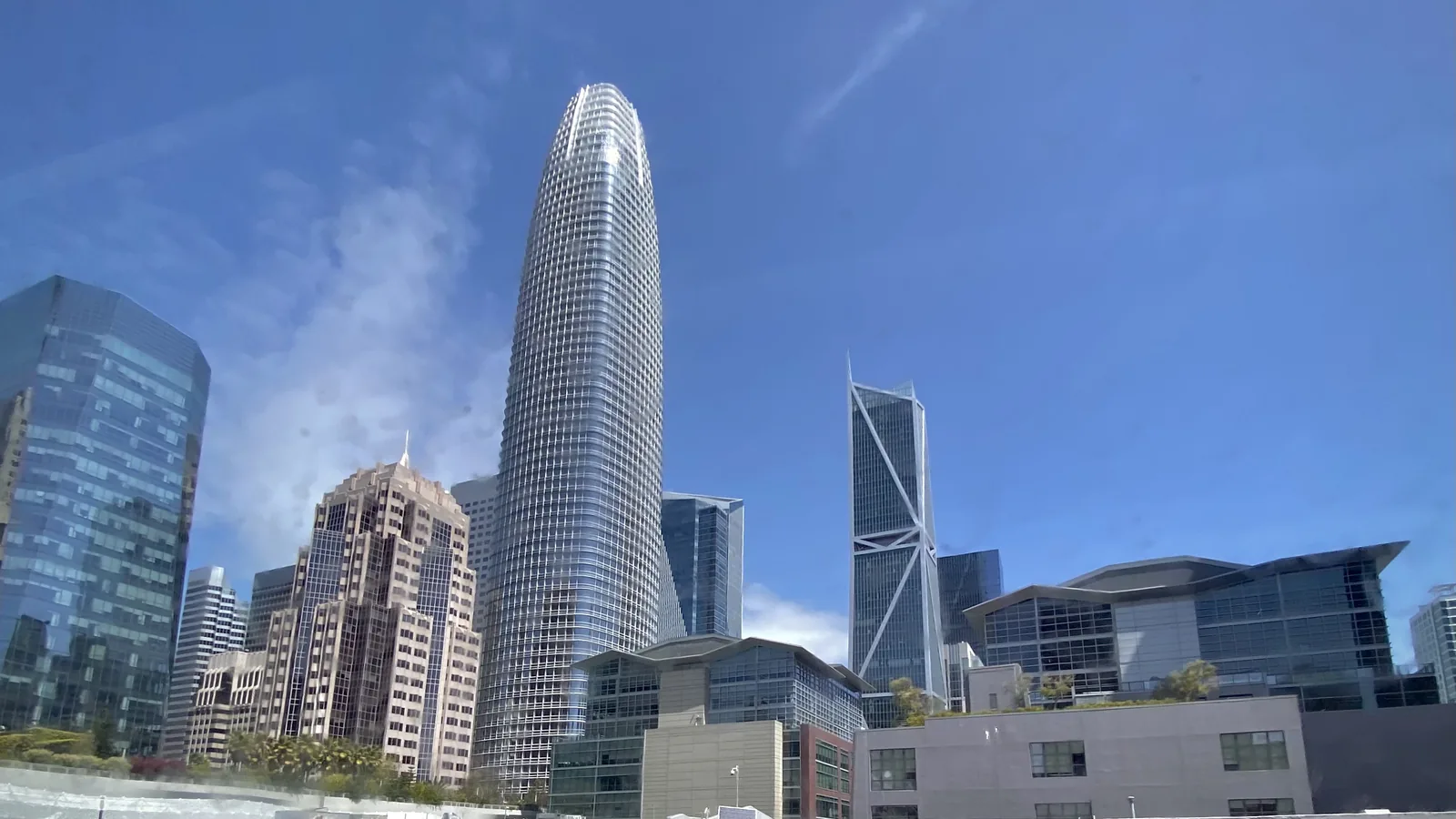

San Francisco's entries in the file
The 54 San Francisco notices in that year covered 3,667 employees. After Salesforce, the largest included Meta Platforms and Atlassian at 252 each, Cloudflare at 224 and eBay's closure at 198, alongside non-tech employers such as a mental health nonprofit. The current report, from July 1 to November 2, 2026, already lists 16 notices and 2,430 employees in the county. Each notice is a group of people who may need a lawyer within days of reading it.
The thresholds a page has to get right
California's WARN Act sets its own thresholds. It covers an establishment that employs, or has employed in the preceding 12 months, 75 or more people, and a "mass layoff" is 50 or more employees laid off in any 30-day period; an employee counts after 6 of the past 12 months on the job (Labor Code 1400.5). The employer must give 60 days' written notice to the employees, the EDD, the local workforce board and the city and county (Labor Code 1401). A page that states these numbers lets a reader test their own layoff against them before calling.
What a laid-off engineer searches for
- Whether the 60 days' notice was given, and what is owed if it wasn't.
- What a separation agreement releases, and whether its terms are negotiable.
- What happens to unvested stock or options at termination, under the plan documents.
- Whether a layoff that hit older workers or people on leave was discriminatory.
- For visa holders, the length of their stay, covered in the next section.
Immigration law
Visa holders after a layoff: the 60 days an immigration page has to explain
For an H-1B worker, losing a job starts a clock. Federal regulations at 8 CFR 214.1(l)(2) say a person in E-1, E-2, E-3, H-1B, H-1B1, L-1, O-1 or TN status, and their dependents, won't be treated as out of status "solely on the basis of a cessation of the employment" for up to 60 consecutive days or until the end of the authorized stay, whichever is shorter, once in each validity period. DHS may shorten or eliminate the period, and the person may not work during it unless otherwise authorized.
Job changes are routine here
The USCIS figures in the section above show change-of-employer approvals as the largest category for San Francisco employers in fiscal 2026: 4,445 of 11,747. Movement between employers is routine here, and so is the layoff that interrupts it. An immigration firm that wants the employment-based client needs a page that answers the question in the order it's asked: how many days, from when, and what can be filed before the days run out.
Pages that answer the question in the reader's order
- "I was laid off on an H-1B: how long can I stay?", with the regulation quoted and the "whichever is shorter" rule explained.
- Options inside the 60 days: a new employer's petition, a change of status, or departure.
- What the grace period means for a spouse in H-4 status.
- How severance pay and the last day on payroll affect the start of the count, written with the firm's own lawyer's view.
Employment and immigration on the same desk
The same person usually needs an employment lawyer and an immigration lawyer in the same week. Firms that practice both can link the two pages; firms that practice one can say plainly what they don't handle. Either way, a reader who finds both answers in one place stays on that site.
Business and startup law
Founders, early funding rounds and the California filings that follow
Startup lawyers compete on a narrow set of searches, and the founders typing them are reading closely. The filings below are California's own, and a firm that explains them accurately earns the founder's trust before the first call.
The notice after a private sale of stock
When a startup sells shares to a small group of investors, it usually relies on the exemption in Corporations Code 25102(f): no more than 35 purchasers, buyers with a preexisting relationship or enough sophistication to protect themselves, buying for their own account, and no advertising of the offer. The Commissioner's rule requires a notice to be filed "no later than 15 calendar days after the first sale of a security in the transaction in this state", and the fee runs from $25 for an offering of $25,000 or less to $300 for one over $1,000,000 (DFPI notice packet). The statute adds that missing the notice doesn't by itself cost the company the exemption, a detail founders worry about.
The $800 question
Founders ask about California's minimum franchise tax early and often. Under Revenue and Taxation Code 23153, corporations subject to it pay "a minimum franchise tax of eight hundred dollars ($800)" each year, but a corporation that incorporates or qualifies on or after January 1, 2000 isn't subject to it in its first taxable year. That first-year rule applies to corporations, not to LLCs, which is the kind of distinction a founder's page should state in a sentence.
Pages that bring founders to a firm
- A step-by-step page on the 25102(f) notice: who files, when, and what it costs.
- The minimum franchise tax by entity type, with the first-year rule for corporations.
- Founder stock and vesting, written for people who have just incorporated.
- What changes when a company hires its first employees in San Francisco, which links to the city ordinances further down.
Family law
Stock options and RSUs when a marriage ends
In a city where so many people are paid partly in equity, the stock grant is often the hardest asset in a divorce. California's courts have dealt with it for four decades, and the two leading cases give a family law firm the backbone of a page that ranks for the questions engineers and their spouses ask.
The Hug time rule
In In re Marriage of Hug (1984), the Court of Appeal held that a trial court "has broad discretion to select an equitable method of allocating community and separate property interests in stock options granted prior to the date of separation", and approved a time rule that measures the community share from the start of employment to the date of separation, set against the time from the start of employment to the date the options could be exercised.
The Nelson variation
Two years later, in In re Marriage of Nelson (1986), the court upheld a formula whose numerator ran "from the date of grant of each block of options to the date of the couple's separation", with the denominator from grant to exercisability. In short, Hug measures from the hire date and Nelson from the grant date, and the choice between them turns on what the options were granted for.
What an engineer's spouse needs on the page
- A worked example with real grant dates, a separation date and vesting dates, showing both formulas side by side.
- The difference between options and restricted stock units, and why the formula question still applies to units that vest after separation.
- Which documents to collect: the grant notices, the plan, the vesting schedule and the latest brokerage statement.
- A plain statement that the court has discretion, so no page can promise which formula a judge will use.
Personal injury
Driverless cars on San Francisco streets: injury pages for a new kind of crash


Robotaxis carry paying passengers in San Francisco at all hours. For an injury firm, that is a new kind of claim with its own statute, its own evidence and its own regulators, and very few firm pages explain it with the law in hand.
Who the "operator" is when nobody is driving
California defines the operator of an autonomous vehicle as "the person who is seated in the driver's seat, or, if there is no person in the driver's seat, causes the autonomous technology to engage" (Vehicle Code 38750(a)(4)). That sentence moves the question of responsibility from a driver to the company that runs the car, and it is the first thing an injury page on robotaxi crashes should quote.
Sensor data the company must keep
The same section requires an autonomous vehicle to capture and store sensor data for at least 30 seconds before a collision and to preserve it for three years after the crash. For a client, that means the most important evidence exists and is held by the company. For the firm's page, it is the reason to explain a preservation letter early.
When a robotaxi breaks a traffic law
AB 1777 added Vehicle Code 38752: a peace officer may issue a "notice of autonomous vehicle noncompliance" to the manufacturer, which must report it to the DMV within 72 hours. The DMV made the process operative on July 1, 2026 (AVIM 2026-002). The statute also says such a notice "shall not create a presumption that the autonomous vehicle is unsafe", which a careful page should say as clearly as it reports the notice itself.
Who holds which permit
The DMV lists Waymo, Nuro and Mercedes-Benz as authorized to deploy autonomous vehicles, and several companies, including Zoox in San Francisco, as testing without a safety driver (DMV). On the CPUC's list, Waymo is the only carrier with a driverless deployment permit (CPUC). Which company ran the car, and under which permit, decides which regulator holds its records.
Where crash records are now kept
The DMV's page that listed individual collision reports is gone. For crashes reported on or after April 28, 2026, the data comes from the federal NHTSA reports that manufacturers submit, and the DMV now links to a dashboard run by UC Berkeley's SafeTREC (TIMS). A page that tells a reader where to look for a report on their own crash saves them a dead end.
Bankruptcy
Bankruptcy pages for a county where the means test runs high
Search engine optimization for bankruptcy attorneys in San Francisco starts with the numbers that decide a case, and in this county those numbers are unusual. Few practices depend so directly on where the client lives.
A median income that a local salary passes easily
For Chapter 7 cases filed on or after July 15, 2026, the U.S. Trustee uses a California median family income of $79,253 for one person, $102,797 for two, $116,541 for three and $139,071 for four (U.S. Trustee Program). Many San Francisco salaries sit above those lines, which sends the filer to the full means test and its expense allowances.
Housing allowances set for San Francisco
The allowances help. The IRS housing and utilities standard used in the means test gives a family of four in San Francisco County $5,776 a month: $888 for non-mortgage costs and $4,888 for the mortgage or rent. In Fresno County the same family gets $2,883. A page that shows the San Francisco figure, with its date, answers a question a statewide page can't.
The homestead exemption at its cap
Under Code of Civil Procedure 704.730, the homestead exemption is the greater of $300,000 or the countywide median sale price for a single-family home in the prior year, capped at $600,000, with both figures adjusted each year for inflation. Census estimates put a typical owner-occupied home in the city at $1,394,500 (ACS DP04), far above the cap, so San Francisco homeowners claim the ceiling. A Senate Judiciary Committee analysis from June 2026 gives the 2026 adjusted figures as $373,175 and $746,350 (AB 2782 analysis); we quote that source as an analysis, not as the statute.
Where San Francisco cases are filed
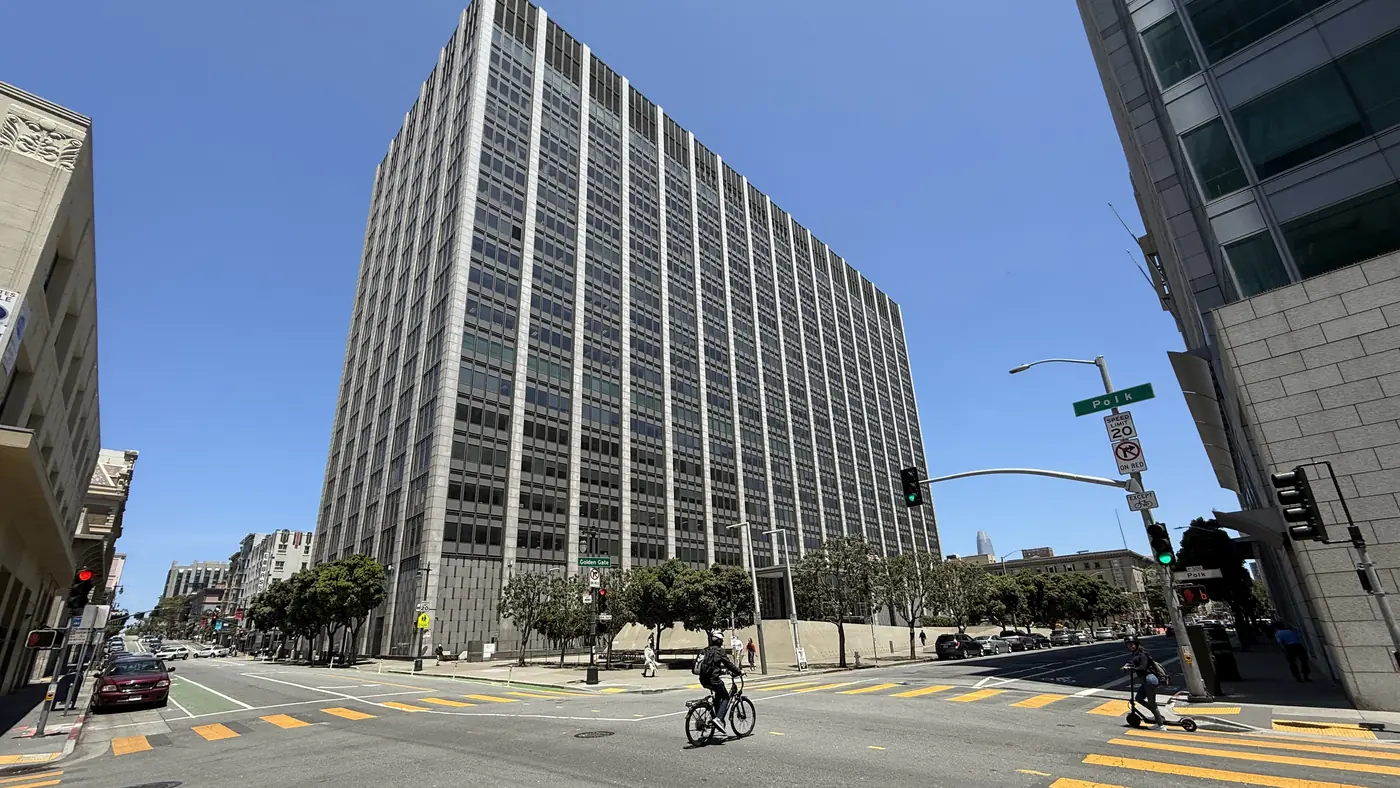
The Bankruptcy Court for the Northern District of California hears San Francisco, Marin and San Mateo County cases in its San Francisco division, with the division office at 450 Golden Gate Avenue, 18th floor (B.L.R. 1001-3). Filings from Alameda and Contra Costa go across the bay to Oakland.

San Francisco employers
Health care spending and parental leave: duties only San Francisco employers carry
Two city laws go further than state law and reach almost every company that grows past 20 people. Employer-side firms write about them for clients; employee-side firms write about them for workers who weren't paid what the law requires.
The Health Care Security Ordinance
Employers with 20 or more workers must spend a minimum amount on health care for employees who have worked for them more than 90 days and regularly work at least 8 hours a week in San Francisco (OLSE). For 2026 the rate is $2.74 an hour for employers with 20 to 99 workers and $4.11 for 100 or more, rising to $2.99 and $4.49 on January 1, 2027. Managerial, supervisory and confidential employees earning more than $128,861 a year in 2026 are exempt (OLSE administrative guidance).
The Paid Parental Leave Ordinance
Employers with 20 or more employees worldwide must pay supplemental compensation to employees bonding with a new child, on top of California Paid Family Leave, up to a weekly cap of $2,522 in 2026 (OLSE). Today an employee qualifies after 180 days with the employer. From January 1, 2027, employers with 100 or more employees must cover people after 90 days, and from January 1, 2028 the 90-day rule applies to both sizes.
What a startup reaching 20 employees needs to read
Twenty is the threshold for both laws, which makes it a natural page for a firm that advises young companies: what changes on the day a company hires its twentieth person, counted worldwide for parental leave. That page also catches the founder from the section above, a year or two later.
Beyond the city
Beyond the city line, fewer lawyers per county
Searches such as "fremont lawyer seo" and "fremont attorney seo" reach this page because San Francisco is the name people attach to the region. Around the Bay the market is thinner, and the State Bar's own counts show by how much.
Lawyer counts county by county
The State Bar lists 17,730 active licensees in San Francisco County, 9,514 in Santa Clara, 7,479 in Alameda and 4,838 in San Mateo (State Bar of California). Alameda County has about twice San Francisco's population but fewer than half its active lawyers, so a Fremont or Hayward firm often faces thinner local competition than one downtown.
Federal divisions around the bay
Federal civil work splits by geography too. Under the Northern District's Civil Local Rules, a case arising anywhere from Sonoma County down to San Mateo, Contra Costa or Alameda is assigned to San Francisco or Oakland, and cases from Santa Clara, Santa Cruz, San Benito and Monterey are assigned to San Jose. A firm whose federal work runs through Oakland should say so on its pages, rather than borrowing San Francisco's address.
Separate pages, separate reasons
A firm with offices in two Bay Area cities needs a page for each one only if each can say something the other can't: its own Superior Court, its own clients, its own map listing. When the only difference would be the city name, we recommend one page and a clear list of the places the firm serves.
GLP
What working with us looks like week to week
Bay Area firms work with our West Hollywood team remotely, over video and through a reporting view that is open between meetings. The people who will do the SEO, writing and development are introduced on our team page, and our how we work page lists the six factors that set the monthly fee. There is no long contract to sign. No one, including us, can promise where a page will rank or whether an AI tool will cite it, and the written scope says that in plain terms.
Nearby
More reading for Bay Area and valley firms
Questions we get from Bay Area partners
In short
Census occupation and citizenship data, the state's WARN layoff file, USCIS H-1B approvals, DMV and CPUC records on driverless cars, U.S. Trustee means-test tables and our own check of 155 Bay Area firm sites on November 4, 2026: the material behind a San Francisco plan.
How should a San Francisco firm compare lawyer SEO companies?
By asking each one for things that can be checked. Ask to see Search Console clicks for a client's site over two equal, dated periods, not a "visibility score". Ask who writes the pages and which lawyer at your firm approves them. Ask what they would change on your site in the first month and why. Any agency that promises a ranking position, or calls itself the best, is promising something Google doesn't sell. We keep the complete checklist in a separate guide.
What should a San Francisco injury firm write about that a generic injury page leaves out?
People hurt on foot. The city recorded 43 traffic deaths in 2024, the most since 2005, and 24 of the people killed were walking; 19 of the 43 deaths happened on the city's Vision Zero High Injury Network, and unsafe speed was the most cited primary collision factor, in 11 of them (Vision Zero SF 2024 report). An injury page that names the High Injury Network corridors its clients were hurt on reads as local in a way that a freeway-crash template can't.
What changed for estate planning pages when Proposition 19 took effect?
The parent-child exclusion now covers only a family home that becomes the child's principal residence within one year of the transfer, under Revenue and Taxation Code 63.2, and the value it shields is capped. For transfers from February 16, 2025 through February 15, 2027 the cap is the home's taxable value plus $1,044,586, according to the Board of Equalization. In a city of high home values, a page that works through what happens above that cap answers the question an heir actually has.
Can a San Francisco judge sign a U visa certification?
Yes. Judges are among the certifiers federal law allows for Form I-918, Supplement B, and the Superior Court's Presiding Judge assigns every request its Civil Division receives to a judge designated to sign them. The court also notes that the certification is required for eligibility but doesn't grant status by itself (San Francisco Superior Court). An immigration firm's U visa page can explain that route step by step.
Do criminal defense pages need to mention the Community Justice Center?
Yes, if the firm defends people arrested in the Tenderloin, South of Market, Union Square or Civic Center. Those neighborhoods are the geographic area of the Community Justice Center, a court at 575 Polk Street paired with a social service center next door at 555 Polk (San Francisco Superior Court). A defense page that explains how that court works differs from every page written for the Hall of Justice alone.
Is there a free way to mediate a San Francisco probate fight?
Probate is heard in Department 204 at 400 McAllister Street, and the court runs a Probate Pro Bono Mediation Program with two panels, one for estates and trusts and one for conservatorships and guardianships (San Francisco Superior Court). A trust-litigation page that explains how a case is referred to the panel gives a family a lower-cost path to read about before they call.
Where does a complex commercial case land in San Francisco Superior Court?
Departments 304 and 613 of the Superior Court, both at 400 McAllister Street. A case counts as complex under California Rules of Court rule 3.400 when it "requires exceptional judicial management" (Complex Civil Litigation). A page that tells an owner what that label does to cost and schedule answers a question they'll ask at the first meeting anyway.
Is there anything specific about asbestos cases in San Francisco?
Yes, they have their own department and their own rule. Asbestos actions follow San Francisco Superior Court Local Rule 20, and law-and-motion and discovery hearings are held on Tuesdays in Department 502, in person or by Zoom (Asbestos Department). Mass tort firms that file here can write pages for clients and referring lawyers around that calendar.
What does a family law page in San Francisco need to say about the ACCESS Center?
That it helps, but isn't a lawyer. The court's ACCESS Center gives legal information and referrals, may help both parties in the same case, and says plainly that what people tell it "is NOT confidential" (San Francisco Superior Court). A family firm's page can state that difference without talking down to the free service.
What changed in the Fair Chance Ordinance in 2026?
Amendments took effect on August 10, 2026, and employers had to post an updated notice. The ordinance covers employers with 5 or more employees, bars questions about arrest or conviction records before a conditional offer, and lists records an employer may never consider, such as most convictions more than 7 years old (OLSE). Employment pages for applicants should say which version of the rules applied on the date of the decision.
We practice AI or technology law. Who outranks us?
Mostly with practice pages written for that exact subject, and with the city's law school. In a separate check we ran on November 4, 2026, UC Law San Francisco's AI law pages ranked on page one for five of the eleven tech-related searches we tried with "san francisco" in them. A smaller firm tends to do better with pages on narrow questions a client actually brings, such as a specific California statute or a contract clause, than with a page that tries to cover "AI law" as a whole.
Can we see AI Overview clicks in Search Console?
It does, but not separately. Google says sites that appear in AI features "are included in the overall search traffic in Search Console" and are reported in the Performance report under the Web search type (Google Search Central). So a San Francisco firm can see the clicks, but not which of them came from an AI answer; that is why we keep our own dated record of the answers that cite a client.
See what ChatGPT and Google say about your firm today
Send us your site and the cases you'd like more of. Two days later you get a screen recording, made by a person, of how Google and ChatGPT present your firm to someone searching from San Francisco.
Or call Call (661) 388-5526