
For law offices from downtown Mesa out to Ellsworth Road
Lawyer SEO in Mesa, AZ
SEO for Mesa law firms whose clients own the house but rent the lot.
One Mesa home in eight is a mobile home, and most of the people living in them own the house and rent the lot it stands on. Their legal questions run on Arizona's park statutes, vehicle-style titles and a hearing office most firms never write about. We plan a firm's site, map listing and AI presence around them and around the relatives who help them.
This page is about Mesa: who your clients are, the Arizona statutes behind their problems and what that means for your site. GLP's general law firm SEO service, which is not tied to any city, is described separately.
Free, done by a real person, and in your inbox within 48 hours.
Mesa at a glance
Who owns the house, who owns the ground: Mesa's households in a single table
Every row compares Mesa with the rest of Maricopa County, meaning the county with Mesa taken out, so the contrast isn't diluted by Mesa's own numbers. All of it is American Community Survey data for 2020 to 2024; the small tag beside each measure opens the Census table.
| Measure | Mesa | Rest of Maricopa County | What it changes for a firm |
|---|---|---|---|
| Mobile homes among all housing DP04 | 12.5% (27,843) | 3.5% (58,326) | Park statutes, titles and relocation rules are mainstream topics here, not a niche. |
| Occupied mobile-home and RV households B25032 | 19,232, 9.7% of households | 53,169, 3.5% | A large, reachable client group that lives in a few dozen dense communities. |
| Of those, householder aged 65+ B25125 | 60.6% | 35.7% | Estate, probate and elder matters arrive bundled with a park tenancy. |
| Those homes owned, not rented, by the household B25032 | 82.9% | 77.2% | The owner is also a tenant, so housing pages need both sets of rules. |
| Residents 65 and older DP05 | 17.5% (89,374) | 16.1% | Only a little older than the county overall; the age gap is concentrated in the parks. |
| Mobile-home and RV households in homes built before 1980 B25127 | 29.0% (5,575) | 38.1% | Mesa's park homes skew newer than the county's, which matters when a park closes and a home has to move. |
The service
Retirees, park residents and the relatives who help them: what Mesa law firm SEO is built around
Most of a Mesa firm's searches look like anyone else's: "estate planning attorney Mesa AZ", "divorce lawyer near me". What differs is who types them and what they are really asking. A good share of the people behind those searches own a home they cannot easily move, on land someone else can sell, under a statute that most firm websites never mention. Each card starts from something a Mesa partner might reasonably ask and explains how our work answers it. We're a West Hollywood, California agency, so Mesa partners meet us by booked video call.
"Will people searching from Mesa find us before the Phoenix firms?"
We open with a no-cost audit of your searches, run from your part of Mesa for the matters your firm most wants to grow. It shows where downtown Phoenix firms are outranking you, and why, before anyone talks about a plan.
"Our clients live in parks along Main Street. How do we reach them?"
With pages built on the statutes that govern their homes: lot rent notices, rule changes, park closures, titles. Each page names the Arizona section, links the text on azleg.gov and says plainly what it covers and what it doesn't, so a resident, or the daughter helping her, can trust it before calling.
"What happens to our map listing?"
Your Business Profile gets the same attention as the site: the right primary category, accurate hours, real photos of the office, and reviews asked for only in the ways Google's review policy permits. The survey further down counts how many firms Google lists for everyday Mesa searches, so you can see the field you are entering.
"Will ChatGPT ever mention us?"
The audit captures how those assistants describe your firm at the moment we run it. The pages we write are built to be quoted: a short, sourced answer near the top, the statute linked, and the same facts about your firm everywhere it appears online. Which sources an assistant picks is outside anyone's control, ours included.
"We need calls this quarter, not next year."
In that case paid search carries the phones while the new pages are still climbing. Every call is traced to the ad that produced it from launch, and the monthly report sets calls and, where your intake data allows, signed cases next to spend. The ad budget itself is separate from our fee.
"Who checks that the pages are right?"
Before any page goes up, we mark the lines that call for legal judgment, and nothing stating Arizona law is posted until one of the firm's attorneys has approved it. You pay a monthly retainer, priced once we've seen your market; firms that also want paid media and intake overseen choose the Consulting CMO version.
See your firm the way a Main Street park resident would find it today. Get My Free Audit
Census housing data
Mobile homes in Mesa against the rest of Maricopa County
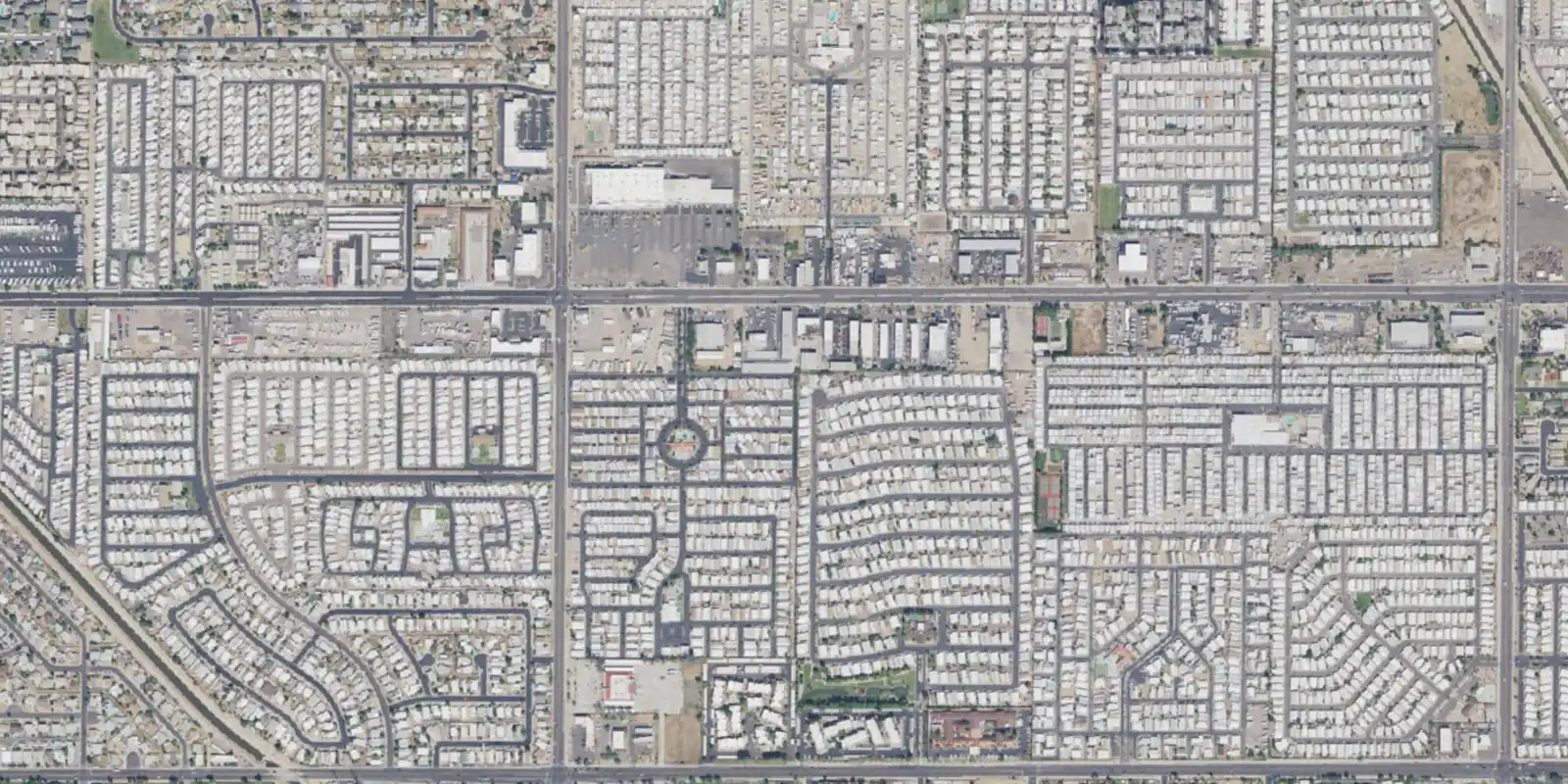
The American Community Survey asks what kind of building each housing unit is. In Mesa, 27,843 of 222,992 housing units are mobile homes, against 3.5% in the rest of the county and 2.8% in Phoenix. Put another way, Mesa holds about 11.8% of Maricopa County's housing units and 32.3% of its mobile homes. Any plan for a Mesa firm has to start from them.
Owned homes on rented ground
Of the 19,232 occupied mobile-home and RV households in Mesa, 15,947 own the unit they live in (ACS B25032). In a park, that ownership stops at the skirting. The space underneath is rented, so the same household is a homeowner when it sells, insures or leaves the home to someone, and a tenant when the rent goes up or the park changes hands. Legal pages written for either role alone miss half of the reader's situation.
"Mobile home" and "manufactured home" are not the same thing in Arizona law
Arizona's housing statute defines a mobile home as a structure built before June 15, 1976 on a permanent chassis, and a manufactured home as one built to the federal construction and safety standards that took effect after that date (A.R.S. § 41-4001). The Census Bureau's category lumps both together. Clients use the words interchangeably; a firm's page should use both in its text, because readers search both, while stating which one the law in question covers.
How old the homes are
Year built is self-reported, but the pattern is clear enough. Mesa's units cluster in the two decades from 1980 to 1999 (8,331), with 4,945 more from 2000 to 2019 and just 381 newer than that (ACS B25127). A fifty-year-old home raises different questions from a new one: whether it can survive a move, whether an insurer or lender will touch it, whether its title shows the right owner after decades of private sales.
Who heads these households
Park households in Mesa are mostly headed by people past 65
Table B25125 cross-tabulates the age of the householder with the type of building. In Mesa the person heading a mobile-home or RV household is 65 or older in 60.6% of cases. Across all Mesa households the figure is 27.5%, almost exactly the national rate. The age skew is not a feature of the city as a whole; it lives in the parks, many of which are age-restricted communities.
Age of the householder: park homes against every home
Mobile-home and RV households compared with all households, ACS 2020-2024
- Mesa 60.6% 27.5%
- Rest of Maricopa County 35.7% 25.6%
- Arizona 44.3% 30.1%
- United States 30.6% 27.5%
Use the arrow keys to read each value.
| Area | Mobile-home and RV households headed by 65+ (%) | All households headed by 65+ (%) |
|---|---|---|
| Mesa | 60.6 | 27.5 |
| Rest of Maricopa County | 35.7 | 25.6 |
| Arizona | 44.3 | 30.1 |
| United States | 30.6 | 27.5 |
Source: U.S. Census Bureau, American Community Survey 2020-2024 5-year estimates, table B25125 (tenure by age of householder by units in structure).
Park homes: one in five older Mesa households lives in one
Mesa has about 54,674 households headed by someone 65 or older, and 11,646 of them live in a mobile home or RV. For an estate, elder or probate practice, that means roughly one prospective client in five will have a home that is titled, taxed and inherited under different rules from a house on its own lot.
The second reader on the page
An older client rarely handles a park dispute or an estate alone. A son reads the rent notice, a niece looks up what happens to the home now that her aunt has died, a neighbor on the residents' committee researches a rule change for everyone. Pages that work for this audience answer the person doing the research as well as the person whose name is on the lease: they say who can act for the resident, what documents to gather and which deadline is already running.
Phone first, and a page that survives being printed
Many of these clients will call rather than fill in a form, and some will print the page and bring it to the office. We put the phone number in plain text at the top of every practice page, track calls to the page that produced them, and keep statute citations and deadlines in the body text instead of in images or expandable widgets that disappear on paper.
Where demand comes from
Matters a park household brings to a Mesa law firm
Park residents need the same lawyers as everyone else, but the way their problems combine is particular. A single phone call can involve a lease, a title, a will and a government agency. These are the practices that see that demand and the angle each one's pages should take.
Landlord and tenant work on both sides
Residents need counsel on rent increases, rules and evictions; park owners need it on notices, rule drafting and redevelopment. Arizona's park act is long and specific, and a firm that publishes clear pages on it competes with very few other law firm pages, because most landlord-tenant content in Arizona is written for apartment renters.
Estate planning and probate
The home is often the largest asset in the estate, yet it isn't real property, so the usual deed-based planning doesn't reach it. And whoever inherits it has to be accepted by the park before moving in. The estate section further down deals with both.
Elder law and guardianship
When a resident can no longer manage, someone has to deal with the park, the title and the bills. Pages that explain how a power of attorney or a guardianship works with a park tenancy, and what the park can ask to see, meet adult children at the moment they start searching.
Consumer claims about homes, dealers and installers
Buying, selling, moving or repairing a manufactured home runs through licensed dealers, brokers and installers regulated by the Arizona Department of Housing, which also manages a recovery fund for some consumer losses. A firm that writes about it addresses a problem few competitors do.
Real estate and business work for park owners
Park sales, redevelopment and change-of-use notices bring transactional work. Owners and buyers research these questions too, and the pages that answer residents' fears are the same ones that show an owner the firm knows the statute.
Title 33, chapter 11
Lot rent, park rules and the 90-day notice: Arizona's park act as page content
The Arizona Mobile Home Parks Residential Landlord and Tenant Act fills chapter 11 of Title 33. It applies when a person rents a space for a mobile home they own, and it differs from the general act for apartments and houses in ways a resident would never guess. Each topic below can carry a practice page or a section of one.
Rent increases need 90 days' written notice
At the end or renewal of a rental agreement, the park may raise or lower rent, but it must tell the tenant in writing, by first-class or certified mail or by hand, at least 90 days before the agreement expires or renews (A.R.S. § 33-1413(G)). The park needn't give a reason. Separately, it may pass through documented increases in insurance, taxes and utility rates (§ 33-1413(I)). A resident who receives a rent letter usually wants to know whether it is lawful and what can be done about it; a page that answers both, with the section numbers, is exactly what that search is looking for.
A four-year agreement on request
A tenant can demand in writing a long-term agreement of four years, with every rent and fee for the term spelled out, and the park must offer one; the tenant then has ten days to accept (§ 33-1413(K)). Few residents know they can ask. A firm that explains the request, and the trade-offs of locking in, has content no apartment-focused page will match.
Rent history before signing
Before an initial agreement the park must disclose in writing the rent increases for the three full calendar years before it, along with the names and addresses of the manager, the owner and the person authorized to receive notices (§ 33-1432). Buyers of a home inside a park use that disclosure to judge what they are getting into, so it belongs on any page for people buying a manufactured home.
Rule changes and new fees
Park rules must serve a stated purpose, apply fairly to all tenants and be explicit enough to follow. A change takes effect only after 30 days' written notice to every tenant, and since May 31, 2016 a new rule that adds a recurring financial obligation can't be enforced against a tenant whose agreement predates it (§ 33-1452). That last point answers a common complaint, a new monthly fee for a service nobody asked for, in one sentence with a citation.
Retaliation and the reason for a termination
A park may not raise rent, cut services or threaten eviction because a tenant complained to a housing agency or to the landlord, joined a tenants' organization or filed an action; a complaint in the six months before the park's move creates a presumption of retaliation (§ 33-1491). The park must also give specific facts for any termination, and quoting the statute is not enough. Tenant-side firms can build a page around each of these protections.
RV spaces and park models after 180 days
A separate chapter, the Recreational Vehicle Long-Term Rental Space Act, takes over when the same tenant rents an RV space for more than 180 consecutive days, and for park models and park trailers it applies after 180 days whether or not there is a written agreement (§ 33-2101). Mesa's RV resorts are full of long-stay residents who assume they are guests. A short page explaining when they become tenants, and which chapter then governs, settles that before a dispute starts.
- Rent letter checklist: date received, renewal date, delivery method, and whether the 90 days were met.
- Pass-through charges: which line items are insurance, taxes or utilities, and whether the park put them in writing.
- Rule change: the mailing date, the effective date and whether the rule creates a recurring charge.
- Termination notice: whether it states the date, place and circumstances or only recites the statute.
Pages like these, written to Arizona's statute and approved by your attorneys, start with the free audit.
When the land changes
When a Mesa park is sold, closed or opened to all ages
The fear that drives the most urgent searches in a park community is losing the space. Arizona's statute gives tenants notice periods, a state-run relocation fund and specific choices, and each step is a page a firm can own. The timeline below lays the notice clocks side by side.
Notice clocks in Arizona's park act
Days before (negative) and after (positive) the date the change takes effect
-
Rent change at renewal (A.R.S. § 33-1413(G))
- -90Written notice of the new rent
- 0Agreement renews at the new rent
-
New or changed park rule (§ 33-1452(E))
- -30Rule change mailed to every tenant
- 0Rule takes effect
-
Increase over 10% plus CPI (§ 33-1476.04)
- -30Moving contract to ADOH and landlord; ADOH has 15 days to answer
- 0Increase takes effect
-
Change in use or redevelopment (§ 33-1476.01)
- -270Landlord barred from raising rent
- -180Notice to tenants and ADOH
- 0Change in use
-
55-plus park converts to all-age (§ 33-1476.05)
- -60Notice to tenants and ADOH
- 120Last day to submit a moving contract
Use the arrow keys to read each date.
| Rule | Day | What happens |
|---|---|---|
| Rent change at renewal (A.R.S. § 33-1413(G)) | -90 | Written notice of the new rent |
| Rent change at renewal (A.R.S. § 33-1413(G)) | 0 | Agreement renews at the new rent |
| New or changed park rule (§ 33-1452(E)) | -30 | Rule change mailed to every tenant |
| New or changed park rule (§ 33-1452(E)) | 0 | Rule takes effect |
| Increase over 10% plus CPI (§ 33-1476.04) | -30 | Moving contract to ADOH and landlord; ADOH has 15 days to answer |
| Increase over 10% plus CPI (§ 33-1476.04) | 0 | Increase takes effect |
| Change in use or redevelopment (§ 33-1476.01) | -270 | Landlord barred from raising rent |
| Change in use or redevelopment (§ 33-1476.01) | -180 | Notice to tenants and ADOH |
| Change in use or redevelopment (§ 33-1476.01) | 0 | Change in use |
| 55-plus park converts to all-age (§ 33-1476.05) | -60 | Notice to tenants and ADOH |
| 55-plus park converts to all-age (§ 33-1476.05) | 120 | Last day to submit a moving contract |
Sources: A.R.S. §§ 33-1413(G), 33-1452(E), 33-1476.01, 33-1476.04 and 33-1476.05, read on azleg.gov, November 4, 2026. Exceptions and other conditions in each section are not shown.
A change in use and the six months' notice it requires
A landlord who plans to close a park or turn the land to another use must notify the Arizona Department of Housing and every tenant in writing at least 180 days ahead, may not raise rent in the 90 days before that notice and must tell tenants about the mobile home relocation fund (A.R.S. § 33-1476.01). The landlord also pays into the fund, $500 for each single-section home and $800 for each multisection home whose owner applies for relocation help.
Moving the home, or leaving it
| Choice | What the fund pays | What the tenant must provide |
|---|---|---|
| Move the home within Arizona | Actual moving costs up to $22,500 for a single-section home or $30,000 for a multisection home, covering take-down, transport and set-up | An application to the Department of Housing for relocation assistance |
| Move a ground-set home | Up to $2,500 more for the extra cost of removing it, if the director agrees it was ground set | The same application, with the removal costs |
| Leave the home in the park | 40% of the maximum moving allowance for that home | The current title endorsed and notarized, releases of every lien, proof the taxes are paid, and copies to the department |
Source: A.R.S. § 33-1476.01(C). The landlord is excused from its per-home payment when a tenant chooses to leave the home.
Relocation money without a closure
The fund also pays when a rent increase, alone or combined with others in a 12-month period, exceeds 10% plus the latest yearly rise in the Bureau of Labor Statistics "West-A" consumer price index. The tenant must own the home and must send a signed moving contract with a licensed installer or contractor to the department and the landlord at least 30 days before the increase takes effect; the department has 15 days to decide, and silence counts as approval (§ 33-1476.04). Few tenants know this route exists, which makes it valuable content.
From 55-and-over to all ages
When an age-restricted park opens to residents of any age, the landlord must give 60 days' written notice, and owners of homes in the park can claim relocation money if they submit a moving contract within 180 days of that notice (§ 33-1476.05). For older residents who chose a 55-plus community on purpose, that change can be as unsettling as a closure, and the page that explains their options is one they will share with neighbors.
A park sale, and what residents can and can't do
Residents may incorporate a tenants' park purchase association to tell the owner in writing that they want to buy, but the statute gives the association no right of first refusal (§ 33-1418). When a park does change hands, the seller must deliver the tenant files, deposit records and underground-utility records to the buyer (§ 33-1438). Pages for associations, and for buyers doing due diligence, can be built from those two sections.
Park models get a smaller allowance
For park trailers and park models in RV parks, the same 180-day notice applies, but the moving payment is the lesser of actual costs or $6,000, and the new location must be within 100 miles (§ 33-2149). A resident of one of Mesa's RV resorts who reads a page about mobile home closures will get the wrong number unless the page says this.
Where disputes are decided
Park disputes go to an administrative law judge before they reach a courtroom
Arizona sends complaints under the park act to the Department of Housing and, from there, to an administrative law judge at the Office of Administrative Hearings (A.R.S. § 41-4061). For many residents this is the forum that matters, and almost no law firm page in the Valley explains how it works.
Filing the petition
Either side can file. The petition goes on the department's form, lists the complaints and comes with a nonrefundable fee that the director sets; the department then mails it to the other party, which gets 20 days to show cause why it should be dismissed. If the respondent doesn't answer, the allegations count as admitted and the director issues a default decision (§ 41-4062). A page that walks a resident through those steps, and says where a lawyer changes the outcome, answers the search that follows a dispute with the park office.
A park company may appear without a lawyer
At the hearing, a corporation can be represented by an officer, employee or contractor who isn't a member of the State Bar, provided representation is incidental to that person's management duties (§ 41-4062(H)). Residents are often surprised to face the park manager rather than an attorney. Firms representing either side can use that fact to explain what a hearing actually looks like.
Rehearing and the courts
A party unhappy with the judge's decision can petition the director for a rehearing, and filing it suspends the decision while the petition is pending (§ 41-4065). After a final decision, a party can appeal to the courts under Title 12 (§ 41-1092.08(H)). Pages that set out the order of these steps help a reader see why calling a lawyer early is worth it.
Estates and transfers
Estate pages for a home that is titled like a vehicle
Much of the general estate planning advice online assumes the client's house is real property. A mobile home in a Mesa park usually isn't, and the differences decide what an estate firm should write. They also matter to every probate and real estate practice in the city.
A title for each section of the home
Arizona's Motor Vehicle Division issues a certificate of title for each mobile home kept in the state, under the same rules as motor vehicle titles, and a home made of two or more sections gets a separate title for each section (A.R.S. § 28-2063). A double-wide can therefore have two titles that must both be found, signed and transferred. Heirs rarely know that.
A beneficiary deed does not reach it
Arizona's beneficiary deed transfers an interest in real property on the owner's death (§ 33-405), which is why so many estate pages recommend it. A home on a rented space isn't real property, so that deed doesn't cover it. The certificate of title can instead carry, at the owner's request, a transfer-on-death provision naming a beneficiary (§ 28-2055(B)), and because § 28-2063 applies the motor vehicle title rules to mobile homes, that is the provision an estate page for park residents needs to explain.
Affixture, and why it rarely happens in a park
A home permanently installed on land the owner also owns can be converted to real property by recording an affidavit of affixture, after which the title is surrendered to the MVD (§ 42-15203). Inside a park the bar is much higher: wheels and axles removed, a lease of at least 20 years that expressly permits recording, and a recorded memorandum of lease signed by both landlord and tenant (§ 33-1501). A page that explains why most Mesa park homes stay titled personal property heads off a lot of confused calls.
Heirs inherit the park's rules along with the home
A person who inherits a mobile home in a park may live in it only if they meet the park's requirements for any tenant, including age limits, background checks and the standard rental paperwork; otherwise they can sell it under the deceased tenant's agreement. Either way they owe whatever the deceased tenant owed the park, and the park must credit any prepaid rent and deposits to the heir (§ 33-1419). A 40-year-old son who inherits a home in a 55-plus park needs that sentence before he plans to move in.
Small estates
Where no probate is opened, Arizona's small-estate affidavit lets a successor collect personal property, and the Motor Vehicle Division will move a vehicle title to the successor on the affidavit and the fees (§ 14-3971). Deciding whether a particular park home qualifies is the firm's call; the page only has to show that the firm knows this route, and a page on titled homes is often the first piece of estate law SEO we build in Mesa.
Buying, moving and repairing
Dealers, installers and Arizona's consumer recovery fund
The Department of Housing's Office of Manufactured Housing licenses the dealers, brokers and installers who sell, move and set up homes, and it runs a consumer recovery fund for certain losses. Consumer and real estate firms in Mesa can build pages around a process most people only discover after something goes wrong.
Cosmetic defects in a new home: 120 days
A buyer of a new manufactured home has 120 days from installation, or from a designated cosmetic-complaint date, to file a complaint about cosmetic, superficial or minor defects, and the dealer or manufacturer is supposed to walk through the home with the buyer within 30 days and complete a checklist (A.R.S. § 41-4032). If the walk-through never happened, the 120-day limit doesn't apply. That detail alone justifies a page.
When a dealer fails to perform
A consumer damaged when a licensed dealer breaks the trust and escrow rules on a sale, or when the seller fails to perform a sales agreement or warranty repairs, can file a claim against the fund; an administrative law judge decides it, and a decision in the consumer's favor suspends the licensee's license until the fund is repaid with 10% interest (§ 41-4043).
What the fund doesn't pay
Recovery from the fund is limited to actual damages and costs; it excludes interest and attorney fees (§ 41-4041(D)). A firm that takes these claims needs a fee page that says so honestly, and a client deciding whether to hire counsel will appreciate knowing it before the first meeting.
- Documents a buyer should gather: purchase contract, installation date, walk-through checklist, warranty and the dealer's license number.
- For a move: the installer's license, the permit and the department's inspection approval at the new site.
- For a sale inside a park: the park's current rules and the rent disclosure, because the buyer becomes the park's tenant.
AI answers
Apartment, park space or RV site: telling AI tools which Arizona tenant law applies
Arizona has three landlord-tenant regimes that matter in Mesa: the general act for houses and apartments in chapter 10 of Title 33, the park act in chapter 11 and the long-term RV act in chapter 19. They set different notice periods and remedies. When an AI assistant answers "can my landlord raise my rent in Arizona", it assembles an answer from the pages it can find, and most of those pages are about apartments.
State the regime in the first lines
We write each housing page so that its opening sentences say who it is for and which chapter governs: "You own your home and rent its space in a park, so the park-tenant statute governs your rent and your notices, not the apartment rules." An assistant quoting that page can't mix up the two, and a reader knows at once that they are in the right place.
A separate page for each situation
A combined "Arizona tenant rights" page invites a blended answer. Separate pages for apartment tenants, park residents and long-stay RV tenants, linked to one another, give AI tools and Google clean passages to choose from, and give your firm a reason to be cited for each.
Facts that match everywhere
Assistants also compare what different sites say about the firm. Your name, address, phone, practice areas and attorney names should match exactly across the site, the Business Profile, the State Bar profile and every directory. Our audit lines those listings up against your site and flags every mismatch, for the reasons our generative engine optimization guide sets out.
Security and trust
IT services for Mesa law firms: protect the domain older clients trust
Search Console shows IT-support searches among this page's queries, worded as "it service for law firm in mesa az", "it services for law firm in mesa az" and "legal practice it support mesa arizona". We don't provide office IT, but one piece of it bears directly on marketing to an older clientele: whether criminals can send email that appears to come from your firm.
Arizona's older residents report more fraud than almost any state's
In 2025 the FBI's Internet Crime Complaint Center received 9,834 complaints from Arizonans aged 60 and over, the fourth-highest count of any state, ahead of New York, and those complainants reported $343,984,935 in losses, fifth-highest. Nationally, phishing and spoofing was the crime older people reported most often, with 48,064 complaints, and business email compromise cost people over 60 $568,048,472 (FBI IC3, 2025 Internet Crime Report).
Why a law firm's domain is worth spoofing
Law firms handle settlement checks, real estate closings and estate distributions, and they send instructions by email. A forged message from a firm's own address asking a client to wire money to "the firm's new account" is a familiar scheme. A client who has trusted the firm for years, and who may be less used to checking addresses, is the ideal target.
What SPF, DKIM and DMARC do
SPF lists the servers allowed to send mail for your domain; DKIM signs each message; DMARC tells receiving servers what to do with mail that fails those checks. A DMARC policy of "none" only asks for reports, "quarantine" asks for failing mail to be treated as suspicious, and "reject" asks for it to be refused (RFC 7489). Google requires every sender to Gmail to use SPF or DKIM, and anyone sending 5,000 or more messages a day to Gmail to have all three (Google's email sender guidelines).
What to ask your IT provider
- Does our domain publish an SPF record, and does it list every service that sends mail for us, including intake software and the newsletter tool?
- Is DKIM signing turned on for our mail service?
- What is our DMARC policy, who reads the reports, and when can we move from "none" to "quarantine" or "reject"?
- Does the website force HTTPS, and does it send an HSTS header so browsers never fall back to an unencrypted connection?
- Who holds the domain registrar login, and is it in the firm's name?
The last question matters to us as much as to you: when we build or rebuild a site we need those records changed correctly, and a domain registered to a former employee or a previous agency can delay a launch for weeks.
Our check, November 2026
Email and HTTPS settings on 135 firm websites from Mesa map results
On November 4, 2026 we ran 14 searches through Google's Places API, each phrased as "[practice] in Mesa, AZ" and centered on Mesa: estate planning, probate, elder law, mobile home park, landlord-tenant, real estate, family law, divorce, DUI, criminal defense, personal injury, bankruptcy, employment and immigration. The searches returned 280 listings for 143 distinct businesses, and 273 listings carried a website. Those websites belonged to 135 different firm domains, of which 126 accept email. We then read each domain's public DNS records and requested each home page over plain HTTP.
DMARC enforcement is rare
Of the 126 domains that accept mail, 61 publish no DMARC record at all and 43 publish a record set to "none", which collects reports but asks receivers to do nothing. Only 16 ask for failing mail to be quarantined and 6 ask for it to be rejected. A firm that reaches enforcement sits among roughly the top sixth of its Mesa competitors on this measure.
HTTPS is nearly universal, HSTS is not
All but five of the 135 domains moved our plain http:// request to an encrypted page. Two served the page unencrypted, and three refused or failed the request, which can mean a firewall rather than a fault. Fewer than two in five sent the HSTS header that tells browsers to use HTTPS every time.
What the check doesn't show
We didn't test DKIM, because its records are published under selector names that only the domain owner knows, and we didn't send any mail. A DMARC policy of "none" can be a sensible first step while a firm finds every service that sends on its behalf. The check measures settings anyone can see; it says nothing about how well each firm guards its systems in other ways. We name no firm here.
The same listings, seen as competitors
Of the 143 businesses Google returned, 114 list a Mesa address. That is the field a Mesa firm's listing competes in for these 14 practices, and it is why the service section starts with an audit of where you stand rather than a promise about where you will land.
Family law
Family law SEO in Mesa, where the Superior Court hears family cases on Javelina Avenue
Maricopa County Superior Court lists the Southeast Justice Center, 222 East Javelina Avenue, Mesa, for family matters and adult probation, and the Juvenile Southeast Courthouse at the same address (Maricopa County Superior Court). Mesa family firms can therefore write for a client who will go to court in their own city, which is a selling point a downtown Phoenix firm can't claim as easily and a natural opening for family law SEO pages.
Dependency cases with the youngest children
Cradle to Crayons East, at the Southeast Juvenile Court Center, 1810 South Lewis Street, provides clinical services and Family Treatment Court for children under 3 and their families in cases involving the Arizona Department of Child Safety (Maricopa County Superior Court). Parents in those cases search for help that fits a very different track from an ordinary custody case. A dependency firm that writes for them has little company.
Later-life divorce and the family home in a park
With so many Mesa households headed by older couples, divorce and separation pages should cover what happens to a home that is titled personal property on a rented lot: who keeps the space, whether the park will approve the remaining spouse as sole tenant, and how a title with two sections gets reissued. For couples writing an agreement before marriage, the Scottsdale page's premarital agreements section covers the Arizona statute, so Mesa pages can simply link to it.
Protective orders at the city court
Orders of protection and injunctions against harassment can also be sought at the city court (City of Mesa). A family page that tells a frightened reader which court to visit that afternoon, the city court in Mesa or the Superior Court on Javelina, does more good than one that only says "contact us".
Local detail
Practice-page material from Mesa's city court, City Plaza and the airport districts
What the city court's own page offers defense firms
Mesa Municipal Court's page links a Community Court for people caught in homelessness and addiction, a Veterans Treatment Court, a Civil Traffic Set Aside for drivers who missed a court date, and a section on past-due obligations that can put a hold on vehicle registration or send a debt to State Collections, with a Compliance Assistance Program to resolve it (City of Mesa). Each one can anchor a page, and the registration hold answers a search people make when the Motor Vehicle Division refuses to renew a car's registration.

Mesa's non-discrimination ordinance
Mesa City Code Title 6, Chapter 14 bars discrimination on bases that include age, disability, familial status, marital status and veteran's status, in businesses open to the public, at employers with five or more employees, in the sale or rental of housing and in labor organizations. The city tries mediation before any citation, and it excludes religious organizations, schools and pricing or policies that favor seniors, veterans, students or people with disabilities (City of Mesa). Employment and housing firms can explain when a city complaint is available alongside state and federal ones.
Falcon Field and the Gateway area
The city's economic development office describes the Falcon District as a hub for aerospace, aviation, defense and advanced manufacturing, and the Gateway area as a 35-square-mile aerotropolis around Mesa Gateway Airport, the second major airport serving Greater Phoenix (Select Mesa). Companies there sign supplier contracts, leases and employment agreements. A business firm that names those districts on its pages is writing for the people who run them.


Websites and paid search
Law firm websites and Google Ads in Mesa for clients who would rather phone
A new site for a Mesa firm, built on the URLs that already earn visits
When a site needs rebuilding, we start with an inventory of every URL that already earns visits so that nothing ranking today is lost, then build fast, plainly structured pages with the phone number in text and call tracking from launch. For a Mesa practice the page plan follows the matters above: separate pages for apartment tenants and park residents, an estate page that deals with titled homes, a family page that names the court on Javelina. Our law firm website design page walks through a rebuild in order, starting with that URL inventory and ending with the checks we run at launch.
Google Ads for law firms in Mesa, counted in phone calls
For a clientele that phones, every campaign is measured by the calls it produces, tracked back to the ad, so the report counts conversations and consultations, not clicks. Searches about buying or selling a home in a park look similar to legal searches but rarely become cases, and we sort those out of the account early so the budget goes to people with a legal problem, as our law firm PPC approach prescribes for every market.
Arizona's rules for the ad and the page
Arizona regulates a firm's website and ads through ER 7.1 and solicitation through ER 7.3, both rewritten in 2021. The Phoenix page works through ER 7.1 clause by clause and has a separate section on paid search under Arizona's rules, so this page only points there. We read each Mesa draft against both rules before it reaches your attorneys.
This page's Search Console queries
Mesa, La Mesa and the East Valley: what firms type before they reach us
Search Console lists the searches that showed this page in Google. Most come from lawyers shopping for a marketing company, worded as "law firm seo company mesa az", "mesa law firm seo service", "seo for law firms mesa az", "legal seo mesa az", "arizona seo company for attorneys" and "website design for lawyer mesa". A few need a straight answer rather than a pitch.
"#1 mesa seo company" and other ranking promises
Searches like "#1 mesa seo company", "mesa #1 seo firm" and "seo consultant mesa" assume someone can sell first place. Nobody can: Google's own guidance on hiring an SEO tells site owners to be wary of any company that promises the first position (Google Search Central). What an SEO company can show a Mesa firm is how it has worked for other law firms, who writes the pages and which attorney signs off on the Arizona law in them. GLP works for law firms only, so restaurants, clinics and contractors in Mesa are better served by a general SEO company.
La Mesa is a California city
"La mesa seo", "la mesa seo company" and "la mesa search engine optimization firm" come from La Mesa, a city in San Diego County, and Google sometimes matches them to this page. Arizona's park statutes don't apply there. A La Mesa law firm should read our San Diego page instead.
Tempe, Gilbert, Chandler and the West Valley
"Lawyer seo tempe", "seo for lawyers in gilbert", "lawyer seo chandler" and "law firm seo avondale" reach this page because those cities have no GLP page of their own. Their firms should start with the Phoenix page in the list below, which compares the cities around Phoenix side by side and holds Arizona's advertising rules.
Searches by practice
"Personal injury attorney marketing mesa az" and "mesa family law seo" come from firms that think in practice areas first. The family law section above covers the Mesa half; for injury firms the work that applies in any city is on our personal injury SEO page, and the IT searches are answered in the email-security section.
Nearby pages
Up the 202, down I-10 and over the state line: neighboring markets we cover
Firms based in Tempe, Chandler, Gilbert, Peoria or Surprise should start with the Phoenix page, which sets those cities side by side with Census data. Further out, these are the pages Mesa firms tend to compare against their own market.
- Phoenix, AZER 7.1, ER 7.3 and the cities around Phoenix
- Scottsdale, AZWealthier households, trusts and part-year residents
- Tucson, AZArizona's second-largest city
- Las Vegas, NVThe nearest large market outside Arizona
- Los Angeles, CAGLP's home market, with the full California rules
- Local SEO for law firmsThe map pack and Business Profile work in any city
Mesa partners' questions on IT, paid search, courts and the free audit
Anything we missed can be raised on the optional call you can book after your audit video arrives.
In short
What lawyer SEO for a Mesa firm has to cover: the city's manufactured-home and RV households and who heads them, the Arizona statutes behind their legal problems, the hearings and titles a firm's pages have to explain, email security for a client base that scammers target, and the Mesa courts and offices that belong on practice pages.
Does the GLP retainer cover a Mesa firm's office IT?
No. Networks, laptops, phones, backups and the firm's mail server belong with a managed IT provider. Our technical work stops at the website and the accounts behind it, and our own guidance on hiring a web designer tells firms to get in writing who owns the domain, hosting accounts and analytics. When we audit a Mesa site we point out a missing HTTPS redirect or a domain that anyone can spoof, then hand the fix to whoever runs your DNS.
What is reverse SEO, and can GLP push a bad result for our firm off page one?
"Reverse SEO" usually means publishing extra pages whose only purpose is to shove a negative review or article down the results. We don't build pages for that. A review that breaks Google's rules, such as one posted by someone who was never a client or one written by a competitor, can be reported under Google's contribution policy. Anything else is answered the slow way: more recent reviews from real clients and pages strong enough to outrank the complaint on their own merits.
Is the ad budget included in what GLP charges a Mesa firm for Google Ads?
No. Google bills your firm for the clicks and calls, and our charge for setting up and managing the campaigns is a separate line, explained on our how we work page. You approve the budget, the account stays in your firm's name, and the report shows spend next to the calls and consultations it produced.
Our injury practice wants Mesa crash pages. Which local figure is worth using?
The city's own. The Mesa Police Traffic Section reports 36 fatal collisions in Mesa in 2024 and names excessive speed and impairment as frequent causes; the section has 29 sworn officers, including six DUI officers and six vehicular-crimes detectives (City of Mesa). A crash page that cites that count, with the link, says something about Mesa that a statewide figure cannot, which is the standard our personal injury SEO pages are held to.
Which court hears an eviction from a mobile home space in Mesa?
Usually a justice court. Arizona's justices of the peace share jurisdiction with the Superior Court over forcible detainer cases worth $10,000 or less (A.R.S. § 22-201), and Mesa's four precincts, East Mesa, Highland, North Mesa and West Mesa, all sit at 222 East Javelina Avenue (Maricopa County Justice Courts). For a material and irreparable breach the park can bring a special detainer: trial three to six days after the summons and, if the park wins, restitution 12 to 24 hours later (§ 33-1485).
Can a park residents' association be a client, and how would a firm reach one?
Yes. Arizona protects tenants who organize: a park may not raise rent, cut services or threaten eviction because a tenant joined a tenants' union or similar group (§ 33-1491(A)(3)), and residents can incorporate a purchase association to tell an owner they want to buy the park (§ 33-1418). Associations look for counsel by reading, so a firm reaches them with pages on rent disclosures, rule changes and park sales, written for a board that has to report back to members.
Someone in Mesa needs a lawyer. Can GLP recommend one?
Referrals to a lawyer aren't something we make; our work is marketing for firms. Arizona's courts run AZCourtHelp.org, an Arizona Supreme Court initiative with forms, a court finder, legal-aid options and a "Law for Seniors" section. The State Bar of Arizona's public pages include a search for licensed legal professionals.
We're in Tempe, Chandler or Gilbert. Which GLP page fits our office?
The Valley's other cities are compared, with Census data for each one, in the Phoenix page section on the rest of the Valley. A firm whose office is in Mesa but whose clients come from Gilbert, Queen Creek or Apache Junction should still lead with a Mesa page, because Google weighs the distance between the searcher and your office.
Can GLP manage SEO for firms elsewhere in Maricopa County, not only Mesa?
Yes. We work with firms anywhere in the county and beyond it. A countywide plan still starts from your office address, because that is where your Business Profile ranks, and then decides which other cities deserve a page of their own. The Phoenix and Scottsdale pages, both linked just above these questions, cover those two cities.
Winter residents own homes in Mesa parks too. Should estate pages treat them differently?
A different question, not a different page. The deciding fact for a part-year resident is usually where the person is domiciled and where the property sits, and the Scottsdale page's section on part-year residents covers that ground. A Mesa page adds what that section doesn't: the mobile home or park model a winter resident owns here is titled through the Motor Vehicle Division, and the estate section above explains what follows from that.
How do Mesa probate filings differ from family filings for a page that lists courthouses?
They go to different buildings. Probate and mental health matters are listed at the Old Courthouse, 125 West Washington Street in Phoenix, while family cases stay in Mesa (Superior Court locations). A Mesa estate page that tells an heir to drive downtown, and a divorce page that keeps the client in Mesa, are both correct.
A Mesa family has an immigration hearing. Where will it be held?
For people who aren't detained, the Phoenix Immigration Court at 250 North Seventh Avenue, Suite 300. The court's own page gives the public counter's hours and a filing window that closes half an hour before the counter does (EOIR, Phoenix Immigration Court). An immigration page written for Mesa families earns its keep with exactly that kind of detail: the address, the filing window and what to bring, in the language the family searches in.
Is GLP a fit for a two- or three-lawyer practice in Mesa?
Size matters less than three other things, which our how we work page lists: room to take more cases in the practice you want to grow, willingness to share intake numbers so the work is judged on signed cases, and patience for SEO measured in months, with ads alongside if the phones need help sooner. Our client list is law firms and nothing else. A small Mesa office that fits those terms is the kind of firm the audit is designed for.
We only need a new site, not monthly SEO. Does GLP take that on?
Yes. Site builds are part of what we do for law firms; the quote comes after a scope meeting covering the number of pages, the writing, any custom design, integrations such as call tracking and whether rankings from an old site need protecting (law firm website design). Ongoing SEO after launch is optional. For a Mesa practice, the page plan usually includes the park-tenant, title and Javelina Avenue court pages described above, because those are what local searchers can't find elsewhere.
What arrives in the 48-hour audit video for a Mesa firm?
Someone at GLP searches for your main practices as a retiree or park resident in Mesa might, reviews your website and Google listing, checks how ChatGPT and similar tools describe the firm, and sends you a short recording of it all inside 48 hours. There is no obligation, and you are free to act on the findings yourself. The form takes about 30 seconds and sits on our get started page.
See what a park resident finds when they look for your firm
Name the matters you want to grow and give us your office address. We'll run the searches a Mesa client would run, read your map listing and your site, and send the findings within 48 hours.
Or call Call (661) 388-5526