
Clark County and statewide
Lawyer SEO in Las Vegas, NV
Attorney SEO across Nevada, tuned to a county that never closes.
Nevada firms bring us in so that people find them in Google, in the map and in AI answers. In Las Vegas that starts with the hours people keep: a county where one commuter in four leaves for work between noon and 5 a.m., and where a client's free time is often the firm's closed time.
Attorney SEO in Las Vegas means being found by people whose day doesn't run nine to five: in Google, in the local map and in AI tools, under Nevada's own advertising rules. For the city-agnostic part of the job, see law firm SEO.
Free, done by a real person, and in your inbox within 48 hours.
Before we write a page
A Clark County day, hour by hour
Most marketing advice for law firms assumes a client who searches at lunch and calls before five. The figures below, set out in the order of the clock, describe a different county. Every row links to where the number came from, and the sections below unpack them.
| When | What happens in Clark County | Figure | Source |
|---|---|---|---|
| Midnight to 5 a.m. | Commuters leaving home for work | 72,959 (7.7%; U.S. 5.5%) | ACS 2020-2024, B08302 |
| 7 to 9 a.m. | The "normal" start, which fewer locals share | 33.8% (U.S. 43.2%) | ACS 2020-2024, B08302 |
| Noon to midnight | Commuters starting a swing or night shift | 178,734 (18.8%; U.S. 13.0%) | ACS 2020-2024, B08302 |
| 6 p.m. to 6 a.m. | Deadly crashes in that window, 2023 | 153 of 243 | NHTSA FARS 2023, our count |
| Any hour | Bail can be posted at the Detention Center | 24 hours, 7 days | Las Vegas Justice Court |
| Any hour | Map listings for twelve practice searches that claim round-the-clock opening | 100 of 240 | Our check, Nov. 4, 2026 |
| Within 15 days | A paid ad must be filed with the State Bar | $100 per filing | Nev. RPC 7.2A; State Bar |
The service
Attorney SEO in Las Vegas for day, swing and graveyard clients
The work is getting a Las Vegas firm in front of the person who needs it, wherever that person looks: the organic results, the local map, Google's AI Overviews, ChatGPT. Those methods don't vary much by city. What changes here is timing. A client who works the graveyard shift reads, searches and decides at hours when most offices are dark, so the plan has to work for that reader as well as for the one who searches at lunch. The table shows how the work divides by the hours a client keeps.
| The client's shift | Their free hours | Our work for that reader |
|---|---|---|
| Day shiftstarts 5 a.m. to noon | Evenings and weekends, after the workday | Practice pages that answer the first questions in full, a contact form that is read the next morning, and evening coverage for calls from paid ads |
| Swing shiftstarts noon to midnight | Mornings, which is when most firms are busy in court | Map listings with hours that are true, a reply promise the firm can keep, and callback booking that doesn't need a live receptionist |
| Graveyardstarts midnight to 5 a.m. | Late afternoon, and the small hours before a shift | Pages that work without a phone call (fees, documents, what happens next), message leads with an honest response time, and AI-readable answers to night-time questions |
| Every shift | Whenever the problem starts | One consistent name, address and phone everywhere the firm is listed, a steady flow of genuine reviews, call and form tracking through to the signed case, and a Nevada rule check before anything is published |
Who looks for us, and what they type
Local firms reach us by typing "attorney seo las vegas", "las vegas law firm seo", "seo for lawyers las vegas" or "law firm seo company las vegas nv"; a few ask for a "clark county seo" agency, or for "digital marketing for lawyers las vegas". They are all asking for the same thing: more signed cases from people who search, and an agency that understands this market well enough not to waste the first three months learning it.
The practices that feel the hours most
Injury, DUI and criminal defense firms already treat the night as working time, and our listing check below shows it. The practices that don't yet are family law, bankruptcy, immigration, eviction defense and estate planning, whose clients keep the same shifts but meet listings that close at five. For those firms the first gain is often not a new page but an honest way to reach them after hours.
Who approves the words
We write, design, build and report. Every statement of law on a page and every paid ad waits for sign-off from one of the firm's lawyers, since Nevada puts the advertising duties, the filing duty included, on the lawyer named in the ad rather than on the agency.
Want to see what your listing tells someone searching at midnight? Send for the free audit: within two days we record your rankings, your map listing and what ChatGPT says about you.
Who the clients are
Clark County's commuters leave home at every hour of the day
The Census Bureau asks working people what time they leave home for work. In most of the country the answers bunch between 7 and 9 in the morning. In Clark County they are spread around the clock: of 947,872 people who commute (people who work from home aren't counted in this table), 251,693, or 26.6%, leave between noon and 5 a.m. Nationally the share is 18.4%.
Departure times of Clark County commuters compared with the national pattern
Share of commuters by departure time, people working from home excluded; ACS 2020-2024
- Midnight to 4:59 a.m. 7.7% 5.5%
- 5:00 to 6:59 a.m. 26.5% 27.0%
- 7:00 to 8:59 a.m. 33.8% 43.2%
- 9:00 to 11:59 a.m. 13.1% 11.4%
- Noon to 3:59 p.m. 9.2% 6.8%
- 4:00 p.m. to 11:59 p.m. 9.6% 6.2%
Use the arrow keys to read each value.
| Time leaving home | Clark County | United States |
|---|---|---|
| Midnight to 4:59 a.m. | 7.7 | 5.5 |
| 5:00 to 6:59 a.m. | 26.5 | 27 |
| 7:00 to 8:59 a.m. | 33.8 | 43.2 |
| 9:00 to 11:59 a.m. | 13.1 | 11.4 |
| Noon to 3:59 p.m. | 9.2 | 6.8 |
| 4:00 p.m. to 11:59 p.m. | 9.6 | 6.2 |
Source: U.S. Census Bureau, American Community Survey 2020-2024 5-year estimates, table B08302 (Time Leaving Home to Go to Work), Clark County, Nevada and United States. Universe: workers 16 and over who did not work from home.
The swing shift and the graveyard shift, counted
87,401 Clark County commuters leave between noon and 4 p.m., 91,333 between 4 p.m. and midnight, and 72,959 between midnight and 5 a.m. Put together, that is roughly a quarter of a million people whose working day starts when an office is winding down or long closed. The classic 7 to 9 a.m. start covers only 33.8% of the county's commuters, against 43.2% nationally.
Who works those hours
The table doesn't record jobs, but the county's economy explains much of it: resorts, casinos and the services around them run all night, and so do hospitals, warehouses, the airport and public safety. The Culinary Workers Union Local 226 and Bartenders Union Local 165 say they represent 60,000 workers in Las Vegas and Reno, including most Strip and downtown casino resorts, in jobs from guest room attendant to cook to bartender (Culinary Union). Many casino floor jobs require a state work registration, which is its own legal topic further down.
What a night schedule does to the way people hire a lawyer
Nobody has published when Las Vegas residents search for lawyers by hour, and we don't claim to know. What the commuting data does show is when people are free. For a graveyard worker, the hours between waking and the start of a shift fall in the afternoon or the evening; for a swing-shift worker, the free hours are in the morning, which is when trial lawyers are in court and the intake line is busiest. A plan that only measures how a firm ranks at 10 a.m. misses the moment many of its clients actually look.
Why the map shows you to some searchers and not others
Google's own help for business owners asks them to list their "regular customer-facing hours of operation", and its map lets searchers filter for places open now (Google Business Profile guidelines). A firm whose listing says it closes at five is telling every night-shift searcher that it isn't available, accurately. That is a business decision for the firm. Our job is to make sure the listing tells the truth, and that the firm sees what the truth costs it.
Our check, November 4, 2026
What 240 Las Vegas map listings say about their hours
To see how firms here answer the question of hours, we pulled Google's map results for twelve searches from a Las Vegas location ("personal injury lawyer las vegas", "divorce lawyer las vegas", "bankruptcy lawyer las vegas" and nine more) and recorded the hours each of the top 20 listings shows. That is 240 listings; a firm that ranks for several searches appears more than once. We ran the same twelve searches from Oklahoma City as a benchmark. No firm is named here.
Map listings showing "Open 24 hours", by practice searched
Count among the first 20 map results per search; the same searches from Oklahoma City, run the same day, as a benchmark
- Personal injury 19 10
- Car accident 19 12
- DUI 13 6
- Criminal defense 13 6
- Divorce 3 4
- Child custody 2 4
- Bankruptcy 0 2
- Immigration 1 2
- Workers' compensation 16 15
- Estate planning 3 4
- Employment 10 2
- Eviction 1 3
Use the arrow keys to read each value.
| Practice searched | Las Vegas | Oklahoma City |
|---|---|---|
| Personal injury | 19 | 10 |
| Car accident | 19 | 12 |
| DUI | 13 | 6 |
| Criminal defense | 13 | 6 |
| Divorce | 3 | 4 |
| Child custody | 2 | 4 |
| Bankruptcy | 0 | 2 |
| Immigration | 1 | 2 |
| Workers' compensation | 16 | 15 |
| Estate planning | 3 | 4 |
| Employment | 10 | 2 |
| Eviction | 1 | 3 |
Source: GLP Marketing check of Google map results (Serper API), 12 searches of the form "[practice] lawyer las vegas" from a Las Vegas location and the same searches from Oklahoma City, top 20 listings each, run November 4, 2026 at 20:37 UTC. A listing counts as 24 hours only if every day shows "Open 24 hours".
Injury and criminal listings claim every hour
Of the 240 Las Vegas listings, 100 said "Open 24 hours" on every day of the week, or 42%. In Oklahoma City the same searches returned 70. The claim is close to universal among injury firms here: 19 of 20 listings for "personal injury lawyer" and 19 of 20 for "car accident lawyer", 16 of 20 for workers' compensation, 13 of 20 for both DUI and criminal defense.
The practices still keeping office hours
Bankruptcy had none. Immigration and eviction had one each, child custody two, divorce and estate planning three each. Some of those listings do stretch into evenings or Saturdays (26 of the 240 had evening or weekend hours without claiming 24), but most keep a weekday schedule: 112 listings in all. A casino porter or a night nurse needs help with exactly these matters, and the map tells them, at the hour they are free, that nobody is there.
What "Open 24 hours" has to mean
A listing that says the firm is open all night is a statement about the firm's services, and Nevada's Rule 7.1 forbids a communication that is false or misleading, including by leaving out a fact a reader needs. If someone at the firm picks up in the middle of the night and can start a case, the claim is true. If a voicemail answers, the listing is promising something the firm doesn't do, and Google's guidelines separately ask for the hours customers can actually be served. We set listing hours to what the firm really staffs, and use Google's secondary "more hours" fields where a phone line runs longer than the front door.
Where the top three stand
The three listings Google shows first in the map pack are the ones most searchers see. In Las Vegas, 17 of the 36 top-three places across the twelve searches said "Open 24 hours"; in Oklahoma City, 16. We don't read that as proof that hours drive ranking (Google doesn't say they do, and the injury listings that claim 24 hours also tend to have the most reviews). We read it as the norm a new firm is measured against when a searcher compares three listings side by side.
Paid search and intake
Leads that arrive after dark: ads, calls and messages
The night problem is most expensive in paid search, because there the firm pays for the contact whether or not anyone answers it. Google's own documentation gives firms the controls; most of the work is deciding, practice by practice, which hours to buy.
Local Services Ads run all day unless you tell them otherwise
In Google's Local Services Ads, the "Google Verified" pay-per-lead listings that appear above the map, the default ad schedule is "All day", 24 hours a day, seven days a week. Google suggests running ads "during regular business hours or when you can respond to customer calls in a timely manner", and outside the schedule a free version of the listing may still show (Google, About ad scheduling). For a Las Vegas injury firm with overnight intake, "All day" may be right. For a family law firm with no one on the phone after six, it means paying for rings nobody hears.
Response time is shown, and it counts
Google says a consistently fast response time "could improve your ad's ranking", and once a firm has two or more message leads in 90 days, an estimate of its typical reply time, from "a few minutes" to "one day", may appear in the ad. If no business hours are set, that estimate is calculated from leads received between 7 a.m. and 9 p.m. (Google, Manage leads). Setting true hours protects the figure from overnight messages the firm was never staffed to answer, and answering those messages quickly when the office opens protects it from the rest.
Messages for the hours a phone can't be answered
Google recommends turning on message leads, which it says usually cost less than calls and help "especially during nights and weekends when you can't answer the phone" (Google, Improve your Local Services Ads performance). For a firm whose clients work nights, a message that gets a real reply at 8 a.m. often does better than a call that rings out at midnight. The reply has to come from a person who can say what happens next.
Google Ads schedules, set by practice
Search campaigns default to showing "All day" too, and can be limited to chosen days and hours (Google Ads Help). We split schedules by practice rather than by firm: an injury campaign may run around the clock with overnight answering, while a bankruptcy campaign runs from late afternoon into the evening, when a swing-shift client is awake and the firm still has someone at a desk. The data from call tracking decides the next month's hours.
A platform change in the middle of the year
Google is moving Local Services Ads into Google Ads as Performance Max campaigns with pay-per-lead goals: home-service advertisers first from August 2026, service-area businesses and custom setups later in 2026, and all remaining categories, which would include legal ones that haven't moved by then, in 2027 (Google Ads Help). Google says its old performance reports won't carry over, so we export a firm's lead history, hours and response figures before its account moves.
The intake review we run first
- Answer rate by hour of the day and day of the week, from call tracking, for each practice.
- Calls that reached voicemail after hours, and how many of those callers were ever called back.
- Form and message replies: how long the first human answer took.
- Ad spend that landed in hours with no one answering, by campaign.
- Whether the hours on the site, the Business Profile and the ads say the same thing.
This is the same intake review we describe on our law firm PPC page, with missed-call alerts set to the firm's actual hours rather than a nine-to-five default.
Injury practice
Night on Clark County's roads, and the pages injury firms need
Injury firms in Las Vegas already market around the clock, and federal crash records show why. We counted the fatal crashes in the National Highway Traffic Safety Administration's Fatality Analysis Reporting System for Clark County, by the hour each crash happened.
Most deadly crashes in 2023 happened after dark
In 2023 the county had 243 fatal crashes with 262 deaths. 153 of those crashes, 63.0%, happened between 6 p.m. and 6 a.m., and 59 between midnight and 6 a.m. In 2022 the split was even: 118 of 236 after 6 p.m. and before 6 a.m. These are our own counts from NHTSA's raw files, not a figure NHTSA publishes, and two years are too few to call a trend. They are enough to say that the crash that brings a family to an injury firm often happens while the firm's office is closed (NHTSA FARS data files).
Which police agency wrote the report
The Las Vegas Metropolitan Police Department was formed on July 1, 1973 by merging the city police with the Clark County Sheriff's Department, and it polices both the City of Las Vegas and unincorporated Clark County (LVMPD). The two neighboring cities keep separate police forces. An injury page that tells readers which agency has their report, and how to get it, is more useful than one that says "get the police report".
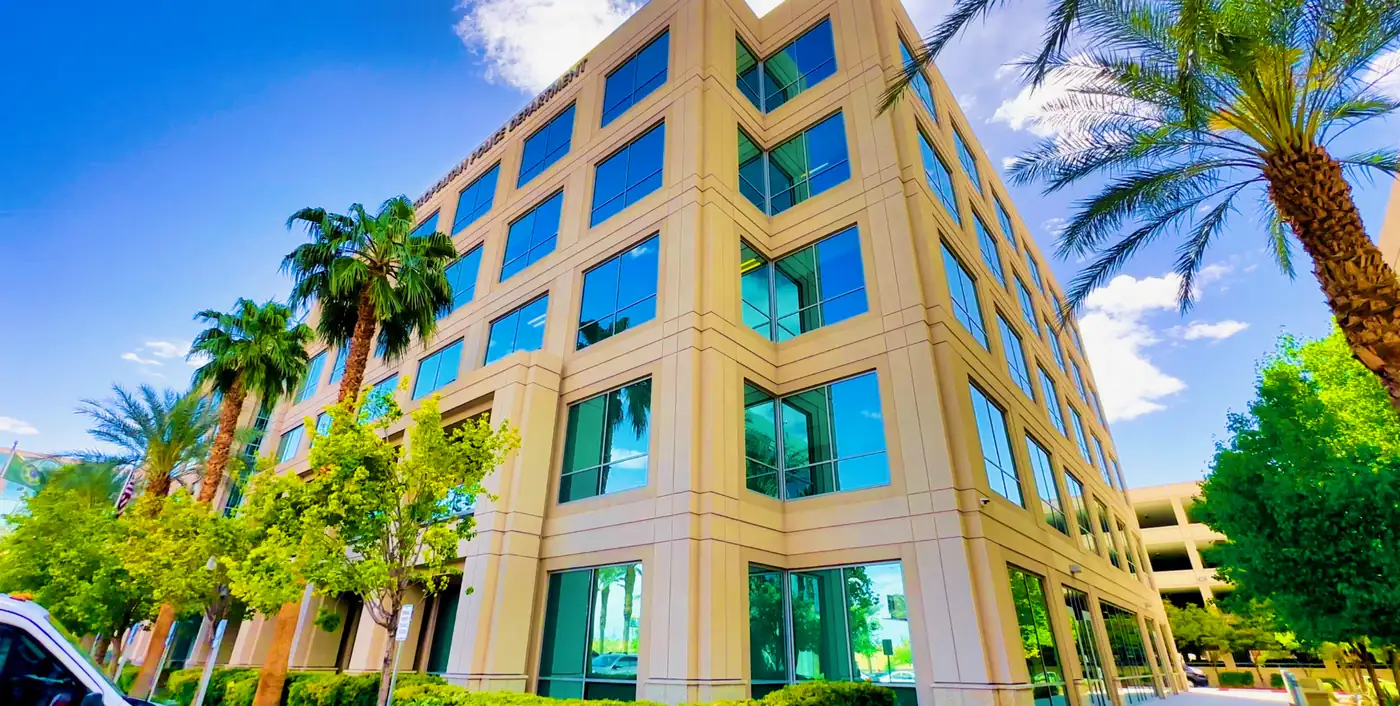

Getting the Metro collision report
LVMPD takes report requests online, in person and by mail. It asks people to wait at least 10 business days after an incident before requesting a crash report, charges $13.00 for a traffic collision report, accepts in-person requests at area commands or at headquarters, Building C, 400 S. Martin Luther King Boulevard, and doesn't take cash at area commands; requests by mail need notarized identity proof and take about three to four weeks (LVMPD Records). Those details belong on a crash page, written for a reader who can only get there on a day off.
Night-crash pages worth publishing
- "Hit by a driver at night in Las Vegas": what to collect when the scene is dark and witnesses leave fast, and which agency's report to ask for.
- "Getting your Metro crash report": the 10-day wait, the fee, the places to ask and the mail option, kept current.
- "Hurt on the way home from a late shift": a page for the commuter whose crash happened at 3 a.m., including how fault is shared under Nevada law.
- A Henderson crash page and a North Las Vegas one, each naming the department that wrote the report.
Criminal defense and traffic
Bail at 3 a.m., and the courts that keep office hours
Part of Las Vegas's legal system does run all night, and a defense firm's pages should say exactly which part. Readers searching from a parking lot outside the Detention Center don't need a general account of criminal procedure; they need the window, the fee and the next step.
The bail window that never closes
Las Vegas Justice Court's Pretrial Services, inside the Clark County Detention Center at 330 S. Casino Center, lists its hours as "Open 24 hours, 7 days a week" for posting bail and surety bonds. District Court cash bail is taken at the Regional Justice Center in business hours, and after hours at the same Pretrial Services window. The court notes that someone booked as John or Jane Doe cannot be bailed out (Las Vegas Justice Court). Clark County's own page adds that the window takes cash and Visa or Mastercard up to $10,000 (Clark County Detention Center). The two official pages list different filing fees, so we would quote the court's page and date it, or leave the fee out.
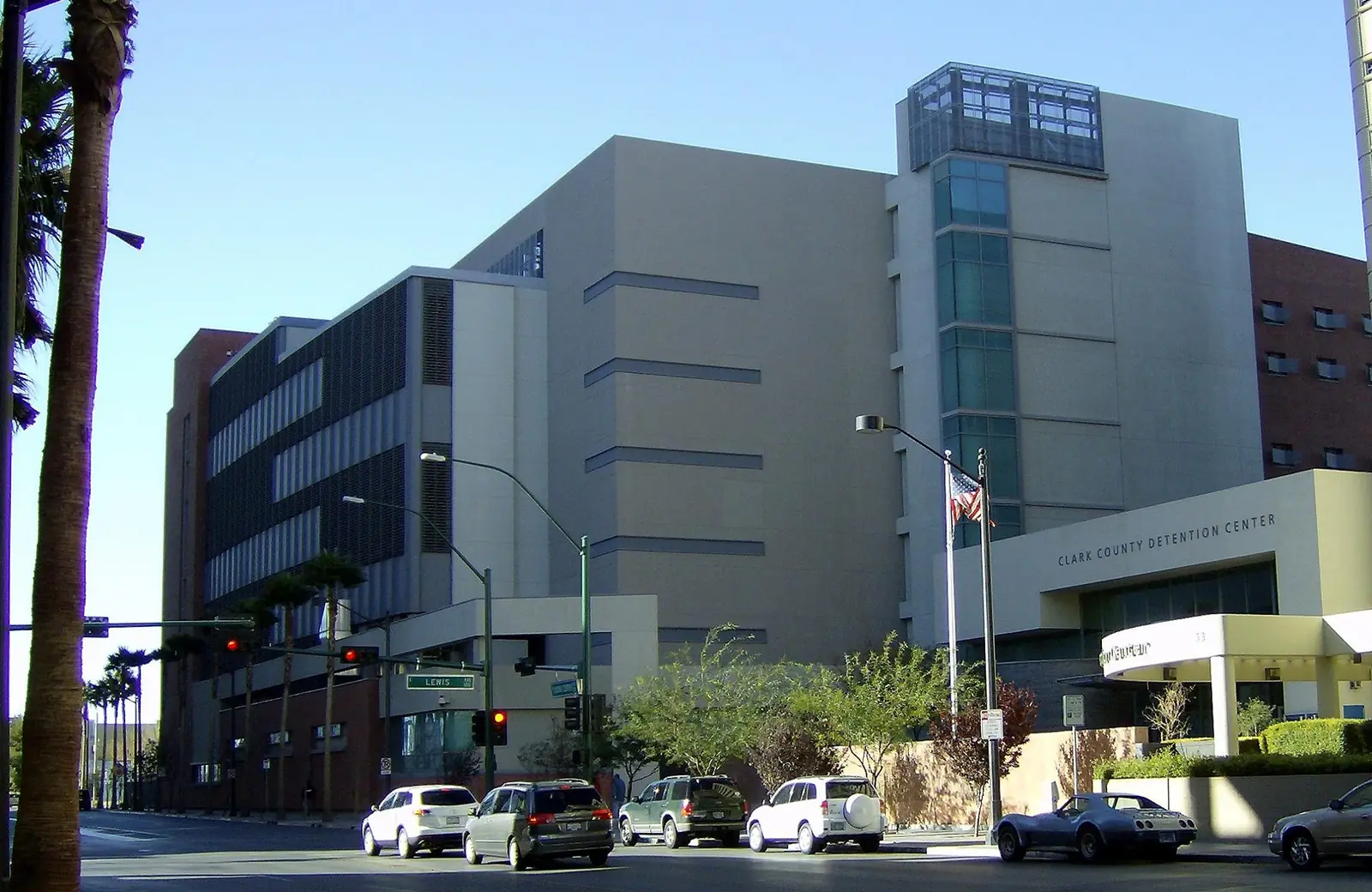

Municipal Court keeps a four-day week
The city's misdemeanor and traffic court keeps a four-day week: Monday to Thursday, seven in the morning until five (Las Vegas Municipal Court). A city misdemeanor page that says "call the court" should say when, because a reader who works Friday to Monday nights may have one usable window a week.
Traffic tickets stopped being crimes in 2023
Assembly Bill 116 (2021) made most traffic and driver's-license violations civil infractions from January 1, 2023, unless a statute keeps a criminal penalty. A ticket must be paid or contested within 90 days; the civil penalty is capped at $500; and courts had to cancel outstanding bench warrants for failures to appear on those offenses, so nobody can be arrested for one committed before 2023 (AB 116, enrolled). The city's explainer warns that ignoring the 90 days leads to collections, a suspended license and demerit points (City of Las Vegas). Old traffic-warrant pages that still say "you may be arrested" are wrong, and a firm that rewrites them first catches the searches the others lose.
A specialty court for problem gambling
The Eighth Judicial District Court runs thirteen specialty court programs, starting with an Adult Drug Court in 1992 and including Felony DUI Court (three to five years, for people with at least three DUI charges in seven years), Veteran's Treatment Court, Mental Health Court and a Gambling Treatment Diversion Court. Under NRS 458A, that last program takes defendants convicted of a crime committed in furtherance of, or as a result of, problem gambling (EJDC Specialty Courts). Few defense sites explain it, and in this county the searches that need it are real.
Employment law
Gaming work cards, daily overtime and Nevada's shift-work law
A large share of the county's night workers are covered by employment rules that don't exist in most states. Firms on both sides of these cases get the searches; few pages answer them well.
Who needs a gaming registration
Under NRS 463.335, a person may not work as a gaming employee unless registered with the Gaming Control Board. NRS 463.0157 defines the jobs: table games, cage and count room, slot personnel and machine mechanics, race and sports book staff, hosts who extend credit or comps, security, shift and pit bosses, gaming IT staff and their supervisors, among others. It excludes people who only prepare or serve food and drink, or who work mainly in hotel functions. The Board's fee since June 1, 2025 is $50 for a new or renewed registration and $10 for a change of location (Notice to Licensees 2025-38).
The deadlines inside the registration rules
- A registered worker who moves to another gaming establishment files a change of employment notice within 10 calendar days, through the licensee.
- A registration runs five years from the start of employment; renewals run five years from the last expiry.
- If the Board hasn't objected within 120 days of a complete application, the applicant is deemed registered.
- On an objection or suspension, the employer must terminate the worker or move them to a job that doesn't need registration; the worker has 60 days to ask for a hearing, and not asking counts as admitting the objection.
- After the Board's decision, a written request for Commission review is due within 15 days, and judicial review follows from there.
- Under NRS 463.3352, a court order for child support arrears suspends the registration at the end of the 30th day unless the worker shows compliance.
An employment firm that writes these deadlines as a plain page, "my gaming card was objected to: what now", owns a search that general employment pages never touch. A family firm can do the same with the child-support suspension.
Overtime counted by the day
Nevada pays overtime after eight hours in a workday, not only after forty in a week, for employees paid less than one and a half times the minimum wage (NRS 608.018). The Labor Commissioner's bulletin puts that threshold at $18.00 an hour since July 1, 2025, and describes the period as 24 hours (2025 Daily Overtime bulletin). The exceptions matter in this county: workers under a collective bargaining agreement that sets its own overtime are excluded, and so are taxicab and limousine drivers, and a four-day, ten-hour schedule agreed by both sides. Shift workers who swap or extend shifts search for exactly this rule.
Breaks, paid leave and the absence of a scheduling law
Under NRS 608.019, an employee working eight continuous hours gets at least a half-hour meal period, and rest periods of ten minutes for each four hours, counted as hours worked; collective bargaining agreements again fall outside it. NRS 608.0197 gives employees of private employers with 50 or more workers in Nevada 0.01923 hours of paid leave per hour worked, usable from the 90th day without giving a reason. Nevada has no predictive-scheduling law in NRS 608, so a page promising "schedule change pay" under Nevada law would be wrong, and a page explaining what the law doesn't cover is worth writing.
Premises and business cases
Hotel and casino cases: what Nevada's innkeeper statutes allow a page to say
Nevada wrote its own rules for claims against hotels, and they are narrower than general premises law. A page that promises more than the statute allows misleads the reader, and in Nevada that is an advertising problem as well as a credibility one.
Assaults by a stranger on hotel property
Under NRS 651.015, the owner of a hotel, motel or lodging house is not liable for an injury caused on its premises by someone who isn't its employee unless the act was foreseeable and the owner failed to take reasonable precautions. An act counts as foreseeable only if the owner failed to use due care, or similar incidents had happened there before and the owner knew of them, and the judge, not the jury, decides foreseeability and duty as a matter of law. An assault page for Las Vegas firms should be built around those two routes, prior incidents above all, because that is what the case turns on.
Property stolen from a room
NRS 651.010 limits a hotel's liability for a guest's property to $750 unless the hotel took the item for safekeeping and agreed in writing to more, and it bars liability for items left in a room when a safe was offered and notice posted, unless the hotel was grossly negligent. The statute must be posted in every room. A page that reads as if a theft from a room is an easy claim is the kind of page Rule 7.1 was written for.
Business court no longer takes these cases
Since June 29, 2026, Clark County business court cases have been assigned at random to Judge Maria Gall or Judge Joe Hardy under a pilot, and the court lists case types it will no longer keep, among them products liability, negligent security, personal injury, non-compete disputes and insurance coverage, even on commercial policies. Cases reclassified as general civil get their business court fees refunded (EJDC Business Court). Commercial litigation pages that describe the old assignment process need updating, and the change is a small, accurate news item a firm can publish while competitors' pages stay stale.
AI search
When the office is shut, an AI answer speaks first
Two of the Search Console queries behind this URL name it directly: "ai marketing for attorneys near me" and "las vegas ai legal marketing company". In a 24-hour county, the case for AI search is plain: the answer box and the chatbot are open when the firm isn't, and they will answer the 2 a.m. question with or without the firm's page.
Questions people ask before morning
"How do I bail someone out in Las Vegas right now." "Can I be arrested for an old traffic ticket in Nevada." "My gaming card got objected to, what now." Each of those has a short, sourced answer in the sections above, and that is the form an AI tool can lift. A firm page that buries the answer under three paragraphs about the firm's values gives the tool nothing to quote.
What we change on the page so a machine can use it
- A direct answer in the opening sentence, then the detail, rather than a long introduction.
- Facts with their source and date beside them, so an answer can be checked and kept current.
- Identical firm details on every page and profile, with the responsible lawyer named, as Rule 7.2(b)(2) already requires of ads.
- Structured data that matches what the page visibly says, never more.
- A test set of night-time prompts in the voice of this county's clients, run on a schedule and reported.
No agency controls what ChatGPT or Google's AI Overviews say, and we say so before we start (more on how we approach AI search).
Nevada Rules of Professional Conduct
Nevada's long-form advertising rules and the bar's 2018 guidelines

Nevada kept its long set of advertising rules when many states shortened theirs. The current text, in force with amendments through 2025, still has Rules 7.1, 7.2, 7.2A, 7.2B, 7.3, 7.4, 7.4A, 7.5 and 7.5A, and Rule 7.6 is reserved. The rules on advertising were last changed by the Nevada Supreme Court's order of March 9, 2018, effective April 9, 2018 (Nevada Rules of Professional Conduct). Nevada also doesn't adopt the ABA comments as its own; under Rule 1.0A they may be consulted for guidance only. That makes the State Bar's own July 2018 interpretive guidelines the closest thing to official commentary, though they say they don't bind bar counsel.
Rule 7.1, and the three tests the bar still applies
Rule 7.1 now reads like the ABA model: no false or misleading communication, including one that omits a fact needed to keep it from misleading. Before 2018 it also listed three Nevada tests: a communication was misleading if it created unjustified expectations about results, compared the lawyer with others without factual support, or used a testimonial that broke the rule (2012 rules, State Bar archive). Those words left the rule, but the State Bar's Guideline 1 still treats all three as "inherently misleading" (Interpretive Guidelines, July 2018). A firm should write as if they were still in the text.
The statements every Nevada ad must carry
Rule 7.2(b) lists required disclosures for any communication made under it, and they apply to paid search ads, video and social posts as much as to billboards:
- Actors and dramatizations must be disclosed, specifically enough to say which people are actors, for as long as they appear.
- A named lawyer who answers for the content.
- Practice areas stated in line with Rule 7.4.
- Contingency-fee ads must say the client may be liable for the opposing party's fees and costs; the bar's suggested wording is "You may have to pay the opposing parties' attorney fees and costs in the event of a loss."
- Fee ranges must state how long they apply and any limits.
- Statements about how good the firm's service is must be provable if the bar or a client asks.
- Past results may be cited only by the lawyer who was lead counsel or primarily responsible, with a disclaimer that past results "do not guarantee, warrant, or predict future cases"; a dollar figure must be what the client actually received, with enough about the case and injuries, and if the gross amount is given, the fees and expenses withheld from it too.
Under Rule 7.2(c) those statements must appear in each language the ad uses, and under 7.2(d) they must be reasonably prominent. For websites, the bar's Guideline 5 says the required words should appear on the same page as the statement that needs them, which rules out a single disclaimer page linked from the footer.
What the bar's guidelines add for websites and pages
- "No fee if no recovery" should say the client is still responsible for costs, advanced litigation expenses, court costs and possibly the other side's fees if there is no recovery (Guideline 2(A)(4)).
- A verdict later overturned or reduced must say so (2(A)(3)).
- Combined experience should say "cumulative", "combined" or "average" years (2(D)).
- Non-lawyers, out-of-state lawyers and specially admitted lawyers must be identified (2(B)), and featuring lawyers not licensed in Nevada so a reader assumes they'll do the work is called a "bait and switch" (Guideline 4).
Rule 7.3: written outreach, the red label and the 30-day bar
Nevada's solicitation rule is broader than the current ABA model. Rule 7.3(a) bars soliciting a person with no family or prior professional relationship "by mail, in person or otherwise" when pecuniary gain is a significant motive, and defines "solicit" to include letters and other communications directed to a specific recipient. General mailers must carry the 7.2 disclaimers in conspicuous type, and the envelope and each page must show, in red ink, "NOTICE: THIS IS AN ADVERTISEMENT!" Rule 7.3(d) then forbids written communication seeking representation of an injured person or their family within 30 days of the incident, and applies the same bar to lawyers who represent the defense side. Targeted messages to people a firm knows were just in a crash, including emails and texts, fall inside that window.
Rule 7.4: "specialist" and "expert" need a certificate
A Nevada lawyer may say they practice in a field. They may call themselves a "specialist" or "expert" only if certified by an organization approved under Rule 7.4A, with at least a third of their practice in the field in each of the two prior years, ten hours of accredited education in it the year before, $500,000 of malpractice coverage (public lawyers excepted), and registration with the State Bar at $250 a year. Any ad that mentions the certification must name the certifying body. "Patent Attorney" and "Proctor in Admiralty" have their own rules.
Rule 7.5: trade names and firms with offices in other states
A made-up firm name is fine in Nevada so long as nobody could take the firm for a government office or a charity, and nothing else about the name misleads. Nevada didn't adopt the ABA comment on domain names, so a keyword domain such as a city-plus-practice name is judged by the same test. Rule 7.5A makes a firm with offices inside and outside Nevada register and pay $500 a year, keep a Nevada office led by a resident active member, and mark which of its lawyers lack a license where each office sits.
Arizona's rulebook is far shorter (see the Phoenix page) and California's far longer (see the Los Angeles page).
Rule 7.2A and Rule 7.2B
What a Nevada firm files with the State Bar, and what it doesn't
Nevada is one of the few states that requires lawyers to file their ads with the bar. Rule 7.2A covers "all advertisements disseminated in exchange for something of value" and written or recorded communications a lawyer sends out to advertise legal services. Each goes to the State Bar within 15 days of first dissemination, on the bar's form, with a non-refundable $100 fee; substantively similar ads can share one filing. Failing to file is grounds for discipline, and the four-year limit for bringing a case runs from the day bar counsel actually learns of the ad (Rule 7.2A; State Bar of Nevada). This is how it sorts out for the marketing we run.
| What we make for a firm | Filed under 7.2A? | Why |
|---|---|---|
| Website and practice pages | No | The rule says websites are not advertisements subject to filing; Ethics Opinion 59 (2022) says the same of business cards and letterhead. |
| Google Business Profile and unpaid social posts | No | Nothing of value is paid to place them. They still have to meet Rules 7.1 and 7.2. |
| Boosted or paid social posts | Yes | The bar's form lists "Social Media (if disseminated in exchange for something of value)". |
| Search ads, pay-per-lead ads and paid directory spots | Yes, as we read the rule | They are paid placements. The bar hasn't published an opinion on search ads; a September 2022 bar article says most internet advertising "is not submitted, though it should be". |
| Video and radio spots | Yes | The bar asks for a complete written transcript with the filing, and an English translation of any ad in another language. |
| Mailers and printed ads | Yes | Print is filed in color; mailers with the front and back of the envelope. |
| A "tombstone" ad: name, address, phone, hours, admissions, languages | No | Exempt under the bar's Guideline 6, as are unchanged versions of an ad already filed. |
Asking before an ad runs
Under Rule 7.2B, a firm can ask the Standing Lawyer Advertising Advisory Committee for an advance opinion. The committee has eleven members (eight lawyers, four from the north and four from the south, and up to three non-lawyers), the fee is $250, and the opinion comes within 30 days. A finding of noncompliance doesn't bind bar counsel, but a finding of compliance does, in the firm's favour, as long as what the firm told the committee was true. For a new television campaign or a results-heavy landing page, that $250 buys certainty.
What the committee says it looks at
In a signed September 2022 article in the State Bar's magazine, the author wrote that the committee receives "somewhere from 20-40 ads to review each month", that its review focuses on print, mail, commercials and billboards because internet ads are transient, that this "does not mean that the guidelines and rules do not apply to the internet", and that it watches for offers to pay for reviews or referrals (Nevada Lawyer, Sept. 2022). So a firm paying for reviews, or rewarding clients for them, is doing exactly what the reviewers say they look for.
The 2005 opinion every contact form should follow
The State Bar's Ethics Opinion 32 warned that a lawyer who advertises or keeps a website "may be deemed to have solicited" what a prospective client sends, creating an expectation of a relationship, and advised "warnings and disclaimers" (Opinion 32). We put a short notice above every contact form we build for a Nevada firm, saying that sending the form doesn't make the reader a client and asking them not to send confidential details yet.
Shared offices and the "by appointment only" line
Ethics Opinion 59 (2022) lets a Nevada-licensed lawyer use a co-working address, but clients must be told meetings there are by appointment only (Opinion 59). That matters twice in search: Google doesn't allow a Business Profile at a co-working space unless the office has signage and is staffed in business hours, and the firm's own pages have to state the appointment-only condition. We check both before listing a shared-suite office.
Where there is no Nevada guidance yet
We checked the State Bar's list of formal ethics opinions, which runs to Opinion 61 (February 2025): none addresses social media, pay-per-click ads, review sites, lead generators, chatbots or AI (State Bar ethics opinions). For those, a Nevada firm works from the rule text and the guidelines above, and from Rule 7.2(a), which allows paying the reasonable cost of advertising and the usual charges of a lawyer referral service but not paying anyone for a recommendation.
The rest of the state
A state with half its lawyers in a single county
From outside Clark County, firms arrive with queries like "nevada lawyer seo services", "nevada law firm seo consultants" and "law firm seo company henderson nv". The State Bar describes nearly 14,000 licensed attorneys, with 50.13% in Clark County, 13.21% in Washoe, 2.38% in Carson City, 2.84% in the rural counties and 31.44% outside Nevada (State Bar of Nevada, member demographics). About half of the profession competes for Clark County's searches; a firm in Elko or Fallon competes with very few local pages.
The two cities next door
The two largest cities next to Las Vegas share its courts and much of its search results, but not its police or its city services. North Las Vegas has the higher off-hours share, 26.6%, and Henderson the lower, 23.4%. A firm with an office in one of them should have a page for that city that names its own police department and municipal court, and its Business Profile should carry that office's real address and hours, not the downtown ones.
Reno, Washoe County and Carson City
Washoe is the state's second legal market, with about 13% of State Bar members, and its commuting pattern is less extreme: 21.5% of commuters leave between noon and 5 a.m. A Reno firm competes against fewer pages than a Las Vegas one, often including Las Vegas firms that rank statewide. The pages that hold up there are the ones about Washoe's own courts and, for regulatory work, the state agencies in Carson City.
Out-of-state lawyers in Nevada's searches
Almost a third of State Bar members are based outside the state. Some of them advertise to Nevada clients, which is why Rule 7.5 asks multi-state firms to state who is licensed where, and why the bar's guidelines treat featuring lawyers not licensed in Nevada as misleading. For a firm based here, a clear "licensed in Nevada" line on each lawyer's bio is both a compliance step and a quiet advantage in the results.
Working with GLP
Our office keeps Las Vegas time, with no lock-in contract
Our team works from West Hollywood, California; Las Vegas clients meet us on video and see their numbers in a dashboard they can open whenever they like. Las Vegas and our office keep the same Pacific clock, so a 4 p.m. call is 4 p.m. for both sides, and when we say an ad schedule switches off at 9 p.m., there is no conversion to get wrong.
Calls and reports
Strategy calls are monthly on the SEO and AI search track and weekly for Consulting CMO clients, whose engagement also covers paid media, intake and vendors and comes with a live dashboard of keywords, pages and leads. Where the firm's intake records allow it, we match leads to signed cases, which is the only number that tells a Las Vegas firm whether paying for night calls makes sense.
Fees and contract length
We quote a monthly retainer after looking at the firm's market, and the scope is spelled out in writing before anything is signed. There is no long contract to escape; if the work stops paying for itself, the firm can stop. And no agency, us included, can guarantee a Google ranking or a mention in an AI answer; we say that in writing at the start.
Related reading for Nevada practices
What a round-the-clock county's firms want settled first
In short
Census commuting data, Nevada statutes and court pages, NHTSA crash files, the State Bar's advertising rules and guidelines, and our own check of 240 Las Vegas map listings on November 4, 2026: the material behind a Las Vegas plan.
Henderson and North Las Vegas run their own police. Does this page still fit a firm there?
Yes. Both are separate cities with their own police departments, which matters for the pages we write (an injury page has to name the agency that took the report), but they share Clark County's courts, its commuting pattern and its search market. In the Census data on this page, 26.6% of North Las Vegas commuters and 23.4% of Henderson's leave for work between noon and 5 a.m., close to the county's figure.
Our injury intake runs overnight. Should the pay-per-lead ads run overnight too?
Yes, and for many Las Vegas firms paid search is where the hours problem shows up first, because an ad that rings an empty office costs money. We set schedules, call tracking and intake checks together, and the law firm PPC page explains how we measure cost per signed case. Paid ads are also the part of a Nevada firm's marketing that the State Bar's filing rule reaches, which websites are not.
Can our homepage call us the #1 injury firm in Las Vegas?
Only if the firm can prove it, and almost none can. Rule 7.2(b)(6) makes statements about the quality of a firm's services "subject to proof of verification" on request of the State Bar or a client, and the bar's interpretive guidelines say quantitative claims such as "the best" or "the most" will be held to that proof. We write around superlatives with facts the firm can document: years in practice, bar admissions, the courts it appears in.
Is the State Bar's referral service a rival to our own marketing?
It refers callers who can pay ordinary fees to one panel lawyer, chosen in rotation; the lawyer may charge a $45 first consultation, pays a $50 annual fee and remits 20% of net fees beyond that consultation (State Bar of Nevada). For some firms it is a useful second channel. It isn't a substitute for being found, because a caller gets the next lawyer on the list rather than the firm they chose.
Who handles the cases our firm turns away, so we can point people there?
For people who can't afford a lawyer, the Legal Aid Center of Southern Nevada at 725 E. Charleston Blvd. gives representation and advice, but says it does not take traffic citations, child support, criminal cases, personal injury or employment discrimination. A firm's "matters we don't handle" page that names the right referral is courteous, and it keeps the page useful to the reader who isn't a fit.
We handle injury cases. Which Nevada fault and deadline rules belong on our pages?
Two things, stated once and accurately. Under NRS 41.141 an injured person can recover if their own negligence was not greater than the defendants'; past that point they recover nothing, and each defendant generally pays only its own percentage. The filing window for most injury and death claims is two years, under NRS 11.190(4)(e). A page that gets either wrong is the page a competitor's lawyer quotes back.
Do Nevada divorce pages need anything a California page would not have?
The residency rule, which is short: under NRS 125.020 a Nevada court can grant a divorce only if one spouse has lived in the state for at least six weeks before filing, unless the cause arose in the county while both lived there. Nevada also has a joint-petition summary divorce (NRS 125.181 to 125.184) for spouses who agree on everything, which either can revoke before the decree. Those two facts answer most first questions from people who just moved here.
Can we advertise that we "specialize" in DUI or injury cases in Nevada?
Saying the firm practices in a field is fine. "Specialist" and "expert" are a different matter: under Rule 7.4(d) a Nevada lawyer may use them only if certified by an approved organization and meeting the rule's practice-share, education and $500,000 insurance conditions, registered with the State Bar for a $250 fee, and the certifying body must be named in the ad. So "focusing on DUI defense" is safe, and "DUI specialist" usually is not.
How long before an attorney SEO plan shows results in Las Vegas?
Ranking and traffic gains usually show between the third and fourth month and keep building after that, as our get started page sets out. The first changes in Las Vegas are often faster than that because they are fixes, not new content: posted hours, call routing and ad schedules can be corrected in a week. No agency can guarantee a ranking or an AI citation, and we don't.
Our site is old. Is a rebuild part of the job?
Yes, as part of an engagement when the current site is what holds the firm back. A Nevada build adds two checks to our usual ones: the required statements of Rule 7.2 sit on the same page as the claim they qualify, as the State Bar's guidelines ask, and the contact form carries the kind of notice Ethics Opinion 32 recommends. See how we design law firm sites.
Reno office plus a Las Vegas office: one website or two?
One site with an office page for each, in most cases, and one Business Profile per staffed office. The two markets differ more than firms expect: in the commuting data on this page, 21.5% of Washoe County commuters leave between noon and 5 a.m., against 26.6% in Clark, and the State Bar counts about 13% of its members in Washoe against about half in Clark. Each office page should be written for its own county's courts and clients.
What changes for a Nevada firm that advertises with video?
Mostly casting. Rule 7.2(b)(1) requires an ad to say which people on screen are actors, for the whole time they appear, so a re-enacted crash or a paid spokesperson needs an on-screen label rather than a line at the end. Testimonials from real clients are not banned in Nevada, but the bar treats any that create unjustified expectations as misleading. When we plan a firm's paid media, the labels go into the script before filming.
How does working with GLP begin for a Las Vegas firm?
Tell us your site and the practices you want to grow. Within 48 hours someone on our team records a walkthrough of how the firm shows up for Las Vegas searches in Google and ChatGPT, hours on the map listing included. Nothing to sign; the form is on this page.
Your map listing at 11 p.m.: open, closed or missing?
Within two days we send a screen recording of how your firm shows up in Google, the Las Vegas map and ChatGPT, and what your listing tells someone who searches after hours.
Or call Call (661) 388-5526