Orlando law firm SEO for the people who work and play in the tourist economy.
Reviewed by Matt Khorsandi, Founder & CEO · Last updated
Orlando runs on the parks, hotels and restaurants, and so do many of its legal matters: a ride operator hurt on shift, a server short on tips, a family from Ohio injured on vacation. Firms that represent those clients need pages, map listings and AI answers that reach them, and that is what we build.
What follows is specific to Orlando: who the clients are, the Florida statutes their claims rest on and the searches they make. For what holds true in any market, read law firm SEO.
Free, done by a real person, and in your inbox within 48 hours.
The Orlando client base
Workers, guests and the counts that size an Orlando practice
Two populations generate much of Orlando's legal work: the residents who staff the tourist economy and the visitors they serve. The table counts both, names the source of each figure and lists the claims each group tends to bring.
Group
How many
Source
Claims it brings
Residents employed by the visitor economy
16.0% in Orlando, 16.3% in Orange County; 8.7% nationally
Orlando law firm SEO built around the people the tourist economy employs and hosts
A housekeeper with a shoulder injury, a line cook whose tips went into the manager's pocket and a family from Ohio whose child was hurt on a ride all search for a lawyer in different ways. The worker searches on a phone, often in the evening, using the name of the employer. The visitor searches from home, weeks later, with the name of the park or the hotel. Lawyer SEO in Orlando means having a page ready for each of them. Our engagements cover the following.
An audit run on worker and visitor searches
We run the searches workers and visitors actually make for your practice, compare what they find with what your site offers and check how AI tools describe the firm. Someone on our team runs it personally and records a short video of the findings, delivered within 48 hours.
Situation pages written from Florida law
Pages for the situations clients name (hurt at work in a park, injured at a resort, short on wages) built on the Florida statutes that decide them, linked to the source. Nothing that states Florida law is published until one of your attorneys has approved it.
Local SEO for the office you staff
A Business Profile for each real office, with categories, services, hours and genuine reviews, plus consistent listings on the directories that matter. Google's guidelines don't allow a listing at an address nobody works from.
Content marketing on a local calendar
Articles timed to what happens in Orlando: the state's quarterly ride-incident report, the September minimum-wage change, the convention season. More on this in the content section below.
AI search visibility
Clear, checkable statements about the firm and about Florida rules, kept consistent everywhere AI tools read, so ChatGPT and Google's AI features can cite the firm accurately.
16% of working residents serve the visitor economy
The American Community Survey groups arts, entertainment and recreation with accommodation and food services. In the city of Orlando 16.0% of employed residents work in that sector, and in Orange County 16.3%; nationally the share is 8.7% and in Florida 10.9% (ACS DP03). South of the county line, in Osceola County and Kissimmee, the share is higher still.
Employed residents working in arts, recreation, lodging and food service
Of every 100 working residents, how many are in these industries (ACS 2020-2024)
Kissimmee17.9%
Osceola County17.6%
Orange County16.3%
Orlando (city)16%
Florida10.9%
United States8.7%
0%5%10%15%20%
Use the arrow keys to read each value.
Employed residents working in arts, recreation, lodging and food service
Area
Share of employed residents (%)
Kissimmee
17.9
Osceola County
17.6
Orange County
16.3
Orlando (city)
16
Florida
10.9
United States
8.7
Source: U.S. Census Bureau, American Community Survey 2020-2024 5-year estimates, table DP03 (industry).
Central Florida's share is close to double the national rate. Data: ACS table DP03 for each area.
Where the jobs are, and what they pay
Employer payroll counts tell the other half of the story, because they record where people work, not where they live. In 2024, Orange County's private employers had 78,809 jobs in restaurants and other eating places, 73,705 at amusement and theme parks and 58,812 in hotels and other accommodation (BLS QCEW). Counting the rest of both sectors, about one private job in four in the county serves leisure and hospitality.
Average weekly wage in Orange County's hospitality industries
Private-sector annual averages, 2024, with the all-industry figure for comparison
Restaurants and other eating places (NAICS 722)78,809 jobs$643
Amusement and theme parks (NAICS 71311)73,705 jobs$940
Hotels and other accommodation (NAICS 721)58,812 jobs$869
All private-sector jobs866,522 jobs$1,300
$0$350$700$1,050$1,400
Use the arrow keys to read each value.
Average weekly wage in Orange County's hospitality industries
Industry
Average weekly wage ($)
Jobs
Restaurants and other eating places (NAICS 722) / 78,809 jobs
643
78,809
Amusement and theme parks (NAICS 71311) / 73,705 jobs
940
73,705
Hotels and other accommodation (NAICS 721) / 58,812 jobs
869
58,812
All private-sector jobs / 866,522 jobs
1,300
866,522
Source: U.S. Bureau of Labor Statistics, Quarterly Census of Employment and Wages, 2024 annual averages, Orange County, FL, private ownership.
Restaurant pay averaged about half the county's all-industry wage. Data: BLS QCEW, Orange County.
Lower wages change the case and the conversation
Restaurant jobs averaged $643 a week, hotel jobs $869 and theme-park jobs $940, against $1,300 for all private jobs. Workers' compensation pays a share of wages, so lower pay means smaller wage benefits and a client who is anxious about every missed shift. Pages for these readers need to answer what they can afford to do, whether a lawyer costs anything up front and what happens to their job, in that order.
Many of them work for very large employers
Orange County's 73,705 theme-park jobs sat in just 41 establishments. A worker suing or claiming against one of the largest employers in the state wants to know the firm has dealt with that employer before. Pages can show it honestly by explaining the employer's claim process and the steps a worker will meet, without naming confidential cases.
Shift work shapes when people search
Hotel, park and restaurant staff work evenings, weekends and holidays. Intake that only answers during office hours misses them, and so does a site whose contact form promises a call "within one business day". We look at when the firm's calls and form fills arrive, and adjust pages and ads to the hours the clients actually have.
Theme-park employment
35% of U.S. theme-park jobs are in Orange County, with the injury claims that come with them
The national figure for amusement and theme-park jobs in 2024 was 208,258; Orange County alone accounted for 73,705 of them, about 35% (BLS QCEW, NAICS 71311). No other county comes close. That concentration makes "hurt working at a theme park" a search with real volume in Orlando and almost nowhere else.
The 30-day notice and the 2-year petition
An injured Florida employee must tell the employer about the injury within 30 days of the injury or of its first appearance, and failing to do so can bar the claim, with narrow exceptions (§ 440.185, Fla. Stat.). A petition for benefits must be filed within 2 years of when the worker knew or should have known the injury was work-related, and payment of benefits tolls that period for a year from each payment (§ 440.19). A park employee who tried to "work through" a back injury for six weeks is exactly the reader who needs the notice rule in the first paragraph.
Why a worker can't usually sue the employer
Workers' compensation is the employer's exclusive liability to the employee for a covered injury (§ 440.11). That is the question behind searches like "can I sue Disney for a work injury", which in our survey returned a forum answer and out-of-state firms. A page that answers it plainly, then explains when a third party (a ride manufacturer, a contractor, a driver) can be sued, gives the worker an accurate picture and the firm a qualified lead.
Injuries specific to park work
Heat illness among costumed and outdoor staff, where the record of shifts and breaks matters.
Repetitive-strain injuries from loading guests and operating ride stations.
Injuries during overnight maintenance, when contractors and employees work side by side.
Parking-lot and shuttle injuries before or after a shift, where coverage depends on the facts.
Each is a page an Orlando workers' compensation firm can own, because few firms elsewhere have a reason to write it.
Getting to and from a shift
Crashes on the drive to work: where workers' comp stops and PIP starts
Park, hotel and restaurant staff drive to shifts that start before dawn and end after midnight. When one of them is hurt in a crash on the way, the first question is which system pays, and Florida answers it in two statutes that injury and workers' compensation pages should explain together.
The commute usually isn't work
Florida law says an injury suffered while going to or coming from work does not arise out of employment, even when the employer provided the transportation, if that transportation was available for the employee's exclusive personal use, unless the worker was on a special errand or mission for the employer (§ 440.092(2), Fla. Stat.). A server driving home is usually outside workers' compensation; a bellhop sent across town with a guest's luggage may be inside it.
Personal injury protection and its 14-day window
Outside workers' compensation, the worker's own personal injury protection coverage is the first source of payment. Florida PIP covers 80% of reasonable medical expenses up to $10,000, but only if the person receives initial care within 14 days of the crash, and reimbursement drops to $2,500 when a qualifying provider determines there was no emergency medical condition (§ 627.736). A worker who keeps picking up shifts and puts off the doctor can lose most of that benefit without knowing it existed.
Why this belongs on an Orlando firm's site
The two rules decide where a worker's claim goes, and most readers don't know either one.
Late-night crashes produce searches at hours when nobody at the firm answers the phone, so the page has to do the explaining.
A clear page here captures both workers' compensation and auto-injury clients, two practices many Orlando firms already handle.
Wages and workplace rules
Tips, the $15 minimum and Orlando's own employment ordinance
Wage claims are the other half of the hospitality workforce's legal needs. Our survey found that restaurant tip searches in Orlando returned New York firms, a management-side firm and a criminal "employee theft" page more often than Florida pages for workers, so the content gap here is wide.
The minimum wage changed on September 30, 2026
Florida's minimum wage rose to $15.00 an hour on September 30, 2026, the last step of the 2020 constitutional amendment (FloridaCommerce). The Florida Constitution lets employers count tips toward the minimum only up to the federal tip credit allowed in 2003, $3.02, so the cash wage for tipped workers is now $11.98 (Fla. Const. art. X, § 24). Every wage page written before that date needs updating, and that kind of maintenance is part of our content work.
What a worker can recover, and how long they have
A worker who prevails recovers the back wages plus the same amount again as liquidated damages, along with attorney's fees and costs. Claims can be brought for four years, or five for willful violations, and as class actions (art. X, § 24(e)). Before suing under the statute, the worker must give the employer written notice and 15 days to pay or resolve the claim (§ 448.110, Fla. Stat.). A tip-credit page that lays out those steps answers the questions a server asks before deciding whether to call.
Small employers inside city limits
Federal and state discrimination laws reach employers with 15 or more employees, but Chapter 57 of the City of Orlando Code treats a company with at least six employees within city limits as an employer (City of Orlando). Complaints under Chapter 57 must be filed within 180 calendar days of the incident (Office of Human Relations). For workers at small restaurants and shops, that threshold is the difference between having a claim and not having one, and an employment page that says so earns their trust.
Pages an Orlando employment practice can build
Tip pools and who may share in them, written for servers, bartenders and bussers.
The $11.98 cash wage and how to check a pay stub against it.
Chapter 57 for workers at businesses with six to fourteen employees.
Schedule changes and lost shifts after a workplace injury.
Representing hospitality workers on wages? Ask for the audit and we'll check what a server in Orlando finds when they search for tip theft today.
Visitors as clients
76.7 million visitors a year, and the claims they take home
Visit Orlando counted 76.7 million visitors in 2025, a record: 70.3 million from within the United States and 6.3 million from abroad (Visit Orlando). 81% were domestic leisure travelers and 10% domestic business travelers. Visitors go home after the trip, and that shapes every injury claim that starts here.
Orlando's largest international visitor markets, 2025
Visitors by country of origin, with the change from 2024
Canada-13.3% on 20241,119,300
United Kingdom+2.8% on 2024933,500
Brazil+5.6% on 2024736,300
Mexico+4.6% on 2024458,500
Colombia+5.0% on 2024360,000
0300k600k900k1.2M
Use the arrow keys to read each value.
Orlando's largest international visitor markets, 2025
Country
Visitors in 2025
Change from 2024
Canada / -13.3% on 2024
1,119,300
-13.3%
United Kingdom / +2.8% on 2024
933,500
+2.8%
Brazil / +5.6% on 2024
736,300
+5.6%
Mexico / +4.6% on 2024
458,500
+4.6%
Colombia / +5.0% on 2024
360,000
+5.0%
Source: Visit Orlando, press release on 2025 visitation (top five international origin markets).
Canada stayed first despite a 13.3% drop; the U.K. and Brazil followed. Data: Visit Orlando.
The 2-year filing deadline and the 51% bar
Since Florida's 2023 tort reform, an action founded on negligence must be filed within two years (§ 95.11, Fla. Stat.), and a claimant found more than 50% at fault for their own harm recovers nothing (§ 768.81(6)). A visitor who flew home assuming they had years to decide is the reader who most needs both rules, stated plainly on the firm's visitor-injury pages.
Hotels and resorts after a criminal attack
When a person lawfully on commercial property is injured by a third party's crime and sues the owner or operator, the jury must now consider the fault of everyone who contributed, including the attacker (§ 768.0701). For negligent-security pages about hotels and resorts, that changes what a visitor can expect and how the firm should describe the claim.
Medical bills from out of state
Florida now limits what can be shown as medical damages to amounts tied to what insurance paid or would pay, with rules for letters of protection and for claimants on Medicare or Medicaid (§ 768.0427). A visitor treated back home under their own health plan raises questions about which bills count, and a page that explains it in terms of their insurance answers them.
International visitors
Canada sent 1,119,300 visitors in 2025, the United Kingdom 933,500 and Brazil 736,300. A visitor hurt in Orlando who lives abroad deals with travel insurance, a home health system and a Florida claim at once, and our survey found a firm page written specifically for British tourists among the theme-park results. That is the right instinct: a page for the visitor's own situation, written in terms they'll recognize.
What visitor pages need
The two-year deadline, near the top.
How the case proceeds when the client lives in another state or country, including remote appointments.
The name of the place: the park, the resort corridor, the rental-car return, the airport.
What to collect before leaving Orlando: the incident report number, photos, witness names, medical records from the local hospital.
Ride safety records
The state's ride-incident report: what it lists and what it leaves out
Florida's amusement-ride statute requires most ride owners to report any accident in which a patron seeks hospital or urgent-care treatment to the Department of Agriculture and Consumer Services by phone within 4 hours and in writing within 24 (§ 616.242(15), Fla. Stat.). The statute doesn't apply to permanent facilities with at least 1,000 full-time employees and full-time in-house safety inspectors, which file an annual inspection affidavit instead (§ 616.242(11)). Those are the large parks.
The exempt-facilities report
The department publishes a quarterly report of incidents submitted by the exempt facilities under a memorandum of understanding: Walt Disney World, Universal, SeaWorld, Busch Gardens and Legoland (FDACS). The October 15, 2026 update lists 50 incidents for 2025 (Disney World 20, Universal 26, SeaWorld 4) and 27 for January through September 2026. The report itself warns that it reflects only what was reported at the time and that the department receives no updates on a patron's condition.
The VelociCoaster at Universal's Islands of Adventure appears three times in the state's exempt-facilities report for the first half of 2026, which is the kind of public record a ride-injury page can cite. Photo: Jeremy Thompson, Wikimedia Commons, CC BY 2.0.
How a firm can use the report responsibly
The entries are short: a date, a ride, an age and a few words such as "stroke symptoms" or "guest fell while exiting", often marked as a pre-existing condition. They don't show fault. A ride-injury page can explain that the report exists, what it covers and what it doesn't, and that an entry may help confirm the date and place of an incident. It shouldn't treat an entry as proof of negligence or name the people involved.
What the report doesn't capture
Falls on walkways, injuries in hotels and restaurants on the same properties, and incidents at smaller attractions all sit outside this report. A firm's resort pages should therefore cover premises cases as fully as rides.
A recurring content opportunity
The report is updated every quarter, and local news covers each release. A firm that publishes a short, accurate summary each quarter, written to explain rather than to alarm, builds a body of pages that local reporters and AI tools can cite.
Our Orlando search survey
Visitor-injury searches are crowded; worker searches are wide open
On 2026-11-04 we ran 12 searches through the Serper API from an Orlando location: eight a visitor might type after an injury and four a worker might type after an injury or a wage problem. For each top-10 list we counted Florida law firm pages written for that exact situation, general Florida injury or employment pages, and everything else (out-of-state firms, forums, social posts, publishers and off-topic results).
Top 10 results for visitor and worker searches in Orlando
Source: GLP Marketing survey of Google results via the Serper API, run from Orlando, 2026-11-04. Top 10 organic results per search; classification by title, URL and snippet.
Visitor searches return pages built for the situation; worker searches mostly don't. Source: GLP survey, 2026-11-04.
Every theme-park result was a dedicated page
For "theme park injury lawyer orlando" all ten results were Florida firm pages about theme-park injuries, and for "uber accident lawyer orlando" all ten were rideshare pages. Some of the firms holding visitor-search results are headquartered in South Florida or Jacksonville rather than Orlando. A new Orlando page for these searches enters a field where everyone already has the page, so it has to add something they don't: local records, a clearer account of the deadline, a better answer for visitors who have gone home.
The worker side is thin
For the three worker searches, Florida pages written for the situation held 7 of 30 places. "Disney employee workers comp lawyer" returned firms from California, South Carolina and Wisconsin, a forum answer and a social video alongside two Florida pages. "Hotel worker workers compensation lawyer orlando" returned eight general workers' compensation pages and one page about housekeepers. This is where an Orlando firm can build pages that have little competition and a large local audience.
"I-4" doesn't mean Orlando to Google by default
Searched without a city, "i-4 accident lawyer" returned mostly Tulsa firms even from an Orlando location, with only two pages about Interstate 4. Crash pages for the corridor need "Orlando" or "Florida" in the title and the opening lines, not just the highway's name.
Limits of the survey
One day, one location, organic results only, and classification by what each result's title, address and snippet showed. For a client, we run the same exercise on that firm's own search terms first.
Medical malpractice
Medical malpractice SEO in Orlando: presuit rules shape the pages
A steady cluster of searches for medical malpractice attorney SEO services, agencies and organic search reaches this page. Orlando has a large hospital sector: Orlando Health's Orlando Regional Medical Center is the county's Level I trauma center on the state list (Florida Department of Health). Florida's medical negligence rules are unusual enough that a page built on them stands out.
The Orlando Health campus downtown. Records from its trauma center are often the first ones requested in a serious-injury or medical-negligence case. Photo: Miosotis Jade, Wikimedia Commons, CC BY-SA 4.0.
The 90-day presuit period and the expert opinion
A medical negligence suit can't be filed for 90 days after the prospective defendant receives notice of intent; during that time the defendant or its insurer must investigate and respond, and silence counts as a rejection (§ 766.106, Fla. Stat.). The claimant must also supply a verified written opinion from a medical expert corroborating reasonable grounds for the claim when the notice is mailed (§ 766.203). Families searching after a bad outcome rarely know any of this, and a page that walks through the sequence explains why the firm asks for records first.
Filing deadlines: 2 years from discovery, 4 at most
A medical malpractice action must begin within two years of the incident or of when it was or should have been discovered, and no later than four years after the incident, with extensions for fraud or concealment and for young children (§ 95.11). The 51% bar described earlier doesn't apply to medical negligence (§ 768.81(6)), a distinction worth stating on a firm's site.
The adult-children rule families ask about
In medical negligence cases, Florida's wrongful-death statute bars adult children from recovering for their own loss, and bars parents of an adult child from the same (§ 768.21(8)). The Legislature passed a repeal in 2025, HB 6017, which did not become law (Florida House). Families learn about the rule in the worst week of their lives, and the firm's page should explain it with care and accuracy, including that it is still in force.
What a medical malpractice content plan looks like here
A presuit page that explains the 90 days, the expert opinion and what the family needs to gather.
Pages for injury types the firm handles, each tied to the Florida rule that shapes it.
A wrongful-death page that states the adult-children rule plainly.
Pages for visitors treated in Orlando hospitals, who pursue a Florida claim from another state.
Content marketing for Orlando law firms
An Orlando content calendar set by the parks, the state and the convention center
"Content marketing for law firms Orlando FL" is one of the searches that most often reaches this page. For an Orlando firm, the strongest calendar isn't built on generic monthly topics; it follows the local events that send people to search. Every piece starts from the primary source, links into the firm's practice pages and gets a lawyer's approval before it runs.
What the calendar includes
Each quarter: a summary of the state's ride-incident report, as described above.
Each September: the minimum-wage and tipped-wage change on September 30, written for workers and small employers.
Before the summer peak: what visitors should do if they're hurt, and the two-year deadline.
Around the convention season: injuries and disputes involving business travelers and event staff.
After a change in Florida law: an update to every affected page, with the date of the change.
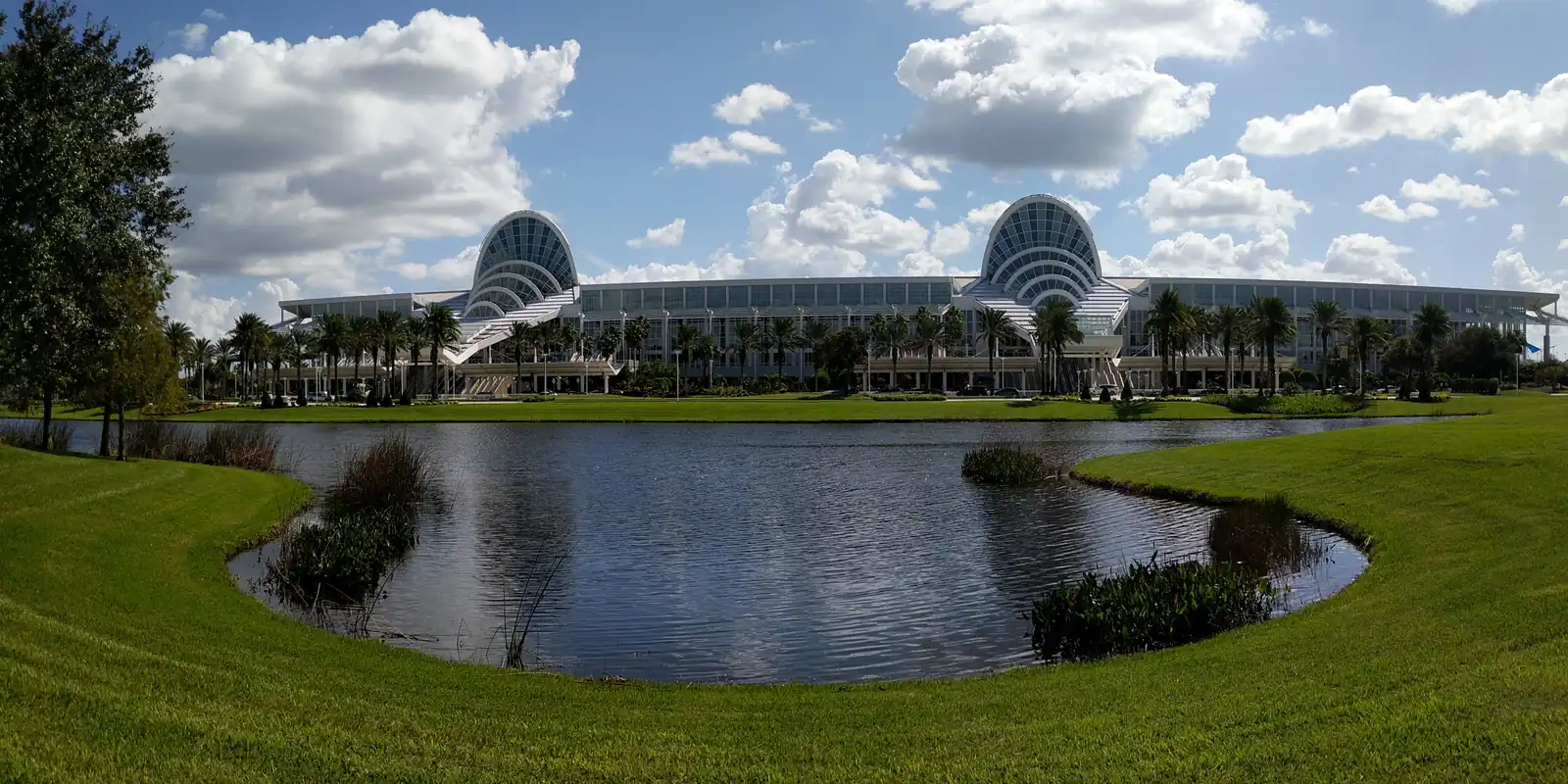
The Orange County Convention Center. Visit Orlando counted 5.8 million group-meeting visitors in 2025, and the events they attend are staffed by the hospitality workers this page describes. Photo: elisfkc, Wikimedia Commons, CC BY-SA 2.0.
Fewer, deeper pieces
One thorough page on a theme-park worker's rights will outperform ten short posts that repeat each other. We write long where the subject needs it, update rather than republish, and retire pages that compete with the firm's own better ones.
Content the firm already has
Many Orlando firms have years of posts. Before writing anything new we check which old posts still bring visitors, which are out of date (a pre-2023 four-year deadline is a common one) and which can be combined. Correcting an outdated page is often the quickest gain available. The legal content page shows how drafts move from writer to lawyer.
The Ninth Judicial Circuit
Orange and Osceola's courts, for accurate practice pages
The Ninth Judicial Circuit serves Orange and Osceola counties, covers more than 2,500 square miles and more than 2 million residents, and describes itself as one of the largest circuits in Florida (Ninth Judicial Circuit). Its structure determines which court a client's case lands in, and pages that get it right read as written by someone who practices here.
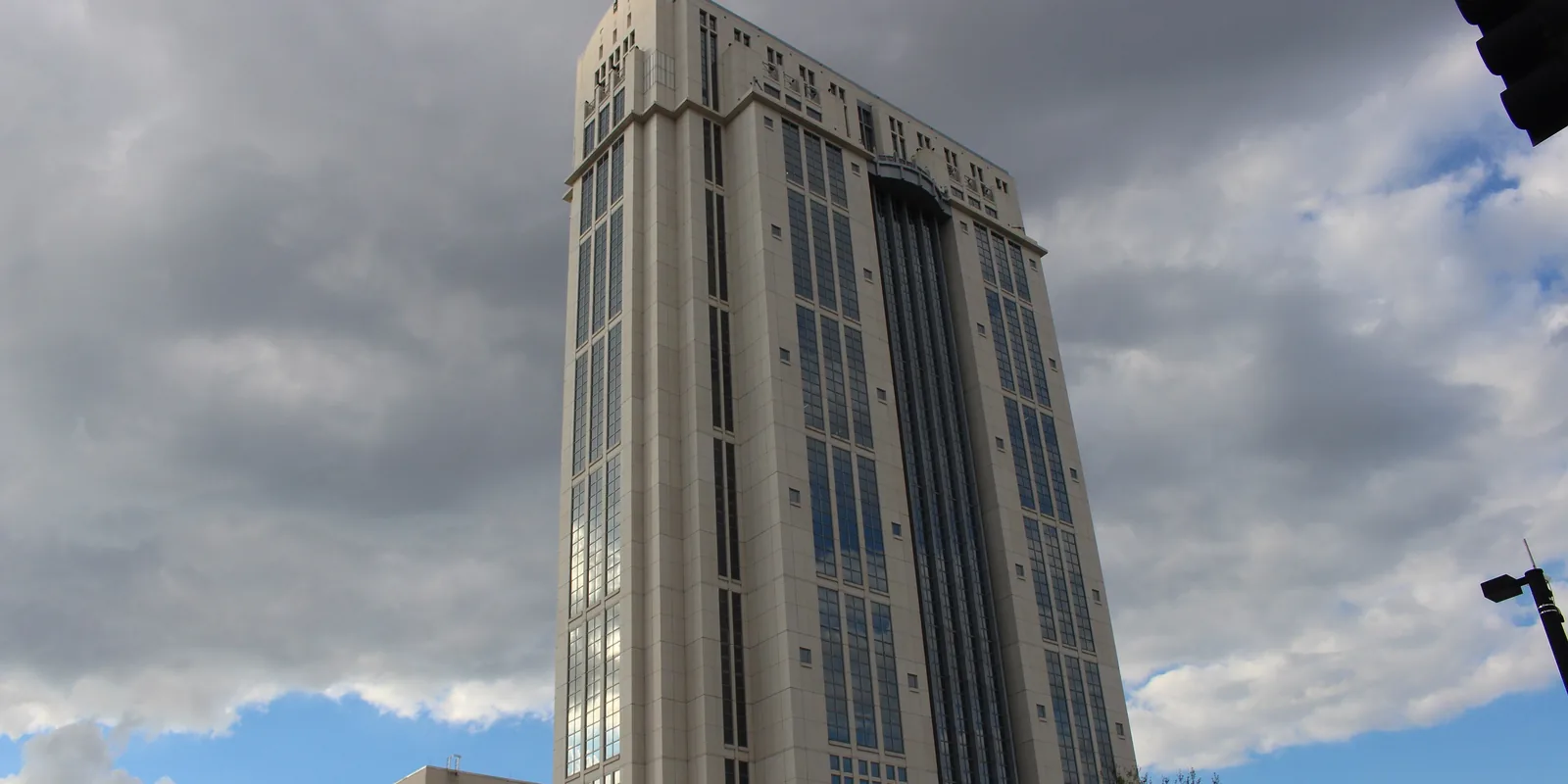
The Orange County Courthouse in downtown Orlando, where the Ninth Circuit hears civil cases above $50,000 and its Business Court sits as Division 43. Photo: Michael Rivera, Wikimedia Commons, CC BY-SA 4.0.
County court or circuit court
Circuit civil courts hear matters over $50,000 and appeals from county court; county courts hear matters of $50,000 or less, small claims under $8,000 and most landlord-tenant cases (Ninth Judicial Circuit). A hospitality worker's wage claim and a visitor's injury claim can land in different courts, and a page that says which one saves a confused call.
The Business Court
The circuit runs a Business Court as Division 43 for Orange County and Division 23 for Osceola County; Osceola joined on January 3, 2023, the fifth Florida county with a formal Business Court (Ninth Judicial Circuit). Commercial firms representing hotels, restaurants and attraction vendors can name these divisions on their pages.
AI search
AI legal marketing in Orlando: answers for workers and for visitors
Several searches reaching this page ask for an Orlando AI legal marketing company or AI SEO services. AI Overviews and AI Mode, per Google Search Central, cite pages from the same index as regular results, so the groundwork doesn't change: accurate, well-organized pages. What changes is the questions.
Visitors ask AI tools before they call anyone
"I got hurt at a hotel in Orlando and I'm back home in Ohio. Do I need a Florida lawyer?" An AI assistant answers that from pages that address the visitor's situation directly. A firm with a clear page on handling a Florida claim from another state is the firm the answer can cite.
Workers ask in plain language
"Can my manager take part of my tips?" A page that answers it under Florida law, with the 2026 figures and the steps before suing, is easy for an AI tool to quote and easy for a server to trust.
Checking what the tools say about the firm
Throughout the engagement we keep a log of how the major AI tools answer the firm's priority questions, which sources they lean on, and which of those sources need correcting. We report what we find; no agency can promise a citation. The stages are written up on our AI search service page.
Florida context
The Florida Bar's rules, and firms elsewhere in the state
Advertising rules every page follows
Orlando firms are bound by the same Rules Regulating The Florida Bar as every Florida lawyer, and we review every draft against them. The detail, including which ads must be filed with the Bar and how the website exemption works, is on our Miami page: Florida Bar advertising rules.
Florida firms outside Orlando
Many searches that reach this page are statewide ("Florida law firm SEO", "lawyer SEO company Florida"). Florida firms outside Central Florida plan their local work around their own city; the state's largest markets have, or will have, their own pages.
We handle Orlando clients from West Hollywood, California, and keep no Florida location. Meetings happen by video call and screen-shared review, and you can reach us at (661) 388-5526.
From audit to written plan
Once you've seen the audit, we hold a strategy call on your site, your profile and the firms ranking ahead of you. Then we put the plan on paper: which practices and searches to target, which pages to build or correct and in what order. The engagement is search and AI visibility alone, or that plus Consulting CMO duties (paid media, an intake check, supervision of other vendors), billed as a monthly retainer in both cases. Read how we work for the steps and our team page for the people.
How results are reported
A monthly report puts Search Console beside the firm's call and form log, so each inquiry, and where possible each signed case, traces back to a page. For an Orlando injury or employment firm, we separate worker and visitor inquiries in the report, since they come from different pages and convert differently.
Orlando firms ask us these before they hire
Missing a question? Include it with your audit request; the reply comes with your results.
In short
How GLP plans lawyer SEO for Orlando firms: the hospitality workforce and the visitors who generate much of Central Florida's legal demand, the Florida statutes their claims turn on, what our search survey found for worker and visitor searches, and how an engagement runs.
Should an Orlando firm publish pages for Kissimmee and the resort corridor?
If it takes clients from there, yes. In Osceola County, 17.6% of people with a job work in the visitor trades, a higher share than Orange County's, and 11.2% of its housing units are held for seasonal or occasional use (ACS B25004). A page for Kissimmee clients should be honest about where the office is and how the firm meets clients there; a listing at an address the firm doesn't staff isn't allowed.
Which kinds of Central Florida firms are a fit for GLP?
Firms of any size in Orange, Osceola and Seminole counties, and Florida firms elsewhere that want Central Florida clients. Most of the practices this page describes are injury, workers' compensation, employment, medical malpractice and immigration, because that is where the tourism economy produces its legal work, but we also plan for family, estate, criminal and business firms. The free audit tells you quickly whether your practice is a fit.
Does GLP take on Orlando businesses that aren't law firms?
No. We only work with law firms, so the searches, rules and intake questions we plan around are the legal ones. A restaurant, hotel or attraction looking for local SEO in Orlando would be better served by a general agency.
What decides the monthly fee for an Orlando firm?
You'll get a figure after the audit and the strategy call, billed monthly. The price depends on how many practice areas and markets you want to reach and how much needs building or fixing; an injury firm going after visitor and worker searches across two counties needs more pages than a single-practice office. Before anything is signed you get the terms on paper (how we work).
Are GLP's case studies relevant to a Florida practice?
On our case studies page. Each one names the firm's practice and market and gives the period over which results were measured, so you can judge how comparable it is to an Orlando practice. We don't publish client results that the client hasn't agreed to share.
Do you build local citations for Orlando law firms?
Yes, as part of local SEO. That means the firm's name, address and phone number listed consistently on the directories and legal platforms that matter for its practice, plus corrections where old addresses or phone numbers linger. For a firm that has moved within Orlando, cleaning up the old address is often the first task, because map rankings and AI answers both read those listings.
Can an Orlando firm advertise to visitors who have already gone home?
It can publish pages and run ads that reach them, but a lawyer needs a Florida licence to handle a Florida claim, and any marketing has to follow The Florida Bar's rules wherever the reader is. Our Miami page covers that ground. The practical point for content is that a visitor's search often happens weeks later from another state, so the page has to make sense to someone who isn't in Florida anymore.
What should an Orlando family law page say about parenting coordinators?
That the Ninth Circuit's parenting coordination program has coordinators who agreed to work at reduced rates for parents who can't afford private fees, and that coordinators are mental health or legal professionals with mediation training who help parents carry out a parenting plan (Ninth Judicial Circuit). Parents in high-conflict cases search for what a coordinator is and what it costs, and few firm pages answer.
Do hospitality workers who just moved to Orlando have to wait before filing for divorce?
Six months: one spouse must have lived in Florida for six months before the petition is filed (§ 61.021, Fla. Stat.). In Orange County the petition goes to the Ninth Circuit's domestic relations division. Hospitality workers who relocated for a job at the parks ask this often, and a family page that states it in the first lines answers them.
What is the Florida lemon law deadline that Orlando buyers should know?
The lemon law rights period ends 24 months after the vehicle was first delivered to the consumer, and "consumer" includes someone who leases for a year or more (§ 681.102, Fla. Stat.). Rental-heavy Orlando also has many buyers of former rental cars, whose questions about when that clock started make a useful lemon law page.
What should an immigration firm's hearing page say about the downtown court?
At 500 N. Orange Ave., Suite 1100, in downtown Orlando (EOIR). Everyone entering needs government-issued identification and passes through security. Immigration firms serving hotel and park workers can put those details, with parking and timing advice, on the page a client reads the night before.
How far ahead should a court interpreter be requested in Orange County?
At least seven days before the proceeding for spoken-language interpreters, and longer for less common languages, according to the Ninth Circuit's interpreter program (Ninth Judicial Circuit). Firms whose clients include international visitors or workers with limited English can say so on their litigation pages, along with the fact that the circuit also offers remote interpreting.
Is local SEO in Orlando different from SEO for the rest of Florida?
The groundwork is the same; the local signals differ. An Orlando office competes in the map against firms within driving distance of the searcher, which in the tourist corridor includes statewide injury firms with offices in the area. Statewide pages for "Florida law firm" searches are a separate job, and we plan them separately so they don't compete with the firm's Orlando pages.
Do you offer AI SEO services to Orlando firms?
Yes. It is part of every engagement: we check what ChatGPT, Perplexity and Google's AI features say about the firm, correct the sources they read and write pages that state Florida rules plainly enough to be cited. Our GEO explainer sets out how the labels differ.
Find out who reaches you from the parks, the hotels and the airport
Tell us which clients you want more of. We'll show you how your Orlando pages, map listing and AI answers look to a hotel worker on a phone, and to a visitor searching from home.
We use cookies to run this site, measure traffic, and serve relevant ads. Choose which categories you allow. You can change this any time. See our Privacy Policy.
We use cookies.
We use cookies to measure traffic and improve our ads. You can opt out at any time. See our Privacy Policy.
We use cookies.
Cookie preferences
Choose which cookies you allow. You can change these at any time from the "Cookie preferences" link in the footer. See our Privacy Policy.
Strictly Necessary
Required for the site to function (session, security, form submissions). Cannot be disabled.
Always on
Analytics
Help us understand how the site is used (e.g., Google Analytics, Matomo). Aggregated, no individual identification.
Marketing
Used to measure ad effectiveness and show you relevant ads on other sites (e.g., Google Ads).
Functional
Remember your preferences and turn on extra site features.