
For firms that sue insurers, and firms that defend them
Lawyer SEO in Tampa, FL
SEO for Tampa law firms in the county where Florida's insurers do their claims work.
Hillsborough County employs more people at insurance companies than any other county in Florida, and the Tampa metro has more claims adjusters per job than Miami, Orlando or Jacksonville. On the other side of those desks are homeowners whose Citizens policies ended in the last three years and who now claim under rules the Legislature changed twice. This page explains how we reach both readers for a Tampa firm.
The page below is about Tampa's market: the insurance workforce, the policyholders it serves and the Florida statutes their disputes run on. If you want the version of this that fits any city, it's called law firm SEO on our site.
Free, done by a real person, and in your inbox within 48 hours.
Tampa Bay's claims economy
The insurers' county, and their customers: Tampa's market, exhibit by exhibit
Each exhibit is a count from a public source, lettered the way a claim file would letter them, with the source named beside it and one line on why a Tampa firm should care. Exhibits A, B and G compare Hillsborough County with the rest of Florida; C compares metro areas; the others describe Hillsborough or the City of Tampa alone.
| Exhibit | What was counted | Count | Why a Tampa firm should care |
|---|---|---|---|
| A | How many people Hillsborough's insurance carriers employBLS QCEW | 21,3852024 average; 22.2% of Florida's 96,392; 3.46 times the national concentration | The other side of a Florida claim is often a few miles from your office, and so are many of the people who handle it. |
| B | The part of that total at property and casualty carriersBLS QCEW | 7,74023.8% of Florida's 32,576 | Homeowner, auto and liability claims are the core of Tampa's insurance work, and of the disputes that follow. |
| C | People adjusting, examining and investigating claims in the Tampa metro, May 2025BLS OEWS | 7,2405.0 per 1,000 jobs; Miami metro 1.8 | A large professional audience reads Florida claim law closely, from the insurer's side of the desk. |
| D | Share of employed Tampa residents in finance, insurance or real estate jobsACS DP03 | 12.0%Florida 8.1% | Insurance and finance are a household employer in the city itself, not only a downtown industry. |
| E | Citizens multiperil homeowner policies in HillsboroughCitizens | 5,328September 2026, down from 77,139 in September 2023 | With Citizens this much smaller, many owners now hold a policy from an insurer they have never claimed against. |
| F | Federal flood policies on Hillsborough homesFEMA | 54,17934,867 of them in the special flood hazard area; August 3, 2026 | Flood claims run on a federal policy with its own rules, separate from the homeowner policy most clients mean by "insurance". |
| G | Subsidence incidents reported in Hillsborough to the Florida Geological SurveyFGS | 618More than any other Florida county; 4,461 statewide | Ground-cover collapse and sinkhole coverage are an everyday policy question here, not a curiosity. |
| H | Lawyers on The Florida Bar's roll with a Hillsborough addressBar directory | 9,7008,303 eligible to practice; searched November 5, 2026 | A crowded field: pages have to be more specific than the next firm's to be found. |
The service
Tampa lawyer SEO from GLP, itemized like a claim estimate
A Tampa firm reading this has probably seen more estimates than most: the adjuster's line items, the contractor's, the appraiser's. So here is our work in the same form, line by line, with what each line covers and when it happens. The lines follow the sequence our how we work page lays out. No line is a ranking promise; nobody can promise where Google or an AI assistant will place a firm.
| Line | Item | Scope for a Tampa firm | When |
|---|---|---|---|
| 01 | Audit video | For the matters you name, someone on our staff runs the searches a Tampa policyholder or claimant would run, then reads your site and map listing the way a worried homeowner would and asks the AI tools which Tampa firm to call, all on one recording. It costs nothing, and you can use it without hiring us. | Within 48 hours |
| 02 | Written plan | The sequence for new practice and city pages, ordered by the fee value of each matter and the competition on each search; the site repairs; the Florida statute behind every page. Nothing starts until both of us have signed off on a written scope. | After the audit |
| 03 | Practice pages | Pages for the matters this market produces, written around the documents a policyholder or claims professional is holding. A lawyer at your firm approves every legal statement before it is published. | Month one onward |
| 04 | Technical repairs | Indexing gaps, broken redirects, slow pages and structured data errors, fixed in the site rather than reported. | Ongoing |
| 05 | Map listing | One Google listing per staffed office, with the right category and real hours and photos; reviews asked for only within Google's rules. | Month one |
| 06 | AI visibility | Each month we ask the AI tools about the firm and log the answers: what they say, the pages they quote, and what moved since the previous check. | Monthly |
| 07 | Report and call | Your intake log of calls, forms and signed clients, read against the search numbers, then a call to set next month's work. Consulting CMO clients meet with us weekly, and we also manage their ads and intake. | Monthly |
| Total | Fee: one retainer per month, set once the audit is done. Advertising spend paid to Google is separate, and your staff keep answering the phones. | ||
See how your firm appears to a Hillsborough homeowner holding a denial letter. Get My Free Audit
Agency-shopping queries behind this page
What Tampa attorneys type when they go looking for an agency
The old edition of this page surfaced for a run of queries, and Search Console still lists them. They come from lawyers, not from their clients: "law firm seo tampa", "lawyer seo tampa", "seo for attorneys tampa", "attorneys seo tampa", "seo agency for lawyers tampa", "law firm seo agency tampa", "legal seo company tampa". Here is what we can tell the attorneys behind each kind of search.
Agency, company or firm: one engagement
Whichever word the search used, the work is the estimate above: an audit video, a written plan, practice pages your lawyers approve, technical repairs, the map listing, a monthly check of AI answers and a report set against your intake. We work from West Hollywood, so a Tampa client deals with us over email and on booked calls. Our law firm SEO page describes the parts that never change by city.
Content, websites and paid ads
Other searches ask for a single service: "tampa content marketing for law firms", "web design for lawyer tampa", "ppc for attorneys tampa". Those are described separately: content for law firms, law firm website design and law firm PPC. Paid ads sit in the Consulting CMO engagement, which adds oversight of ads and intake to the SEO work.
Email and social media
A few searches name "email marketing for lawyers tampa" or "lawyer social media management tampa". Neither is a line in the estimate above. If either matters to your firm, raise it on the call, and the written scope will say plainly whether it is included.
Tampa Bay, not only Tampa
Some attorneys add the bay: "seo for attorneys tampa bay", "seo for dui lawyer tampa bay". For a firm whose clients live in Pinellas, the answer depends on where its offices are, which the section across the bay and the St. Petersburg question at the end both take up.
BLS county employment data
More insurance-carrier jobs than any other Florida county: Hillsborough's claims industry
The Quarterly Census of Employment and Wages counts jobs from employers' unemployment-insurance filings, so it covers nearly every private employer in the county. For insurance carriers, the companies that write policies and pay claims, Hillsborough County averaged 21,385 jobs in 2024, more than any other county in Florida and nearly twice the next one, Duval (BLS QCEW 2024, NAICS 5241).
Property and casualty, not only life and health
Within that total, carriers writing direct property and casualty insurance, the policies behind home, auto and liability claims, employed 7,740 people in Hillsborough, 23.8% of the state's 32,576 (QCEW, NAICS 524126). One in four Florida P&C carrier jobs, in a county with fewer than one in fourteen Floridians (ACS 2020-2024), is the concentration that shapes this market.
Claims adjusting firms cluster here too
Independent claims adjusting businesses, a separate industry code from the carriers, employed 1,397 people in Hillsborough in 2024 at a location quotient of 4.43, the highest among the large Florida counties we compared (QCEW, NAICS 524291). Agencies and brokerages added another 11,690 jobs. Add them up and the insurance business is one of the county's defining private employers.
What a carrier town means for a law firm's site
For a firm that represents policyholders, the adjuster reading the demand may work a short drive from the client's house. For a firm that defends insurers, its potential clients' claims departments are local. Both kinds of firm compete for search attention in the same county, and both are read by people who know Florida's claim statutes well. Vague pages lose that audience fast.
BLS occupational data
Claims adjusters as a share of all jobs: Tampa against Florida's other metros
Industry counts say where the employers are; occupation counts say who does the work. The Occupational Employment and Wage Statistics survey for May 2025 puts 7,240 claims adjusters, examiners and investigators in the Tampa-St. Petersburg-Clearwater metro, a quarter of Florida's 28,100, and pays them a mean of $77,970 a year (BLS OEWS, Tampa metro).
Claims work as a share of the Tampa job market
For every 1,000 jobs in the Tampa metro, 5.0 belong to this occupation, 2.4 times the national rate by BLS's own location quotient. Miami, with a far larger workforce, has 1.8 per thousand; Orlando 2.4; Jacksonville 2.8. None of Florida's three other large metros comes close.
A professional readership for Florida claim law
People who adjust claims for a living read the same statutes a policyholder's lawyer cites, and they read them to the subsection. When an insurance defense or coverage firm publishes a page on, say, the 2023 bad-faith amendments, the readers who matter most are already experts in the procedure. A page that gets a day count wrong is noticed.
Workers with their own legal problems
Seven thousand adjusters, plus the agents, underwriters and support staff around them, are also clients in their own right: employees with pay disputes, injuries, divorces and estate plans like anyone else. A Tampa employment page that names the insurance industry, the way a page in a factory town names the plant, speaks to a large local group that generic copy misses.
Citizens and flood policies
Hillsborough homeowners after Citizens: who insures the house now
Citizens Property Insurance Corporation is the state-created insurer of last resort. Its monthly county reports trace a boom and a bust in Hillsborough: its main homeowner book more than tripled between September 2020 and the 2023 peak, then all but emptied by September 2026, as Exhibit E shows (Citizens, policies in force by county).
Why owners can't simply stay with Citizens
Florida law keeps Citizens as the insurer of last resort. A primary residence isn't eligible for a new Citizens policy if an authorized insurer offers comparable coverage at a premium no more than 20% higher than Citizens' own (§ 627.351(6)(c)5.a.). When a private insurer assumes Citizens policies, the owners get a shorter nonrenewal notice than the law otherwise requires; the documents table below gives the figures. For many Tampa homeowners, the insurer on the next claim isn't the one they chose.
The flood requirement for those who remain
Citizens now requires flood insurance as a condition of its homeowner policies. Homes in FEMA's special flood hazard area have needed it since 2023, and outside that area it was phased in by replacement cost: $600,000 or more from January 1, 2024, $500,000 from 2025, $400,000 from 2026, and all other Citizens homeowner policies from January 1, 2027. Policies that exclude wind and condo-unit policies are exempt (§ 627.351(6)(aa)). A page that explains this in a single table answers a question thousands of Tampa owners will meet at renewal.
Flood policies already in force
FEMA's count, Exhibit F above, shows how many Hillsborough homes already carry a federal flood policy, most of them inside the mapped flood zone (OpenFEMA, NFIP residential penetration). Those policies come with their own claim process. A homeowner after a storm may be holding two policies with two sets of deadlines, and a firm's pages should keep them apart.
Florida Statutes, chapter 627
The property-claim clock since Florida rewrote it in 2022 and 2023
Florida changed the rules for property claims twice in four months: a special-session law signed on December 16, 2022, and the broader 2023 act signed on March 24, 2023. A lot of Tampa web copy hasn't caught up. These are the rules as they stand in the 2026 statutes.
Reporting deadlines for new, reopened and supplemental claims
A new or reopened property claim is barred unless notice reached the insurer within one year after the date of loss; a supplemental claim for more damage from the same peril, within 18 months. For a hurricane, tornado, windstorm or severe rain, the date of loss is the landfall or the date the National Oceanic and Atmospheric Administration verifies the event. The separate limitation period for filing suit still applies. The statute defines the two later kinds: a reopened claim is one the insurer closed and reopened at the insured's request for more costs on damage already disclosed, and a supplemental claim covers more damage from the same peril, or costs of finishing repairs on an open claim (§ 627.70132). A page should define both terms before it gives either deadline.
What the insurer owes, and by when
A residential property insurer must acknowledge a communication about a claim within 7 calendar days, begin investigating within 7 days after receiving proof of loss, inspect within 30 days of that proof, and send the policyholder a copy of any detailed estimate within 7 days after its adjuster produces it. Within 60 days after notice of the claim it must pay or deny it, and payments made later carry interest (§ 627.70131). Those are the dates a policyholder page should list in digits, because they're the dates the client can check against their own email.
Deadlines in a Florida residential property claim
Days counted from the event that starts each lane: the loss, the insurer's receipt of notice or proof of loss, or the end of the policy
-
Policyholder reports the loss (§ 627.70132)
- Day 0Date of loss
- Day 365Notice deadline, new or reopened claim
- Day 548Last day for a supplemental claim (18 months)
-
Insurer handles the claim (§ 627.70131)
- Day 30Inspect, counted from proof of loss
- Day 60Pay or deny, counted from notice of the claim
-
Insurer decides not to renew (§ 627.4133(2)(b))
- Day -120Written notice with the reason
- Day 0Policy ends
Use the arrow keys to read each date.
| Rule | Day | What happens |
|---|---|---|
| Policyholder reports the loss (§ 627.70132) | 0 | Date of loss |
| Policyholder reports the loss (§ 627.70132) | 365 | Notice deadline, new or reopened claim |
| Policyholder reports the loss (§ 627.70132) | 548 | Last day for a supplemental claim (18 months) |
| Insurer handles the claim (§ 627.70131) | 30 | Inspect, counted from proof of loss |
| Insurer handles the claim (§ 627.70131) | 60 | Pay or deny, counted from notice of the claim |
| Insurer decides not to renew (§ 627.4133(2)(b)) | -120 | Written notice with the reason |
| Insurer decides not to renew (§ 627.4133(2)(b)) | 0 | Policy ends |
Sources: Fla. Stat. §§ 627.70132, 627.70131 and 627.4133(2)(b), 2026 Florida Statutes on flsenate.gov, read November 5, 2026. Exceptions and tolling rules are not shown.
Notice of intent before any lawsuit
Before suing on a residential or commercial property policy, the claimant must file a notice of intent to initiate litigation with the Department of Financial Services, on the department's form, at least 10 business days before filing and not before the insurer has decided coverage. After a denial the notice includes an estimate of damages if known; otherwise it carries a settlement demand that itemizes damages, fees and costs, and the disputed amount. The insurer has 10 business days to respond, and a suit filed without the notice, or too early, must be dismissed without prejudice. When the notice isn't about a denial, the insurer answers with a settlement offer or by requiring appraisal or other dispute resolution; the limitation period is tolled meanwhile, and if appraisal isn't finished within 90 days after the 10-day period ends, the claimant may sue without further notice (§ 627.70152).
Benefits that can no longer be assigned
For residential and commercial property policies issued on or after January 1, 2023, a policyholder may not assign post-loss benefits; an attempt is "void, invalid, and unenforceable". The exceptions are a later buyer of the property, a power of attorney under chapter 709 and liability coverage (§ 627.7152(13)). Assignments under policies issued from July 1, 2019 through December 31, 2022 still follow the section's earlier requirements, so a page on assignments asks first when the policy was issued. Contractors who once took assignments now work for the homeowner, and a page aimed at homeowners should say who holds the claim.
The end of one-way attorney fees
The statutes that once made an insurer pay a winning policyholder's fees, sections 627.428 and 626.9373, were repealed by the 2023 act for suits filed after March 24, 2023; for property suits the December 2022 law had already removed the right (ch. 2023-15, Laws of Fla.). The 2023 fee statute for declaratory actions after a total coverage denial expressly does not apply to residential or commercial property policies (§ 86.121(2)). Any Tampa page that still tells homeowners "the insurance company pays our fees" is out of date, and misleading in a lawyer's advertisement.
Mediation the insurer pays for
The department runs a mediation program for residential property claims. The insurer must tell policyholders about it at issuance, at renewal and when a claim is filed, and it bears the cost; a policyholder who doesn't show up pays to reschedule. Mediation isn't binding, a written settlement can be rescinded within three business days unless the check has been cashed, and disputes under $500 are excluded unless both sides agree (§ 627.7015). For many claims it is the cheapest step a page can describe.
Do your property pages still promise that the insurer pays your fee? Book the free audit first
Documents as page topics
Pages built from the letter a Tampa policyholder is holding
People don't search "first-party property dispute". They search with a letter in their hand, using its words. Florida law decides what many of those letters must contain and when they must arrive, which makes each one a page topic with a precise answer. The table pairs the document with the statute that governs it and the page we would write for it.
| The document in the client's hand | What Florida law says about it | The page it calls for |
|---|---|---|
| Renewal premium notice | At least 45 days before renewal (§ 627.4133(2)(a)) | What a premium increase notice must say, and what the owner can do before the date |
| Nonrenewal or cancellation notice | At least 120 days ahead, with the reason; 10 days for nonpayment; 20 days in the first 60 days of coverage (§ 627.4133(2)(b)) | "My insurer won't renew": deadlines, the stated reason and the options left |
| Name and license number of the field adjuster | Given to the policyholder in print or electronically when there is a physical inspection (§ 627.70131(3)(b)) | What to expect at the inspection and what to keep from it |
| The adjuster's detailed estimate | Sent within 7 days after it's generated, if one was made (§ 627.70131(3)(e)) | How to read an estimate line by line, and when to ask for it |
| Payment or denial letter | Within 60 days of notice, with a reasonable written explanation, and of any shortfall against the insurer's own estimate (§ 627.70131(7)(a)) | Denied or underpaid: what the explanation must contain and the next step |
| Notice of the mediation program | Given at issuance, renewal and claim filing (§ 627.7015(2)) | DFS mediation explained, with the 3-day rescission rule |
| Cancellation or nonrenewal during repairs | Not until 90 days after repairs following a declared hurricane or wind loss; for other covered losses, not until repairs end or a year after final payment, whichever is first; exceptions for nonpayment, claim fraud and similar (§ 627.4133(2)(e)) | "Can they drop me before the roof is fixed?": the dates and the exceptions |
| Takeout nonrenewal from Citizens | Citizens may give 45 days instead of 120 when a private insurer takes the policy over (§ 627.4133(2)(b)5.) | "Citizens transferred my policy": what changed and what didn't |
Why document pages work in search and in AI answers
A document page matches the reader's own words, because they copy them from the letter, and it can answer in one sentence with a statute number, which is the kind of passage an AI assistant can quote. It also keeps a firm honest: each page explains what the paper means and what the law requires of the insurer, and stops short of telling the reader what their claim is worth.
Writing them without overpromising
Each document page ends with what the firm does, not with what the reader will receive. A sentence like "the insurer must explain a denial in writing" is a fact; "we'll get your claim paid" isn't, and we don't write it.
Roofs and wind mitigation
Roof age, roof deductibles and the state's mitigation grants
In Tampa the roof decides a great deal: whether a policy is written at all, how much of a claim is paid up front, and what the owner can do to bring a premium down. Florida law speaks to each of those, and each is a page a homeowner looks for.
When roof age can and can't block a policy
An insurer may not refuse to issue or renew a homeowner's policy solely because the roof is less than 15 years old. For an older roof, the owner may pay for an inspection by an authorized inspector before the insurer can require replacement, and if it shows at least five years of useful life left, roof age alone can't be the reason to refuse. The age runs from the last date the whole roof surface was built or replaced to code. The rule applies to policies issued or renewed since July 1, 2022 (§ 627.7011(5)).
The separate roof deductible
A homeowner policy may carry its own roof deductible, capped at the lesser of 2% of the dwelling (Coverage A) limit or 50% of the cost to replace the roof. It can't be applied to a hurricane, to a tree or other hazard that punctures the roof deck, to a total loss, or to a repair of less than half the roof, and the owner can reject it on a signed form approved by the Office of Insurance Regulation. An insurer may offer it at issuance only with an opt-out, and add it at renewal only with a notice of change in policy terms and the same opt-out (§ 627.701(10)); owners who don't remember signing anything usually didn't reject it. Where it does apply, the insurer may pay only the actual cash value of the roof loss until the owner shows proof of paying that deductible, such as a canceled check or an installment contract (§ 627.7011(3)(a)). That second rule explains many of the "why did they pay so little" calls a Tampa firm receives.
Free inspections and matched grants
The Department of Financial Services runs My Safe Florida Home, which offers free wind-mitigation inspections and grants for approved upgrades. The statute limits it to owner-occupied, site-built single-family homes with a homestead exemption and an insured value of $700,000 or less; grants are matched $1 from the owner for every $2 from the state, up to $10,000 of state money, and low-income applicants can receive up to $10,000 without a match, all subject to annual appropriations (§ 215.5586; My Safe Florida Home). The 2026 Legislature amended the section, so a page about the program should carry the date its figures were checked.
Who writes these pages
Roof and mitigation pages bring in homeowners before there is any claim, which suits real estate, insurance-coverage and consumer firms that want a relationship before the dispute. They also help a property-claims practice later, because the homeowner who read about the roof rule remembers which firm explained it.
Florida Geological Survey data
Sinkholes and ground-cover collapse in the county with the most reports
Owners who see the ground sink can report it to the state's geologists, and the reports are public. Hillsborough has 618 on file, more than any other county, followed in the bay area by Pasco, Hernando and Polk (FGS subsidence incident reports, DEP open data). The survey is careful to say most reports were never checked by a geologist, so they record what owners noticed, not confirmed sinkholes. For a law firm that is the useful number: it counts the people who saw the ground move and wanted someone to know.
What every policy covers, and what costs extra
Every Florida property insurer must cover catastrophic ground-cover collapse, which requires all four of: an abrupt collapse, a depression visible to the naked eye, structural damage to the building including the foundation, and an order from the government to vacate the structure. Settling or cracking alone doesn't qualify. Wider "sinkhole loss" coverage is something insurers must offer for an extra premium, with a deductible of 1%, 2%, 5% or 10% of the dwelling limit (§ 627.706).
How long an owner has to report ground movement
A claim under a policy with sinkhole coverage, initial, supplemental or reopened, is barred unless notice reached the insurer within two years after the owner knew or reasonably should have known about the loss (§ 627.706(5)). That clock starts with knowledge, not with the crack, which is the detail a homeowner most needs from a page.
Neutral evaluation
Once a sinkhole report has been issued, either side may ask the Department of Financial Services for neutral evaluation. It is nonbinding but mandatory once requested, the insurer pays its reasonable costs, filing tolls the time to sue, and the evaluator's report is admissible later (§ 627.7074). It deserves a page of its own, because it changes how a sinkhole dispute unfolds.
Auto insurance
Florida cars that carry no bodily-injury coverage, and the uninsured-motorist question
An injury firm's Tampa pages can't assume the other driver's policy will pay for the client's injuries, because Florida doesn't make drivers buy bodily-injury liability coverage to register a car.
What registration requires
The state's motor vehicle department says that to register a car you must show personal injury protection and property damage liability, at least $10,000 of each; bodily-injury liability is listed as required only for taxis (FLHSMV, insurance requirements; § 324.022). Personal injury protection itself is covered on our Orlando page and isn't repeated here.
When the 10/20/10 figures come in
Chapter 324 defines proof of financial responsibility as $10,000 for bodily injury to one person, $20,000 for two or more and $10,000 for property damage (§ 324.021(7)). The chapter brings those figures into play after a reported crash: unless an exemption applies, the department suspends the driver's license and the owner's registrations 30 days after notice of the crash, and posting security or showing proof of financial responsibility is among the ways to avoid it (§ 324.051(2)(a)). Until then, a driver can be on the road lawfully with no bodily-injury coverage at all.
Uninsured-motorist coverage, and its rejection form
A policy that does include bodily-injury liability can't be issued in Florida without uninsured-motorist coverage, unless a named insured rejects it in writing on the form the Office of Insurance Regulation approves (§ 627.727). That signed form is often the first document an injury lawyer asks a new client to find, and a page that tells the client what it looks like saves a week.
Fla. Stat. § 624.155
Bad-faith claims after the 2023 amendments: the notice, the safe harbor and the new duties
Florida's civil remedy statute is where insurance disputes become litigation over the insurer's conduct, and the 2023 act changed it in ways both sides of a Tampa practice need on their pages.
The civil remedy notice and the cure period
Before suing, the claimant must give the Department of Financial Services and the insurer 60 days' written notice of the violation, and no action lies if the insurer pays the damages or corrects the problem within those 60 days. In a residential property claim the notice can't be filed within 60 days after either side invokes appraisal (§ 624.155(3)).
Liability claims and their 90-day tender
For a third-party liability claim, no bad-faith action lies if the insurer tenders the lesser of its policy limits or the amount demanded within 90 days after actual notice of a claim supported by sufficient evidence; if it doesn't, any limitation period is extended by 90 days (§ 624.155(4)). An injury firm's demand-letter page should explain why the evidence goes out with the first letter.
Negligence isn't bad faith, and claimants owe good faith too
"Mere negligence alone is insufficient to constitute bad faith." The insured, the claimant and their representatives now have a duty to act in good faith in furnishing information, making demands, setting deadlines and trying to settle, and the trier of fact may reduce damages against the insurer if they didn't (§ 624.155(5)). Separately, Florida's offer-of-judgment statute now applies to every civil action involving an insurance contract (§ 624.1552), so a rejected offer can shift fees in either direction.
Same statute, a page for each side
A policyholder firm's page explains how to build a demand that starts the clock properly. A defense firm's page explains the safe harbor and the claimant's new duty. Both are describing the same three subsections, and in Tampa both audiences are large enough to be worth writing for.
Insurance defense and coverage practices
Pages written for the insurer's side of a Tampa claim
Most lawyer-marketing advice assumes the client is a consumer who has just been hurt or wronged. In Tampa a large share of insurance law is practised for carriers and their insureds, by firms whose readers are claims managers, in-house counsel and the adjusters counted above. A page written for them sounds different and proves its points differently.
What a claims professional looks for
- The current text of the rule, quoted to the subsection, with the date of the session law that last changed it.
- The procedural step and its deadline from the insurer's side: the 10-business-day response to a notice of intent, the 14 business days to reinspect after asserting that right (§ 627.70152(4)), the 60-day cure window under § 624.155.
- The forum, state or federal, and what changes for the insurer when a case is in one rather than the other.
- Who in the firm handles that kind of file, with a biography that says so.
- Nothing about winning big for injured people, which on a defense site reads as the wrong firm.

The federal division that covers most of the bay
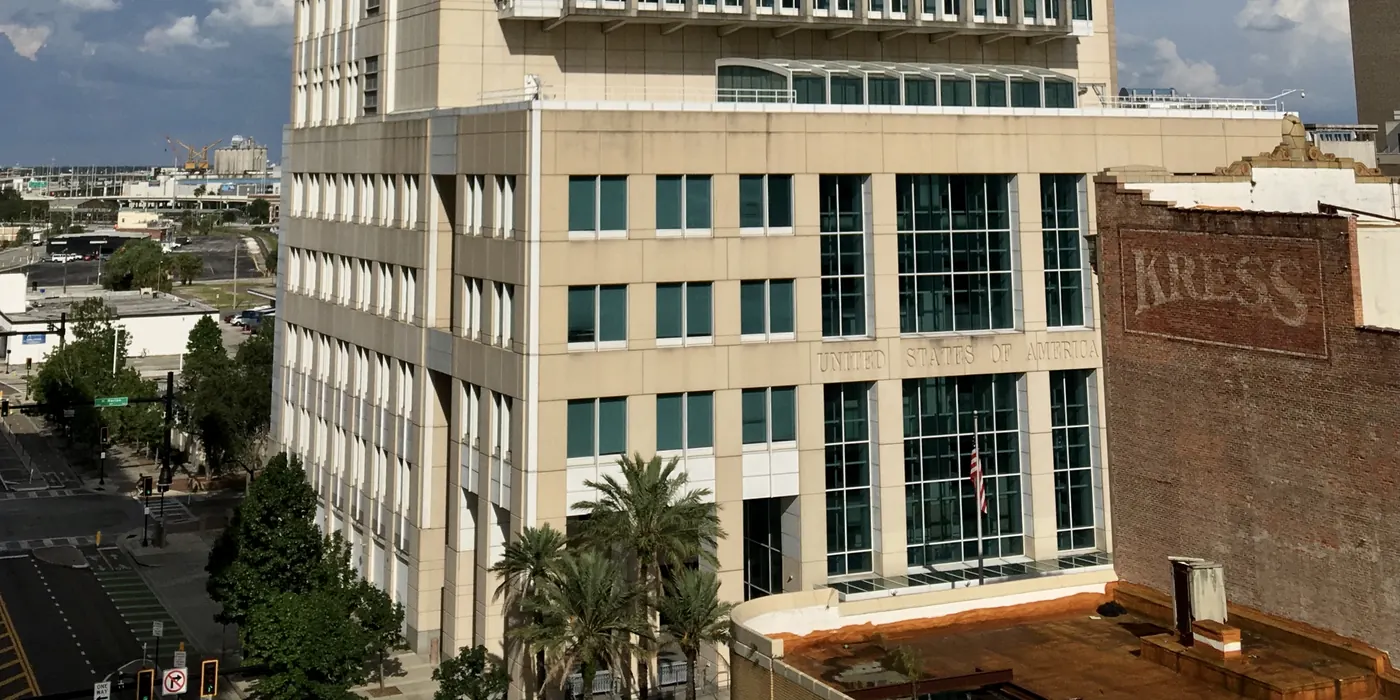
The Middle District of Florida's Tampa Division serves Hardee, Hillsborough, Manatee, Pasco, Pinellas, Polk and Sarasota counties from the Gibbons courthouse (M.D. Fla.), and the U.S. Bankruptcy Court's Tampa Division keeps its clerk in Suite 555 of the same building (Bankruptcy Court, M.D. Fla.). For a coverage practice, that one courthouse is the federal venue for most of the bay area, and a page that says so is accurate for clients in St. Petersburg and Lakeland as well as Tampa.
Search is a smaller part of how carriers hire
We say this plainly to defense firms: a claims department chooses counsel through relationships and its own processes more than through a search box. The website's job is to confirm the choice. That means substantive pages on the issues the firm handles, accurate biographies and published writing a claims manager can forward. SEO helps those pages be found by the in-house lawyer checking a name; it doesn't replace the relationship.
Our survey, November 5, 2026
A shared map for both sides of a claim: ten Tampa insurance searches, listing by listing
A Tampa firm on either side of insurance claims wants to know who it is up against in the map results. We looked.
Downtown searches, read by hand
On November 5, 2026 at 14:34 UTC we sent ten queries to Google's Places API, one query per practice, the practice name followed by "Tampa", from "hurricane damage lawyer" to "insurance defense attorney", with downtown Tampa as the center of a 20-kilometer bias, saving the top 20 from each. The 200 places went to only 65 distinct listings, so the same firms fill most of these searches. A minute later we read each listed website's home page and up to two linked insurance or property pages, and checked every match by hand.
| Search, with "Tampa" | Listings kept | Also returned for "insurance defense attorney" | Claims businesses, not law firms |
|---|---|---|---|
| Hurricane damage lawyer | 20 | 8 | 1 |
| Property damage lawyer | 20 | 8 | 0 |
| Insurance claim lawyer | 20 | 12 | 2 |
| Denied insurance claim attorney | 20 | 10 | 0 |
| Roof damage claim lawyer | 20 | 9 | 2 |
| Sinkhole lawyer | 20 | 5 | 0 |
| Bad faith insurance lawyer | 20 | 9 | 0 |
| Flood insurance claim lawyer | 20 | 10 | 0 |
| Homeowners insurance lawyer | 20 | 8 | 0 |
Source: GLP survey through the Google Places API (New), November 5, 2026, 14:34 UTC, first 20 listings per search. A listing counts in every search it appeared in.
Defense firms and homeowner firms share the same results
Of the 20 listings for "insurance defense attorney", 15 also came up in at least one of the nine homeowner searches, and every homeowner search shared between 5 and 12 of its 20 listings with the defense search. Google's map results don't sort firms by the side they take. The firm's own words have to: the Business Profile description, the first line of each practice page and the services listed.
Claims businesses among the lawyers
Three listings weren't law firms but claims businesses that Google files as insurance agencies; two describe themselves as public adjusters. They appeared in the hurricane, insurance-claim and roof searches, beside the firms a homeowner might hire.
Few firm sites name the pre-suit notice
Of the listed firm websites, 23 had an insurance or property-claim page we could read. Five of those mentioned the notice of intent that § 627.70152 requires before a property suit. Two told readers, with no date or policy qualifier, that the insurer usually pays the firm's fees, which the claim-clock section above shows is no longer the general rule for property suits.
What the survey can't show
It is one location on one day. The Places API returns listings in an order close to, but not always the same as, what a person sees on a phone, and three pages per site can miss a topic covered deeper in. We don't name the firms; the counts are the point.
What we do with it for a client
For a Tampa insurance practice the first fixes are the ones the survey points to: a Business Profile description that states the side the firm takes, practice pages that say it in the first sentence, a page on the notice of intent, and fee wording checked against the current statutes before anything else is written.
Hillsborough County
Hillsborough's own courts and programs, for the pages that cite them
Beyond insurance, Tampa practice pages are more useful when they name the local office that handles the reader's problem. We confirmed each detail below on the office's own website.
Hillsborough's circuit court and its mediation fees
The Thirteenth Judicial Circuit is made up solely of Hillsborough County, with two courthouses and 70 judges; the George Edgecomb Courthouse is at 800 East Twiggs Street (Thirteenth Circuit). Court-connected mediation costs nothing in small claims under $8,000, $60 a party in county civil cases from $8,000 to $50,000, and the mediator's hourly rate above that; family mediation is a flat $60 or $120 a party depending on combined income (Mediation and Diversion Services). Fee figures like these answer the cost question that keeps people from calling.
City limits decide which civil rights office takes a complaint
Inside Tampa's city limits, discrimination complaints go to the Tampa Office of Human Rights at 2555 East Hanna Avenue, within 180 days; its online questionnaire doesn't itself file a complaint (City of Tampa). Residents of unincorporated Hillsborough, Temple Terrace and Plant City use the county's Equal Opportunity Administrator at 700 East Twiggs Street, whose ordinance covers employers with five or more employees working 30 or more hours a week, also within 180 days (Hillsborough County). An employment page that routes the reader by address first gets them to the right counter.
Treatment courts and diversion
Families seeking court-ordered treatment for a relative under the Marchman Act start the petition in Room 205 at 800 East Twiggs Street, and the case is heard in Division Z (Marchman Act court). The circuit's drug court is open to people charged with a non-violent offense whose sentencing scoresheet totals 60 points or fewer; depending on the track, it lasts from about six months to fourteen (Adult Drug Treatment Court). Young people aged 8 to 17 who complete the civil citation program for a first misdemeanor leave without an arrest record (civil citation). Defense pages that set out who qualifies give families something to act on.
Guardians must be trained
Anyone the court appoints as a guardian in Hillsborough must complete at least eight hours of instruction within four months of appointment, and the circuit's Guardianship Case Management office, renamed in 2025 from the Elder Justice Center, runs approved family classes at the downtown courthouse (Thirteenth Circuit). A guardianship page that mentions the old name sends readers looking for an office that no longer goes by it.
Pinellas, Pasco, Polk and beyond
Across the bay: other circuits, the appeals court and the advertising rules
Clients come to Tampa firms from every shore of the bay, and each county line moves the case to a different circuit. Pinellas and Pasco form the Sixth Circuit, Polk is in the Tenth, and Manatee and Sarasota in the Twelfth (Florida Courts). A St. Petersburg homeowner's claim is filed in Pinellas, not at the Edgecomb courthouse, and a page that serves both sides of the bay should say so.

The appeals court sits in St. Petersburg
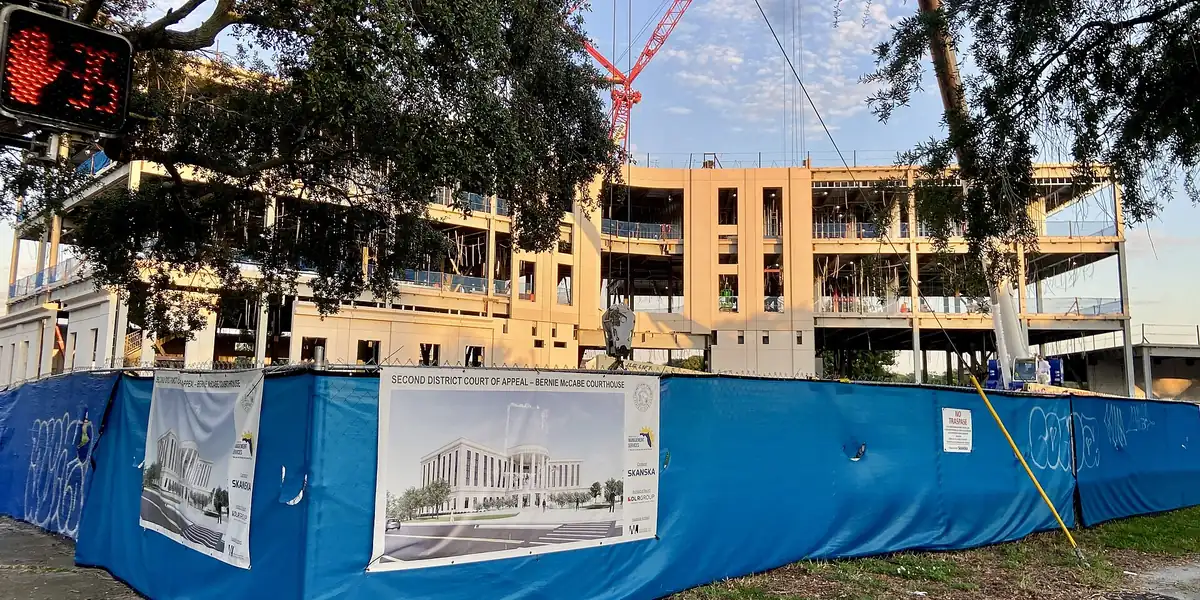
The Second Appellate District is made up of the Sixth, Twelfth and Thirteenth circuits, and the statute places its headquarters in Pinellas County (§ 35.03; § 35.05(1)). The court's courthouse page gives the address as 525 Mirror Lake Drive North, St. Petersburg (Second DCA), although parts of its own site still describe it as headquartered in Tampa. Appellate pages should use the address on the courthouse page.
Flood exposure is larger across the water
Pinellas has more residential flood contracts in force than Hillsborough, 76,020 of them, on a smaller housing stock (OpenFEMA). A Tampa firm writing for Pinellas homeowners should put the federal flood claim nearer the top of the page than it would for Brandon or Riverview.
Advertising rules that bind a Florida firm's site
A law firm's website and its other marketing are advertising under the Rules Regulating The Florida Bar, which set what an ad must and must not say, and which ads must be filed for review. Our Miami page covers those rules in detail, starting with how they treat a firm's website and what gets filed with the Bar. We write to them on each Tampa page we produce.
Other Florida pages
If the firm also practises in Miami, Orlando or Jacksonville
Each of GLP's Florida pages is written around its own city's clients, so none repeats this one.
| Miami | Clients born abroad and Spanish-language search |
|---|---|
| Orlando | The tourism workforce and visitors, workers' compensation and PIP |
| Jacksonville | Duval County and northeast Florida |
| Law firm SEO | The service itself, for a firm in any city |
Before hiring anyone, Tampa partners tend to ask
Anything missing from this list is fair game on the optional call after you've watched the audit.
In short
Tampa law firm SEO built around the insurance workforce in Hillsborough County and the policyholders it serves, the Florida claim deadlines and documents behind property, roof, sinkhole, auto and bad-faith pages, what insurance defense pages need, and the Tampa and Tampa Bay offices a practice page should name.
Do we deal with GLP in person or remotely?
Remotely, by email and on scheduled calls with one day-to-day contact. GLP has no Florida office; our people work out of West Hollywood, CA, and you can see who they are on the team page. Nothing on this page needed a Tampa desk. The Hillsborough job counts and the Citizens reports came from the agencies that publish them, and each figure links back to its source so your partners can check it.
Can our pages say we "fight insurance companies"?
It depends on the claim behind the words. The Bar's advertising rules decide what a firm may say about itself and its results; the section on the advertising rules says where they are set out in full. Every line we draft is checked against those rules before one of your attorneys gives it final approval.
Is "law firm seo tampa" the search our own site should try to win?
No. That wording is typed by attorneys shopping for a marketing agency, and it is the kind of query that brings readers to this page. Your clients type their problem: "hurricane damage lawyer", "roof claim denied", "insurance defense attorney". The written plan after the audit lists the searches each of your pages should own, drawn from your own Search Console where it has data.
Google's map results put our policyholder firm next to insurance defense firms. Can that be changed?
Not fully; Google decides who appears for a search. In our November 2026 survey, 15 of the 20 listings returned for "insurance defense attorney" in Tampa also turned up in at least one homeowner search. What a firm controls is how plainly it says which side it takes: the description on its Business Profile, the first sentence of each practice page and the services it lists. A claims manager or a homeowner should be able to tell within one line.
We take hurricane claims. What should happen to our site between storms?
The deadline pages stay up all year and get checked against the statute after each legislative session, since a date of loss runs from landfall and the reporting windows are set in law (§ 627.70132). What changes around a named storm is the storm itself: a page that names it, gives the date of loss and links the deadline pages. It should be ready to publish before landfall rather than written afterwards, while the phones are already ringing.
Our office is in St. Petersburg. Will a Tampa page bring us Pinellas clients?
Probably not many. In the ten searches of our survey, every listing but one had a Hillsborough address, and Google ranks a Business Profile partly by distance from the searcher. Pinellas is also a different circuit, as the section across the bay explains. A St. Petersburg office is better served by its own listing and pages that name Pinellas courts, with a Tampa page only if the firm really has an office here.
Public adjusters appear in the same searches as our firm. Should our pages mention them?
Where it helps the reader, yes, without disparaging anyone. Our survey found three claims businesses, not law firms, among the listings returned for lawyer searches, two of them describing themselves as public adjusters. A homeowner comparing the two needs a plain, accurate line on what a lawyer can do that an adjuster can't, such as filing suit, and a lawyer at your firm checks that line before it goes live.
Do the 60-day payment rules cover our business clients' property claims?
Some of them. The pay-or-deny deadline applies to residential claims, to structural or contents claims under a commercial property policy for a building of 10,000 square feet or less, and to contents claims under a commercial tenant policy for premises of that size; it doesn't apply to policies covering commercial structures in more than one state (§ 627.70131(7)(b)-(c)). A commercial-claims page for Tampa businesses should start with the square footage.
Our office is in Lakeland. How much of this applies?
Close to it. Polk County is in the Tenth Judicial Circuit, not Hillsborough's Thirteenth, but it is also an insurance county: 4,613 insurance-carrier jobs in 2024, at 2.26 times the national concentration (BLS QCEW), and its federal cases go to the same Tampa Division. Most of this page applies; the courthouse references would be Polk's.
We defend insurers. Will GLP write articles for claims professionals, not just consumer pages?
Yes. Articles and guides are part of our content work for law firms, and for a defense firm they are often the more useful half: statute summaries with the session law and effective date, notes on appellate decisions your lawyers want to discuss, and practical checklists for a claim file. One of your lawyers reads and approves each piece first.
Where do the Citizens figures on this page come from, and can our firm use them?
From Citizens' own Policies in Force reports, published monthly with a "Detail by County" view that excludes takeouts (Citizens). They are public, and a firm can cite them. Give the month and link the report, because the count changes every month and an undated number is quickly wrong.
How do you measure whether policyholder pages are working?
By the calls and forms each page produces, not just its traffic. We tag calls and forms by the page they came from from the first day, and the monthly report sets those against the matters your intake signs. For document pages, such as the one on nonrenewal notices, we also watch which months bring the inquiries, since renewal letters arrive on the insurer's schedule, not the firm's.
How your firm looks to a Hillsborough policyholder searching for help today
Tell us which kind of case you'd like more of and where the firm is based. A person on our team will run the searches, read your site and Google listing, ask the AI assistants about your firm and send you a recorded review within 48 hours, with no obligation.
Or call Call (661) 388-5526