Clients inside Tucson, clients on county land

Lawyer SEO in Tucson, AZ

Tucson attorney SEO for clients who have a Tucson address and a county government.

Roughly one Pima County resident in three lives outside any city or town, and most of them still write "Tucson" on an envelope. Their police, courts, zoning and wage rules are the county's, so a Tucson firm's pages have to say which government a client is dealing with. The sections below lay out how we handle that for a firm.

This page deals with the Tucson market only: where its people live, which government handles their problems, and how that shapes a law firm's search presence. The groundwork that never changes with geography lives on the page titled law firm SEO.

Free, done by a real person, and in your inbox within 48 hours.

Pima County by jurisdiction

Inside the city line and outside it: the Tucson market on a single sheet

The figures below are drawn like a map legend. A solid frame marks a figure about the City of Tucson, a dashed frame a figure about land outside any city or town, and a double frame a figure for Pima County as a whole. The last column turns each figure into a change to a Tucson firm's website; sources are linked in the rows.

KeyFigureWhat was countedOn a Tucson firm's pages
1,080,149 People living in Pima County on July 1, 2024Census estimates The pool a Tucson office draws from. The City of Tucson holds just over half of it.
554,013 Residents counted within the Tucson city limits that dayCensus estimates Only these residents are covered by city ordinances, Tucson Police and Tucson City Court.
372,918 People in Pima County living in no city or town (34.5%; Maricopa County 7.1%)Census estimates For them the county is the local government, so a page that names only city offices misdirects them.
72,059 Residents of Casas Adobes, the county's largest community without a city governmentACS B01003 More people than Marana or Oro Valley, with no town council, town police or town court of its own.
46 of 56 Law-office map listings on unincorporated land whose Google address reads "Tucson"GLP survey The listing tells a reader where to drive, not which government is in charge there. The copy has to say that.
$15.45 Tucson's 2026 minimum wage, owed for work done inside the city boundariesCity of Tucson Two employees of the same chain, a mile apart, can be owed different hourly rates.
9 Justice court precincts in Pima County; seven of them sit in one building at 240 N. Stone AvenueJustice Court Misdemeanors from county land and every eviction in the county go to a justice of the peace.

The service

Law firm SEO for Tucson practices whose clients cross the city line

Tucson firms bring us in so that Google, the map and the AI assistants surface them when someone in the area looks for their kind of lawyer. In Tucson that work has one local twist that runs through everything below: a large share of the people searching "Tucson" don't live under the City of Tucson's government, and the answer to their legal question often changes with that. The six steps of the engagement are the same as on our how we work page; what each one looks like here is set out on the markers below. None of the markers is a position in Google or an AI answer; those are Google's and the AI companies' to decide, and we don't sell them.

An audit recorded by a person

A GLP staffer searches as your clients would, once from inside city limits and once from the unincorporated county, then reviews your site and Google listing, checks whether ChatGPT names your office for a Pima County question, and records the whole session. You get it at no cost, two days at most after asking.

A written plan with a jurisdiction map

Which practice pages to build or repair first, weighed by what a case is worth to you and how crowded the results are, and for each page which courts, agencies and rules apply inside Tucson, in the towns and on county land.

Pages a lawyer has signed off

Practice pages written around where a matter happened, each statute linked to azleg.gov or the city code. Before publication, one of your lawyers checks every sentence that states Arizona law.

Site repairs, made in the site

Pages Google skips, redirect chains, slow templates, near-copies of location pages and broken structured data, fixed in your website's code or CMS rather than listed in a report for someone else.

Map listings at real street addresses

An office with people in it gets a Business Profile at its real street address, with the category, opening times and pictures that match the office. Review requests follow Google's published rules.

Monthly numbers that end in retained matters

Once a month we put Google's numbers next to the inquiries and retained matters your intake recorded, with a strategy call to go through them. Consulting CMO engagements meet weekly instead, with advertising, intake and outside vendors on the agenda.

We quote a monthly retainer after the audit, when your market and your site's condition are known; get started lays out both ways to engage us. Any ad budget goes to Google directly, outside our fee, and intake stays with your own staff.

Our free audit runs your searches from an unincorporated address. Get My Free Audit

Census Bureau population estimates

Pima County's residents who live in no city or town at all

Every year the Census Bureau estimates the population of each incorporated city and town, and it reports what remains of each county as a "balance of county" figure: the people living outside any municipality. For Pima County on July 1, 2024 that balance was 372,918 people, 34.5% of the county's 1,080,149 (Census Vintage 2024 subcounty estimates). That is more people than live in Chandler or Gilbert, and more than unincorporated Maricopa County holds, although Maricopa has more than four times Pima's population.

Share of each Arizona county's population on unincorporated land, July 1, 2024

Census 'balance of county' estimates; the share of each county's population is under the name

Use the arrow keys to read each value.

Share of each Arizona county's population on unincorporated land, July 1, 2024
CountyResidents outside any city or town
Pima County / 34.5% of 1,080,149 residents 372,918
Maricopa County / 7.1% of 4,673,096 residents 332,694
Pinal County / 46.9% of 513,862 residents 241,158
Yavapai County / 37.3% of 252,013 residents 94,041
Mohave County / 37.7% of 226,479 residents 85,476
Navajo County / 62.5% of 109,516 residents 68,466
Yuma County / 26.8% of 220,310 residents 59,137
Apache County / 85.3% of 64,800 residents 55,287
Coconino County / 36.2% of 145,161 residents 52,492
Cochise County / 38.6% of 125,773 residents 48,585

Source: U.S. Census Bureau, Vintage 2024 subcounty resident population estimates for Arizona (sub-est2024_4.csv), "Balance of county" rows, July 1, 2024. The ten counties with the most such residents are shown.

No Arizona county has a larger unincorporated population than Pima. Source: Census Vintage 2024.

A quarter of the state's unincorporated population

Across Arizona, 1,502,497 people lived outside any municipality in 2024, and 24.8% of them were in Pima County. Rural counties such as Apache and Navajo have higher shares, but their totals are small. Pima is the only county in the state where a city of half a million sits beside an unincorporated population of more than a third of a million. Those residents are not scattered ranchers; most live in suburbs that look, from the street, exactly like the city next to them.

The county is still adding people outside the cities

The same series puts the balance of Pima County at 363,102 in the April 2020 estimates base and 372,918 four years later, a gain of 9,816. The City of Tucson grew from 542,649 to 554,013 over the same period. Growth outside the city line has not stopped because of annexation; new subdivisions keep appearing in the county's jurisdiction, and each one adds households whose legal questions run through county offices.

What a third of the county means for intake

A firm that builds its pages around "Tucson" as a city government is writing for about half of its potential clients. For the other half, the answers to everyday questions differ: who patrols the street, which court sends the summons, whether a city ordinance applies, who issues the building permit. None of that is exotic law, and it is exactly the kind of detail a reader checks against the paper in front of them. Readers stop trusting a page the moment it names the wrong agency.

Census-designated places

Casas Adobes outnumbers Marana: communities that stayed unincorporated

The Census Bureau draws statistical boundaries, called census-designated places, around communities that have a name and a settled population but no municipal government. Pima County has dozens. Several of them are larger than the towns that sit beside them, as the chart shows (Tucson, at 547,073 in the same survey, is left out so the others are readable).

Largest communities in Pima County after Tucson, by type of government

ACS 2020-2024 five-year population; towns and cities shaded apart from unincorporated communities

Use the arrow keys to read each value.

Largest communities in Pima County after Tucson, by type of government
CommunityResidentsGovernment
Casas Adobes / unincorporated 72,059 Unincorporated
Marana / town 56,938 Incorporated town
Catalina Foothills / unincorporated 52,593 Unincorporated
Oro Valley / town 48,162 Incorporated town
Sahuarita / town 35,862 Incorporated town
Drexel Heights / unincorporated 27,675 Unincorporated
Green Valley / unincorporated 22,114 Unincorporated
Flowing Wells / unincorporated 16,559 Unincorporated
Vail / unincorporated 16,315 Unincorporated
Tanque Verde / unincorporated 15,866 Unincorporated
Valencia West / unincorporated 14,728 Unincorporated
Tucson Estates / unincorporated 12,136 Unincorporated

Source: U.S. Census Bureau, American Community Survey 2020-2024 5-year estimates, table B01003, places in Pima County.

Seven of the twelve largest communities after Tucson have no city or town government. Data: ACS B01003.

Why the big ones never became towns

Arizona declares all territory within six miles of a city of 5,000 or more people an "urbanized area", and land inside one can't be incorporated unless the existing city adopts a resolution approving it, or unless the city leaves an annexation request from the area unanswered for 120 days (A.R.S. § 9-101.01). Most of the populated land around Tucson is within six miles of it. The statute's exception for large communities works only when the community has more residents than the city opposing it, which no community near Tucson does.

Names readers use, names the law uses

Residents of these places tend to name their community in conversation and "Tucson" in their address. Courts and agencies use neither: they use the precinct, the patrol district, the zoning case number or the parcel. A page that connects the three, "if you live in Drexel Heights, your misdemeanor case is in the Pima County justice court, not Tucson City Court", is answering the question as the reader experiences it.

Which communities deserve their own page

Not all of them. A page per census-designated place, each repeating the same paragraphs with a new name, is the thin location content Google warns against and readers ignore. A community earns a separate page only if the firm actually takes cases there and the page has something of its own to explain: a different justice court, a different water provider, a planned-community declaration that governs most homes. Otherwise the community names belong inside the practice pages, in the sentences that explain which rule applies where.

GLP survey, November 5, 2026

Offices that say Tucson and sit in the county: a count of map listings

We wanted to know how often the address a reader sees on Google matches the government that actually governs the spot. On November 5, 2026 we ran 51 searches through the Google Places API, the source behind Google Maps listings: "lawyer" and "law firm" near each of 17 Pima County communities, plus "attorney in [community], AZ" for each, which returned 147 different listings. We removed businesses that were not law offices, such as document preparers, title agencies, investigators and a court, leaving 133. We then placed each listing's map coordinates in its Census place with the Census Geocoder and compared that with the city name in the listing's address.

Law-office listings by where the office sits and what its Google address says

133 listings from 51 Google Places searches around Pima County communities, 2026-11-05

Use the arrow keys to read each value.

Law-office listings by where the office sits and what its Google address says
Where the office sitsAddress says "Tucson"Address names the community
City of Tucson / incorporated 630
Casas Adobes / unincorporated 250
Catalina Foothills / unincorporated 150
Tanque Verde / unincorporated 40
Flowing Wells and other county land / unincorporated 20
Green Valley / unincorporated 010
Oro Valley / town 212

Source: GLP survey, 2026-11-05. Google Places API (New) text search, 51 searches run 03:15-03:16 UTC; each listing's coordinates matched to its Census place (Census Geocoder, current boundaries). Non-law businesses removed by hand.

Every office on unincorporated land north and east of Tucson shows "Tucson" as its city. Source: GLP survey, 2026-11-05.

What the listings say

Of the 133 law offices, 111 show "Tucson" in their address. 48 of those are not inside the City of Tucson: 46 sit in unincorporated Pima County, mostly along Oracle Road and Ina Road in Casas Adobes and around Sunrise Drive and Swan Road in Catalina Foothills, and two are inside the Town of Oro Valley. Looked at the other way, 46 of the 56 offices on unincorporated land carry a Tucson address. Nothing is wrong with those listings. "Tucson" is the post office's name for those ZIP codes, and Google copies it.

Green Valley is the exception

The only unincorporated community whose offices use their own name is Green Valley, where all ten listings read "Green Valley, AZ". It has its own ZIP codes and its own justice court, precinct 7, in a separate courthouse from the downtown building (Pima County Justice Court). Readers there are used to naming their community, and pages for them can do the same.

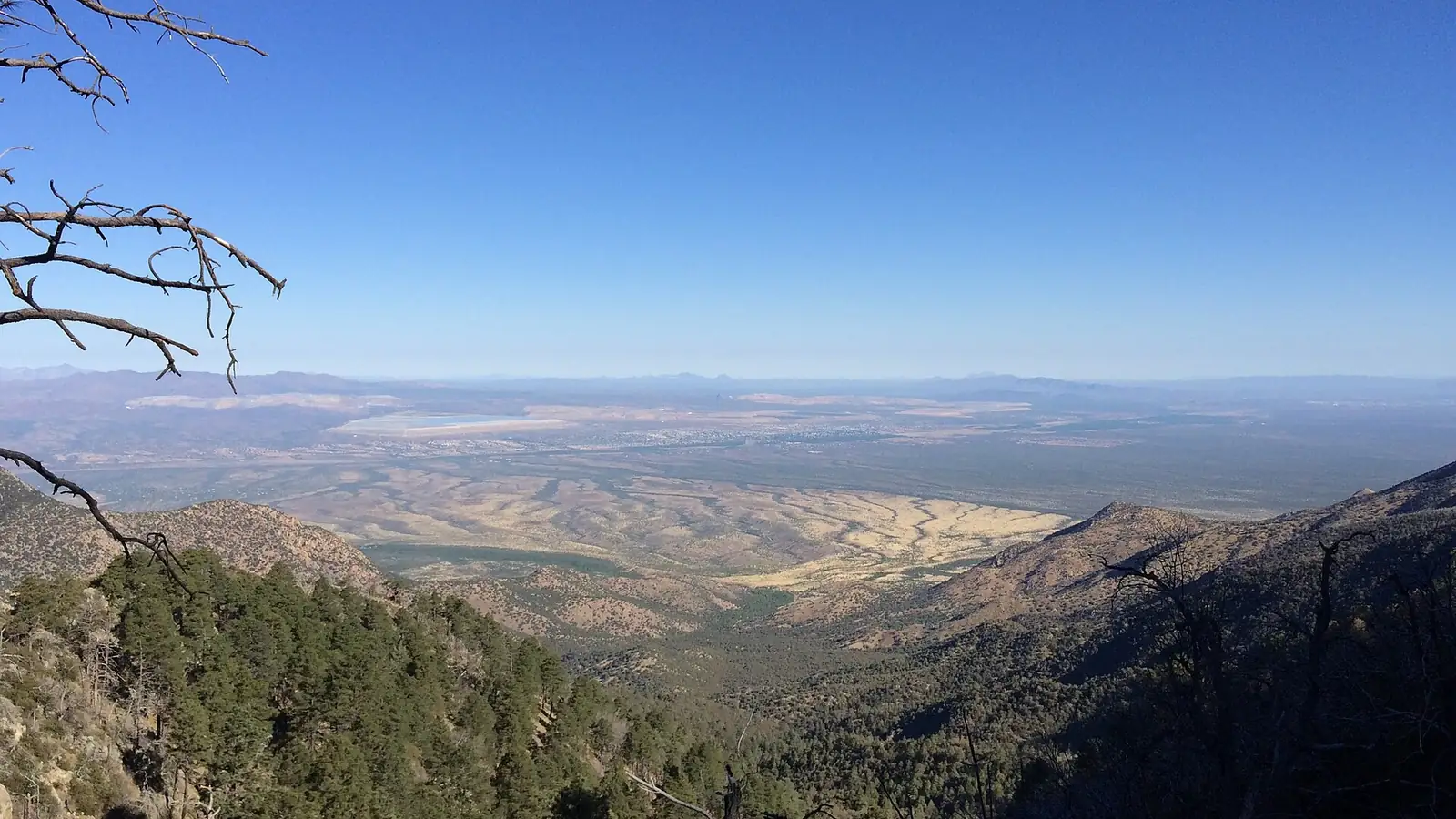
View from the forested Santa Rita Mountains down onto the Green Valley area and the Santa Cruz River valley, with pale mine tailings and desert stretching to distant ranges.
Green Valley from the Santa Rita Mountains. All ten Green Valley law offices in our count show the community's own name on Google, and its cases go to the Green Valley Justice Court rather than the downtown precincts. Photo: Matthewcasebier, Wikimedia Commons, CC BY-SA 4.0 (cropped).

The limits of the count

The searches were centered on communities outside the city, so the sample overweights county land compared with a search from downtown; the 63 offices inside Tucson are not a census of the city's firms. Google returns at most 20 listings per search, and our filter for law offices was applied by reading each name. What the count does establish is the pattern: a Tucson address tells you where to drive, not which government is in charge.

Arizona's limited-jurisdiction courts

The court that hears a client's case depends on where it happened

Felonies, divorces, probate and civil suits above the justice-court limit all end up in the Superior Court in Pima County, wherever in the county they began. Below that level, the place an offense happened decides the court, and that is where county residents and their families most often get the wrong advice from a generic page.

Tucson City Court, inside the line

Every Arizona city and town has a municipal court, which hears cases under its own ordinances and shares jurisdiction with the justices of the peace over state-law violations committed inside its limits (A.R.S. § 22-402). Tucson City Court runs its own problem-solving calendars, including mental health, domestic violence and community court, and handles motions to set aside, sealing requests and marijuana expungement for its own cases. None of those city programs is available to a defendant whose case is in a justice court.

The justice courts, for county land

Justice courts hear misdemeanors and offenses punishable by up to six months in jail or a $2,500 fine committed within their precincts, and they handle felonies only through the preliminary examination (A.R.S. § 22-301(A)). Pima County has nine precincts. Seven share the Consolidated Justice Court at 240 N. Stone Avenue, and precincts 3 and 7 sit in Ajo and Green Valley (Pima County Justice Court).

Courts run by the incorporated towns

Each town runs its own court for cases arising inside town limits; Oro Valley's sits in the town hall at 11000 N. La Cañada Drive (Oro Valley Town Court). A citation issued by a town officer goes there, not downtown, and a defense page for northwest-side clients should list it by name.

Evictions go to a justice of the peace everywhere

Municipal courts have no eviction calendar. Eviction cases with $10,000 or less at stake can be filed either with a justice of the peace or in Superior Court when the amount at stake is $10,000 or less, and hear other civil suits up to the same figure (A.R.S. § 22-201). So a landlord with units in the city and in Flowing Wells files both cases with a justice court, though the precinct differs.

Which public defender is appointed

Misdemeanors inside the City of Tucson are assigned to the City of Tucson Public Defender's Office unless they are charged with a felony; the Pima County Public Defender takes felonies, juvenile delinquency, dependency cases and appeals, and county cases can also go to the Legal Defender, the Legal Advocate or court-appointed counsel (Pima County Public Defender; City of Tucson). For a private defense firm, the useful sentence on a page is the one that tells a family which office the court will have called.

Defense and landlord-tenant pages that name the right court for each part of the county are the first ones we build for a Tucson practice. See criminal defense SEO.

Reports, records and red tags

Tucson Police, the Sheriff or a town department: who wrote the report

An injury, defense or insurance client usually needs a copy of the police report before anything else. Who holds it follows the same line as the courts, and the way to get it differs by agency.

Inside Tucson: the city's records section

The Tucson Police Department charges $5 for a paper report plus 25 cents a page after 15 pages, $5 for a copy sent by email, $25 for digital material such as 911 calls and photos on a disc, and $44 per hour of video reviewed; victims of Part I crimes get one free copy of their case report under A.R.S. § 39-127 (Tucson Police records). A crash page for city clients can give those figures and the request route.

On county land: the Sheriff's Department

The Pima County Sheriff's Department, nearly 1,500 employees and more than 400 volunteers headquartered at 1750 E. Benson Highway, covers the communities outside the cities, from Mount Lemmon to Green Valley, Vail, Catalina and Picture Rocks (Pima County Sheriff). Its duty to keep the peace and arrest offenders is set by A.R.S. § 11-441. For a collision on Oracle Road north of the city limits, the report a client needs is the Sheriff's, not Tucson Police's.

Town police in the northwest and south

Oro Valley, Marana and Sahuarita have their own police departments, each with its own records request. Interstate crashes on I-10 and I-19 add a fourth possibility, the state's highway patrol. A client rarely knows which agency responded until they look at the card the officer handed them, so a page that lists all of them, with the clue to look for, saves a call.

A red tag stays up for 180 days, inside the city

Tucson's unruly gathering ordinance, City Code section 16-32, applies to gatherings of five or more people on private property that disturb the neighbors, and the posted red tag stays on the property for 180 days, with questions handled by the Tucson Police Red Tag Unit at 1310 W. Miracle Mile (City of Tucson). Landlords and tenants dispute those tags often enough to deserve a page; the same page should say plainly that the ordinance doesn't reach rentals in the county.

A city-only employment rule

Tucson's own minimum wage and the county addresses it skips

Tucson voters approved Proposition 206, the Tucson Minimum Wage Act, in November 2021. The rate is $15.45 an hour for 2026 and $16.00 for 2027, higher than the state and federal rates, and it covers full-time, part-time and temporary employees who do at least five hours of work in a pay cycle within the city's boundaries. Employees of the State of Arizona, the federal government and tribal entities are excluded (City of Tucson). Outside the line, the state minimum wage under A.R.S. § 23-363 applies, adjusted every January for inflation.

The workplace address is the first fact a wage page needs

An employment firm's wage pages should start with where the hours were worked, because the same employer can owe different rates at its city and county locations. A worker who drives between sites counts the hours spent inside Tucson; the Act also defines work hours to include required security screening, time required on the premises or at a prescribed site, and time logged in to an employer's app.

Independent contractors under the ABC test

Under the Act a worker is presumed to be an employee unless the hiring business shows that the person is free from its control, performs work outside its usual course of business and is customarily engaged in an independent trade of the same kind. That is a stricter test than Arizona law applies elsewhere, so a misclassification page has to tell the reader which side of the line the work was on before it applies either test.

Pay rules that exist only inside Tucson

  • Employers with at least 26 employees in the last quarter of the previous year owe three hours of pay when a scheduled shift of three or more hours is cut short after the worker reports, or cancelled with less than 24 hours' notice.
  • An employer can count tips toward the wage, but only up to $3.00 of each hour.
  • Deductions for employer-provided meals or for damaged, lost or spoiled goods can't take pay below the minimum unless a law or court order requires them.
  • Minimum-wage pay can't be made only through a pay card or reloadable debit card that needs a valid Social Security number.
  • Adverse action within 90 days of a complaint is presumed to be retaliation.

Who enforces it

The city's Labor Standards Unit takes complaints by an online declaration form, by email to minimumwage@tucsonaz.gov, by mail or in person at 201 N. Stone Avenue, and the city may bring a complaint in municipal court. A violation is a civil infraction carrying up to $100 per violation for each employee and each day, plus back pay, and repeated violations can cost an employer its business license. An employee's page should explain the city route alongside a private claim; an employer's page should explain how to check a site against the MapTucson boundary lookup.

Employment pages that ask where the work happened before quoting a rate are part of our SEO for employment lawyers.

A.R.S. § 9-471

Annexation moves a client into Tucson without a move

Tucson and the towns grow by annexing county land, and when they do, the residents and businesses on that land change government on the day the ordinance is adopted. Their address may not change at all. For business, real estate and employment clients near the edges, annexation is a legal event with deadlines, and it is a subject almost no Tucson firm writes about.

The annexation clocks, in days

Each lane counts from its own starting point: the filing of the blank petition, then the adoption of the ordinance

Use the arrow keys to read each date.

The annexation clocks, in days
RuleDayWhat happens
Before the vote: the petition (A.R.S. § 9-471(A))0Blank petition and boundary map filed with the county recorder
Before the vote: the petition (A.R.S. § 9-471(A))20Public hearing window opens (last 10 days of the wait)
Before the vote: the petition (A.R.S. § 9-471(A))30Signatures may be gathered, for up to one year
After the Mayor and Council adopt the ordinance (§ 9-471(B), (D), (E); Tucson Minimum Wage Act)0Annexation final on adoption
After the Mayor and Council adopt the ordinance (§ 9-471(B), (D), (E); Tucson Minimum Wage Act)30Last day to file a verified petition challenging it
After the Mayor and Council adopt the ordinance (§ 9-471(B), (D), (E); Tucson Minimum Wage Act)60Ordinance copy due to the clerk of the Board of Supervisors
After the Mayor and Council adopt the ordinance (§ 9-471(B), (D), (E); Tucson Minimum Wage Act)90City minimum wage reaches annexed workplaces

Sources: A.R.S. § 9-471(A), (B), (D) and (E), read on azleg.gov, November 5, 2026; Tucson Minimum Wage Act, City of Tucson. Other conditions in the statute are not shown.

The challenge window closes 30 days after adoption, before the city's wage rule even starts.

How a petition is built

The city files a blank petition with a description and map of the territory with the county recorder, waits 30 days before collecting signatures and holds a public hearing in the last ten days of that wait. Within a year after the waiting period, it may file a petition signed by the owners of one-half or more of the value of the real and personal property that the city could tax after annexation, and by more than half of those owners (A.R.S. § 9-471(A)). The annexation becomes final when the governing body adopts the ordinance (§ 9-471(B)).

A 30-day window to challenge

The city, the attorney general, the county attorney or any other interested party in the territory may question the annexation by verified petition, but only for failure to follow the statute and only within 30 days after the ordinance is adopted. The petitioner carries the burden of proof, and no later action is allowed (§ 9-471(D)). A landowner who calls a lawyer after the tax bill changes is usually too late.

Zoning carries over

Developers sometimes assume annexation is a route to a denser project. It isn't, by itself; the FAQ below gives the statute that keeps the county's zoning limits in place.

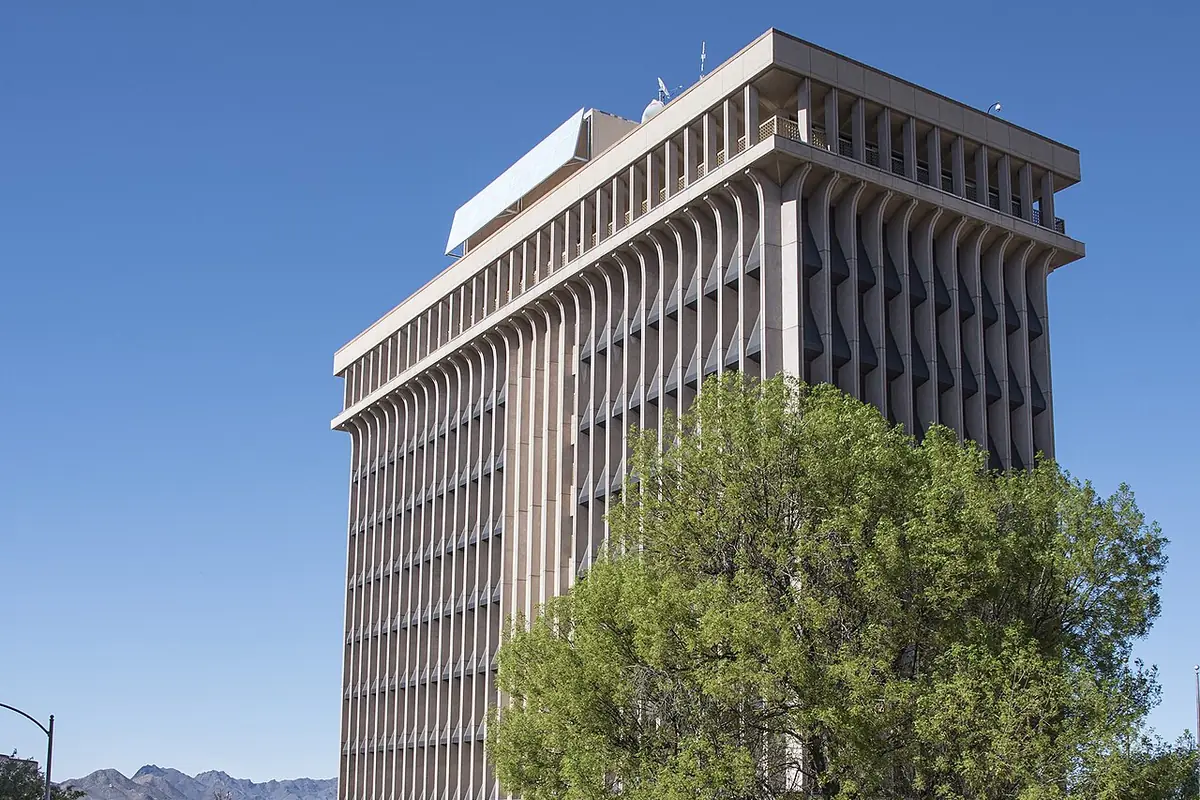
The Tucson City Hall tower, a pale concrete high-rise with vertical fins, behind a leafy tree and low walls, against a clear blue sky.
Tucson City Hall, 255 W. Alameda Street, where the Mayor and Council adopt annexation ordinances. That vote is the date every later deadline in the chart above counts from. Photo: Gillfoto, Wikimedia Commons, CC BY-SA 4.0 (cropped).

What changes for the people on the land

Policing passes from the Sheriff to the city, new misdemeanor cases go to the city court, and city ordinances begin to apply. The minimum wage is the one change with a delay written into it: workers at a workplace inside newly annexed land are covered 90 days after annexation, the same applies to an employee who works from a home that is annexed, and a firing during those 90 days is presumed to be retaliation (City of Tucson). A page timed to a pending annexation, explaining those changes for the businesses inside the boundary, is the kind of content an AI assistant has nowhere else to find.

Pima County Development Services

Building, splitting and drilling on county land

For a resident of unincorporated Pima County the Board of Supervisors is the local legislature, and county departments do the work a city would do. Real estate, construction and small-business clients feel that most.

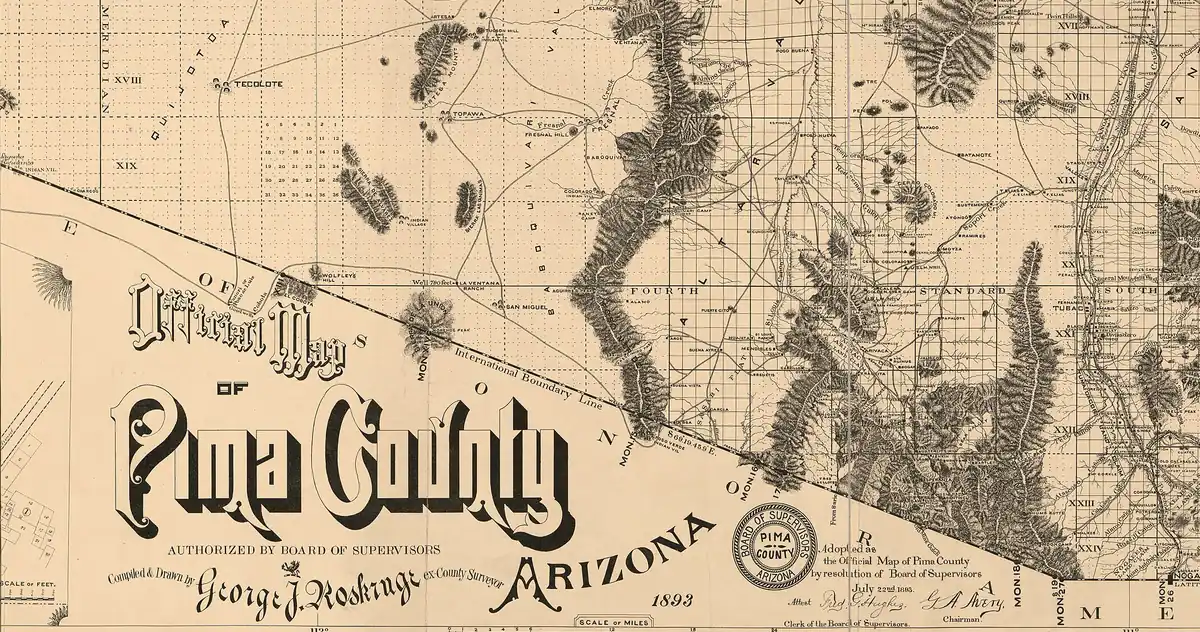
Detail of an 1893 engraved map of Pima County, Arizona, showing mountain ranges, survey grid lines and the international boundary, with the ornate title Official Map of Pima County, the words Authorized by Board of Supervisors and a round Board of Supervisors seal.
The 1893 Official Map of Pima County, adopted by resolution of the Board of Supervisors. The same board still sets the zoning for every parcel outside city and town limits, which today means land where about 373,000 people live. Drawn by George J. Roskruge; scan held by the Library of Congress (public domain), detail shown.

The county's plan and the parcel's zone

Pima County's comprehensive plan, Pima Prospers, gives every region of unincorporated Pima County a land-use designation, and each parcel has a zoning designation listing permitted uses and standards such as minimum lot size, setbacks, height and lot coverage. Uses not allowed by right need a conditional use permit, and a use that can't meet the zone's standards may need a rezoning (Pima County). A real estate page for county clients should explain those steps in the county's terms, not the city's.

Small lot splits reviewed by county staff

Small land divisions outside the towns go to county staff rather than a city planning office, under A.R.S. § 11-831; the FAQ below lists what the application must show and what happens if the county doesn't answer in time. Buyers of split parcels in the rural west and southeast of the county are a steady source of questions about access and permits.

Wells on rural parcels

Many county homes depend on a domestic well, which Arizona's groundwater code treats under a small-well exemption (detail in the FAQ below). A property page that explains the exemption, and the fact that a well is a disclosure item when the land is sold, answers questions people ask before they buy.

No county business license

Clients opening a business on county land often go looking for a county license; what they need instead is set out in the FAQ below. A business-formation page that lists the city's process alone is half right for a Tucson firm's clients.

How we write for this market

Writing practice pages around the place an event happened

The pattern on this page so far is simple to state: in Pima County, the place where something happened often changes the answer. A practice page built for that market asks the reader that question early and answers each case in turn. Here is how we put that into the pages themselves.

A jurisdiction sentence near the top

Each practice page carries, in its first screen, a sentence that sorts the reader: inside Tucson, in a town, or elsewhere in the county. For a DUI page it names the three kinds of court; for a wage page, the two minimum wages; for a building dispute, the city or county permit office. That sentence is short, specific and easy to quote, which matters for the AI answers discussed below.

Community names inside the copy, not on doorway pages

The communities where your clients live, Casas Adobes, Catalina Foothills, Drexel Heights, Vail, Tanque Verde, appear where they matter: in the paragraph about which justice court hears their cases, in the FAQ about the city wage, on the map of who patrols where. That puts the words people search for on pages that actually answer them, instead of on a stack of near-identical location pages.

The documents a client is holding

People in trouble read the paper in front of them first. We write sections around those documents: the citation that names a court, the Sheriff's report number, the annexation notice, the county's zoning violation letter. A reader who can match the page to the paper trusts the rest of it.

A page for each practice, revised when the rules move

City wage rates change every January, annexations redraw the line several times a year, and the statutes on this page are amended from time to time. We keep a list of the facts each page depends on, with the date each was checked, and revise the page when one changes, rather than letting old figures sit until a reader notices.

  • Criminal and DUI pages: city court, justice courts and town courts by place of arrest.
  • Injury pages: which agency's report to request, and how, for city streets, county roads and the interstates.
  • Employment pages: the city rate, the state rate and the workplace address that decides between them.
  • Real estate and land-use pages: county zoning, lot splits, wells and annexation.
  • Landlord-tenant pages: every eviction to a justice court, and the city-only red tag.
  • Business pages: no county license, but county zoning approval, and the city's rules only inside the line.

Google Business Profile

Google listings for offices on county land

The map listing is where most local legal searches end, and for a firm outside the city limits it raises questions the city firms never face. Google's rules are the same for everyone; applying them to Pima County takes some care.

The address is the address

Google asks a business to represent itself as it appears in the real world, on its signs and stationery, and to keep its address and service area accurate and precise (Google Business Profile guidelines). An office in Casas Adobes whose mail goes to "Tucson, AZ 85704" lists that address. Adding the community name to the business name, or inventing a second listing to appear in another community, risks a suspension and helps nobody.

Service areas, when the firm also goes to clients

A business that serves clients at its office and also visits them can list service areas alongside the address. Google allows up to 20, defined by city, postal code or other area rather than a radius, and says the overall area shouldn't extend much beyond about two hours' drive from the base (Google Business Profile Help). For a firm that meets clients at home in Green Valley or Marana, naming those places is accurate. For a firm that only sees clients at its office, it adds nothing.

Pages and listings that agree

The address, phone number and office hours on the website should match the listing exactly, and the location page the listing links to should say, in plain words, where the office is and which communities its clients come from. When a firm moves from the city into the foothills, or the city annexes the block it is on, we update the listing, the site and the directory profiles in the same week, so the old version doesn't linger. Our local SEO work covers the listing and the citations together.

AI answers

AI assistants reading a Tucson mailing address

An assistant answering "who handles a DUI near Oracle and Ina" or "does the Tucson minimum wage apply to my job" works from the pages it can find. If those pages treat "Tucson" as one place, the answer will too. The mismatch our survey found in the map listings is the same one an assistant inherits from the web.

State the rule and the place together

The sentences most likely to be quoted are the ones that carry the whole answer: "If the offense happened in unincorporated Pima County, the case is in the justice court for that precinct." We write the jurisdiction sentence that way on purpose, with the statute linked, so that a system lifting one sentence lifts a correct one.

Name the communities the way residents do

People ask assistants about where they live in their own words: Catalina Foothills, Vail, Drexel Heights. Pages that use those names in the sentences that explain the law are the ones an assistant can connect to the question. Pages that only say "Tucson area" leave the connection to the model, which is where errors creep in.

Asking the assistants about the firm

Part of each engagement is asking the main assistants about the firm and its practice every month and logging the answers, including the pages they cite. When an answer puts a county matter in the wrong court or quotes the city wage to a Marana worker, we fix the page it drew from. How we handle AI visibility beyond this county is explained on the AI SEO for law firms page.

This page's Search Console queries

Tucson attorneys shopping for search help: agency, company, expert or marketing

Search Console keeps a record of the searches that showed this page to someone, and in Tucson's case almost all of them were typed by attorneys, not by their clients. Most turn the same few words around: "tucson attorney seo services", "tucson lawyer seo services", "seo for attorneys tucson", "attorney seo tucson", "seo for lawyer tucson", "tucson law firm seo", "tucson lawyer seo", "lawyer seo tucson", "law firm seo tucson", "tucson attorney seo", "seo for law firms tucson" and "tucson law firm seo services". This section answers the questions behind those searches, grouped by the word the searcher chose.

Agency, company or firm

Some searches name the kind of business they want to hire: "law firm seo agency tucson", "attorney seo agency tucson", "lawyer seo agency tucson", "law firm seo company tucson az", "tucson seo firm", "attorney seo company" and, from the state level, "arizona seo company for attorneys". Whichever label the search used, the Tucson engagement is the one described in the service section above: a recorded audit, a written plan with a jurisdiction map, pages your lawyers sign off, repairs made in the site, map listings at real addresses and a monthly report set against retained matters. We do SEO only for law firms, from an office in West Hollywood, and Tucson clients work with us through booked video calls and shared documents. We don't keep a Tucson office, and the page says so because a reader comparing agencies deserves to know it.

Experts, specialists and advisors

A smaller group asks for a person: "law firm seo experts", "law firm seo specialists", "law firm seo advisor". Labels like these are easy to print and hard to check, so we would rather point you to what can be checked. Each month you see which pages gained or lost visibility, which calls and forms came from them, and which of those your intake marked as retained. Ask any agency you interview, us included, to show that same report for a current law firm client, with the client's permission.

Law firm marketing, not only SEO

"tucson law firm marketing" asks a wider question. Our main work is search; a firm that wants its paid ads, its intake and its other marketing vendors managed under a single plan can choose the Consulting CMO engagement on get started. Website builds and content for Tucson attorneys are part of the same plan when the current site can't carry the pages this market needs.

What no agency can promise a Tucson firm

Nobody controls Google's rankings or the answers an AI assistant gives, and we don't promise a position or a date. What we commit to is the work and the reporting: the pages, the fixes and the listings in the plan, delivered in the order agreed, with the numbers in front of you every month so you can judge whether the work is paying for itself.

Searches that belong to another page

A few searches that reached this page were meant for other cities or other kinds of business. Firms in Atlanta and Austin have their own pages, at Atlanta and Austin. Someone typing "tucson seo" or "seo service company near me tucson" for a shop or a clinic needs a general agency, because every GLP client is a law firm. And a driver searching "lemon law attorney tucson" is a client looking for a lawyer, not a firm looking for us.

The local bar and the competition

Competing with Phoenix firms for Tucson clients, under ER 7.1

Lawyers make up a slightly smaller share of jobs in the Tucson metro than nationally, a location quotient of 0.90 in the federal wage survey (BLS OEWS, May 2025; the headcount is in the FAQ below). It is a modest field next to the Phoenix area, and it shapes the search results in a particular way.

Phoenix firms on searches that don't name a city

Many Phoenix firms advertise statewide, with Tucson location pages and paid ads, so a search for "Arizona injury lawyer" or a practice phrase without a place name is open to them. A Tucson firm has its advantage on searches that name Tucson or a Pima County community, and on the local detail that a firm based 110 miles away rarely writes: the precinct, the city wage, the Sheriff's records route. The plan puts the firm's effort where that advantage is.

Practice areas we usually see first

Injury, criminal defense, family law, estate planning, employment, real estate and land use, landlord-tenant and immigration all have demand in Pima County, and narrower practices such as lemon law, where competition is lighter, can move faster. Which ones come first depends on your caseload and what a case is worth to you, not on a template.

ER 7.1, briefly

Lawyer advertising in Arizona, including a firm's website, is governed by ER 7.1 of Arizona's conduct rules, rewritten in 2021. Our Phoenix page explains the rule and what it means for a firm's pages; we draft every Tucson page against that rule, and a page is published only after an attorney at the firm has approved its text.

Nearby pages

GLP pages reached by I-10 and I-8 from the Old Pueblo

If your firm also has offices or clients in these markets, each page below covers what is specific to it. The mileage on each sign is measured as the crow flies from one Census reference point to the other, so the drive is longer.

Asked by Tucson firms about county clients, courts and search

Anything not answered below can go on the list for the call after your audit video.

In short

Lawyer SEO for Tucson firms with many clients in unincorporated Pima County, and what it involves: population outside city limits, the mailing-address mismatch on Google listings, which court and police agency handle a matter, Tucson's own minimum wage, annexation, county land rules, and how pages, map listings and AI answers should name the right place.

Our injury pages link only to Tucson Police records. Is that enough for crashes in the foothills?

No. The Pima County Sheriff's Department covers the communities outside the cities, from Mount Lemmon to Green Valley, Vail and Catalina (Pima County Sheriff), so a collision on Oracle Road north of the city limits produces a Sheriff's report, not a Tucson Police one. In our map survey, 46 law offices with a "Tucson" address sat on unincorporated land, which shows how much of this market lies outside the city line. Give each agency its own request route on the crash page, with Tucson Police's $5 paper-report fee on the city side (Tucson Police records).

We found general "Tucson SEO" companies too. What would a law-only agency do differently?

The parts that depend on the law. Practice pages state rules a lawyer at your firm has to approve, the Arizona Supreme Court's conduct rules govern what an ad may claim, and the most useful local detail for a Tucson firm is jurisdictional: which court, which prosecutor, which wage rule. Our law firm SEO service is built around that review step, and the Tucson specifics on this page are the local layer on top of it.

Our DUI and misdemeanor pages say "Tucson City Court" throughout. Is that costing us clients from the foothills?

It can. A client arrested by the Sheriff in Catalina Foothills has a county case: a misdemeanor goes to the justice court for the precinct where it happened (A.R.S. § 22-301(A)), and seven of the nine precincts share the Consolidated Justice Court at 240 N. Stone Avenue (Pima County Justice Court). A page that names only the city court tells that reader the firm handles someone else's cases. We add a short "where your case is heard" block to each defense page, with both courts named, and write a page for the justice court itself when your intake shows enough of those calls.

Should a defense firm's site name the prosecutor's office, and which one?

Name both, each beside its own kind of case. Outside the city, the Pima County Attorney is the public prosecutor and conducts prosecutions "in the superior and other courts within the county" (A.R.S. § 11-532(A)); inside Tucson, ordinance misdemeanors are filed in Tucson City Court. Readers often search the prosecutor's name printed on their paperwork, so a page that matches it is the one they click. A defense page that lists one office for both kinds of case sends the reader to the wrong door, and an assistant summarizing that page repeats the mistake.

We represent workers in Marana and Oro Valley as well as Tucson. Can one wage page serve all three?

One page can, if it splits the answer by workplace. The Tucson Minimum Wage Act covers employees who do at least five hours of work in a pay cycle "within the City of Tucson's boundaries" (City of Tucson); in Marana, Oro Valley, Sahuarita or unincorporated Pima County the state minimum applies, which A.R.S. § 23-363 adjusts each January by the change in the consumer price index. We usually build the page around one question, where the work was done, and link the city's MapTucson lookup so a worker can check the address before calling. For an employment firm, that page tends to earn more qualified calls than a generic minimum-wage article.

Is annexation worth a page on a real estate firm's site?

For a firm with clients along the city's edge, yes, because the questions are specific and few local pages answer them. Owners can only stop an annexation by withholding their signatures, which count against the petition thresholds in A.R.S. § 9-471, and once the ordinance is adopted an interested party has 30 days to file a verified petition questioning the procedure, with no later challenge allowed (§ 9-471(D)). A page that states that 30-day window plainly, and is updated when the city posts a new annexation, gives a land-use practice something to rank for that statewide firms rarely write.

Clients ask us what an annexation does to their zoning. Should our pages answer that?

Yes, briefly, because the answer is short and fixed in statute. An annexing city must adopt zoning that permits densities and uses no greater than the county allowed immediately before annexation, and later changes go through the city's ordinary rezoning procedure (A.R.S. § 9-471(N)). Stated in two sentences early on an annexation or land-use page, that answers the reader who searched it and gives an AI assistant a quotable passage that points back to the firm.

Do Casas Adobes or Catalina Foothills deserve their own pages on our site?

Only when the firm has real business there and something specific to say. Casas Adobes is the county's second-largest community and has never incorporated; because it lies close to Tucson, the urbanized-area rule of A.R.S. § 9-101.01 means becoming a town needs Tucson's agreement, so its residents will keep dealing with county offices. Otherwise the better move is to name those communities inside the practice pages where the county route differs, as the section on unincorporated communities above describes, rather than publishing thin pages that swap one name for another.

Our real estate practice handles rural lot splits near Vail. What should that page cover?

The statute's own conditions, in order. If a split creates five or fewer lots, any of them ten acres or smaller, county staff review it, and an application that meets the conditions (zoning minimums, legal access, a surveyor's statement on physical access, utility easements and a sworn acknowledgment) must be approved; a review not finished within 30 days counts as approved. Dividing land into six or more lots in concert with others is unlawful outside the subdivision laws (A.R.S. § 11-831). A page that lists those conditions, and says where the six-lot line sits, answers the owner before the consultation and is the kind of page we review with your lawyer before it goes live.

Our business-formation pages assume the client is inside Tucson. What changes for county clients?

The licensing step. Pima County says it does not require or issue business licenses; a business on county land still needs zoning use approval from Pima County Development Services, through a building permit or a zoning use permit, and food businesses need a county health permit (Pima County). We add a county column beside the city one on those pages, so an owner in Tanque Verde or Picture Rocks finds their own steps instead of a city process that doesn't apply to them.

Rural property buyers ask our firm about wells. Is that a page worth building?

For a real estate or water practice serving Avra Valley, Picture Rocks or the area around Vail, often yes. Groundwater withdrawals for non-irrigation uses from a well whose pump moves no more than 35 gallons per minute are exempt from most of Arizona's groundwater code, subject to the conditions and notice requirements in A.R.S. § 45-454. A page that explains the exemption and its limits, and doesn't suggest any lot can have a well, is useful to buyers and gives the firm a topic that urban competitors don't cover.

Our office is in Oro Valley. Should our pages say Tucson?

Say both, in their proper places. Your Google listing and your site's address have to match the address you actually use, and Google asks businesses to represent themselves as they appear in the real world (Google Business Profile guidelines). The pages can still serve Tucson searches: a practice page that explains how a matter is handled in Tucson, Oro Valley and the county around them is useful to readers in all three, without pretending the office is somewhere it isn't.

How many lawyers does the federal wage survey count around Tucson?

About 1,690 salaried lawyers and 980 paralegals and legal assistants in the metro area as of May 2025, and the lawyers' mean annual wage was $147,830 (BLS OEWS, May 2025). Partners who own their firms don't appear in that survey, which counts employees only.

Do you build Spanish-language pages for Tucson firms?

When a firm's intake can handle Spanish-speaking callers, yes, starting with the practice pages that already draw those calls. Every Spanish page follows the same lawyer review as the English one, and the jurisdiction rules on this page apply to it in the same way.

A free look at your listings from an unincorporated street

Name the practice areas you want to grow and say whether your office sits inside Tucson or on county land. Working from an unincorporated address, one of our staff runs those searches, notes what the map and the AI tools return for your firm, and records a short walkthrough for you inside 48 hours. You're under no obligation.

Or call Call (661) 388-5526