
Web design and search for Tarrant County practices with royalty-owner clients
Lawyer SEO in Fort Worth, TX
Law firm websites and search for Fort Worth, where the tax roll lists more mineral accounts than homes.
Tarrant County's 2025 appraisal roll carries 1,207,764 mineral accounts, 424,414 of them inside Fort Worth's city limits. Two decades of drilling under neighborhoods turned ordinary households into royalty owners, and their questions reach every kind of practice: a late check, a pipeline across the yard, minerals in a divorce, an account still in a dead parent's name. We design and run websites for Fort Worth firms with that client in mind.
What follows is written for Fort Worth only: the 2025 mineral roll, the Texas statutes a royalty owner runs into, and how a firm's site should answer them. If you want the whole approach rather than the Fort Worth slice of it, our law firm SEO page has it.
Free, done by a real person, and in your inbox within 48 hours.
Tarrant Appraisal District, 2025 certified data
Fort Worth's mineral roll, itemized like a royalty check stub
A royalty statement lists each well, the volume sold, the deductions and the owner's share, line by line. The table below borrows that layout for the figures this page is built on. Lines 01 to 06 come from our own count of the mineral property files the Tarrant Appraisal District publishes for anyone to download; line 07 is the Texas Department of Transportation's. The right-hand column turns each number into a decision about a firm's website.
| Line | Item | Figure | For a Fort Worth firm |
|---|---|---|---|
| 01 | Mineral-interest accounts on the 2025 certified roll, Tarrant County TAD 2025 | 1,207,764 | Every one of them can turn into a question about a lease, a payment, a death or a divorce. |
| 02 | Of those, accounts inside Fort Worth city limits TAD, city 026 | 424,414 | Whoever reads a Fort Worth practice page, about an injury, a divorce or a will, may well own a share of a well too. |
| 03 | Owner records behind the Fort Worth accounts (TAD party IDs) TAD supplement | 107,598 | People, family trusts, estates and companies: about a hundred thousand separate owners with a stake under the city. |
| 04 | Fort Worth accounts whose owner gets mail at a Fort Worth address Mailing city | 234,961 | Most owners are local, and they search for help locally. |
| 05 | Median appraised value of a Fort Worth mineral account TAD 2025 | $12 | These are small interests: the firm that serves them sells clarity, not big recoveries. |
| 06 | Fort Worth accounts appraised at $500 or more, 2023 and then 2024 Our count | 39,878 → 10,899 | The tax line moves with gas prices, and so does the number of owners who get a bill. |
| 07 | Reportable crashes inside Fort Worth city limits in 2024 TxDOT 2024 | 12,865 | The injury side of the site still carries most of the firm's search demand. |
The service
Websites and search for Fort Worth law firms, drawn as the site we build
Most firms land here from a search such as "fort worth law firm web design". The site is the thing they want fixed first, and they're right to start there: rankings, map listings and AI answers all draw on what the website says and how it is put together. So the clearest way to show the service is the site itself. Below is the structure we usually propose for a Fort Worth firm with an injury, family or estate practice, and with clients who own minerals. Each box names a part of the site and what goes into it; the branches change with the practice, the shape of the work doesn't.
Home page
Who the firm helps in Tarrant County, the practices in one line each, the office address that matches the Google listing, and a phone number that is tracked without changing the one the firm publishes everywhere else.
Practice pages
A dedicated page for each practice and each case type the firm is trying to grow, each opening with a two-sentence answer an AI tool can quote.
Owner pages
For the reader holding a royalty statement: one page per question, written from the Texas statute that answers it.
Place pages
One for each place the firm really serves from, written with facts that hold only there. A set of pages that differ only by town name is the doorway pattern Google's spam policies name.
People and proof
Attorney bios with bar admissions and the practices each lawyer actually handles, and any published results worded to the Texas rules linked below.
What sits under every page
The structure is the visible part. Underneath it we build pages that load fast on a phone, structured data that ties the firm, its lawyers and its office together, call tracking from the day the site launches, and content that is in the HTML rather than loaded later by scripts, so Google and AI crawlers read the same page a client does. Our law firm website design page explains each of those choices and the platforms we build on.
Redesigning a site that already ranks
Many Fort Worth firms come to us with a site that has some history in Google. A redesign is the easiest way to throw that away, usually by changing addresses or deleting pages. Before anything moves we list every URL that gets clicks, impressions or links, keep the ones that rank where they are, and redirect the rest one by one. Why bother: an owner page that already ranks for a royalty question is worth more than a prettier one that starts from zero.
The monthly work once the site is live
A new site is where the work starts, not where it ends. Each month we add the pages the plan calls for, fix technical problems on the site itself, keep the Google Business Profile accurate (category, hours, photographs of the real office) and record how AI assistants describe the firm and which pages they link. Every report measures the work against the calls and signed cases your own intake recorded. Fees are set per firm once we have studied its market, and the two shapes an engagement can take are described on how we work. Rankings are Google's decision and quotations are each AI company's, so we report what changed rather than promise a position.
Lawyer marketing in Fort Worth, as the searches word it
Many searches reaching this page say marketing: "fort worth lawyer marketing", "law firm marketing fort worth", "legal marketing agency fort worth tx". Some spell it out: "search engine optimization management for law firms in fort worth texas". For us, marketing a law firm means search engine optimization of the site and map listing, paid search under a Consulting CMO engagement (how we work), and intake records showing which produced signed cases.
Part VII of the Texas Disciplinary Rules, and who signs off
A Texas firm's site is lawyer advertising under Part VII of the Texas Disciplinary Rules, so the wording of results, specialties and fee statements has to meet them before a page goes live. Our Houston page covers those rules for every Texas office, including what an advertisement may say and what is filed with the State Bar and when. We draft to those rules, and the final word stays with the firm: a page explaining a Texas statute waits until an attorney at your office approves it.
MemoBefore a redesign starts, have us map every URL on the current site.Get My Free Audit
Who holds the minerals
Royalty owners on the Tarrant County roll: local, numerous and mostly small
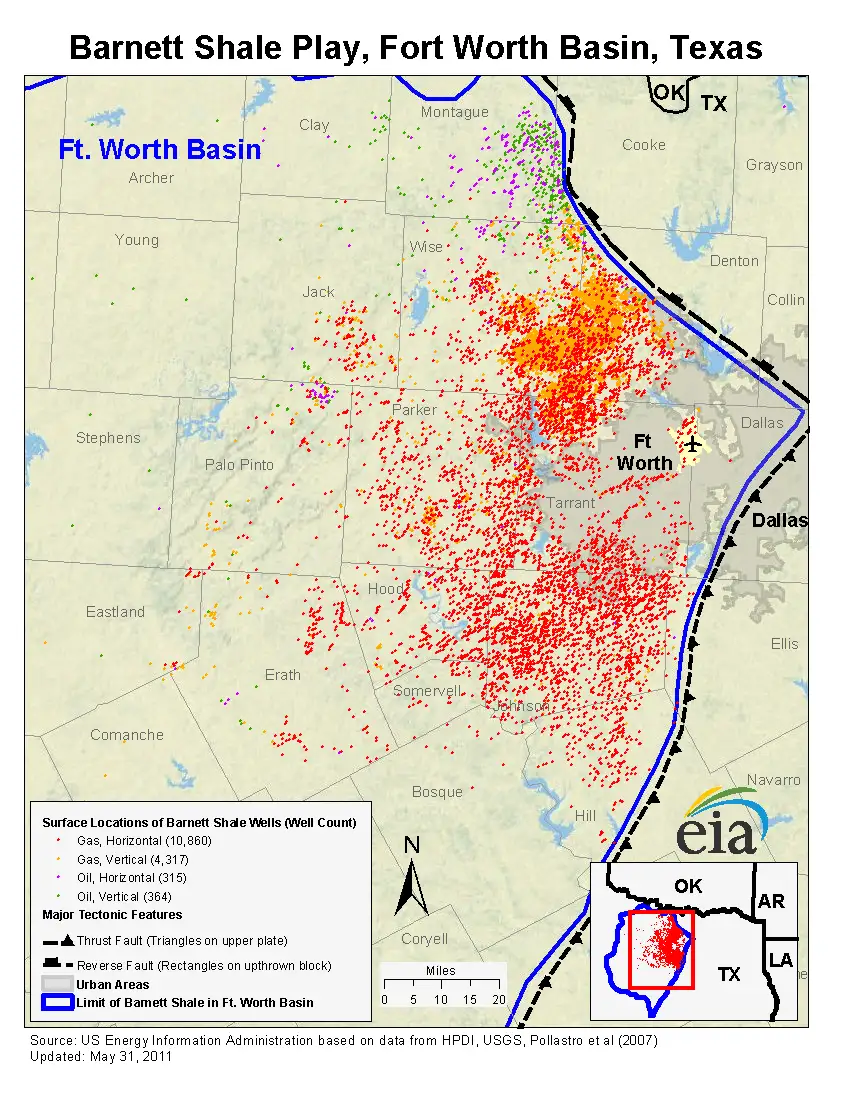
Tarrant County sits inside the Barnett Shale, the Railroad Commission's Newark, East field, which the Commission describes as stretching west and south from Dallas over about 5,000 square miles (RRC, Barnett Shale). The county's own tax office calls Tarrant "the largest oil or gas field ever developed in an urban area" and says thousands of homeowners own very small interests in gas units developed under large residential developments (Tarrant County minerals FAQ). Every owner in a producing unit became a royalty owner, and every one of those interests has to be appraised. That is why a county roll most people think of as houses and businesses also lists more than a million mineral accounts.
More mineral accounts than homes
The Census Bureau counts 373,948 housing units in the city (ACS 2020-2024, DP04), fewer than the mineral accounts the roll places inside its limits. One owner usually holds several accounts, because each interest in each well is a separate tax account, so the two figures don't mean every home has a share. They do mean the roll a law firm's clients live with is as much about minerals as it is about houses.
Owner records behind the accounts
The appraisal district's supplementary file gives each owner a party number. 107,598 different party numbers hold the Fort Worth accounts, and 237,877 hold mineral accounts anywhere in the county. Reading the owner names, about one in thirteen of Fort Worth's belongs to a company, a trust, a church, a foundation or some other organization; the rest are people, usually listed one or two to an account. That second group is the one a neighborhood firm meets: a retired couple in Wedgwood, a widow in Riverside, a son who inherited his mother's share and lives in Plano.

Owners who live here, and owners who moved away
Most of these owners are close by: together, Fort Worth and other Texas addresses account for 90.4% of the accounts. The 33,792 accounts mailed to another state are the harder files: children who moved to Colorado or California, estates handled from out of state, owners who sold the house and kept the minerals. They search for a Fort Worth lawyer from a distance, by name of the city and the problem, which is exactly the search a well-built owner page catches.
Limits of an appraisal roll
Appraised value is the district's estimate of what the interest is worth on January 1 for tax purposes, worked out by its mineral appraiser from production and prices. It is not the royalty an owner receives that year, and it isn't the price someone would pay to buy the interest. Owner names on the roll lag behind deaths and sales, which matters later on this page. And a party number counts owner records, not people: a husband and wife on one account are one party, a person listed twice with different spellings may be two.
How we counted
We downloaded the 2025 certified mineral file and its supplement from the appraisal district's public data downloads page on November 5, 2026, along with the certified mineral files for 2021 to 2024, and counted rows by the city code, the value field and the owner's mailing city. Code 026 is the City of Fort Worth taxing jurisdiction in the district's own code list. We publish only totals; the file names individual owners, and none of them appear here.
Texas Tax Code §§ 11.146 and 23.175
The $500 tax line, and why it moves with last year's gas price
Most Fort Worth royalty owners never see a property tax bill for their minerals, and many of the ones who do are surprised by it. Both facts come from two sections of the Texas Tax Code, and both make good pages for a firm, because the owner's question usually arrives in the form "why did I get this?"
Under $500 in a taxing unit, no tax
A person is entitled to an exemption for a mineral interest "if the interest has a taxable value of less than $500" (Tex. Tax Code § 11.146(a)). The test runs taxing unit by taxing unit, and inside each unit all of the owner's mineral interests are added together (§ 11.146(b)). The $500 figure dates from the section's enactment in 1995 and has never been raised. On the 2025 roll, 406,404 of the 424,414 accounts inside Fort Worth, 95.8%, are appraised under $500 on their own, and a median account is worth $12. Added up owner by owner, 8,240 of the 107,598 owners with Fort Worth accounts reach $500 or more across their Fort Worth interests.
Valued from the previous year's price
The appraisal district can't wait for this year's royalty statements, so the law tells it which price to use. The method "must use the average price of the oil or gas from the interest for the preceding calendar year", multiplied by a price adjustment factor the chief appraiser works out from the federal Energy Information Administration's price forecast (§ 23.175). The Comptroller's manual then sets how future income is discounted, and appraisal districts must follow it. In Tarrant County the district contracts that work to Pritchard & Abbott, a mineral appraisal firm with its home office in Fort Worth, according to the county's FAQ.
| Tax year | Accounts at $500+ | All Fort Worth accounts | Total appraised value |
|---|---|---|---|
| 2021 | 17,086 | 401,882 | $197 million |
| 2022 | 26,889 | 398,346 | $457 million |
| 2023 | 39,878 | 400,607 | $897 million |
| 2024 | 10,899 | 405,268 | $127 million |
| 2025 | 18,010 | 424,414 | $242 million |
Source: Tarrant Appraisal District certified mineral files for 2021 to 2025 (PropertyData_M_<year>), city code 026. Counted by GLP on November 5, 2026. The 2023 peak reflects 2022 gas prices.
The year a royalty owner gets a first bill
An owner who has never paid tax on a royalty can get a bill in a year when last year's prices were high, and lose it again the next year without anything changing on their side. Tarrant County adds two details owners rarely know: each gas well is a separate property, so each interest in each well is a separate tax account with its own bill, and an interest only becomes taxable on January 1 of the year after the unit first produces. An owner page that explains those three points, with the county's own wording linked, answers the call before it is made.
Changing the name or address on a mineral account
The district doesn't take ownership information from owners first. Its minerals page says the first step after a sale is to tell the well operator, because the district and its mineral appraiser "get the ownership information from the operators"; address changes go to the operator and to Pritchard & Abbott's address inbox (TAD, minerals). The same page explains why an account can show $0 and why one owner has several accounts. A royalty owner takes exactly these questions to a real-estate or estate lawyer, and a firm page that points to the correct inbox helps that owner far more than a bare "contact us" line.

Natural Resources Code, chapter 91
Late, short or missing royalty checks: the payment clock in Texas law
When a Fort Worth owner calls a lawyer about a royalty, it is usually about money that hasn't arrived. Texas answers that in a short subchapter of the Natural Resources Code that sets deadlines, interest and a notice step before any lawsuit (Tex. Nat. Res. Code §§ 91.401-91.408). None of it was amended in the 2025 legislative session.
When the first check is due, and the ones after it
Proceeds from a new well must be paid "on or before 120 days after the end of the month of first sale of production from the well" (§ 91.402(a)). After that the lease controls; if the lease is silent, oil proceeds are due within 60 days after the end of the month of sale and gas proceeds within 90 days. The Barnett is a gas field, so for a Fort Worth owner the 90-day figure is usually the one that matters.
Small amounts may come once a year
The law lets a payor send a once-a-year payment when it owes a payee $100 or less in total, and hold amounts under $10 until production ends. On the owner's written request, the payor must pay monthly once it owes more than $25 (§ 91.402(f)). With accounts this small, many owners are inside these rules without knowing it, and a missing monthly check is often lawful. A page that says so saves a firm calls it can't turn into cases.
When a payor may hold the money
Payments may be withheld without interest while there is a title dispute that would affect who gets paid, reasonable doubt about title, an unmet title requirement, or a child support lien under the Family Code (§ 91.402(b)). That list explains most stuck royalties in an older city: an owner died, a house was sold without the minerals being dealt with, or a divorce decree never reached the operator.
Interest, notice and fees
Outside those reasons, late payments carry interest at two percentage points above the rate the New York Federal Reserve Bank charges on loans to depository institutions, unless a written agreement sets another rate (§ 91.403(a)). A new payor that takes over a well must tell each payee; if it doesn't, the interest rate rises by two more points (§ 91.407). Before suing, the owner must give written notice of the nonpayment by mail, and the payor then has 30 days to pay or to explain in writing why it hasn't (§ 91.404). A plaintiff who wins recovers reasonable attorney's fees, with damages topped up to at least $200 (§ 91.406). That fee clause is a large part of why a small royalty claim can be worth a lawyer's time.
Royalty payment deadlines under Natural Resources Code chapter 91
Each lane starts at its own trigger: a month of sales ending, or a letter reaching the payor
-
A new well (§ 91.402(a))
- Day 0End of the month of first sale
- Day 120First payment due
-
Later sales, lease silent (§ 91.402(a)(1)-(2))
- Day 0Sales month closes
- Day 60Oil proceeds due
- Day 90Gas proceeds due
-
Notice of nonpayment (§ 91.404(b))
- Day 0Letter delivered
- Day 30Pay, or explain in writing
-
Question about deductions (§ 91.504(a))
- Day 0Certified-mail request received
- Day 60Payor's written reply due
Use the arrow keys to read each date.
| Rule | Day | What happens |
|---|---|---|
| A new well (§ 91.402(a)) | 0 | End of the month of first sale |
| A new well (§ 91.402(a)) | 120 | First payment due |
| Later sales, lease silent (§ 91.402(a)(1)-(2)) | 0 | Sales month closes |
| Later sales, lease silent (§ 91.402(a)(1)-(2)) | 60 | Oil proceeds due |
| Later sales, lease silent (§ 91.402(a)(1)-(2)) | 90 | Gas proceeds due |
| Notice of nonpayment (§ 91.404(b)) | 0 | Letter delivered |
| Notice of nonpayment (§ 91.404(b)) | 30 | Pay, or explain in writing |
| Question about deductions (§ 91.504(a)) | 0 | Certified-mail request received |
| Question about deductions (§ 91.504(a)) | 60 | Payor's written reply due |
Sources: Tex. Nat. Res. Code §§ 91.402(a), 91.404(b) and 91.504(a), read from an Internet Archive capture of statutes.capitol.texas.gov dated December 13, 2025. A lease or written agreement can set other dates where the statute allows it.
MemoSee how your owner pages answer a late-check question before the client has to phone.Get the audit
Division orders and remittance advice
The paperwork on the kitchen table: division orders and check stubs
Two documents explain most of what a Fort Worth royalty owner doesn't understand about their money. The first comes before the money does: a form asking the owner to confirm the decimal share the operator has on file. The second arrives with every payment: the stub. Texas regulates both, and a firm that writes clear pages about them will be found by the people holding them.
What a division order can and can't do
Chapter 91 lists what a division order may contain and gives a safe-harbor form whose capitalized line reads: "THIS AGREEMENT DOES NOT AMEND ANY LEASE OR OPERATING AGREEMENT" (§ 91.402(c)-(d)). Signing one doesn't relieve the lessee of its lease duties, including the duty to market the gas as a reasonably prudent operator, and any term that contradicts the lease is invalid to that extent (§ 91.402(h)). Either side can end a division order on 30 days' written notice (§ 91.402(g)).
Refusing to sign
Here the statute is more protective than the conventional wisdom. Tarrant County's FAQ tells owners the operator can't release payments until a signed division order is on file. The statute is narrower: if an owner won't sign because the order contains provisions beyond those the section allows, the payor "shall not withhold payment solely because of such refusal" (§ 91.402(e)). One more clause deserves a line on any owner page, because it decides how a royalty is valued: a division order may define "market value" language in the lease as the amount realized at the mouth of the well in an arm's-length sale (§ 91.402(i)).
What every stub must show
The payor has to put the required information on the check stub or on a remittance advice sent with the payment (§ 91.501). Section 91.502 lists twelve items, grouped here as an owner would read them:
- the lease, property or well name and its identification number;
- the month and year of the sales, and the volume sold;
- the price per barrel or per MCF;
- severance and other production taxes, and any other deductions or adjustments;
- the net value of total sales after deductions;
- the owner's interest, written as a decimal;
- the owner's share before taxes and after deductions;
- an address and telephone number for questions.
When the stub doesn't explain a deduction
An owner can ask by certified mail for an explanation of the deductions, and the payor must answer by certified mail within 60 days of receiving the request (§ 91.504(a)). An owner paid by paper check gets the stub information with the check unless they agreed to receive it some other way (§ 91.506(b)), and if the payor ignores a proper request for 60 days the owner may sue, with fees to the prevailing party (§ 91.507(d)). Written out with a sample letter, it is a page owners print and AI assistants cite.
Post-production costs
Deductions from royalties, and the lawsuits Fort Worth itself has brought
The most common complaint behind a royalty case isn't a missing check; it's a check that arrives smaller than the owner expected because gathering, compression, treating or transportation costs were taken out first. Whether those deductions are allowed depends on the words of the lease, and the Texas Supreme Court has said so in two cases a Fort Worth royalty page can cite.
Hyder: a Barnett lease and a "cost-free" royalty
In Chesapeake Exploration, L.L.C. v. Hyder, 483 S.W.3d 870 (Tex. 2016), the Hyder family had leased 948 mineral acres in the Barnett Shale. The court started from the general rule that an overriding royalty is free of production costs but bears its share of post-production costs "unless the parties agree otherwise", and held that the lease's cost-free language did take post-production costs off the overriding royalty. Its lesson for owners was that the effect of a lease turns on a fair reading of its text.
Randle: "gross value received" against "at the mouth of the well"
BlueStone Natural Resources II, LLC v. Randle, 620 S.W.3d 380 (Tex. 2021) came up from Hood County through Fort Worth's Second Court of Appeals. The court held that a royalty computed on "gross value received" is a gross-proceeds measure from which post-production costs may not be deducted, while a royalty valued "at the mouth of the well" contemplates deductions, and that the lease's free-use clause covered only on-lease uses of gas. Two phrases, one lease, opposite answers: that is what an owner needs to see on a page before deciding whether to call.
The city's own royalty dispute
The City of Fort Worth is a mineral owner too, under city-owned land that includes its airports, and it has been through the same fight. A 2016 memo from the City Auditor to the Mayor and Council records that Chesapeake had become the largest lessee of the city's acreage, that it deducted post-production costs from the city's royalties despite a lease saying the royalties "shall be free of all costs of any kind", that the city sued Chesapeake and Total E&P on October 17, 2013, and that settlements were reached (City Auditor, June 24, 2016). An earlier city audit, in 2014, counted more than $200 million received from oil and gas companies in lease bonuses and gas sales since Barnett development began in the 2000s (City audit, 2014). When a homeowner reads that the city they pay taxes to had to sue over the same deductions, their own question stops sounding naive.
Content for a firm that takes royalty cases
- A page per royalty clause the firm sees most often, quoting the phrase and explaining what Texas courts have done with it.
- A page on reading a stub's deduction lines, built on the twelve items above.
- A page on operator changes in the Barnett: the appraisal district's own list shows properties passing from Chesapeake to TEP Barnett and from XTO to BKV Barnett, and each change of payor carries a notice duty.
- An honest page on class actions and individual claims, and which kind a small interest usually fits.
Drilling inside the city limits
Gas wells next to houses: HB 40, the 600-foot rule and the surface owner
The City of Fort Worth's gas-well map listed 2,267 well records when we queried it on November 5, 2026, 1,955 of them producing, along with 218 multiple-well pad sites (city gas well layer). Those wells sit beside homes, churches and schools, and they generate a different set of legal questions from the royalty: who decides where a well goes, what a neighbor can object to, and what the owner of the surface can do when the owner of the minerals wants to use it.
What a Texas city may still regulate
Since 2015 an oil and gas operation is "subject to the exclusive jurisdiction of this state". A city may regulate only aboveground activity, such as fire and emergency response, traffic, lights, noise, notice and reasonable setbacks, and only if the rule is commercially reasonable and doesn't effectively prohibit a reasonably prudent operator (Tex. Nat. Res. Code § 81.0523). An ordinance that has been in force for five years and has let operations continue is presumed commercially reasonable. Fort Worth's setback rules are older than that.
Fort Worth's 600-foot rule and the 1,000-foot notice
Under the city's gas drilling ordinance, as its own permit forms quote it, no well may be drilled within 600 feet of a residence, religious institution, hospital, school or public park without a City Council waiver after a public hearing, or written consent from every protected-use owner inside that radius filed in the county deed records (city waiver form). Residents within 1,000 feet of a proposed well receive a notice, and a sign goes up near the site (city gas wells page). The rule also runs the other way: a new house, school or other protected use may not be built within 300 feet of a well, or 225 feet of a multiple-well pad site, with exceptions for lots platted before April 3, 2009 (setback information). A buyer looking at a lot near a pad site may not learn that until a permit is refused, and a real-estate firm's page can tell them first.
Notice that leased owners don't get
A spacing exception under the Railroad Commission's Rule 37 requires notice to "affected persons": the designated operator, lessees where there is no operator, and the owners of record of unleased minerals (16 Tex. Admin. Code § 3.37). A homeowner whose minerals are already leased isn't on that list. The Commission mails a 21-day notice of application to the people who are (RRC, July 2025). Owners often assume they will be told about every new well near them; the page that explains why they aren't is one they will bookmark.
The surface owner's side: accommodation
Texas treats the mineral estate as dominant, but the Supreme Court held in Getty Oil Co. v. Jones, 470 S.W.2d 618 (Tex. 1971) that it must be used "with due regard" for the surface owner. On rehearing the court gave an urban example: a use that is reasonable on bare prairie "could be unreasonable within an existing residential area of the City of Houston". Later, in Merriman v. XTO Energy, Inc., 407 S.W.3d 244 (Tex. 2013), the court set out the surface owner's burden: proof that the operator's use completely precludes or substantially impairs an existing use, and that the surface owner has no reasonable alternative. Evidence that the alternative is only more inconvenient or less profitable isn't enough. For a Fort Worth homeowner who owns the surface but not the minerals, those two cases are the honest starting point.
What the city won't advise on
The city's own FAQ says plainly that it "does not lease nor provide advice about leasing private property", that mineral ownership may differ from surface ownership, and that a title search may be needed to find out. It also notes that the city only profits from drilling on city-owned property. Every one of those lines points a resident to a private lawyer, and a firm whose pages pick up where the city's FAQ stops is the one they will find.
Property Code, chapter 21
When a pipeline company wants an easement across a Fort Worth lot
Gas leaves urban wells through pipelines, and the city's own financial policy lists the license and easement fees it collects for gathering lines laid under city-owned property (FY2026 financial policy). A private owner asked for an easement may be dealing with a company that holds the power of eminent domain or one that doesn't, and the first job of a firm's page is to help the reader find out which. When the power exists, Texas puts a fixed sequence on its use, and an owner who knows the sequence knows which letter is coming next.
The Landowner's Bill of Rights
The entity must give the owner the Landowner's Bill of Rights statement no later than the seventh day before its final offer, and earlier still if it first claims the power to condemn (Tex. Prop. Code § 21.0112). The Attorney General publishes the statement; the current version is dated November 2025 and adds a right to file a written complaint with the Texas Real Estate Commission against a registered right-of-way agent. A private company condemning a pipeline easement must also hand over the addendum written for that case (Attorney General, Landowner's Bill of Rights).
Offers, appraisals and the 30-day gap
A bona fide offer follows a set order: a written initial offer, a written appraisal by a certified appraiser before the final offer, a final offer made on or after the 30th day after the initial one and at least equal to the appraisal, and at least 14 days for the owner to respond (§ 21.0113). The entity must also disclose any appraisal of the owner's property it obtained in the previous ten years and can't make the deal confidential (§ 21.0111). A page that lays out those steps lets an owner check, letter by letter, where they stand.
Owner pages from chapter 21
- "I got a letter about a pipeline easement": what the letter is, and what has to come before a final offer.
- The appraisal: what the owner is entitled to see, and when.
- Easement terms worth reading twice: width, depth, above-ground equipment, restoration of the yard.
Family Code, chapter 3
Minerals in a Tarrant County divorce: a separate estate, and the checks it produced
Royalty interests turn up in Fort Worth divorces more often than family lawyers elsewhere would expect, and they raise a question most divorcing spouses have never thought about: if one of them owned the minerals before the marriage, or inherited them, who owns the checks that came in while they were married?
Separate property, and the presumption against it
Property owned before marriage, or acquired during marriage by gift, devise or descent, is a spouse's separate property; everything else acquired during marriage is community property (Tex. Fam. Code §§ 3.001-3.002). Property either spouse has when the marriage ends is presumed to be community, and separate character has to be shown by clear and convincing evidence (§ 3.003). For minerals that means paperwork: the deed or will that brought them into the family, and a trail for the money they produced.
Royalty as a sale of the separate estate
The Texas Supreme Court answered the royalty question in Norris v. Vaughan, 152 Tex. 491, 260 S.W.2d 676 (1953): royalty paid for gas produced from a spouse's separate minerals is payment for "the extraction or waste of the separate estate" and remains separate property, and funds from that sale stay separate "if traced". The same opinion treated interests acquired during the marriage, and the gas sold from them, as community. That gives a family firm two clear pages: one for the spouse who inherited minerals, and one for the spouse who signed a lease after the wedding.
The checks after the decree
A decree that divides minerals doesn't move the money until the operator acts on it. Until the title change reaches the operator, the payor may hold the payments as a title question (§ 91.402(b)), and a child support lien under the Family Code is one of the listed reasons a payor may withhold royalties. A divorce page that ends with "send the decree to every operator and to the appraisal district's mineral contractor" is more useful than one that ends with the decree.
Estates, and money nobody has claimed
Owners who have died, and royalties waiting in Austin
Mineral interests outlive their owners easily. A house is sold, cleaned out and re-titled after a death; a royalty interest worth a few dollars a year can go untouched for years. The 2025 roll shows it: 1,541 Fort Worth mineral accounts, under 494 owner names, are listed to a person's estate ("Estate" or "Est." after the name), which means the district's records still point to someone who has died. We left out companies and life estates when counting.
Where the money goes when nobody claims it
Royalties, bonuses, delay rentals and shut-in royalties held for an owner who can't be found are presumed abandoned after three years (Tex. Prop. Code §§ 75.001, 75.101). Holders report them by July 1 each year, listing the lease or well and the county (§ 74.101), and the money goes to the Comptroller, whose unclaimed property program lists mineral interests among the property it holds and points owners to ClaimItTexas.gov (Comptroller, unclaimed property). Interest under chapter 91 stops once the funds are delivered to the state (§ 91.403(c)). The Comptroller reports more than $12.5 billion in unclaimed property of all kinds waiting to be returned.
Letters from finders
Families of deceased owners often hear first from a finder offering to recover the money for a share. Texas caps a finder's fee at 10% of the value recovered plus reasonable attorney's fees, and when the property is mineral proceeds the fee may not include any part of the minerals themselves or an overriding royalty (§ 74.507). An estate page that quotes that cap protects the reader and shows the firm knows the territory.
What an estate firm's site needs
- A page on minerals in an estate inventory: how to find every account on the appraisal roll and every operator paying on it.
- A page on stuck royalties after a death, built on the title reasons in § 91.402(b).
- A short guide to searching ClaimItTexas.gov for a parent's royalties, with the finder-fee cap.
- A link to the heirship content on our San Antonio page rather than a second copy of it, because the Texas rules for proving heirs are the same in both counties.


Personal injury
Fort Worth personal injury SEO, page by page from TxDOT's Tarrant County tables
Injury work is where most Fort Worth firms that write to us want growth, and their searches show it: "fort worth personal injury law firm seo", "fort worth seo for personal injury attorneys", "dallas-fort worth personal injury seo services". It's also the most crowded corner of local search. The way through isn't one more general accident page; it's a set of pages that each answer a specific Tarrant County client with a specific Tarrant County figure.
The county's 2024 crash count
The Texas Department of Transportation counted 28,074 reportable crashes in Tarrant County in 2024. 189 were fatal and killed 201 people; the reports listed 983 suspected serious injuries and 6,654 suspected minor ones (TxDOT, Crashes and Injuries by County, 2024). Inside Fort Worth's city limits TxDOT counted 12,865 crashes and 116 deaths (Cities and Towns, 2024). A page that serves the whole county should say which figure it is quoting, because a little under half of the county's crashes happen inside the city.
Highways, interstates and city streets
TxDOT also breaks fatal crashes down by road type. In Tarrant County in 2024, 50 fatal crashes happened on interstates, 51 on U.S. and state highways and 73 on city streets (Fatal Crashes and Fatalities by County and Road Type). It shapes the site. A crash on a city street raises different questions about road design, signals and the city as a possible party than a crash at highway speed, and a client searching after one rarely reads a page written about the other.
Speed and alcohol, county by county
Two more county tables cover the case types firms ask about most. Speed was involved in 7,458 Tarrant County crashes in 2024, including 86 fatal crashes that killed 94 people (Speed Involved Crashes and Injuries by County). Alcohol was involved in 1,425 crashes, with 37 deaths and 104 suspected serious injuries (DUI (Alcohol) Crashes and Injuries by County). Quote the county's figure and its year. Most competing pages quote the state's.
The pages an injury practice needs here
- A main Fort Worth car accident page that uses the county and city figures above and says which is which.
- Separate pages for drunk-driving, speeding, motorcycle and pedestrian crashes, each built on its TxDOT table rather than on national statistics.
- A page for crashes on city streets, written for someone hit at an intersection rather than on the highway.
- A wrongful death page that explains, in plain terms, who may bring the claim under Texas law and why the estate sometimes ends up in probate court, where Tarrant County's two probate judges also hear injury suits tied to an estate (Tarrant County probate courts).
Competing with the Dallas firms
Searchers lump the two cities together, "dallas-fort worth personal injury seo services" being one of this page's own queries, and the large Dallas injury firms advertise across the whole metroplex. A Fort Worth firm doesn't beat them with a "DFW" page that splits its local detail between two counties. It beats them by being plainly from Tarrant County: the office on its Google listing, the Tarrant figures on its pages, the courthouses its clients will actually walk into. Firms with real offices on both sides do better with a separate page for each, which is how our Dallas page treats the other side. For intake, call handling and the rest of injury marketing, see personal injury SEO.
MemoFor Tarrant County injury firms: we'll check which of these pages you have and which of them rank.Request the audit
The rest of Tarrant County
How the roll spreads beyond Fort Worth, from Arlington to Kennedale
This page also collects queries for Arlington, Grand Prairie and Denton firms. The mineral roll explains part of why a Fort Worth practice hears from all over the county: the Barnett wells weren't confined to one city, and neither are the owners.
Arlington: a second city of owners
Arlington's 257,459 accounts make it the county's other big mineral city. A Fort Worth firm with Arlington clients has two honest options: open a real office there, with its own Google Business Profile, or serve Arlington from Fort Worth and say so plainly on the pages Arlington readers land on. What it shouldn't do is publish an "Arlington office" page for an address where no lawyer works. Google's Business Profile guidelines don't allow a listing at a location the business doesn't staff during its stated hours, and a client who drives to an empty suite remembers.
Owners whose minerals sit on another county's roll
The chart counts only Tarrant County's roll, yet several of these cities straddle a county line, and Fort Worth itself reaches into four neighboring counties, according to the Census place-by-county file. Each of those counties runs its own appraisal district. An owner who lives in Burleson may find that the interest under one street is on Tarrant's roll and the one under the next street is on Johnson's, with a different appraiser, a different notice and a different office to call. An owner page that names the right district for the reader's street saves a phone call; one that assumes everyone is on Tarrant's roll sends people to the wrong office.
Unincorporated land and the edge of the city
125,695 accounts sit outside any city. Owners there deal with the county and the state rather than a city hall, which changes the drilling section further up the page for them: the city ordinances that protect a Fort Worth neighborhood don't reach land outside the city limits.
Fort Worth and Dallas map searches don't mix
On November 6, 2026 we searched twelve practices, oil and gas royalties among them, as "[practice] Fort Worth" from downtown Fort Worth and as "[practice] Dallas" from downtown Dallas, through the Google Places API (documentation), keeping 20 listings each.
| Search | Total | Fort Worth | Dallas | Other |
|---|---|---|---|---|
| Fort Worth search | 240 | 234 | 0 | 6 |
| Dallas search | 240 | 0 | 231 | 9 |
Source: our Places API run, November 6, 2026, 20:41 UTC, 20-kilometer bias. Google's map pack may order listings differently; read the counts as a snapshot.
Firms that show up on both sides keep an office on both sides
Nineteen pairs went to a firm found in both cities' results, mostly injury firms, each time with a Tarrant County address in one and a Dallas address in the other. For the map the metroplex is two markets, and a Dallas firm reaches Fort Worth searchers only through a staffed Fort Worth office.
Other GLP pages
Neighbors on our site, from Dallas to El Paso
Of GLP's city pages, only Dallas sits close enough for clients to overlap with Fort Worth's. The rest are listed for firms with offices elsewhere, each built around its own market rather than copied from this one.
- DallasDallas County, about 34 miles east, written for firms with corporate clients.
- Oklahoma CityAbout 190 miles north, over the Red River.
- AustinTravis County, written for clients who work from home.
- HoustonHarris County, and the State Bar rule section linked above.
- San AntonioBexar County families, homes and estates.
- El PasoFar West Texas, some 530 miles away.
Royalty pages, redesigns, Denton calls: Fort Worth partners' questions
Anything not covered here can go to the follow-up call, which is optional and offered once your audit video has been sent.
In short
Fort Worth law firm web design and SEO, built around mineral owners: what the Tarrant Appraisal District's 2025 mineral roll says about the city's royalty owners, the Texas law behind their problems (payment deadlines, division orders, the $500 tax line, deductions, drilling and pipelines inside the city, minerals in a divorce or an estate), and how injury, Arlington and Dallas-side searches fit the same site.
Can you redesign our Fort Worth site on WordPress, or does it have to be rebuilt?
Either can work, and we decide it with you at the start rather than after the design is done. Our own default is a static build, the way glpmarketing.com runs on Astro, because pages load quickly and there are no plugins to keep patched. WordPress is easier for office staff to edit and fine when caching and plugins are kept in check; hosted site builders are the quickest to launch and the hardest to tune later. Our website design page sets out the trade-offs. If the firm wants to stay on its current platform, say so on the first call.
Is it a problem that our marketing agency wouldn't be in Fort Worth?
No. We work out of West Hollywood, California, and you can see who would handle a Fort Worth account on our team page. Fort Worth partners meet us by scheduled video call. The local part of the work doesn't need a desk in Sundance Square: we run searches with Tarrant County location settings, read the same appraisal-district and county records quoted on this page, and tell you which tool produced each number in a report.
How soon would a new Fort Worth site start to rank?
The expectation we publish for every firm is three to four months before rankings and traffic move, with month six usually well ahead of month three; it's on our get started page. A redesign that keeps the old URLs keeps whatever the old site had earned, which is one more reason not to change addresses. No one can promise a ranking or a date, and calls follow traffic with a lag that depends on the practice: an owner page about a late royalty check can be read the week it ranks, while an injury page competes with Dallas firms for longer.
Do you add structured data to a Fort Worth law firm site?
Yes, on every page we build: the firm, its office, its attorneys, the services it offers and any visible FAQ are marked up and connected, so search engines and AI tools read the same facts the page shows. Two limits apply. Markup describes what is on the page; it can't claim a review score or a result that isn't there. And it doesn't buy rich results, which Google grants or withholds on its own terms. For a firm with royalty-owner pages, the markup also ties each statute page to the attorney who reviewed it.
Is link building part of the engagement?
Yes. Earning links is part of the monthly search work (see how we work). For a Fort Worth firm the links worth having are local and on topic: a neighborhood association writing about a proposed pad site, a local news story on royalty deductions that cites the firm's explainer, a Tarrant County organization listing members. A royalty or division-order page that answers a real question is the kind of page those sources link to on their own, which is why we write the page before we ask for the link.
What does a monthly report from GLP show?
What changed and what it produced. Search Console and analytics figures sit next to the calls, forms and signed cases your intake logged, page by page where tracking allows, plus a record of how AI assistants describe the firm. We don't count impressions as success on their own: a Fort Worth owner page can collect thousands of impressions for a search it doesn't answer. If your intake doesn't record where a client came from, we say so and help fix it, because without that the report can't connect spending to cases.
Can GLP handle law firm IT in Fort Worth, such as email, servers or phones?
No. Our work stops at the website, search and AI visibility; networks, mail servers and office equipment belong with an IT provider, and saying so is better than taking on work outside our skills. Where IT and the website meet, we check the pieces that affect search and intake, such as the site's security certificate, redirects and form delivery. For the questions to put to an IT provider about a firm's email domain, our Mesa page has a short list.
We get calls from Denton County too. Is that a separate market?
Partly. Fort Worth's city limits run into Denton County, and the city's gas-well map lists 270 well records there, so some of your own city's owners are on Denton County's appraisal roll, not Tarrant's. The city of Denton has its own county government, courthouses and appraisal district. If the firm has clients there but no office, the honest approach is a Fort Worth page that names the Denton County offices a client will deal with, not a Denton page pretending to be local.
Is GLP connected to GLP-1 drug lawsuits or a "GLP legal team"?
No. The three letters are a coincidence. We build websites and search programs for law firms, which means we have no clients to take on and no lawyer to refer anyone to, and a search for a medication claim that lands here has come to the wrong place. Anyone looking for help with a medication claim should look for a licensed attorney through the State Bar of Texas lawyer search or its referral information.
Do you do SEO for real estate agents, contractors or other Fort Worth businesses?
No. We take on law firms only, as how we work explains. That covers real-estate law, title and oil-and-gas practices, but not brokerages or agents. The same goes for software questions such as HubSpot: we connect a firm's website forms to whatever CRM it already uses so leads don't stall in one inbox, but we don't sell or administer the CRM.
What should an estate planning page for a Fort Worth client with minerals say?
That minerals need to be named. A will or trust that disposes of "all my property" may still leave heirs to sort out dozens of small well accounts with different operators, which is how so many Fort Worth accounts end up still listed to an estate. An estate planning page can explain how to list the interests (the appraisal district's account numbers and the operators' owner numbers), who will receive the division orders, and whether the plan keeps small interests together or splits them among children. Searches like "estate planning seo firm in fort worth" are firms asking how to reach exactly these clients.
Should our Fort Worth defense site name the courts and the DA's deferred prosecution program?
Yes, both. Felonies and misdemeanors are heard at the Tim Curry Criminal Justice Center, 401 West Belknap Street, by 11 district courts and 10 county criminal courts (Tarrant County criminal courts). The District Attorney's Deferred Prosecution Program takes people aged 17 to 26 at the time of the offense with no conviction or supervision for a Class B offense or higher, and acceptance stays at the DA's discretion (Tarrant County DA). Parents of young clients search for exactly that.
Is a Business Court page worth writing for a Fort Worth commercial firm?
Possibly. Fort Worth hosts the Eighth Business Court Division, whose two judges had 59 cases filed between them as of April 30, 2026, and most of the 409 cases filed statewide since September 2024 concern energy, real estate or technology (mid-year report). The court itself is covered on our Dallas page.
See your site the way a Fort Worth royalty owner finds it
Name the practice you want to grow and the street your office is on. Within two days we send a recording that shows a GLP staffer searching from Tarrant County as a royalty owner or an injured driver would, then opening your site and map listing and asking ChatGPT and Gemini who handles that kind of case in Fort Worth.
Or call Call (661) 388-5526