
Davidson County firms, Middle Tennessee offices and practices from Memphis to Chattanooga
Lawyer SEO in Nashville, TN
Search for Nashville law firms, written for clients who arrive with a bill before they arrive with a case.
GLP builds search for Nashville and Tennessee law firms whose clients often call with a medical bill, a collection letter or a short paycheck in hand. Each page is written to the Tennessee statute or court that answers that problem, and read against the Tennessee Supreme Court's advertising rules before it goes up.
This page is about the part of lawyer SEO, legal marketing and AI search that changes in Tennessee: who Nashville's clients are when money is short, which Tennessee statutes and Davidson County dockets their questions turn on, and the advertising rules the Tennessee Supreme Court rewrote in 2021. Everything that doesn't change from state to state is on law firm SEO.
Free, done by a real person, and in your inbox within 48 hours.
What we do for Nashville firms
SEO and AI search that GLP builds for Nashville firms, and for the rest of Tennessee
Nashville firms hire GLP, a law firm SEO company, digital marketing agency and SEO consultant for Tennessee lawyers, for search and AI visibility, and our planning here begins with the people who hire lawyers in this city: more of them are uninsured, carrying debt in collections or filing for bankruptcy than the national averages. A firm whose pages speak to that reader, with fee terms stated plainly and the Tennessee rule that fixes their problem, earns the call. The table shows what each of our two published engagements includes and how we apply it to a Tennessee firm.
| Deliverable | SEO and AI search | Consulting CMO | Tennessee version |
|---|---|---|---|
| Audit and strategy | Included | Included | Starts from the searches in your county and the metro your clients name, not a statewide keyword list. |
| Practice and location pages | Included | Included | Written from the Tennessee Code section, court or agency behind each matter, with the fee basis stated where Comment [6] to RPC 7.1 allows it. |
| Google Business Profile and local SEO | Included | Included | One profile per real office; Murfreesboro, Franklin or Memphis get pages only where the firm actually works there. |
| AI Overview and answer-engine work | Included | Included | Pages that answer the cost and debt questions people put to ChatGPT before they call anyone. |
| Paid media management | Not included | Included | Ads and landing pages carry a responsible lawyer's name and contact information, and copies are kept for two years. |
| Intake and conversion work | Not included | Included | Intake that records whether a caller is uninsured, in collections or already garnished, so you can see which pages bring cases you can take. |
| Reporting | Monthly strategy call | Weekly calls and a live dashboard | Search Console and call data set against signed cases, county by county. |
The rows come from our published description of the two engagements on get started; the right-hand column is how we would apply each one in Tennessee.
Start with the free audit. We search for your practice the way a Davidson County client would, in Google and in ChatGPT, note which firms appear above you, and send a short recorded video with the first fixes.
Get My Free AuditBefore any keyword research
Money pressure in Nashville households, measured against the national figures
These seven figures set the plan for a Nashville firm. Each row gives the local or Tennessee number, the comparison, the size of the gap, and what the gap changes on a firm's website.
| Measure and source | Here | Compared with | Gap | What it changes on the site |
|---|---|---|---|---|
| Residents with no health insurance, Nashville (ACS DP03) | 12.8% | 8.4% U.S. | +4.4 points | Injury pages that cover what happens to an unpaid hospital bill. |
| Working-age Nashvillians with a job but no coverage (ACS DP03) | 13.6% | 10.3% U.S. | +3.3 points | Wage and workplace pages written for people who have a job and still no coverage. |
| Residents with any debt in collections, Davidson County (Urban Institute) | 26.5% | 22.7% U.S. | +3.8 points | Debt-defense pages built around the General Sessions civil warrant. |
| Medical accounts sent to collectors, share of Davidson County residents (Urban Institute) | 5.9% | 3.2% U.S. | +2.7 points | Medical bills appear on bankruptcy, injury and estate pages alike. |
| Consumer bankruptcy filings per 1,000 residents, Tennessee (U.S. Courts F-2) | 3.18 | 1.75 U.S. | 1.8 times | Bankruptcy is a mainstream practice here, with mainstream competition. |
| Share of consumer filings under Chapter 13, Tennessee (U.S. Courts F-2) | 56.1% | 36.7% U.S. | +19.4 points | Repayment-plan pages deserve as much depth as Chapter 7 pages. |
| Lawyer density in Davidson County, active attorneys per 10,000 people (BPR, ACS) | 92.7 | 29.2 Tennessee | 3.2 times | A crowded local bar, so generic pages lose to specific ones. |
Census figures are 2020-2024 averages; debt figures come from a credit bureau panel for August 2025; bankruptcy counts cover the 12 months ending September 30, 2026; attorney counts are the Board's fiscal 2025-2026 totals.
The reader behind the search
When a Nashville client calls about a bill, not a lawsuit
Census estimates put 12.8% of Nashville residents without any health insurance, against 10.0% for Tennessee and 8.4% for the United States (ACS 2020-2024, DP03). Credit records tell the rest of the story. In August 2025, 26.5% of Davidson County residents with a credit file had some debt in collections, with a median of $2,123, and 5.9% had medical debt in collections, close to twice the national rate (Urban Institute, Debt in America). For a law firm, that means many first calls are about money that is already owed.
Three signs of money strain: Nashville, Tennessee and the United States
Health coverage from the Census Bureau; debt in collections from a national credit bureau panel
- No health insuranceACS 2020-2024, civilian population 12.8% 10% 8.4%
- Any debt in collectionsCredit records, August 2025 26.5% 27.6% 22.7%
- Medical debt in collectionsCredit records, August 2025 5.9% 7.9% 3.2%
Use the arrow keys to read each value.
| Measure | Nashville (%) | Tennessee (%) | United States (%) |
|---|---|---|---|
| No health insurance / ACS 2020-2024, civilian population | 12.8 | 10 | 8.4 |
| Any debt in collections / Credit records, August 2025 | 26.5 | 27.6 | 22.7 |
| Medical debt in collections / Credit records, August 2025 | 5.9 | 7.9 | 3.2 |
Sources: U.S. Census Bureau, ACS 2020-2024 five-year estimates, DP03 (data.census.gov); Urban Institute, Debt in America, credit data from August 2025, Davidson County (apps.urban.org).
Insured through work is not the rule here
Among employed Nashville residents aged 19 to 64, 13.6% have no health coverage (ACS DP03). These are people with a paycheck, often in jobs that pay hourly, and an injury or a firing reaches their household budget within weeks. Pages for workplace injury, unpaid wages and car crashes should be written for a reader who can't wait out a long claim, which means saying early what the firm charges and when.
A state that has not expanded Medicaid
Tennessee is one of the 10 states that have not adopted the Affordable Care Act's Medicaid expansion; 41, counting the District of Columbia, have (KFF). Low-income adults who would qualify for Medicaid across the line in Kentucky or Arkansas often have no coverage here, and an emergency room visit becomes a bill. Urban's state figures put Tennessee's medical-debt rate, 7.9%, above every one of its eight neighbors, whether they expanded or not. Tennessee injury and bankruptcy pages can't borrow copy written for an expansion state.
Collections arrive before the lawyer does
Debt in collections is usually the first legal problem a household sees. The credit panel defines it as past-due accounts a creditor has charged off, plus unpaid bills reported for collection. For a consumer firm, the useful point is that a household meets debt as a series of papers: a collection letter, then a lawsuit, then a garnishment. Each of those deserves its own page rather than one "debt help" page, because each one prompts a different search.
The words people use when money is the problem
- "Can't afford a lawyer" and "payment plan lawyer" searches, which a firm answers with its real fee terms.
- "Hospital bill after car accident" and "who pays my medical bills", the injury reader who has no health plan to bill.
- "Sued by debt collector Nashville" and "General Sessions court date", which belong to debt-defense pages.
- "Final paycheck Tennessee" and "employer didn't pay me", the wage reader in the section below.
- "Chapter 13 or Chapter 7 Tennessee", the comparison most bankruptcy readers start with.
Fee terms, stated once and plainly
Comment [6] to Tennessee's RPC 7.1 expressly allows a firm to publish how its fees are set, its prices for specific services, and its payment and credit arrangements (Tenn. Sup. Ct. R. 8). For this audience that is the most valuable sentence on the page. We put each firm's real terms (contingency percentage and who pays costs, flat fees, payment plans) on one fee page and link to it, instead of scattering "affordable" across every page.
Bankruptcy practices
Bankruptcy pages for a state that files more Chapter 13 than Chapter 7
In the 12 months ending September 30, 2026, Tennessee's three bankruptcy courts received 23,002 consumer cases, about 3.18 for every 1,000 residents; the national rate was 1.75 (U.S. Courts, Table F-2; population from ACS 2024). 56.1% of those Tennessee cases were filed under Chapter 13, the repayment plan, against 36.7% nationally. Only four states filed a larger share under Chapter 13 in that period (Louisiana, Alabama, South Carolina and North Carolina), so a bankruptcy page built from a national Chapter 7 template reads wrong to a Tennessee reader.
Western, Eastern and Middle districts file differently
The Western District, which takes Memphis, filed 72.7% of its consumer cases under Chapter 13. The Eastern District, with Knoxville and Chattanooga, filed 44.8%, and the Middle District, Nashville's, 45.7%. A firm with offices in two of these districts can't run one bankruptcy page for both: the mix of cases its readers expect, and the questions they ask first, differ by district.
Tennessee's median income and the means test
The U.S. Trustee Program's current table, which governs cases filed from July 15, 2026, sets Tennessee's median family income at $63,979 for one earner, $82,846 for a family of two, $97,511 for three and $109,585 for four (U.S. Trustee Program). Those numbers start the means test, and readers search them directly. A page that states the current Tennessee figure, the date it took effect and when it will change answers the question before the consultation and gives an AI tool a dated fact to quote.

What the Middle District's own procedures add to a page
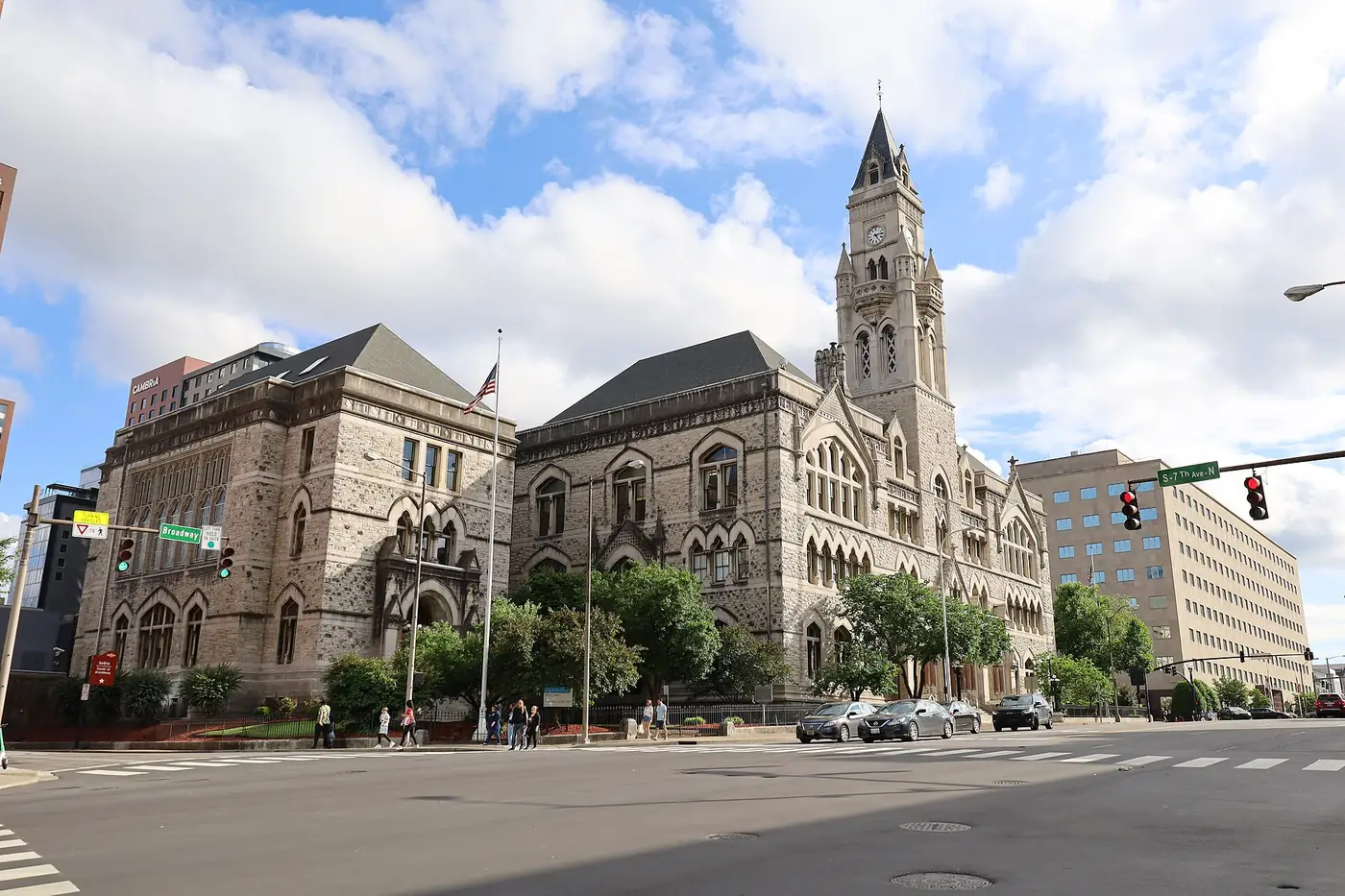
The court's home page lists its Nashville clerk's office on Broadway and two unstaffed offices in Columbia and Cookeville, and it points debtors to information on meetings of creditors held by Zoom (Bankruptcy Court, M.D. Tenn.). A filer from Cookeville worried about a day off work and a drive to Nashville needs exactly that information. Pages that walk through the 341 meeting as it actually runs in this district, video link and all, answer a fear a national page never mentions.
Certified bankruptcy specialists in Tennessee
The Tennessee Commission on Continuing Legal Education lists the American Board of Certification as the national body for consumer and business bankruptcy and creditors' rights certification, and a certified lawyer must also register with the Commission to appear on Tennessee's Roll of Certified Specialists (CLE Commission). For a firm that has done both, the credential is worth stating on its bankruptcy pages, in the wording the specialist rules section below sets out.
Bankruptcy firms: the free audit checks which Chapter 13 and Chapter 7 searches in your district reach your site today, and which reach the firm above you.
Ask for the auditInjury and medical-malpractice practices
Hospital liens and medical bills on Nashville injury pages
An injured Tennessean without health coverage meets the hospital's bill long before any settlement, and Tennessee law gives the hospital a claim on the recovery itself. The firms that get these calls are the ones whose pages explain, in Tennessee terms, what happens to the bill. Three Supreme Court and Court of Appeals decisions supply most of what such a page needs.
The hospital's lien and its ceiling on the recovery
Under the Hospital Lien Act, Tenn. Code Ann. §§ 29-22-101 to -107, a hospital that treats an injured person can claim up to one-third of the damages the patient obtains by judgment or settlement. It must file notice of the lien in the circuit court of the county where the hospital is located and of the county where the patient lives, and the patient can move to quash or reduce it, as the Tennessee Supreme Court summarized in Franks v. Sykes (Tenn. 2020) (opinion). A Nashville injury page that names the lien, the one-third ceiling and the motion to reduce it gives an uninsured reader the first piece of good news they have heard.


When the hospital bills the lien instead of the health plan
Franks itself was about patients who did have insurance. The hospitals filed liens for their full charges instead of billing the patients' health plans, and the patients sued under the Tennessee Consumer Protection Act. The Court held that the Act applies to health care providers acting in their business capacities, so the patients could state a claim (Franks v. Sykes). For an injury firm, that turns a lien explainer into a question worth asking every new client: did the hospital ever submit the bill to your plan?
Full bills as proof of medical expenses
In Dedmon v. Steelman (Tenn. 2017), the Supreme Court kept Tennessee's collateral source rule for personal injury cases where the collateral benefit is private insurance: a plaintiff may offer the full, undiscounted medical bills as proof of reasonable expenses, and the defense may not answer with the discounted rates an insurer paid, though it can rebut reasonableness in other ways (opinion). It is a Tennessee rule a national injury template gets wrong, and it is a fair answer to a client's question about what their medical damages are.
The short clock on health care liability claims
A health care liability action in Tennessee must be filed within one year after the cause of action accrues, which the Court of Appeals restated in 2026 with the discovery rule attached (Clark v. Maikis, citing §§ 29-26-116(a) and 28-3-104(a)(1)). A patient fighting a hospital over a bill may not realize the same treatment could be a malpractice claim on a short clock. A malpractice page should put that one-year figure in its first screen.
How we build injury pages for readers without coverage
- A hospital-lien page of its own, with the Act, the one-third ceiling and the motion to reduce.
- An intake question on every injury page asking whether the bill went to any health plan, TennCare or Medicare.
- Medical-expense explanations written to Dedmon, not to the national "paid versus billed" debate.
- No promise about what a client will receive; RPC 7.1 Comment [3] asks for the facts behind any result.
Employment practices
Nashville wage theft lawyers: paycheck pages in a state without a minimum wage law
Searches for Nashville wage theft lawyers and attorneys reach this page in Search Console, and they fit its reader: someone working, short on money, and short-changed by an employer. The law that answers them is split between Washington and Tennessee in a way most readers don't expect, and the page that explains the split clearly is the one they call.
Federal pay law fills a gap Tennessee leaves open
The U.S. Department of Labor lists Tennessee among the states with no minimum wage law; employers covered by the Fair Labor Standards Act pay the federal $7.25 an hour (U.S. DOL). That makes the federal Act the main tool for minimum wage and overtime claims in Nashville. An employer that violates it owes the unpaid wages plus "an additional equal amount as liquidated damages" (29 U.S.C. § 216(b)), and the claim must be filed within two years, or three for a willful violation (29 U.S.C. § 255).
The final paycheck: next payday or 21 days, whichever is later
Tennessee does regulate when wages are paid. Tenn. Code Ann. § 50-2-103 requires an employee who quits or is fired to be paid in full no later than the next regular payday or 21 days after leaving, whichever comes last, and forbids employers from contracting out of that duty (Tennessee Attorney General Op. 08-81, quoting the section). For a server or warehouse worker who left a job last week, "when do I get my last check" is the search, and the 21-day answer is the page.
Paydays, posters and equal pay
The state's required Wage Regulations Act poster tells employees that their regular payday must be posted in at least two conspicuous places, and that Tenn. Code Ann. § 50-2-202 forbids paying one sex less than the other for comparable skill, effort and responsibility (Tennessee Department of Labor poster). Both are facts a worker can check on the breakroom wall, and pages that quote the poster connect what the reader sees at work with what the law says.
Where pay discrimination charges go
Pay discrimination claims under the federal statutes the EEOC enforces start with a charge, and the agency's Nashville Area Office is the local door for Middle Tennessee workers (EEOC). An employment page should explain the order of steps (charge, investigation, right to sue) before the worker meets a deadline they didn't know about, and say clearly where a private lawyer fits in.
Consumer and debt-defense practices
Debt suits under $25,000: writing for the General Sessions civil docket
Most consumer debt suits in Nashville are small enough to stay in General Sessions. The Metropolitan General Sessions Court hears civil suits up to $25,000 and has original and unlimited jurisdiction over detainer warrants between landlords and tenants (General Sessions Court). A credit card balance, a repossession deficiency or a medical account sold to a debt buyer all arrive as a civil warrant in this court, and the defendant is often a reader searching the night before a court date.
Civil warrants, recovery warrants and the clerk who files them
The Circuit Court Clerk's General Sessions civil division files civil warrants (claims for money or property, up to $25,000), detainer warrants, recovery warrants for specific personal property, orders of protection and environmental code cases (Circuit Court Clerk). A debt-defense page that uses the court's own words ("civil warrant", not "lawsuit summons") matches what the reader is holding in their hand, which is also what they type.
A different judge each week
General Sessions has eleven divisions, each with an elected judge, and the judges rotate weekly across civil and criminal dockets; the clerk advises confirming the current week's assignment before appearing (Circuit Court Clerk). For a firm's pages, that rules out "Judge X's courtroom" content and favors explaining the docket itself: what happens at the first setting, what a default judgment is, and how to ask for time.
How we structure a debt-defense practice area
- A page for each stage: the collection letter, the civil warrant, the judgment and the garnishment.
- Court language from the clerk's own categories, so the page matches the paper in the reader's hand.
- Medical accounts treated separately, because they raise lien and billing questions other debts don't.
- A clear line on when bankruptcy, not defense, is the better answer, linked to the firm's bankruptcy pages.
AEO and GEO for Tennessee lawyers
Who helps law firms in Nashville with AI visibility or AEO optimization?
That question reached this page in Search Console almost word for word, along with requests for a Nashville AI legal marketing company, GEO experts for family and divorce lawyers, and AEO services for firms in Chattanooga. GLP does that work: AI Overview optimization, content structured for answer engines, and AI citation tracking are part of our published SEO and AI search engagement. For a Tennessee firm whose clients are worried about money, the work looks like this.
Answer the cost question before the tool does
People ask ChatGPT what a bankruptcy lawyer costs in Nashville, or whether an injury lawyer will take a case with no health insurance. If the firm's own pages don't state its fee basis, the answer comes from a directory or a national article. A fee page with the firm's real terms, written under Comment [6] to RPC 7.1, gives the tool a source from the firm itself to quote.
Dated Tennessee facts that an answer engine can lift
Answer engines prefer a sentence that states a fact, its source and its date. A sentence that gives the Tennessee figure, the agency that set it and the date it took effect is that kind of sentence; "income limits apply" is not. We write the key facts of each practice page that way, and we keep a list of the dated ones so they are refreshed when the U.S. Trustee, the Census or the legislature changes them.
Family and divorce firms
Divorce searches in Nashville carry debt with them: who pays the joint cards, what happens to a house in foreclosure, whether one spouse's Chapter 13 affects the divorce. Pages that answer one of those questions at a time, from Tennessee law, give an answer engine something specific to cite, and they reach a reader that a general "Nashville divorce lawyer" page misses.
How we check what AI tools say about a Tennessee practice
For each firm we keep a set of test questions written in the voice of its clients and named for its county, from "Chapter 13 lawyer Murfreesboro payment plan" to "who pays my hospital bill after a wreck in Nashville". Each month we log which sites Google's AI answers and ChatGPT cite for those questions, and AI referral traffic goes into the same report as Search Console. Answers vary by person, place and wording, so the result is a sample, and we label it as one.
Our search survey
How far Tennessee firms reach beyond their home city in search
This is GLP's only Tennessee page, and its search data shows firms asking about Memphis, Knoxville, Chattanooga and Murfreesboro as well as Nashville. Before advising a firm to expand across the state, we wanted to know how far Tennessee firms already reach. On November 4, 2026 we ran the same eight practice searches (personal injury, car accident, bankruptcy, divorce, criminal defense, workers' compensation, debt defense and wage theft) with each of the four city names, placing the searcher in that city through the Serper API, and recorded the first ten organic results for all 32 searches.
Who held page one for the same eight practice searches in four Tennessee cities
Organic top ten for each of 32 searches, located in the named city; 318 results, November 4, 2026
- Nashville79 results from 8 searches 54916
- Memphis79 results from 8 searches 511414
- Knoxville80 results from 8 searches 58517
- Chattanooga80 results from 8 searches 56717
Use the arrow keys to read each value.
| City | Firm site seen in this metro only | Firm site seen in two or more metros | Directories, forums and social |
|---|---|---|---|
| Nashville / 79 results from 8 searches | 54 | 9 | 16 |
| Memphis / 79 results from 8 searches | 51 | 14 | 14 |
| Knoxville / 80 results from 8 searches | 58 | 5 | 17 |
| Chattanooga / 80 results from 8 searches | 56 | 7 | 17 |
Source: GLP Marketing survey of Google results via the Serper API, November 4, 2026, 20:41 UTC; gl=us, hl=en, location set to each city. Directories, forums and social = Justia, Super Lawyers, LawInfo, Reddit, Facebook and a bar association page.
Most firm sites rank in their home city alone
The 32 searches returned 254 organic results from law firm sites, belonging to 173 different firms. Of those, 162 appeared in one city only. Eleven appeared in two or more, and just one appeared in all four. In practice, Tennessee search is four local markets with a thin layer of firms across them, and a Nashville firm should treat Memphis or Knoxville as a new market, not an extension of its home pages.
Directories in almost every search
Justia appeared in 26 of the 32 searches and Super Lawyers in 24. Directories, forums and social pages took 64 of the 318 results. A firm's profile on those sites is part of its search presence in every Tennessee city, and it is subject to the same RPC 7.1 standard as the firm's own site, which the rules sections below cover.
Memphis is where multi-city firms show most
Firms seen in more than one city held 14 of Memphis's 65 firm results, against 9 in Nashville, 7 in Chattanooga and 5 in Knoxville. A Memphis practice faces more competition from firms with offices or pages across the state and beyond; a Knoxville practice faces mostly local firms. That difference should set how much a firm spends on each city before it writes a single location page.
Murfreesboro and Franklin sit inside Nashville's orbit
Two Murfreesboro queries, one for an SEO company and one for website design, appear in this page's Search Console data. Rutherford and Williamson counties share the federal Nashville Division with Davidson (Middle District of Tennessee), but their county courts and clerks are their own. A firm with a real office there earns its own pages and its own Business Profile; a Nashville firm without one is better served by Nashville pages that mention who it represents from those counties.
Map listings for offices in Knoxville or Chattanooga
The search data includes a question about who provides Google Business optimization for law firms in Knoxville. The answer we give any Tennessee firm is the same: one profile for each office where staff work during posted hours, categories chosen from the matters the office actually takes, and reviews asked for after the matter closes. Profiles for cities where the firm has no office don't last and aren't worth building.
The competition, counted
Where Tennessee's active attorneys are registered, district by district
The Board of Professional Responsibility counts active Tennessee attorneys by its nine disciplinary districts, and two of those districts are single counties: District V is Davidson and District IX is Shelby (Tenn. Sup. Ct. R. 9, § 3). Its fiscal 2025-2026 report counts 6,630 active attorneys in Davidson County alone, close to a third of the 20,602 counted across the nine districts (BPR 45th annual report).
About 93 lawyers for every 10,000 Davidson County residents
Set against the county's 2020-2024 population, Davidson has 92.7 active attorneys per 10,000 residents; the statewide figure is 29.2. Part of that is the state capital, the courts and the large firms downtown, which serve clients far outside the county. For a consumer practice it still means a crowded field, and pages that answer a specific Tennessee question beat pages that announce a practice area.
Memphis has more people and about half the lawyers
Shelby County's 3,402 active attorneys serve about 919,000 residents, or 37.0 per 10,000. Combined with the survey's finding that multi-city firms show up most in Memphis, a Nashville firm considering a Memphis office should expect fewer local competitors but stronger visiting ones.
Licensed in Tennessee, practicing elsewhere
The same report counts 4,744 active Tennessee attorneys whose address is out of state. Some of them appear in Tennessee search results through national firms and lead programs. Under RPC 7.1(b), any communication about their services still has to carry a responsible lawyer's or firm's name and contact information, which is a fair test to apply when a firm audits who is advertising in its city.
Tennessee Supreme Court Rule 8
Tennessee's Rule 7 series since 2021: what remains in force and what was deleted
On October 27, 2020, the Tennessee Bar Association petitioned the Supreme Court to amend RPCs 7.1 through 7.6 on lawyer advertising and solicitation. The Court adopted many of the proposals, rejected others and made its own changes, effective September 1, 2021 (Board of Professional Responsibility materials). A second order, filed December 15, 2021 and effective January 1, 2022, rewrote RPC 7.6 and deleted Supreme Court Rule 44 (BPR). Here is where each rule stands in the current text (Tenn. Sup. Ct. R. 8).
| Rule | Status | Where its subject matter lives now |
|---|---|---|
| RPC 7.1 | In force | False or misleading communications, the required name and contact information, two-year retention, and in its comments fees, specialization, firm names and awards. |
| RPC 7.2 | Deleted and reserved | Nothing. Paying for advertising and leads moved to RPC 7.3(f). |
| RPC 7.3 | In force | Solicitation, the "Advertising Material" label, the 30-day bar, retention of targeted messages, and payments to others. |
| RPC 7.4 | Deleted and reserved | Nothing. Specialist claims are governed by Comments [9] and [10] to RPC 7.1. |
| RPC 7.5 | Deleted and reserved | Nothing. Firm and trade names are in Comments [11] to [13] to RPC 7.1. |
| RPC 7.6 | In force, rewritten | Intermediary organizations, a category that now names "online marketing platform" expressly. |
| Sup. Ct. R. 44 | Deleted January 1, 2022 | Registration of intermediary organizations with the Board, which no longer exists. |
No filing, no pre-approval, no mandatory label on the website
The current text contains no requirement to file advertisements with the Board, no review before publication, and no label for ordinary website pages. The "Advertising Material" words in RPC 7.3(c) apply only to targeted solicitations. That puts the whole weight on getting the content right, which is why the comments matter so much in Tennessee.
A cross-reference that outlived its rule
Comment [10] to RPC 7.3 still says lead generators are "subject to RPC 7.6 and Tenn. Sup. Ct. R. 44" when they qualify as intermediary organizations, but Rule 44 now reads only "[Deleted and Reserved.]" (Tenn. Sup. Ct. R. 44). The Board's own page says intermediary organizations are no longer required to register (BPR). A vendor or a firm checklist that asks whether a lead service is "registered with the Board" is working from the text before January 1, 2022.

RPC 7.1
RPC 7.1 on a Nashville firm's website: contact details, dated copies, results and names
Under Tennessee's RPC 7.1(a), nothing a lawyer says about the firm may be false or misleading, and the test is materiality: a wrong statement of fact or law, or a missing fact without which the whole statement would deceive (Tenn. Sup. Ct. R. 8). The rest of the rule, and its fourteen comments, decide what that means on a page.
A name and contact details on every communication
Under RPC 7.1(b), any communication made under the rule must include the name and contact information of at least one lawyer or law firm responsible for its content. On a website, a footer does that for every page; on a Google ad, a sponsored post or a directory profile, the firm has to check that its name and contact details actually appear, because a headline and a link alone may not be enough.
Keeping dated copies of a website that keeps changing
Paragraph (c) adds a retention duty: keep each advertisement, as a copy or recording, for two years after it last ran, along with when and where it appeared. Comment [14] lets a firm keep one copy for a series of materially similar ads and says a lawyer may comply by following guidelines the Board may adopt for websites, email and other electronic communications. For a website that changes monthly, we keep dated copies of every page version and a change log, so the firm can show what a page said on any given day.
Results, comparisons and the qualifying language that helps
Comment [3] warns that a true report of a win can still mislead when readers would expect the same outcome whatever their own facts, and that comparing the firm's service or fees with other lawyers' needs substantiation. Tennessee's comment treats a disclaimer as a possible cure, not a guaranteed one. On a Nashville site we write each case result with the facts that produced it and a qualifying line beside it, and we never write "lower fees than" anyone.
The 2004 word list the Board still publishes
Formal Ethics Opinion 2004-F-149 was written under the pre-2021 rule text, but it remains on the Board's list of opinions. It says that, absent factual substantiation, a lawyer shouldn't advertise as "No. 1", "the best", "experienced", "highly qualified", "reputable" or with "the lowest" fees, and that paid testimonials and simulated clients without a prominent notice are prohibited (BPR, 2004-F-149). The current rule is less specific, so we treat the opinion as a record of how the Board has read the rule, and we avoid those words unless the firm can substantiate them.
Awards and ratings from outside organizations
Comment [8] permits a lawyer to advertise a characterization conferred by an organization if the organization has inquired into the lawyer's fitness and does not hand out such designations indiscriminately or for a price. A badge bought with a listing fee fails that test. Before an award goes on a page, we check how the organization chooses and whether it charges for the honor.
Trade names, "Legal Clinic" and office-sharing names
Comment [11] accepts trade names and distinctive web addresses unless they mislead. Its own example, "Springfield Legal Clinic", shows the risk with place names: the firm may need to say outright that it is not a public legal aid office. Comment [13] adds that lawyers who merely share space may not use a combined name that suggests a partnership. For a Nashville firm considering a "Music City Legal" brand or a domain built from "Nashville" and a practice, the place name is the part we check first.
Specialization
Specialist claims in Tennessee: certified, registered with the CLE Commission, or left off the page
Naming practice areas is fine in Tennessee, and so is announcing that the firm takes nothing outside them. The words "specialist", "specialty" and "specializes", and any claim of being recognized or certified as a specialist, are another matter, allowed only in the situations Comments [9] and [10] set out (Tenn. Sup. Ct. R. 8).
Patent and admiralty
Tennessee carves out two fields by history. Comment [9] points to the Patent and Trademark Office's long-standing recognition of patent practitioners and to admiralty's roots in maritime commerce and the federal courts. A Nashville IP practice with registered patent lawyers can describe that registration plainly.
National certification, then Tennessee registration
Otherwise, a lawyer may claim specialist status only after certification by an organization accredited by the American Bar Association's House of Delegates, and only after registering that certification with the Tennessee Commission on Continuing Legal Education under Supreme Court Rule 21. The Commission keeps a Roll of Certified Specialists, charges an annual registration fee and sends renewal notices each May for the period starting July 1 (CLE Commission). A lapsed registration means the word comes off the website until it is renewed.
What a lawyer may never say
Comment [10] ends with a flat prohibition: a lawyer shall not state or imply that the lawyer has received any certification of specialty from the Tennessee Commission on Continuing Legal Education. The Commission registers certifications; it doesn't grant them. "Certified by the State of Tennessee" is therefore wrong on any page, in any practice.
How we handle practice descriptions
- "Practice limited to" and "we handle only" for focused firms, both of which Comment [9] allows.
- Certification stated with the certifying body's name, and only after we see the Roll of Certified Specialists entry.
- No "specialist", "specializing" or "expert" in titles, meta descriptions or image alt text without that registration.
- A date on every credential claim, so it can be checked again at the July 1 renewal.
RPC 7.3
Solicitation under RPC 7.3: the 30-day bar in Tennessee reaches divorce filings
RPC 7.3(a) defines a solicitation as a targeted communication, initiated by or for a lawyer, directed to a specific person, that offers or can reasonably be understood to offer legal services for a particular matter (Tenn. Sup. Ct. R. 8). Comment [1] puts ordinary marketing outside the definition: billboards, banner ads, websites and TV spots aimed at the public, answers to someone who asked for information, and responses generated automatically by internet searches.
Phone calls and meetings versus written messages
RPC 7.3(b) bars soliciting by live person-to-person contact when pecuniary gain is a significant motive, unless the person is a lawyer, routinely uses that type of legal service for business, is reached through a court-ordered class notice, or has a family, close personal or prior professional relationship with the lawyer. Comment [2] treats in-person meetings, live phone calls and any other real-time voice or video exchange as live contact. Anything written that the recipient can simply ignore falls outside it, from a text or an email to a chat-room post.
Business clients who hire lawyers routinely
Comment [4] gives examples of people who routinely use legal services for business: those who hire outside counsel for an entity, entrepreneurs who regularly engage business, employment or IP lawyers, and small business owners who routinely hire lawyers for leases or contracts. A business firm may phone those prospects; a consumer firm may not phone a person it knows is being sued on a debt.
"Advertising Material" on targeted messages
Under RPC 7.3(c), every written, recorded or electronic solicitation to someone known to need legal services in a particular matter must carry the words "Advertising Material" on the outside envelope, if any, and at the beginning and end of any recorded or electronic communication. The envelope may not reveal the subject of the matter. Newsletters, announcements and replies to people who asked for information need no label, as Comment [8] confirms.
The month-long pause after an accident, disaster or divorce petition
RPC 7.3(d)(3) bars a solicitation driven by pecuniary gain about personal injury, workers' compensation, wrongful death, an accident or disaster, or a divorce or legal separation, unless the event occurred more than 30 days before the message is sent or the lawyer has a family, close personal or prior professional relationship with the person. Comment [6] explains the divorce part: a spouse who receives a lawyer's letter before being served can be put at risk of violence before the statutory injunctions of Tenn. Code Ann. § 36-4-106(d) take effect. Divorce filings are a Tennessee addition to the usual list, and a direct-mail template written for another state won't include them.
Stop requests and silence
RPC 7.3(d)(1) bars soliciting anyone who has told the lawyer they don't want to be solicited, and Comment [5] adds that if a letter gets no response, further efforts to reach the recipient may violate that paragraph. For email and text sequences, that means one targeted message, then nothing, unless the person replies.
Copies of targeted messages and who received them
RPC 7.3(e) requires a copy of each targeted communication for two years after its last dissemination, with a record of when and to whom it was sent; Comment [9] allows one copy plus a list of names and addresses for identical messages. A firm's email platform can hold that record if the list and the template are exported and kept, which we set up before any targeted campaign starts.
RPC 7.3(f) and RPC 7.6
Paying for leads, directories and referral platforms in Tennessee
Paragraph (f) of RPC 7.3 starts with a ban: nothing of value to a non-employee for recommending or securing the lawyer's services. Five exceptions follow: reasonable advertising costs, which expressly include online group advertising; an intermediary organization's usual charges under RPC 7.6; buying a practice; sponsorships or charitable gifts in return for publicity; and non-exclusive reciprocal referral deals disclosed to the client (Tenn. Sup. Ct. R. 8).
Vendors and lead generators
Comment [10] to RPC 7.3 lets a firm pay vendors who provide marketing services, website designers included, as long as they don't direct the lawyer's professional judgment. It also allows paying for internet leads, provided the lead generator does not recommend the lawyer, the payment is consistent with RPCs 1.5(e) and 5.4, and the generator's communications meet RPC 7.1. A lead service that says or implies it is recommending the lawyer, referring for free, or has analyzed the person's legal problem is one a Tennessee firm may not pay.
When a platform is an intermediary organization
RPC 7.6(a) defines an intermediary organization as a lawyer-advertising cooperative, lawyer referral service, lawyer matching service, online marketing platform, prepaid legal insurance provider or similar organization that refers consumers to lawyers or helps create lawyer-client relationships without bearing ultimate responsibility. Under RPC 7.6(b), a lawyer taking part must be licensed and in good standing in Tennessee and make reasonable efforts to ensure that the organization:
- does not direct or regulate the lawyer's professional judgment;
- does not solicit improperly under RPC 7.3;
- discloses its inclusion criteria to prospective clients, including any payment by the lawyer and any fee to the client, at the start of the client's interaction;
- has the referral arrangement fully disclosed to the client at the start of the client's interaction with the lawyer;
- charges only a reasonable share of its administrative and advertising costs, or for a nonprofit, a referral fee figured as a reasonable percentage of the fee;
- is not owned, controlled or directed by the lawyer or the lawyer's firm.
If the lawyer learns of noncompliance, RPC 7.6(c) requires withdrawing or seeking a correction, and withdrawing if the organization doesn't correct it.
Marketplaces where clients post the job
The Board's Formal Ethics Opinion 2018-F-165 looked at a website where people post a description of the legal services they need and lawyers submit fee quotes, with fixed membership and per-quote charges and no recommendation by the company. It found the site was not an intermediary organization and appeared to comply, on conditions including no fees tied to the number of clients or to legal fees, no role in the client's choice, and a disclaimer that quotes are advertising rather than recommendations (BPR, 2018-F-165). It is the closest Tennessee guidance on bid-style legal marketplaces, and we apply its conditions when a firm asks about one.
Asking the Board before you launch
Tennessee lawyers can ask the Board's Ethics Counsel for informal guidance about their own proposed conduct, by phone or through the Board's online form (BPR). The Board reports answering 2,093 phone and internet ethics inquiries in fiscal 2025-2026 (BPR annual report). When a campaign rests on an unusual arrangement, the responsible lawyer asking first is cheaper than a grievance later.
For firms that already buy leads: the audit can include a read of how your current lead and directory vendors present your firm against RPC 7.3(f) and 7.6.
Request the auditBeyond Tennessee
GLP city pages within a day's drive of Nashville, and the practice guides behind this page
No second Tennessee city has a GLP page yet. The closest others are several hours' drive away in other states. A Nashville firm opening in Atlanta, Indianapolis or Columbus has a page for that city written to that state's rules, and the full list sits on areas we serve.
Fees, rules, offices and results: the Tennessee FAQ
In short
GLP plans law firm SEO in Nashville around a client base under money pressure (more uninsured residents, more debt in collections and more Chapter 13 filings than the national average), writes practice pages to the Tennessee law behind those problems, and checks every claim against Tennessee RPC 7.1, 7.3 and 7.6.
Is GLP based in Nashville?
Not in person. Our headquarters is in West Hollywood, California, where a nine o'clock call is eleven o'clock in Nashville. A Tennessee firm gets a single day-to-day contact plus a monthly strategy call on the SEO and AI search engagement, or weekly calls on the Consulting CMO engagement (the two engagements). What a Tennessee firm gets from us is the research on this page applied to its own practice, county and competitors, not someone at a desk on Church Street.
How much does SEO cost for a Nashville law firm?
We don't publish a price list, and we would be guessing if we quoted one before seeing your market. A monthly retainer is quoted after we look at the practice areas, the number of offices, how much content the plan needs, the state of the current site and how many Tennessee firms already rank for your searches. A bankruptcy practice serving four counties and a single-office estate firm in Belle Meade are priced very differently. A free audit comes first, and how we work lists what pushes a retainer up or down.
Do paid search ads and Google's lead ads fall under the Tennessee rules too?
Yes. Paid search is advertising under RPC 7.1, so the ad or its landing page has to carry the name and contact information of a lawyer or firm responsible for it, and the firm keeps a copy for two years after the ad last runs. Local Services Ads (LSA), the pay-per-lead units at the top of the page, only appear once Google has checked the lawyer's license and background. The firm owns the Google Ads account and we work inside it, which keeps the history with you if you ever change agencies; the rest is on law firm PPC.
We want client video testimonials. What does Tennessee allow?
Real clients telling the truth about their experience are allowed, with two cautions. RPC 7.1 Comment [3] warns that a truthful result can still mislead if viewers would expect the same outcome without the facts of their own case, and qualifying language helps. The Board's Formal Ethics Opinion 2004-F-149, written under the older rule text and still published on its site, says actors portraying clients need a prominent notice that they are simulations (BPR). We script videos so neither problem arises, and the firm signs off on the final cut.
We're in Murfreesboro or Franklin. Do we need different pages from a Nashville firm?
Only in part. A Murfreesboro reader types "Murfreesboro" or "Rutherford County", as this page's own search data shows, and their case lands in that county's courts and clerk's offices, not Davidson's. We build those pages from Rutherford or Williamson sources and keep Nashville material for Nashville matters; the survey section above shows why a nearby city is still its own search market.
Is a website rebuild part of what GLP does?
Yes, and Nashville partners who ask about law firm website design get Tennessee requirements built in from the first template: a responsible lawyer's name and contact information where RPC 7.1(b) needs them, a way to keep dated copies of pages for the two-year retention period, and fee and payment pages written for readers who can't pay much up front. See examples of our website work.
We practice family law. How would GEO and AEO work for a Nashville divorce firm?
Divorce questions arrive tangled with money: who keeps the house, who pays the credit cards, whether filing bankruptcy first makes sense. Answer engines quote pages that take one of those questions and answer it directly from Tennessee law and Davidson County practice. One Tennessee rule shapes outreach rather than content: RPC 7.3(d)(3) bars written solicitation of a person within 30 days after a divorce or legal separation is filed, so a family firm's growth has to come from search and referrals, not letters to new filings. We describe the parts of that work that don't change by state on family law SEO.
Is there a published GLP result from Tennessee?
Not yet. Every result GLP has published comes from a California or British Columbia law firm, or from a bail bonds business, and each states its own time frame and where its numbers came from (case studies, shown with the earnings disclaimer). Tennessee's Comment [3] to RPC 7.1 is a fair test here too: a result in another market, presented without its facts, says little about what a Nashville firm should expect.
Can anyone guarantee our firm page one of Google in Nashville?
No, and anyone who does is describing something they don't control. Rankings are Google's decision, and Google's Search Central documentation states that following its guidelines doesn't assure crawling, indexing or display. Our commitments are the items written into your plan: which pages get built, which fixes get made, what the reports show and on what schedule.
How soon do Tennessee firms see movement?
On our get-started page we say that most clients see ranking and traffic gains within roughly three to four months, and that the work compounds across a year. In Tennessee the starting point matters as much as the calendar. A firm whose site already appears for its Nashville bankruptcy searches has less ground to cover than a new site entering Memphis injury searches, where our survey found the most firms working across several cities. You see the monthly Search Console figures and can judge the direction on your own.
Is Night Court worth a page on a defense firm's site?
Yes, because it is where a family's first money question gets answered. Five judicial magistrates, known together as Night Court, are on duty 24 hours a day, 365 days a year; they hold probable cause hearings, issue warrants and set bail bonds in criminal cases, and they issue ex parte orders of protection (General Sessions Court). A defense page that explains who sets bail, how a bond is posted and what happens next answers the late-night search a relative makes before any lawyer is hired.
Davidson County clients keep saying "probate court." Which court do they mean?
The Seventh Circuit Court's Probate Division, which the Circuit Court Clerk says holds exclusive jurisdiction in Davidson County over estate administration and the probate of wills, and shares jurisdiction over conservatorships and guardianships (Probate Court Clerk). Locals call it the Davidson County Probate Court, so estate pages should use both names. When an estate is mostly unpaid medical bills and a car, those pages should also say what happens to the debts, because that is what heirs are searching for.
I'm looking for a lawyer in Nashville, not an agency. Where should I start?
Our page here speaks to firms, not to people hiring a lawyer. Free help exists: the Nashville Bar Association's Dial-A-Lawyer line takes calls on the first Tuesday of every month from 6 to 8 p.m., and the same association runs a referral service (Nashville Bar Association). The Board of Professional Responsibility's online directory shows whether a lawyer is licensed and in good standing in Tennessee.
Is the firm down the street getting your Tennessee calls?
Give us your address and name the cases you would like intake to log more often. Someone at GLP runs your practice through Google and ChatGPT as a client in your county would, and a recorded walkthrough reaches you within 48 hours.
Or call Call (661) 388-5526